Best Pet Grooming Dryer: How to Choose the Right One for Your Dog
We may earn a commission for purchases made using our links. Please see our disclosure for more details.
Drying a dog after a bath can take longer than washing one, especially when thick fur holds moisture close to the skin. A regular towel may leave the undercoat damp, while a household hairdryer can be too hot or difficult to control. A dedicated pet grooming dryer offers another option, but models differ considerably in airflow, noise, size, and attachments.
Before buying, consider your dog’s coat, temperament, and how often you bathe them. A small, short-haired dog may need little more than towels and gentle airflow; a large double-coated dog presents a different challenge. We’ll compare dryer styles, explain which features deserve attention, and highlight five options for different budgets and grooming routines so you can choose equipment you’ll actually use.
When a Pet Grooming Dryer Is Worth Buying
A dog dryer is most useful when towels cannot remove moisture from dense or long fur efficiently. High-velocity models push water away from the coat instead of relying primarily on high temperatures. They dislodge loose undercoat, too.
For a short-haired dog bathed occasionally, absorbent towels may be enough. A dryer becomes worthwhile with several dogs, curly coats, or lengthy drying sessions. It cannot replace appropriate brushing or skin treatment.
Force Dryers vs. Handheld and Stand Models
Force dryers use a motorized canister and hose to direct concentrated air into thick fur. They suit many large, double-coated dogs, although they can be noisy.
Compact brush-dryers combine a brush with a smaller blowing device. They suit small pets, not saturated, dense undercoats.
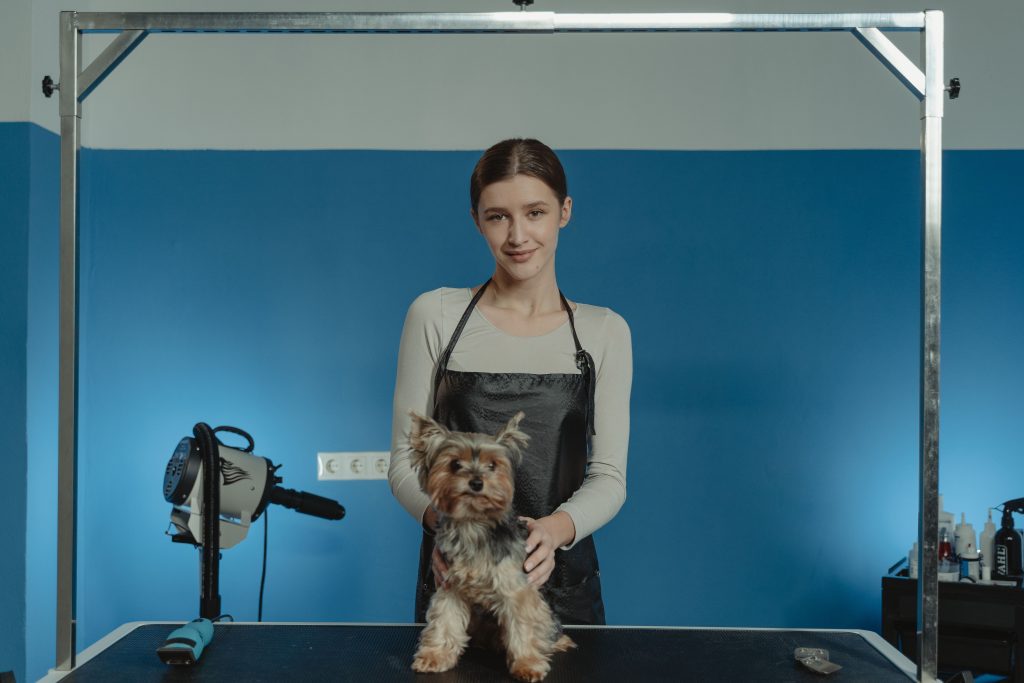
Stand dryers leave your hands more available for brushing and shaping a coat. They require a dedicated grooming area. Combination vacuum-and-dryer systems provide several grooming functions, though their drying output should be evaluated separately.
Choose a Dryer Based on Coat Type
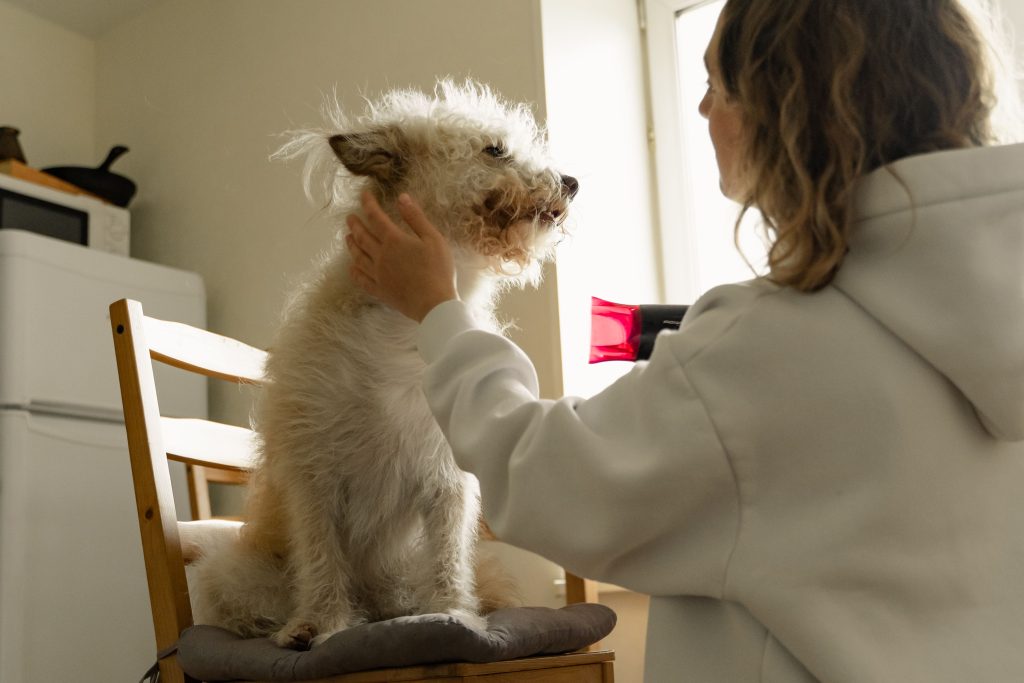
A golden retriever, husky, or other thick double-coated dog usually benefits from directed airflow that can reach beneath the outer fur. Adjustable speed lets you start gently. Coat-appropriate brushing may help afterward.
Poodles and similar curly-coated dogs may need controlled drying alongside careful brushing for a smoother finish. Short-coated breeds often require less equipment. For sensitive dogs, gentle airflow matters more than power.
Never attempt to blow apart tight, painful mats. Ask a qualified groomer or veterinarian about severely matted coats before bathing.
Compare Airflow and Adjustable Speed
Airflow control matters more than impressive-looking motor claims. A powerful dryer that only has one forceful setting may be frustrating for small dogs or sensitive areas. Prefer continuously adjustable speed.
Manufacturers may describe output using air speed, cubic feet per minute, watts, or horsepower. These measure different things and are difficult to compare. Prioritize controllability, hose handling, and your pet’s comfort.
Heat Settings and Temperature Control
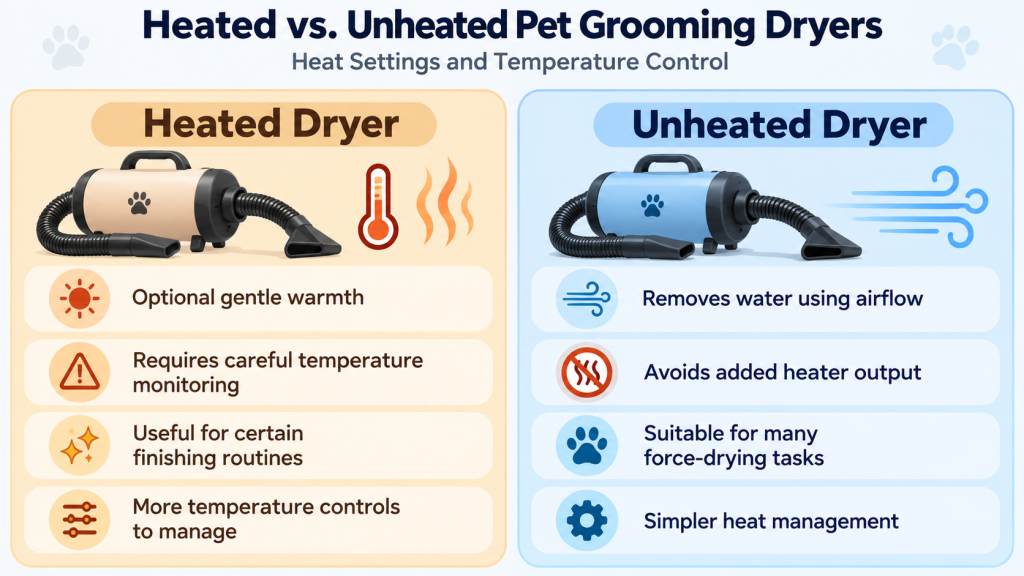
You do not need high heat to remove water with a force dryer. Moving air is the main drying mechanism, and too much heat can irritate or burn skin. A no-heat option is valuable.
Some machines offer warm-air settings for finishing. If you choose one, start without heat, test the air against your hand, and keep the nozzle moving. Advertised temperatures do not guarantee comfort at skin level. Monitor your pet and stop if they become hot or distressed.
Noise Levels and Your Pet’s Comfort
Even a dryer marketed as quiet can sound intimidating near a dog’s ears. Low speed helps, but no machine is necessarily silent. Pay attention to trembling, attempts to escape, tucked tails, and repeated avoidance.
Introduce the appliance while switched off, reward calm investigation, and later run it at a distance for short periods. Approach only when your dog relaxes. Never force a frightened pet to continue.
Nozzles, Hose Length, and Attachments
A wide or flat nozzle spreads air over broad coat sections; a narrower nozzle concentrates it for stubborn moisture in dense fur. Concentrated air requires caution. For sensitive areas, lower the speed or remove a restrictive nozzle if the manufacturer permits it.
A flexible hose helps you reach around a dog without lifting the motor. Check connection and replacement availability. A few practical nozzles usually suffice.
Size, Storage, and Electrical Compatibility
Check the canister’s footprint and where the hose will live between baths. Stands need an open, level area. Consider how far the power outlet is from the bathing station and keep all electrical connections away from splashing water.
For U.S. households, confirm the specific model is intended for the available outlet and circuit. Imported variations may have different requirements. Check manufacturer guidance before using an extension cord.
How to Use a Dog Dryer After a Bath
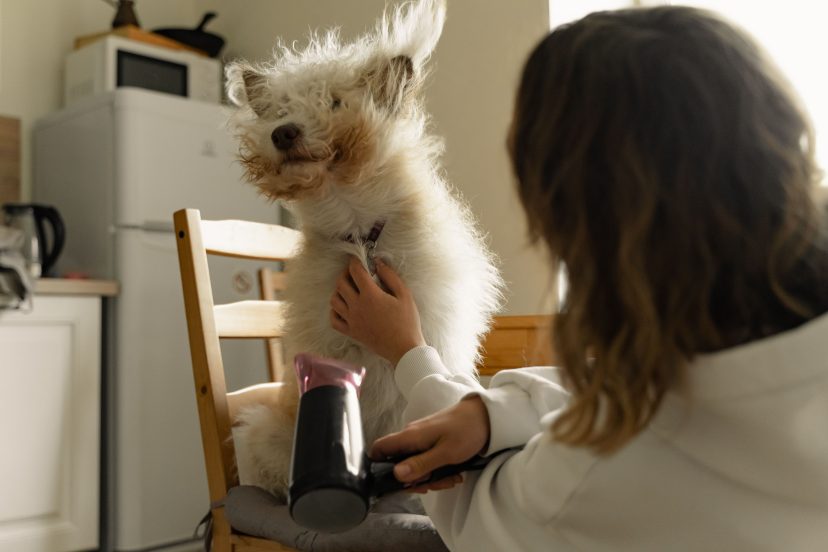
First, rinse shampoo thoroughly and gently squeeze excess water from the coat. Press absorbent towels into fur without rubbing vigorously. Use a nonslip surface and supervise continuously.
Start the dryer on low airflow without added heat, directing it toward the body rather than the face. Work through manageable sections, moving the nozzle continuously and keeping it at a comfortable distance. Part thick fur to check the skin-level moisture.
Reduce airflow around the belly, paws, and other sensitive areas. Avoid directing air into the eyes, nose, mouth, or ear canals. Finish by checking beneath the outer coat for damp patches and gently combing suitable coat types. Take breaks as needed.
For a safer, more ergonomic setup, our guide to choosing a pet grooming table explains stability, surface size, and appropriate handling during home grooming.
Mistakes That Make Drying Less Safe
Stronger air and hotter settings aren’t always better. A startled dog can slip or struggle, while concentrated heat may injure skin. Work at your dog’s pace.
Other avoidable mistakes include using a damaged cord, positioning the motor where it could get wet, directing a narrow blast into ears, and neglecting damp undercoat. Do not leave any pet unattended with a running dryer, including inside a crate. Stop and seek veterinary advice if your dog becomes unwell.
How to Clean and Maintain Your Dryer
Loose fur and lint can collect around air intakes and filters. Unplug, cool, and clean filters as directed. Check the hose for blockages, cracks, and loose connections, and wipe attachments after grooming.
Store it dry with the hose loosely coiled. Replace worn parts with compatible components. Inspect the cord and switch; stop using equipment that overheats, smells unusual, or malfunctions.
Five Pet Grooming Dryer Picks for Different Needs
These models offer distinct approaches to drying. Choose according to coat density, available storage, and the amount of grooming equipment you already own.
SHELANDY Groomer Partner Pet Hair Force Dryer Dog Grooming Blower with Heater (Blue)
Best for: Everyday home grooming across different coat types.
This variable-airflow force dryer includes four nozzles, a flexible hose, and two heating settings. Its adjustable output makes it a practical general-purpose starting point for households with different dogs. The motorized canister still requires storage space, and sensitive pets may need gradual introduction before tolerating stronger airflow.
Flying Pig High Velocity Dog Pet Grooming Dryer w/Heater (Model: Flying One, Purple)
Best for: Frequent grooming and long reach around larger dogs.
The Flying One has a steel housing, adjustable airflow and heat, a flexible hose reaching up to ten feet, and interchangeable nozzles. Those features are useful for working around a sizeable dog without constantly repositioning the canister. Its solid construction also means it is less convenient to carry or store than a small handheld tool.
B-Air Fido Max 1 Dog Hair Dryer – Premier Grooming Collection (Hot Pink)
Best for: Owners who prefer unheated airflow.
This Fido Max 1 uses high-velocity air without an added heater. It includes a six-foot hose and grooming nozzles, offering a straightforward approach for drying and loosening shed fur. The trade-off is limited warmth adjustment: owners seeking a heated finishing option should consider another model, while still keeping any heat gentle.
oneisall 8-in-1 Dog Grooming Vacuum & Dryer for Shedding/Drying/Trimming
Best for: Households wanting an integrated grooming kit.
The oneisall system combines a pet dryer, suction-based grooming tools, and clippers, with selectable airflow and temperature settings. It can reduce the number of separate appliances needed for brushing, trimming, and drying. However, this multifunction format is more complicated to maintain, and its dryer should not automatically be treated as equivalent to a dedicated high-velocity blower.
Flying Pig High Velocity Dog Pet Stand Grooming Dryer w/Variable Air Speed & Heat (Green)
Best for: Dedicated grooming spaces and brush-assisted finishing.
A wheeled stand with lockable casters and adjustable height makes this dryer easier to position during longer grooming sessions. It also provides variable airflow, heating controls, and nozzle options. The stand takes up considerably more floor space than a portable canister and is best suited to owners who already have a reliable, supervised grooming station.
What Research Reveals About Dryer Noise
A peer-reviewed study, Noise impacts from professional dog grooming forced-air dryers, published in 2012, measured four brands of grooming dryers at one meter. Depending on measurement weighting, recorded levels included 94.8 to 108.0 dBA. These are substantial noise exposures, particularly for professionals operating dryers repeatedly.
The study primarily evaluated potential hearing risks for people working with dryers; it did not establish a safe exposure threshold for dogs or rank today’s home models. Still, it supports treating dryer noise as a serious purchasing and handling consideration.
The American Kennel Club’s dog-drying guidance also recommends introducing dryer sounds gradually and keeping forceful air away from the face and ears. Choose controllable airflow and prioritize calm handling over a promised drying-time reduction.
Frequently Asked Questions About Pet Grooming Dryers
Is a pet grooming dryer better than a human hairdryer?
For dogs with thick coats, a purpose-built force dryer is usually more practical because it moves water with airflow rather than depending primarily on heat. Human hairdryers may have concentrated hot settings and limited coverage. Whatever tool you use, avoid excessive temperature, protect the eyes and ears, and stop if your pet is uncomfortable.
Can I use a dog dryer on a cat?
Only when the particular device is suitable and the cat tolerates it. Many cats find intense noise and airflow stressful, so a powerful dog dryer is not automatically appropriate. Start with towels, seek veterinary or feline-grooming advice when needed, and never restrain a panicking cat just to finish drying.
Do high-velocity dryers remove shedding fur?
They can help dislodge loose hair, especially from dense double coats, while blowing out water after bathing. However, they do not stop normal shedding or replace coat-appropriate brushes. Excessive hair loss, bald patches, redness, or skin discomfort warrants veterinary evaluation rather than stronger airflow or more frequent grooming.
Is a dryer with heat necessary for winter baths?
No. An unheated force dryer can remove water effectively, provided your dog is kept in a comfortably warm indoor environment. A gentle warm setting may be useful on some models, but high heat creates unnecessary risk. Thorough towel drying first can shorten the time your dog spends damp without increasing heat.
How often should I clean a pet grooming dryer filter?
Inspect it after grooming sessions, particularly when drying heavy shedders. Remove accumulated fur as directed by the manufacturer, and clean more often if airflow weakens or the intake becomes visibly blocked. Always unplug the machine first. There is no universal cleaning interval because coat volume, session length, and filter designs vary.
Final Thoughts: Choosing the Right Pet Grooming Dryer
The right pet grooming dryer should match your dog’s coat and tolerance, not simply offer the highest advertised power. Adjustable airflow, a manageable hose, appropriate nozzles, and an easy-to-clean filter are more useful than unnecessary extras. Safe drying also depends on towels, careful handling, and patience around noise.
For many households, the SHELANDY Groomer Partner provides a versatile combination of airflow control and accessories. The B-Air Fido Max 1 is worth considering if you want an unheated alternative, while a stand dryer makes more sense for a dedicated grooming area. Start with the gentlest effective setting, protect sensitive areas, and choose the model that fits your dog’s routine rather than forcing your dog to fit the equipment.