How To Stop A Dog From Jumping On People
We may earn a commission for purchases made using our links. Please see our disclosure for more details.
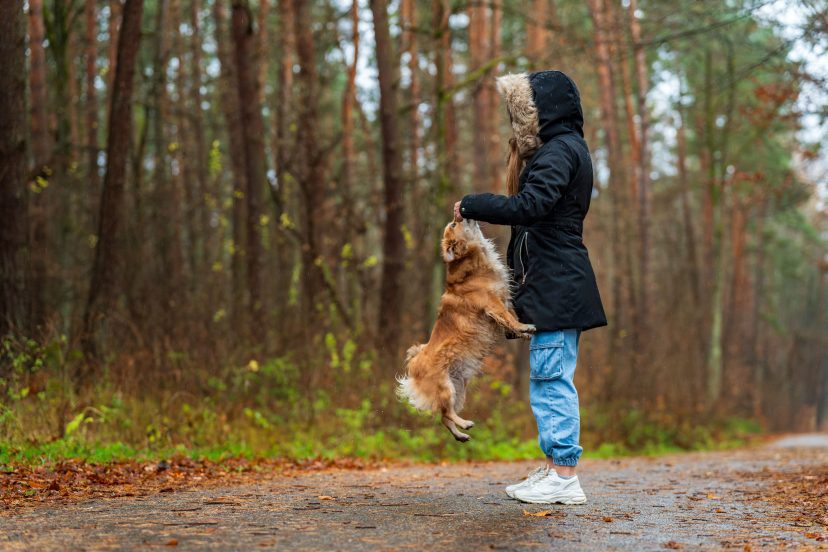
Your dog races to greet a visitor and plants two paws on their chest. An adult dog can scratch someone, knock over a child, or frighten a guest. Dogs do not automatically understand why their enthusiastic welcome feels different to a stranger. They need practice with a greeting they can repeat when someone rings the bell or walks through the gate.
Learning to Stop A Dog From Jumping On People does not mean discouraging affection. It means teaching a safer way to ask for attention. Use rewards, one clear household rule, and management before excitement takes over.
Here are practical exercises for home and walks, visitor strategies, and useful training tools.
Why Dogs Jump on People in the First Place
Many dogs jump to get closer to someone’s face or attract attention. Excitement is common, but frustration, anxiety, and uncertainty can produce similar movements. Notice the trigger rather than assuming friendliness.
A habit can develop accidentally. If jumping earns petting, laughter, conversation, or even repeated scolding, the dog may learn that launching upward gets a response. A fearful dog needs distance and reassurance, not more greetings.
Choose One Greeting Rule Everyone Can Follow
Define a successful greeting first. Four paws down lets a dog stand naturally. Sitting works too, especially for dogs that already respond reliably to a sit cue.
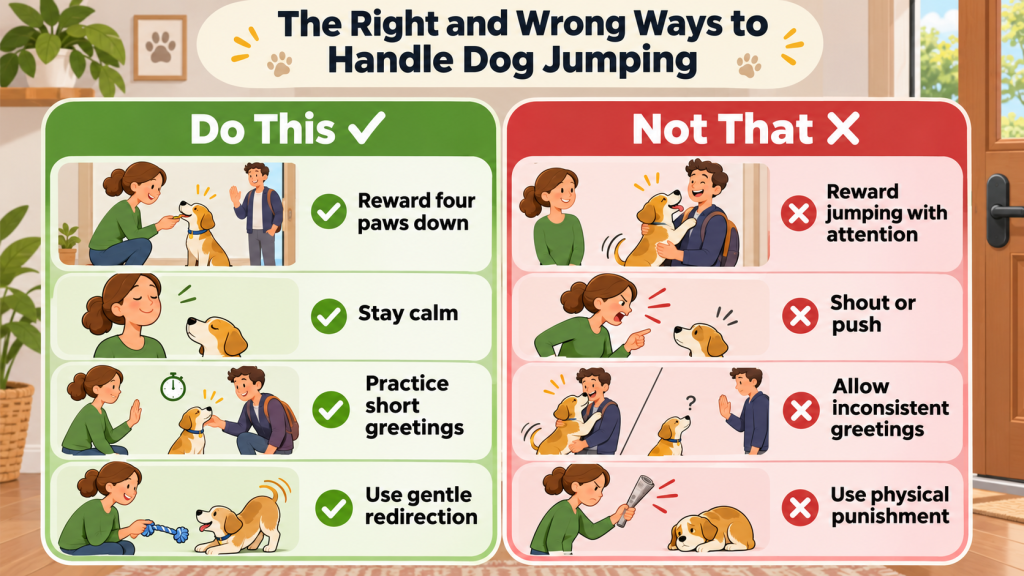
Tell family members exactly what to reward. For example, your rule might be: “We say hello and pet the dog only while all four feet are down.” Do not allow jumping at some times but forbid it around guests. Inconsistent responses make the lesson much harder to learn.
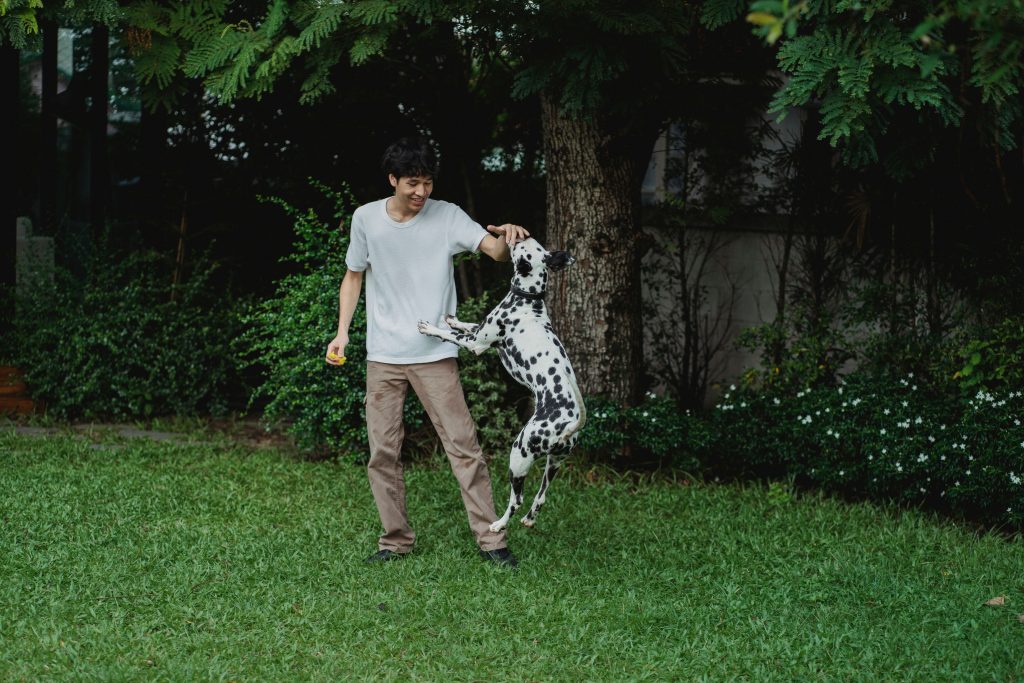
Stop A Dog From Jumping On People With Four-Paws Training
Start indoors with a calm helper and small treats. Use a comfortable leash if needed, without pulling. Reward before the dog gets excited enough to jump.
- Have your helper approach slowly from several steps away.
- Place a treat on the floor while your dog remains grounded.
- Let the helper offer brief, gentle attention if your dog stays relaxed.
- Have the helper step away before excitement builds.
- Repeat, then gradually delay the treat and extend the greeting.
If they jump, increase distance or shorten the greeting. Make the exercise easier rather than repeating commands over an excited dog.
Teach a Sit or Mat Cue as an Alternative
Some dogs do better with a specific task than with an abstract instruction to stop jumping. Practice “sit” without visitors. Mark the instant your dog’s bottom touches the floor, give a reward, and release them after a moment.
A “go to your mat” cue can work particularly well near the front door. Reward stepping onto the mat, then staying as you approach the door. Add knocking, door movement, and another person only when the previous step is comfortable. Never use the mat as punishment.
Respond Calmly When Jumping Happens
If your dog springs up for attention, keep your hands close, turn sideways, and avoid animated speech or pushing. When all paws return to the ground, offer a calm greeting immediately. The contrast clarifies what earns attention.
Ignoring is appropriate only when everyone is safe. Do not risk someone being knocked down. Step behind a gate, create distance, or have another adult calmly guide the dog away. Safety should always come before finishing the exercise.
Practice Greetings With Family and Friends
A dog that behaves beautifully with you may still jump on a friend carrying shopping bags. Practice with different people, movements, voices, and locations.
Recruit a willing adult who can follow instructions. Ask them to approach, pause, and leave if your dog becomes too excited. Let guests pet the chest or shoulder briefly rather than reaching over the head. Add one challenge at a time: a person, lively voice, or bag.
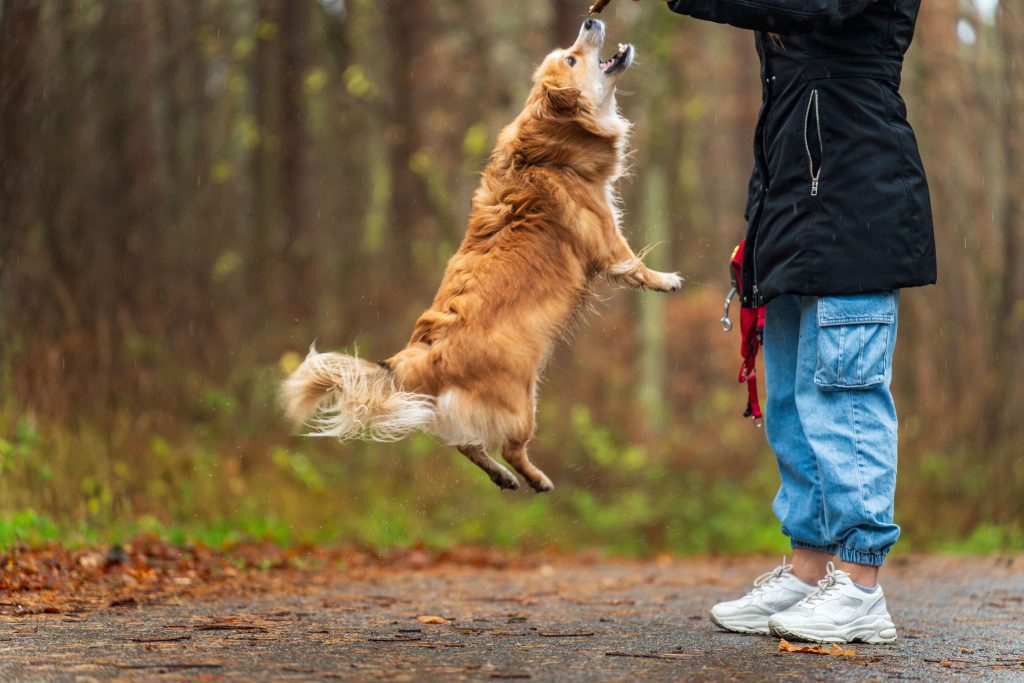
Manage the Front Door Before Guests Arrive
Doorbells and entrances can send excitement soaring before training even begins. Keep your dog behind a secure gate or in another room while visitors enter. Release them for a short practice greeting only once everyone is settled.
A leash can provide backup, but hold it loosely and avoid jerking the dog downward. If your dog cannot focus or take treats, skip the greeting for now. Separation helps protect children and vulnerable visitors.
Prevent Jumping on Strangers During Walks
Outdoors, prevent unwanted greetings. Keep enough distance for your dog to notice a person and still respond to you. Reward a glance back, four paws on the ground, or walking past without contact.
You do not owe every stranger a dog greeting. Ask people not to approach during training. If your dog is already pulling toward someone, move farther away rather than dragging them back by the collar. A reliable recall cue is useful too; these dog recall training exercises provide additional practice for returning to you when distractions appear.
Help Puppies and Easily Excited Dogs Succeed
Start polite-greeting habits while your puppy is small. A tiny jumper becomes less welcome as they grow. Reward quiet approaches during ordinary moments instead of waiting until the puppy is wildly excited.
Dogs with intense enthusiasm may benefit from sniffing, play, appropriate exercise, and adequate rest before guests arrive. Avoid assuming that tiring your dog out will solve jumping by itself. If frantic, reduce stimulation and simplify training.
Avoid Punishment and Other Common Mistakes
Kneeing a dog in the chest, shouting, pushing, or using painful collar corrections can cause fear or increase arousal. These do not teach an alternative. A dog may stop jumping around one person while remaining confused or worried around others.
Also avoid rewarding the wrong moment. If you hold a treat above the dog’s nose, you may encourage them to rise toward your hand. Deliver food low, where you want their paws to stay. Stop sessions before mistakes multiply.
Build a Simple Training Routine and Track Progress
Practice for a few minutes at predictable times rather than relying on an occasional long session. Begin with household members, rehearse the door routine when no guests are coming, and introduce real visitors gradually. Note which situations still trigger jumping.
Progress is rarely linear. Unexpected visitors may require an easier setup. If jumping includes growling, snapping, intense fear, sudden behavior changes, or repeated injuries, consult your veterinarian and a qualified reward-based behavior professional.
Recommended Products to Stop A Dog From Jumping On People
Training tools cannot replace consistent practice, but they can make rewards, management, and safer greetings easier. Choose based on your biggest challenge.
Starmark Pro-Training Clicker for Dogs
Best for: Precise reward timing during beginner training
This compact clicker produces a consistent sound that you can pair with food to mark the instant your dog keeps their paws down. Its raised button helps with deliberate clicking, and a training guide is included. A clicker is optional; you must first teach what the sound means, and sensitive dogs may prefer a quiet verbal marker.
Chuckit! Treat Tote Dog Treat Pouch for Puppy Training, 1 Cup
Best for: Keeping rewards accessible during short sessions
The clip-on pouch holds about one cup of treats and opens with a drawstring, making it convenient when you need to reward a calm greeting quickly. Its compact design is easy to wear around the house or outdoors. It lacks the storage space of a larger training bag, and assorted colors may vary.
PetSafe Easy Walk Harness, No Pull Dog Harness, Black, Medium
Best for: Controlled greeting practice on walks
This nylon harness uses a front-chest leash attachment and adjustable straps to help manage pulling while you practice passing people. It can make distance management more comfortable than relying on a neck collar alone. Measure carefully, check the fit during movement, and remember that a harness does not teach polite greetings by itself.
MidWest Homes for Pets 30-Inch Exercise Pen with Door
Best for: Creating a temporary visitor-free space
This folding metal exercise pen has a door and configurable panels, making it useful for managing some dogs while guests enter. It creates an alternative to holding an excited dog at the doorway. Check the dog’s size, jumping ability, and the pen’s stability first; an athletic dog may climb or clear an enclosure, so supervision matters.
KONG Classic Stuffable Dog Toy, Natural Rubber Chew, for Large Dogs
Best for: A familiar food activity while visitors settle
The large KONG Classic is a hollow natural-rubber toy that can be filled with suitable food and offered before guests arrive. It gives a dog an alternative activity while you manage the entrance. Choose the correct size and chewing strength, supervise use, and avoid assuming that a food toy will calm an anxious dog by itself.
What Research Shows About Reward-Based Dog Training
The American Veterinary Society of Animal Behavior’s 2021 humane dog training position statement recommends reward-based methods rather than techniques relying on pain, fear, or intimidation. Its guidance specifically discusses managing jumping by changing the environment and reinforcing appropriate behavior.
A 2020 study published in PLOS ONE observed 92 companion dogs attending training schools. Dogs in aversive-based programs showed more stress-related behavior during training than dogs in reward-based programs. Because the study compared existing training groups rather than randomly assigning dogs, it does not prove that every individual outcome was caused by training style.
Together, these sources support a practical choice: teach a safe replacement greeting and avoid unnecessary force.
Frequently Asked Questions About Dogs Jumping on People
How much time does it usually take to train a dog to stop jumping?
Some dogs show improvement after several consistent sessions, while others need weeks or months of practice. Age, excitement level, previous rewards for jumping, and the number of people involved all influence progress. Watch for calmer greetings in easy situations before expecting the same behavior at a busy front door or park.
Should I tell my dog “off” when they jump?
A familiar “off” cue can help if you have already taught what it means and reward compliance. Repeating it loudly after every jump often adds attention and excitement. For many dogs, silently stepping away and rewarding four paws on the floor communicates the rule more clearly than repeated corrections.
What if my dog only jumps on visitors?
Train specifically with visitors, beginning with one calm helper. Rehearse brief approaches, reward grounded paws, and arrange a gate or separate space for real arrivals until your dog can manage the excitement. Ask guests not to invite jumping with squealing, patting their chest, or leaning over the dog’s face.
Can an older dog learn to greet people politely?
Yes. Adult and senior dogs can still learn better greeting behaviors, though dogs that have been jumping for years may need more time and repetition to break the habit. Adapt sessions to your dog’s mobility, hearing, and comfort. If jumping appeared suddenly or comes with pain or unusual behavior, arrange a veterinary check before treating it as a simple training problem.
Is ignoring a jumping dog always the right choice?
No. Removing attention can help with attention-seeking jumping, but it is unsuitable when someone might fall, be scratched, or become frightened. Dogs jumping because of anxiety may need distance and professional support. In risky situations, manage the environment first and resume training only when the dog and people are comfortable.
Conclusion: Make Calm Greetings the Easy Choice
You can Stop A Dog From Jumping On People by changing what happens before, during, and after each greeting. Decide on one clear rule, reward paws on the floor, and practice with calm helpers before expecting success around lively visitors. Use barriers and distance to prevent unsafe rehearsals while your dog is learning.
A treat pouch or clicker can improve reward timing; an appropriate pen or food toy can help manage the bustle at the door. None replaces patient teaching, and dogs jumping out of fear need a different level of support from simply excited greeters.
Start with one easy greeting today, reward it immediately, and build toward busier situations only when your dog can succeed.