5 Indoor Activities For Dogs On Rainy Days
We may earn a commission for purchases made using our links. Please see our disclosure for more details.
The rain hasn’t let up, your dog’s usual walk is on hold, and the squeaky toy you pulled out ten minutes ago has already lost its appeal. Sound familiar? Spending an entire day inside can be frustrating for dogs accustomed to exploring, exercising, and following interesting scents outdoors.
Fortunately, indoor activities for dogs on rainy days can be as simple as hiding pieces of kibble around the living room or practicing a new trick. You don’t need a large house or a collection of expensive toys to make the day enjoyable.
These five activities combine physical movement, problem-solving, and time spent together. You’ll also learn how to adapt each game to your dog’s age, energy level, and available space without compromising safety.
1. Play a Find-It Scent Game
Give your dog a chance to put their nose to work by hiding food or a favorite toy around a room.
Start with these simple steps:
- Let your dog watch you place a piece of kibble on the floor.
- Say “find it” and encourage them to investigate.
- Repeat with rewards beside furniture or behind an open door.
- Gradually hide rewards out of sight once your dog understands the game.
Choose accessible hiding spots away from electrical cords, cleaning supplies, and fragile objects. Make the next round easier if they lose interest.
2. Turn Mealtime Into a Food Puzzle
Instead of serving your dog’s entire breakfast in a bowl, reserve some of their usual food for an interactive feeding game.
For a homemade version, scatter kibble across a clean towel, fold it loosely, and let your dog uncover the pieces while you supervise. Skip fabric games if your dog tends to tear or swallow cloth.
Introduce unfamiliar puzzles with clearly visible rewards. Once your dog confidently retrieves them, increase the difficulty. Count all the food toward their regular daily allowance.
3. Teach a New Trick or Useful Skill
Pick one skill, such as touching your hand with their nose, bringing a toy, or settling on a mat.
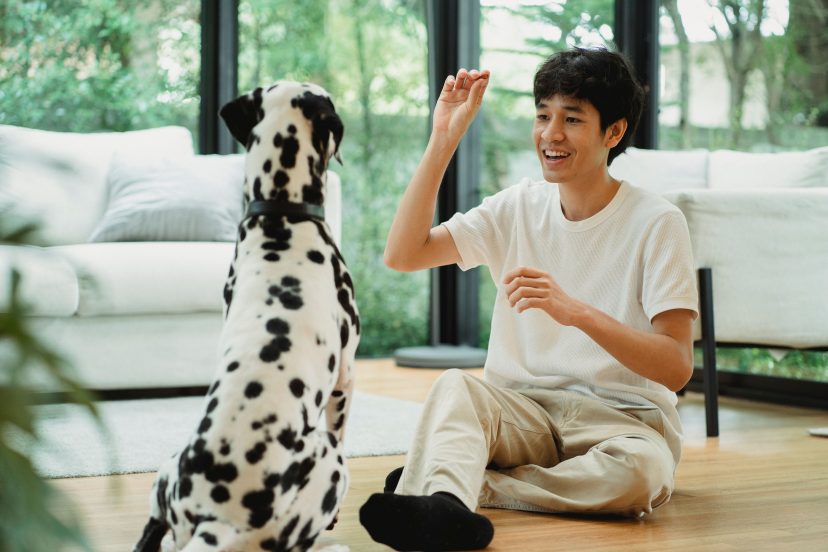
To teach a hand target, hold your open palm near your dog’s nose. When they voluntarily touch it, mark the moment with a word such as “yes,” then offer a reward. Repeat before gradually moving your hand to different positions.
Keep sessions to a few minutes initially. If your dog begins wandering away or appears confused, simplify the task or take a break.
4. Play Gentle Indoor Fetch or Tug
A controlled game of fetch or tug can provide a physical outlet without turning the living room into a racetrack. Select a clear area with good traction and use a soft ball or a suitable tug toy.
Roll the ball across the floor rather than tossing it into the air.
For tug, keep the toy low and let your dog pull voluntarily. Avoid jerking their neck, lifting them off the ground, or treating the game as a contest of strength. Pause regularly and reward a voluntary release. End play if your dog becomes difficult to manage or starts grabbing clothing.
5. Organize a Family Hide-and-Seek Game
Hide-and-seek encourages your dog to explore the house while practicing coming when called.
Ask another adult to stay with your dog while you hide somewhere easy, such as behind an open doorway. Call your dog once and reward them warmly when they locate you.
If you’re playing alone, use a familiar stay cue only if your dog is comfortable with it. Avoid closing your dog in another room if separation causes distress.
Why Dogs Still Need Enrichment When It Rains
A walk offers more than exercise. It allows dogs to investigate their surroundings, encounter different smells, and make choices about what to explore. A day spent inside removes many of those opportunities.
Enrichment means providing appropriate experiences that allow your dog to engage in meaningful behaviors, such as sniffing, searching, chewing, and playing.
Alternating active games with quieter activities gives your dog different ways to spend the day. Observe what your dog chooses rather than insisting on a particular game.
How to Prepare a Safe Indoor Play Area
Before beginning, move breakable objects, secure loose cables, and keep children away from the immediate play area during energetic games. Use a nonslip rug on smooth flooring to give your dog better footing.
Avoid activities that require repeated jumping, sharp turns, or racing up and down stairs. Choose toys your dog cannot easily swallow, and remove anything that develops cracks, loose fabric, or detached pieces.
In households with several dogs, offer food puzzles separately, particularly if any dog has a history of guarding food or toys.
Choosing Activities for Puppies, Adults, and Senior Dogs
Puppies benefit from brief, straightforward sessions that allow plenty of time for naps. Introduce easy scent searches and reward simple behaviors without expecting prolonged concentration.
Healthy adult dogs may enjoy a combination of gentle physical play and increasingly challenging puzzles.
Senior dogs often do well with accessible scent games and stationary food puzzles. Avoid asking them to repeatedly sit, stand, or turn if those movements appear uncomfortable. Dogs with joint disease, breathing problems, injuries, or prescribed exercise restrictions need activities approved by their veterinarian.
Indoor Activities for Dogs on Rainy Days in Small Apartments
Living in an apartment doesn’t mean your dog has to spend the day staring out the window.
Use a towel puzzle near your dog’s bed, hide kibble in accessible corners, or practice hand targeting beside the sofa. Rotate a few toys so that the same options aren’t constantly available.
If you share walls with neighbors, choose quiet games rather than encouraging prolonged barking or repeatedly bouncing hard toys.
Helping Your Dog Cope With Thunderstorms
Not every dog wants to play during heavy rain. Thunder, sudden flashes of light, and unfamiliar noises can make some dogs too frightened to engage with toys or food.
Offer access to a familiar resting area where your dog can retreat voluntarily. Close curtains if flashes are disturbing them, and consider gentle background sound if they find it reassuring.
If your dog refuses treats, trembles, or tries to escape, stop the game. Repeated or severe storm anxiety warrants veterinary guidance.
Building a Balanced Rainy-Day Schedule
Spread activities across the day instead of attempting to compensate for a missed walk with one exhausting session. Start with a short scent search in the morning, follow with a trick session around midday, and offer gentle play later.
Use part of dinner for a feeding puzzle, then allow uninterrupted rest.
A consistent dog daily routine helps you maintain familiar patterns even when the weather changes. Take short outdoor toilet trips when conditions are safe. Indoor play supplements regular walks; it doesn’t permanently replace outdoor exploration or appropriate exercise.
Recommended Products for Indoor Activities for Dogs on Rainy Days
KONG Classic Stuffable Rubber Dog Toy
Best for: Food-based enrichment and average chewers.
The hollow center of this natural rubber toy holds kibble or suitable soft food, allowing dogs to work for part of a meal. Its reusable design makes it practical for regular indoor enrichment. Select the size according to the manufacturer’s guidance, and consider a different rubber formulation if your dog is a particularly powerful chewer.
Nina Ottosson by Outward Hound Dog Brick Interactive Dog Puzzle
Best for: Dogs ready for intermediate puzzles.
This Level 2 feeder combines sliding compartments, hinged covers, and removable pieces that conceal food. You can leave some covers open initially, then introduce more obstacles as your dog learns. The removable components require supervision, especially for dogs that prefer chewing plastic over searching for treats. Wash the puzzle by hand after use.
Chuckit! Indoor Ball
Best for: Controlled fetch in a clear living area.
This lightweight ball features a soft chenille covering and a core designed to limit the impact of its bounce. It offers a gentler alternative to hard outdoor balls when playing near furniture. Roll it rather than launching it across the room, and remove it if your dog starts shredding the fabric.
Outward Hound Hide A Squirrel Plush Puzzle Toy
Best for: Dogs that enjoy searching for squeaky toys.
The plush trunk holds removable squeaky squirrels that dogs can investigate and retrieve. Unlike food puzzles, this game doesn’t require extra calories, making it useful for dogs whose food intake is closely managed. Select a size appropriate for your dog and supervise play closely, particularly if your pet tends to dismantle stuffed toys.
West Paw Bumi Tug Toy
Best for: Gentle, interactive tug sessions.
The curved, flexible Zogoflex toy stretches as dogs pull, giving both you and your pet a place to grip during play. Its dishwasher-safe construction makes cleanup straightforward. West Paw designs the Bumi for gentle chewers, so it is better suited to shared games than prolonged chewing by dogs that destroy toys.
What Research Reveals About Canine Mental Stimulation
A 2019 study by Charlotte Duranton and Alexandra Horowitz, Let me sniff! Nosework induces positive judgment bias in pet dogs, compared dogs participating in scent work with dogs practicing heelwork over two weeks. The nosework group subsequently approached an ambiguous food-bowl location more readily, suggesting a more positive emotional outlook.
The study was small, and this behavioral measure cannot establish exactly how every dog feels.
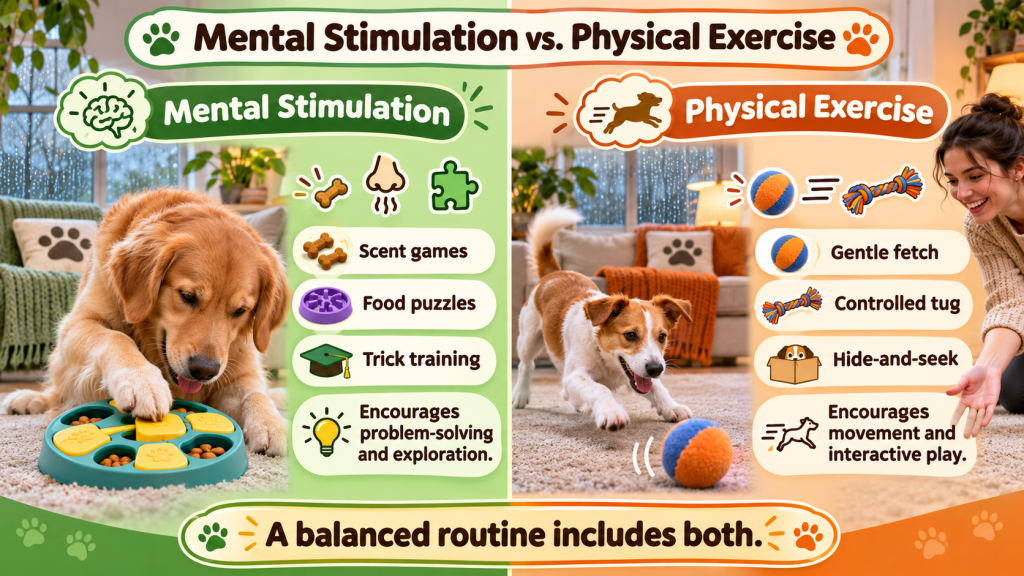
Veterinary guidance from VCA Animal Hospitals on enrichment and activity toys recommends matching puzzle difficulty to the individual animal and offering appropriate opportunities to forage. Together, these findings support incorporating enjoyable, manageable scent and food searches into a dog’s routine rather than relying exclusively on vigorous exercise.
Frequently Asked Questions About Rainy-Day Dog Activities
How long should I play with my dog indoors?
Start with five to ten minutes of an activity and adjust according to your dog’s interest, fitness, and age. Puppies and older dogs may benefit from shorter sessions. There is no universal daily indoor exercise target that suits every dog, so include breaks and maintain their normal rest schedule.
Can mental stimulation replace a daily walk?
Mental stimulation can compensate for some missed opportunities to explore during bad weather, but it cannot fully replace regular walks. Outdoor activity offers movement, environmental variety, and bathroom opportunities. Resume your dog’s normal exercise routine once conditions improve, provided their health allows it and outdoor conditions are safe.
What can I use if I don’t have dog toys?
Your dog’s usual kibble, an open cardboard box, or a clean towel can provide a simple supervised search activity. Remove tape, staples, and other potential hazards before using cardboard. Avoid materials your dog is likely to swallow, and stop the activity if they begin tearing off pieces.
How can I entertain my dog while working from home?
Offer an appropriate food puzzle during a supervised work break, then schedule another short interaction later. Dogs also need time to sleep without interruption. If you’re unable to supervise a new toy or one with removable components, put it away until you can watch your dog’s interaction with it.
Is it safe to take my dog outside in light rain?
Light rain is generally manageable for many healthy dogs if temperatures and footing are suitable. Keep outings comfortable, dry your dog afterward, and respect their reluctance to go outside. Avoid thunderstorms, flooding, and dangerous winds. Dogs with health conditions or poor temperature tolerance may require additional precautions.
Conclusion: Make Rainy Days Enjoyable for Your Dog
The most useful indoor activities for dogs on rainy days combine opportunities to move, think, and interact without demanding more than your dog can comfortably manage. A few hidden pieces of kibble, a short training session, or a gentle game of tug can make an otherwise uneventful afternoon more interesting.
For a reusable feeding activity, the KONG Classic offers a straightforward starting point. Dogs that enjoy retrieving toys may prefer the Chuckit! Indoor Ball, provided there is enough clear floor space.
You don’t need to keep your dog occupied every moment. Make time for bathroom breaks, fresh water, and uninterrupted naps. Start with one activity your dog enjoys, introduce variety gradually, and return to regular outdoor exercise when the weather permits.