Cold Symptoms in Dogs: Signs, Causes, Home Care, and When to Call the Vet

We may earn a commission for purchases made using our links. Please see our disclosure for more details.
A sneeze here or a little nasal drip there can make any dog owner wonder whether their pup has caught a cold. Cold symptoms in dogs can include coughing, sneezing, watery eyes, nasal discharge, tiredness, and reduced appetite, but those signs do not point to one illness. Kennel cough, canine influenza, airway irritation, allergies, pneumonia, and other problems can look similar.
This guide explains what to watch for, what mild cases may need at home, when veterinary care should not wait, and which simple supplies can make monitoring and comfort easier. The goal is to help you make a better-informed next decision.
What Cold Symptoms in Dogs Usually Look Like
Common cold symptoms in dogs include sneezing, a runny nose, watery eyes, coughing, mild lethargy, and eating less than usual. Some dogs still act normal between coughing fits, while others want more sleep. These are common respiratory signs, but they are not specific to one disease.
Consider the overall situation instead of focusing on just one symptom. Clear discharge with normal breathing is very different from thick yellow-green discharge, a wet cough, or labored breathing. A short video of coughing can also help your veterinarian evaluate what is happening.
Why Dogs Get Cold-Like Respiratory Signs
Dogs do not simply catch the same “common cold” people pass around. Cold-like signs can come from canine respiratory infections, including organisms involved in canine infectious respiratory disease complex, often called kennel cough. Canine influenza can cause a similar mix of coughing, sneezing, fever, nasal discharge, low energy, and poor appetite.
Smoke, aerosol sprays, heavy dust, and strong fragrances may also trigger coughing or sneezing. Allergies, a nasal foreign body, heart disease, tracheal problems, and pneumonia can mimic infection, so persistent cold symptoms in dogs deserve more attention than the label “just a cold.”
Cold Symptoms in Dogs vs. Kennel Cough, Flu, and Allergies
Kennel cough often produces a sudden, harsh, dry “honking” cough, sometimes followed by gagging. Canine influenza may cause a dry or moist cough along with nasal discharge, fever, lethargy, and poor appetite. Allergies more often cause recurring sneezing, itchiness, watery eyes, or clear discharge.
Even so, the sound by itself is not enough to determine the cause. If cold symptoms in dogs appear after boarding, daycare, grooming, dog-park visits, or another high-contact setting, tell your veterinarian. That exposure history can help narrow the cause.

When Cold Symptoms in Dogs Need Veterinary Care
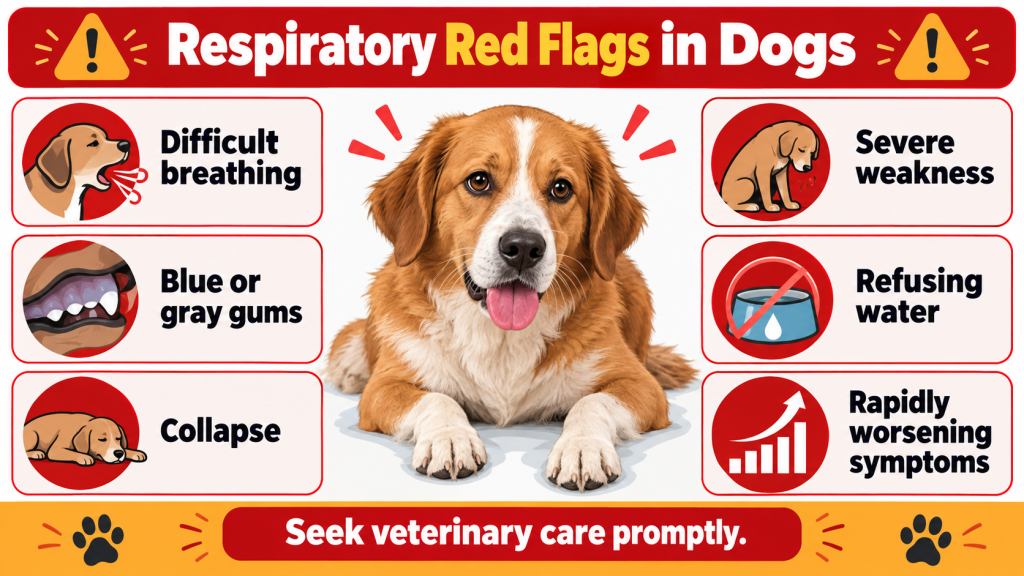
Call your veterinarian promptly if your dog has difficulty breathing, rapid or labored breathing at rest, bluish or gray gums, marked weakness, collapse, refuses water, or seems substantially worse. A wet cough, fever, thick or colored nasal discharge, and loss of appetite also raise concern for a more complicated illness.
Puppies, older dogs, brachycephalic breeds, and dogs with heart, lung, or immune problems deserve a lower threshold for care. Even when cold symptoms in dogs seem mild, seek advice if they persist, intensify, or keep returning.
How Veterinarians Diagnose Respiratory Symptoms
A veterinarian usually starts with your dog’s history, recent exposure to other dogs, vaccination status, temperature, breathing pattern, heart and lung sounds, and the character of the cough or discharge.
When signs are severe, unusual, or slow to improve, testing may include chest X-rays, blood work, or respiratory samples for PCR. Those tests can help distinguish uncomplicated upper-airway disease from pneumonia, influenza, or another problem needing different treatment.
Safe At-Home Care for Mild Respiratory Signs
For a bright, alert dog with mild signs and no breathing difficulty, supportive care may include rest, fresh water, normal meals if tolerated, and a comfortable indoor space away from smoke or strong scents. A clean cool-mist humidifier may help prevent dry air from adding irritation.
Keep walks short and calm. A harness may be more comfortable than pressure from a collar. If hydration is a concern, make water easy to reach; this dog food and water dispenser guide can help you choose a practical setup for dependable access to water.
What Not to Give a Dog With Cold-Like Symptoms
Do not improvise with human cold medicine. Multi-symptom products may contain acetaminophen, ibuprofen, decongestants, antihistamines, cough suppressants, or sweeteners that can be dangerous for dogs depending on the ingredient and dose. The FDA specifically cautions against giving human pain relievers without veterinary direction.
Do not use leftover antibiotics or another pet’s prescription either. If cold symptoms in dogs are uncomfortable enough that you are considering medication, ask your veterinarian what is appropriate for that specific dog.
How to Reduce Spread to Other Dogs
If an infectious respiratory illness is possible, keep your dog away from dog parks, daycare, boarding, shared bowls, and nose-to-nose greetings until your veterinarian says social contact is reasonable again. Respiratory pathogens can spread through droplets and contaminated surfaces.
Wash bowls, bedding, and frequently handled gear. In a multi-dog home, separate food and water bowls and give the sick dog a quiet recovery area when practical.

Recommended Products for Cold Symptoms in Dogs: Monitoring and Comfort
Products cannot diagnose or cure cold symptoms in dogs, but a few practical items can make monitoring, hydration, humidity, and rest easier while you follow veterinary guidance.
| Product | Best for | Main practical feature |
| iProven Dog & Cat Thermometer | Temperature monitoring | Flexible-tip digital reading |
| Levoit 2.5L Top Fill Humidifier | Dry indoor air | Cool mist with top-fill tank |
| PetSafe Healthy Pet Water Station | Easy water access | Gravity-fed stainless-steel bowl |
| Furhaven Orthopedic Dog Bed | Rest and washable comfort | Removable washable cover |
| K&H Self-Warming Crate Pad | Drafty resting areas | Non-electric heat-reflective pad |
iProven Dog & Cat Thermometer for Fast and Accurate Fever Detection
Best for: Owners who want objective temperature monitoring
This waterproof digital pet thermometer has a flexible tip, memory function, and roughly 20-second reading time. It can give your veterinarian useful information instead of relying on whether your dog “feels warm.” Rectal temperature-taking requires calm handling and proper technique, so ask your veterinary team to demonstrate it if you are unsure.
Levoit Top Fill Humidifiers for Bedroom, 2.5L Tank for Large Room, 28dB
Best for: Homes with dry air and irritated upper airways
This cool-mist unit uses a 2.5-liter top-fill tank and is designed for easy refilling and cleaning. It suits owners who want gentle humidity near a resting area. Keep mist from blowing directly into your dog’s face, skip essential oils, and clean the tank regularly to reduce microbial buildup.
PetSafe Healthy Pet Water Station, 320 oz, Stainless Steel Bowl, Large
Best for: Multi-dog homes or owners who want water readily available
This gravity-fed station uses a large reservoir and removable stainless-steel bowl that is dishwasher safe. Its capacity can reduce refill frequency during recovery. However, it does not replace watching intake; if your sick dog suddenly drinks far less than normal, contact your veterinarian.
Furhaven Orthopedic Dog Bed for Large/Medium Dogs, Faux Fur & Velvet Sofa, Driftwood Brown, Large
Best for: Dogs that need a soft, washable resting spot
This sofa-style bed has an egg-crate foam base, removable bolsters, and a removable washable cover. A dedicated bed can give a coughing dog a calm place to rest. Choose the size carefully, and remember that comfort supports recovery but does not treat the underlying respiratory illness.
K&H Crate Pad, Self-Warming Crate Pad, Adjustable Fit, Large 37x25in, Gray
Best for: Dogs resting in cooler rooms without electric heat
This machine-washable pad reflects a pet’s own body heat and needs no electrical cord. It can make a crate or floor-level sleeping area feel less chilly. Treat it as a comfort item, not a fever remedy, and do not add warmth if your dog is overheated or breathing hard.
Research-Backed Guidance on Canine Respiratory Illness
The Merck Veterinary Manual review of respiratory signs lists coughing, sneezing, nasal discharge, rapid breathing, and labored breathing among important respiratory clues.
Merck’s canine influenza guidance, last updated in 2025, reports that approximately 80% of exposed dogs develop a mild infection; severe cases can include high fever, pneumonia, and secondary bacterial infection.
The U.S. FDA animal-drug guidance warns that common human pain relievers can be processed differently by dogs and may cause gastrointestinal, liver, or kidney injury.
Finally, the AAHA canine vaccination guidelines treat Bordetella and canine influenza vaccination as risk-based decisions tied to lifestyle and exposure rather than one-size-fits-all recommendations.
Special Considerations for Puppies, Seniors, and Flat-Faced Dogs
Puppies have less mature immune defenses, while seniors and dogs with chronic disease may have less reserve if a respiratory infection worsens. Flat-faced breeds can already have narrower upper airways, so congestion or inflammation may affect them more noticeably.
For these dogs, seek veterinary advice earlier rather than waiting several days if cold symptoms in dogs affect breathing, appetite, hydration, or energy.
How Long Recovery Usually Takes
Recovery depends on the cause. Uncomplicated kennel cough often improves within one to three weeks, although coughing may linger after the dog otherwise seems brighter. Canine influenza can also cause coughing for several weeks.
Watch the trend. Gradual improvement is reassuring. A dog that improves and then becomes lethargic, feverish, or develops a wet cough should be reassessed because complications can occur.
Preventing Future Respiratory Infections
No plan removes all risk, but you can lower exposure. Keep your dog’s regular vaccines up to date, and check with your veterinarian about whether Bordetella or canine influenza vaccines make sense based on your dog’s travel, daycare, boarding, or daily routine.
Avoid close contact with visibly coughing dogs, do not share bowls in group settings, and choose facilities with clear illness and sanitation policies. Good ventilation and avoiding smoke or aerosol irritants also support respiratory comfort.
Frequently Asked Questions
Can dogs catch a cold from people?
Dogs can develop cold-like respiratory illness, but the usual canine causes differ from the viruses behind most human common colds. If both you and your dog are sick at the same time, do not assume one caused the other. Focus on your dog’s signs and contact a veterinarian if coughing, fever, breathing changes, or lethargy become significant.
What are the first cold symptoms in dogs?
Early cold symptoms in dogs may include sneezing, clear nasal discharge, watery eyes, mild coughing, reduced energy, or a small drop in appetite. Those signs are not specific enough to identify the cause. Watch breathing closely, note recent contact with other dogs, and track whether symptoms are improving or becoming more frequent.
Can dogs safely take human cold medicine?
Only give it if your veterinarian has specifically recommended that medication and provided the correct dosage. Human cold and flu products may combine decongestants, pain relievers, antihistamines, or cough suppressants. Some can harm dogs. Bring the exact product label to your veterinarian if you are asking whether something is appropriate.
Should I use a humidifier for a dog with a cough?
A clean cool-mist humidifier may make a dry room more comfortable, but it does not treat the underlying cause. Keep the device clean, use plain water as directed, and avoid essential oils. If your dog has breathing difficulty, fever, low energy, or a worsening cough, seek veterinary care.
What signs suggest that my dog’s cough may be serious?
A cough needs urgent attention when it comes with difficult breathing, blue or gray gums, collapse, marked weakness, or obvious distress. Call your veterinarian promptly for a wet cough, persistent fever, thick nasal discharge, poor appetite, or worsening lethargy. A video plus notes about duration and recent dog exposure can help.
Conclusion: What to Do When Your Dog Has Cold Symptoms
Most cold symptoms in dogs are easier to manage when you focus on breathing, overall behavior, and whether the illness is improving. A mildly sneezy dog that is eating, drinking, and breathing comfortably is different from one with fever, colored discharge, weakness, or labored breathing.
For mild cases, rest, fresh water, a clean environment, and appropriate humidity can support comfort. Tools such as the iProven thermometer or Levoit humidifier can make monitoring and the recovery space easier, but they do not replace a diagnosis. If signs persist, worsen, or involve breathing difficulty, contact your veterinarian rather than trying human medication or waiting for a “cold” to run its course.