Dog Crate Training: How To Get Your Pup To Love Their Crate
We may earn a commission for purchases made using our links. Please see our disclosure for more details.
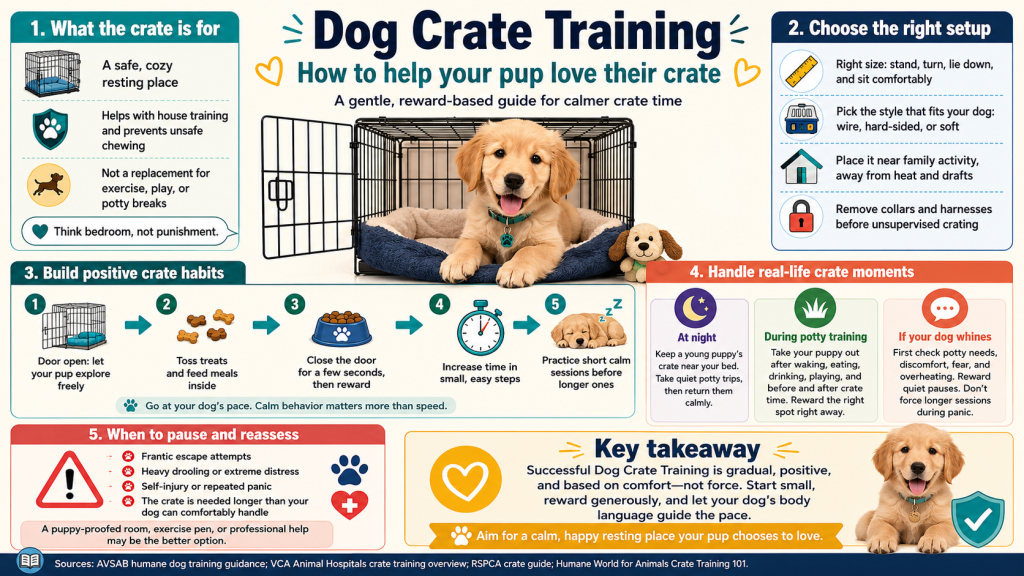
A crate can become your puppy’s favorite nap spot, but it does not happen simply because you close the door and hope for the best. Successful Dog Crate Training is a gradual process that teaches your pup that the crate predicts comfort, treats, rest, and safety—not isolation or punishment. The right setup matters, but your timing and your dog’s emotional response matter even more.
This guide explains how to choose an appropriate crate, introduce it without pressure, build calm duration, handle whining, and use confinement responsibly during potty training. You will also find carefully selected products for different homes, budgets, and travel needs, plus clear signs that a crate may not be suitable for your dog.
What Dog Crate Training Should Accomplish
The goal is not to make your dog tolerate being locked away. It is to create a predictable resting place where your pup can relax during everyday routines.
A crate can support house training and prevent unsafe chewing, but it cannot replace exercise, social contact, bathroom breaks, enrichment, or training. Think of it as your dog’s bedroom, not a storage locker.
Choose the Right Crate Size and Style
Your dog should be able to stand naturally, turn around, lie on their side, and sit without ducking. Measure their length and height, then add modest clearance.
Wire crates with dividers suit growing puppies. Hard-sided kennels feel more enclosed and often travel well. Soft crates are lighter but best for dogs that already settle calmly and do not chew fabric. An oversized crate may let a puppy toilet at one end and sleep at the other.
Set Up the Crate for Comfort and Safety
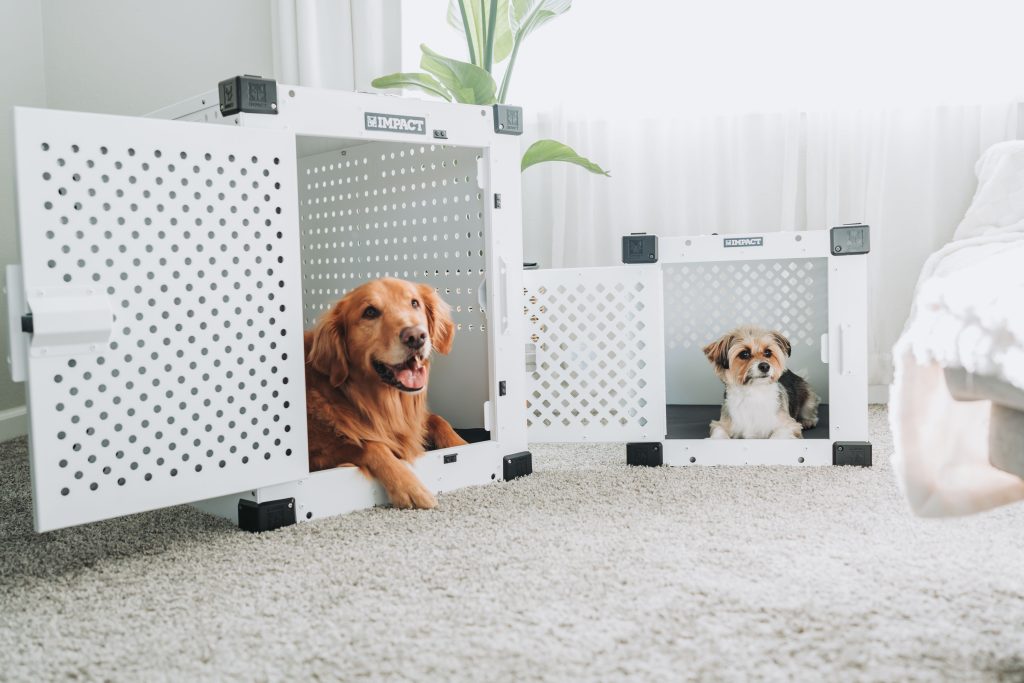
Place the crate near family activity but away from heat, drafts, and constant foot traffic. Start with a washable mat or a bare tray if your puppy shreds bedding.
Remove collars, harnesses, and dangling tags before unsupervised crating because they can catch on hardware. Offer only size-appropriate chews. If you add a cover, block just part of the crate, preserve airflow, and watch whether your dog actually relaxes.
Start With an Open-Door Introduction
Secure the door open so it cannot swing and startle your pup. Scatter treats near the entrance, then gradually place them farther inside. Let your dog investigate and leave freely.
Never push or drag them in; that can turn a neutral box into a tiny haunted house. Repeat several short sessions daily. Add a cue such as “crate” only after your dog is already entering reliably and comfortably.
Use Meals and Rewards to Build Value
Feed meals near the entrance, then move the bowl farther inside as your dog gains confidence. If they stop eating, make the step easier.
You can also toss treats into the crate or offer a stuffed food toy with the door open. The lesson is that good things happen there and entering does not always mean confinement. Use part of your dog’s normal food allowance to avoid quietly serving a second dinner.
Teach the Door to Close Without Panic
While your dog is eating, move the door slightly and reopen it. Progress to closing it for one second, delivering a treat, and opening it again.
Build slowly from seconds to short intervals. Stay nearby at first, then stand and take a step away. Loose posture, normal breathing, and interest in food suggest comfort. Frantic scratching, heavy drooling, repeated escape attempts, or refusing favorite treats means the session is too difficult.
Increase Crate Time in Small Steps
Add time like a dimmer switch, not an on-off button. Mix easy repetitions with slightly longer ones instead of making every session harder.
Give your dog a bathroom break and suitable activity before crating. Practice while you are home, then briefly leave the room and eventually step outside. A camera can reveal whether your dog settles after you go. There is no universal maximum; age, health, bladder control, temperature, exercise, and emotional comfort all matter.
Handle Nights and Early-Morning Wake-Ups
When crate training a puppy at night, place your young puppy’s crate beside your bed so you can hear stirring before it becomes full-volume opera.
Very young puppies may need several overnight outings. If crying becomes prolonged or escalates, check for toilet needs and fear rather than assuming stubbornness. Move the crate closer or shorten the interval while continuing positive daytime practice.
Use the Crate During Potty Training
A crate can support potty training, but it does not replace a reliable bathroom schedule. Take puppies out after waking, eating, drinking, playing, and before and after confinement.
Reward them right away when they go to the bathroom in the right place. If an accident occurs, clean it with an enzymatic cleaner and shorten the next interval. Accidents often mean the schedule was too ambitious, the crate was oversized, or a medical issue needs attention—not that your puppy deserves punishment.
Fix Whining, Barking, and Refusal
First rule out toilet needs, pain, hunger, overheating, and fear. If the crate appears only when everyone leaves, rebuild its value with open-door meals, games, and calm sessions while you stay nearby.
Reward quiet pauses, but do not wait through intense panic merely to avoid “rewarding” noise. Repeated escape attempts, self-injury, heavy drooling, or distress triggered by departure cues may indicate separation-related or confinement anxiety. Stop extending sessions and seek professional guidance.
Know When Crating Is Not the Right Tool
Some dogs are safer in a puppy-proofed room, exercise pen, or gated area. Seniors with pain, dogs recovering from certain conditions, and animals with a history of confinement panic may need another arrangement.
If your schedule requires longer confinement than your dog can comfortably manage, arrange a walker, sitter, day care, or larger safe space. When a dog bends bars, breaks teeth, bloodies paws, or repeatedly escapes, do not simply buy a stronger cage. Ask your veterinarian and a qualified reward-based behavior professional for help.
Recommended Products for Dog Crate Training
The best choice depends on your dog’s size, chewing behavior, training stage, and where the crate will be used. Measure your dog and confirm the product variation before ordering.
| Product | Best use | Type | Main trade-off |
| MidWest iCrate | Large-breed puppy setup | Wire | Can rattle during transport |
| DIGGS Revol | Premium home setup | Wire and reinforced frame | Heavy and expensive |
| Petmate Vari Kennel | Hard-sided travel and den-like rest | Plastic | Less open visibility |
| Lesure Soft Collapsible Crate | Portable use with trained dogs | Soft-sided | Not suitable for determined chewers |
| KONG Puppy | Positive crate enrichment | Stuffable rubber toy | Must be correctly sized and supervised initially |
MidWest Homes for Pets 42-Inch Two-Door iCrate Folding Dog Crate with Divider Panel, Leak-Proof Tray & Secure Latches
Best for: Budget-conscious owners of large-breed puppies
This folding wire crate includes two-door access, a divider panel, a removable plastic pan, and protective rubber feet. The adjustable interior suits a growing dog, while the second door offers flexible room placement. It is functional rather than decorative, and wire construction may rattle when moved or used in a vehicle.
DIGGS Revol Collapsible Dog Crate with Wheels, Smoke, Medium
Best for: Premium home setups
The Revol combines a collapsible design with built-in wheels, a removable tray, front and side access, and a top hatch. Its medium version is designed for many medium dogs and includes a puppy divider. The polished design suits visible living spaces, but its substantial weight and premium cost make it less appealing for frequent lifting.
Petmate Vari Dog Kennel, 32 Inches, Taupe and Black
Best for: Dogs that prefer a more enclosed crate
This hard-sided plastic kennel provides ventilation around the body, a wire door with a squeeze latch, and an interior moat intended to help keep pets away from moisture. Its enclosed walls can reduce visual stimulation. It is useful for home and travel, although transport rules vary, so confirm carrier requirements directly with your airline or transport provider.
Lesure Collapsible Dog Crate, 36 Inches, Light Gray
Best for: Portable use with crate-trained dogs
This soft-sided crate folds for storage and uses four zippered mesh panels for ventilation, visibility, and multiple entry points. A carrying bag and light construction suit visits or trips. It is not the safest first crate for puppies that scratch, chew fabric, test zippers, or panic when confined.
KONG Puppy Natural Teething Rubber Chew Toy, Small
Best for: Building a positive crate routine
The puppy version uses a softer rubber formula intended for growing teeth and can be stuffed with suitable food to create calm crate enrichment. It works well for short training sessions and settling practice. Choose the correct size, inspect it regularly, and consider a tougher formula later if your dog becomes a powerful chewer.
What Research and Expert Guidance Support
The American Veterinary Society of Animal Behavior’s humane training statement recommends reward-based methods for dog training and behavior modification. Applied to crate work, that means reinforcing voluntary entry and calm behavior rather than using intimidation, forced confinement, or punishment.
VCA Animal Hospitals’ veterinary guidance on crate training likewise recommends positive reinforcement, exercise, and a bathroom opportunity before training. The RSPCA’s crate-training guide emphasizes that a crate should be a safe haven, never a punishment, and should be introduced in gradual stages.
Evidence specifically defining one perfect crate schedule is limited because dogs differ widely. Professional guidance is more consistent on the principles: progress gradually, monitor body language, avoid prolonged confinement, and seek veterinary or behavior support when panic appears. Humane World for Animals also warns that a dog should not spend most of their life in a crate.
Dog Crate Training FAQs
How long does Dog Crate Training take?
Some puppies begin entering willingly within a few days, while comfortable closed-door duration may take weeks. Adult rescue dogs or dogs with negative confinement experiences may need longer. Progress depends on temperament, history, repetition, and how carefully you avoid pushing past distress. Judge success by relaxed behavior rather than a fixed calendar.
Should I let my puppy cry in his crate?
Brief fussing can occur, but sustained or escalating crying should prompt a check for toilet needs, discomfort, fear, or overly difficult training. Do not use a “cry it out” approach during obvious panic. Make the next repetition shorter and easier, and seek professional help if vocalizing comes with drooling, escape attempts, or self-injury.
Can my dog sleep in a crate every night?
Yes, many dogs can sleep comfortably in a properly sized crate once they are trained and their physical needs are met. The door does not necessarily need to remain closed forever. Adult dogs that are trustworthy at night may eventually prefer an open crate, dog bed, or another safe sleeping area.
Should food and water go inside the crate?
Food can be useful for building a positive association, especially during short training sessions. Water needs depend on duration, age, health, temperature, and veterinary advice. A secured bowl may reduce spills. Never restrict water simply to avoid accidents, particularly in hot conditions or for dogs with medical needs.
Can dog crate training relieve separation anxiety?
A crate may help a dog who already feels safe there, but it does not treat separation anxiety by itself. For some dogs, confinement intensifies panic and increases injury risk. If distress begins when you prepare to leave, or continues despite gradual training, consult your veterinarian and a qualified behavior professional before extending crate time.
Final Dog Crate Training Recommendation
Good Dog Crate Training is built on choice, repetition, and sensible expectations. Start with the correct size, place the crate near family life, reward voluntary entry, and close the door in tiny increments. A practical wire option such as the MidWest iCrate suits many growing puppies, while the Petmate Vari Kennel may work better for dogs that settle in a more enclosed space.
Choose a premium or portable model only when its trade-offs fit your routine. More importantly, let your dog’s behavior guide the pace. Calm eating, resting, and easy recovery signal progress; frantic escape behavior signals that you need to step back. Used thoughtfully, a crate can become a comfortable resting place—not a shortcut for managing a dog’s entire day.