
7 Non-Toxic Pet-Safe House Plants
We may earn a commission for purchases made using our links. Please see our disclosure for more details.
You want a cozy home full of greenery. Your cat wants to chew the greenery like it owes them money. Your dog may not care at first, but give them one bored afternoon and suddenly your plant stand becomes a salad bar.
So it’s important to choose houseplants that are safe for pets. Plants can make your space feel calmer, fresher, and more alive, but not every pretty leaf belongs in a pet-friendly home.
In this guide, you will learn which non-toxic houseplants are better choices for homes with cats and dogs, how to style them safely, what to avoid, and which Amazon products can help you build a greener home without turning your living room into a vet bill waiting to happen.
Affiliate Disclosure: As an Amazon Associate, I may earn from qualifying purchases at no extra cost to you.
Why Pet-Safe House Plants Matter
Pets explore the world with their mouths. Cats nibble leaves. Puppies chew stems. Even older dogs sometimes investigate plants because, apparently, furniture and shoes were not enough drama.
Some common houseplants can irritate the mouth, upset the stomach, or cause serious poisoning. The tricky part is that many toxic plants look harmless. A shiny leaf does not come with a warning label.
Pet-safe plants give you a better starting point. They let you enjoy indoor greenery while lowering the risk for your furry roommates.
What “Pet-Safe” Really Means
Pet-safe does not mean “your pet can eat the whole plant for dinner.” It means the plant is generally listed as non-toxic to cats and dogs.
However, too much plant material can still cause mild vomiting or loose stool. Think of it like your pet eating grass outside. It may not be poisonous, but that does not mean their stomach will applaud.
So the goal is simple:
- Choose non-toxic plants.
- Keep plants out of easy chewing range.
- Watch curious pets closely.
- Call your vet if your pet eats something questionable.
1. Spider Plant
Spider plants are the friendly golden retrievers of the plant world. They are cheerful, easygoing, and hard to kill unless you truly commit to neglect.
They have long, arching leaves and baby plantlets that hang down like tiny green fireworks. Cats often find them fascinating, so hanging baskets work best.
Why It Works for Pet Homes
Spider plants are listed by the ASPCA as non-toxic to both dogs and cats. They are also beginner-friendly, which is lovely if your plant history includes “I forgot it existed.”
Care tips:
- Provide indirect, strong light.
- When the top inch of soil seems dry, add water.
- Use a hanging planter if your cat is a known leaf thief.
2. Boston Fern
Boston ferns bring soft, classic greenery into your home. They look like something your grandmother would have loved, but in a stylish, “cottage-core but make it practical” way.
They are especially nice for bathrooms, kitchens, or humid corners.
Best for Humid Spaces
Boston ferns enjoy moisture and indirect light. If your bathroom has a window, this plant may feel like it won the spa package.
Care tips:
- Keep soil lightly moist.
- Mist occasionally if your air is dry.
- Avoid direct afternoon sun.
3. Parlor Palm
The parlor palm is elegant without acting precious. It gives your home a soft tropical look, but it does not demand a greenhouse, a prayer circle, or a plant science degree.
This is one of the best dog-friendly indoor plants for living rooms and bedrooms.
Best for Low-Light Corners
Parlor palms tolerate lower light better than many houseplants. That makes them useful for apartments, offices, and rooms that get gentle natural light.
Care tips:
- Use bright, indirect light when possible.
- Let the top soil dry out gradually in between waterings.
- Keep it in a sturdy pot so dogs do not knock it over during zoomies.
4. Prayer Plant
Prayer plants are dramatic in the best way. Their patterned leaves fold slightly at night, almost like they are tucking themselves in.
They bring color, movement, and personality without being one of those plants that punishes you for breathing wrong near it.
Best for Colorful Pet-Friendly Decor
Prayer plants work well if you want something more decorative than plain green foliage. Their leaf patterns can add warmth to desks, shelves, and side tables.
Care tips:
- Use filtered or indirect light.
- Keep soil lightly moist, not soggy.
- Avoid cold drafts.
5. African Violet
If you want flowers without panic, African violets are a sweet choice. They are compact, colorful, and perfect for windowsills or small shelves.
They also feel a little nostalgic, like a plant your auntie kept near the kitchen window and somehow always made bloom.
Best Flowering Option
Many flowering plants are risky around pets, but African violets are listed as non-toxic to cats and dogs.
Care tips:
- Give bright, indirect light.
- Water from the bottom when possible.
- Avoid soaking the fuzzy leaves.
6. Money Tree
The money tree is popular for good reason. It has a braided trunk, glossy leaves, and a calm, polished look that works in modern homes.
It also has a symbolic charm in many cultures, where it is associated with luck, abundance, and positive energy. Even if you are not superstitious, it still looks great beside a sofa.
Best Statement Plant
A money tree is a nice choice when you want height and presence without choosing a risky plant like a sago palm.
Care tips:
- Place in bright, indirect light.
- Water should be added once the top few inches of soil are dry.
- To ensure even growth, rotate the pot.
7. Peperomia
Peperomia plants are small, sturdy, and adorable. Many varieties have thick, rounded leaves that look almost like tiny green coins or raindrops.
They work well for small spaces like desks, shelves, and apartments.
Best for Small Spaces
Peperomia is a lovely option if you want safe houseplants for pets but do not have room for big floor plants.
Care tips:
- Give medium to bright indirect light.
- Let soil dry between watering.
- Avoid overwatering because the roots dislike soggy soil.
Plants Pet Owners Should Avoid
Now for the “nope shelf.” Some plants are beautiful but risky for pets.
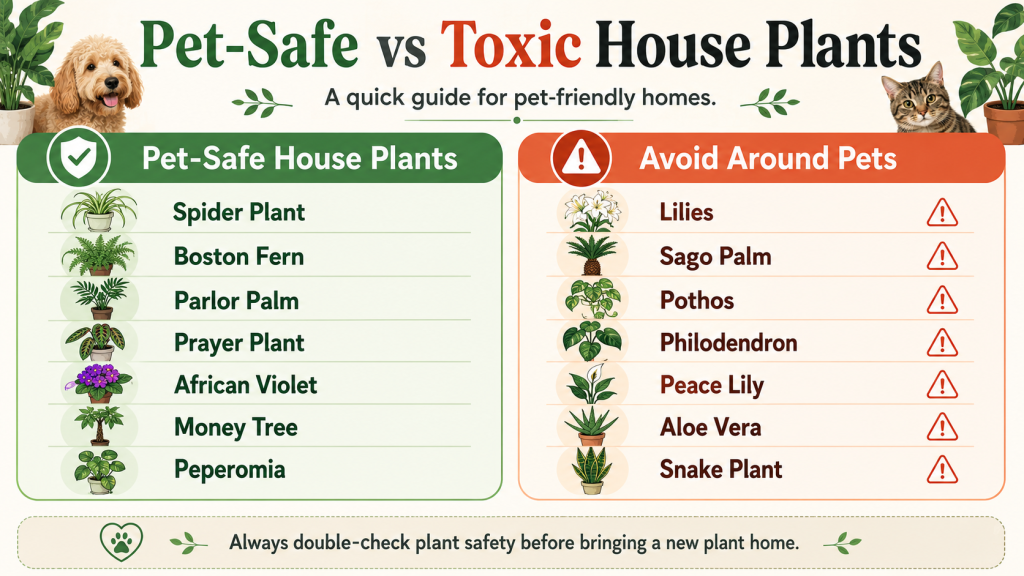
Avoid keeping these where cats or dogs can reach them:
- Lilies
- Sago palm
- Pothos
- Philodendron
- Peace lily
- Aloe vera
- Snake plant
- Dieffenbachia
- ZZ plant
- Tulips and daffodils
Lilies deserve extra caution for cat owners. Cornell Feline Health Center warns that lilies can cause life-threatening kidney failure in cats, even in very small amounts.
How to Choose the Right Plant for Your Pet
Before you buy a plant, ask yourself one honest question: “Will my pet treat this like decor or dinner?”
If your cat climbs everything, skip trailing plants at eye level. If your dog bumps into tables, choose heavy pots. If you have a kitten, assume chaos and plan accordingly.
Quick Buying Checklist
Look for:
- Non-toxic plant status
- Sturdy pot
- Proper drainage
- Safe placement
- No sharp leaves
- No toxic soil additives within pet reach
Where to Place Pet-Safe House Plants
Placement matters as much as plant choice. A non-toxic plant on the floor may still become a chew toy.
Try these safer spots:
- Hanging baskets
- Tall plant stands
- Wall shelves
- Closed sunrooms
- Pet-free home office corners
- High windowsills for small pots
Think of plant placement like toddler-proofing, except the toddler can jump six feet and stare at you while doing it.
Simple Care Tips for Pet-Friendly Indoor Plants
Healthy plants are less messy and less tempting. Droopy, crispy leaves fall off and become instant pet snacks.
Keep your plants happy with a simple routine:
- Check soil once a week.
- Remove dead leaves quickly.
- Avoid overwatering.
- Dust leaves gently.
- Rotate plants for even growth.
- Keep fertilizers sealed away from pets.
A consistent routine also helps you notice if your pet has been nibbling.
Products for Pet-Safe Plant Homes
Here are five helpful Amazon products that fit a pet-friendly indoor plant setup. Always check availability, seller details, and current product descriptions before buying.
1. American Plant Exchange Spider Plant – 6-Inch Pot
Short description: A live spider plant in a nursery pot, ideal for beginners and pet-friendly homes.
Features:
- Live indoor houseplant
- Fast-growing trailing style
- Works in hanging baskets
- Beginner-friendly care
Use cases: Great for cat owners, apartment dwellers, and anyone who wants a low-maintenance starter plant.
2. Costa Farms Boston Fern Live Plant
Short description: A lush Boston fern that works indoors or outdoors in the right conditions.
Features:
- Large, feathery foliage
- Good for bright indirect light
- Adds soft texture to rooms
- Works well in humid areas
Use cases: Best for bathrooms, shaded patios, plant stands, and homes that need a fuller green accent.
3. Costa Farms Money Tree Live Indoor Plant
Short description: A decorative money tree with a braided trunk and polished indoor look.
Features:
- Bonsai-style houseplant
- Decorative pot
- Compact enough for desks or side tables
- Pet-friendly decor listing
Use cases: Great for home offices, living rooms, gift giving, and anyone who wants a stylish plant with height.
4. Costa Farms Live Indoor House Plants 3-Pack
Short description: A curated set of easy-care live indoor plants.
Features:
- Three live plants
- Decorative plant pots
- Low-light-friendly options
- Useful starter bundle
Use cases: Good for beginners who want multiple plants at once, though pet owners should confirm each included plant before placing it near cats or dogs.
5. Espoma Organic Indoor Plant Food
Short description: A liquid plant food made for indoor houseplants.
Features:
- Concentrated formula
- Designed for indoor plants
- Works for large and small houseplants
- Easy to mix with water
Use cases: Best for plant owners who want to support healthy growth. Store it away from pets and follow the label closely.
Research-Backed Safety Notes
The ASPCA’s toxic and non-toxic plant database lists spider plant, parlor palm, prayer plant, African violet, and money tree as non-toxic options for cats and dogs. That makes the ASPCA guide to non-toxic plants for pets one of the best references to check before bringing a new plant home.
Cornell Feline Health Center also reminds pet owners that some plants are far more dangerous than others. Their expert guidance on toxic plants and common cat hazards highlights lilies as especially dangerous for cats because of the risk of kidney failure.
For everyday pet wellness beyond plants, it also helps to build a full care routine. For example, this helpful guide on how to use a dog ear cleaner safely is a practical read if you want to keep grooming simple and comfortable.
Common Mistakes New Plant-and-Pet Owners Make
The biggest mistake is assuming “natural” means safe. Many toxic plants are completely natural. So are mushrooms, poison ivy, and cats at 3 a.m. Natural is not the same as harmless.
Other common mistakes include:
- Buying plants without checking toxicity
- Putting plants on low tables
- Ignoring fallen leaves
- Using fertilizers within pet reach
- Assuming dogs will not chew plants
- Trusting vague “pet-friendly” labels without checking the species
A little caution upfront saves a lot of stress later.
How to Stop Pets From Chewing Plants
You do not need to turn your home into a plant prison. But you do need a plan.
Try this:
- Offer cat grass for nibbling.
- Move tempting plants higher.
- Use heavier pots.
- Give bored pets more enrichment.
- Clean up fallen leaves.
- Avoid dangling plants near climbing paths.
Many pets chew because they are curious or bored. A tired, entertained pet is less likely to wage war on your fern.
Signs Your Pet May Have Eaten a Toxic Plant
Even careful owners can have accidents. Watch for symptoms such as:
- Drooling
- Vomiting
- Diarrhea
- Pawing at the mouth
- Lethargy
- Loss of appetite
- Tremors
- Difficulty breathing
- Sudden behavior changes
If you suspect plant poisoning, contact your veterinarian or a pet poison hotline right away. Do not wait to “see how it goes.”
Styling Pet-Safe Plants Without Stress
Pet-safe greenery can still look beautiful. You do not have to choose between a stylish home and a safe one.
Try grouping plants by height. Put taller plants like parlor palm or money tree in sturdy floor pots. Use spider plants in hanging baskets. Place African violets on high shelves or window ledges.
Mix textures too. Ferns add softness. Palms add height. Peperomia adds cute little detail. Together, they create a room that feels alive without feeling cluttered.
FAQs
Are Pet-Safe House Plants good for cats and dogs?
Yes, Pet-Safe House Plants are better choices for homes with cats and dogs because they are generally listed as non-toxic. Still, pets should not freely chew them, since too much plant material can upset digestion.
What are the easiest non-toxic plants for cats?
Spider plants, parlor palms, peperomia, and money trees are some of the easiest non-toxic plants for cats. They are low-maintenance and work well in many indoor spaces.
Can dogs get sick from non-toxic houseplants?
Yes, dogs can still get an upset stomach from eating too much of a non-toxic plant. Non-toxic means the plant is not known to be poisonous, not that it is meant to be eaten.
Which indoor plants should cat owners avoid completely?
Cat owners should avoid lilies, sago palm, pothos, philodendron, peace lily, aloe vera, and snake plant. Lilies are especially dangerous for cats and should not be kept in the home.
How do I make my houseplants safer around pets?
Choose non-toxic plants, use sturdy pots, place plants out of reach, clean up fallen leaves, and keep fertilizers stored away. Also, give pets safe enrichment so plants become less tempting.