Dog Walking Schedule: How Often Is Enough?
We may earn a commission for purchases made using our links. Please see our disclosure for more details.
A dog who circles the door at sunrise may seem to need endless miles, while another is ready for the couch after one quiet block. That contrast makes building a Dog Walking Schedule surprisingly confusing. How many walks are enough, how long should they last, and do bathroom trips count?
The practical answer depends on your dog’s age, health, energy, temperament, and daily environment. This guide helps you turn those factors into a realistic daily routine, spot when the plan needs adjusting, and choose useful gear. It also includes sample schedules for puppies, adults, seniors, apartment dogs, and busy households.
Affiliate disclosure: We may earn a commission from qualifying purchases made through links provided in the research notes, at no additional cost to you.
What a Good Dog Walking Schedule Actually Includes
A useful schedule balances toilet opportunities, physical activity, sniffing, training, and recovery. Separate bathroom breaks, purposeful walks, and optional higher-intensity exercise, then spread them across the day.
A predictable Dog Walking Schedule makes changes easier to notice. When a dog who normally trots ahead starts lagging, that matters. Keep the pattern consistent, but flexible enough for weather, work, and your dog’s condition.
How Often Should Most Adult Dogs Walk?
Many healthy adult dogs do well with one or two purposeful walks daily, plus toilet breaks. A relaxed dog may enjoy two gentle outings, while an energetic dog may also need training, play, or another activity.
Watch the result. Your dog should settle comfortably without appearing exhausted. Persistent restlessness may suggest more movement or enrichment is needed. Repeated soreness, reluctance, or prolonged heavy panting means the plan needs reassessment.
Build a Dog Walking Schedule Around Age
Puppies need frequent bathroom opportunities and short, positive outings that introduce leash skills, surfaces, sounds, and people. The “five minutes per month of age” rule is a rough convention, not a precise prescription; ask your veterinarian about development.
Healthy adults allow more flexibility, although increases should remain gradual. Senior dogs usually prefer shorter, more frequent walks. Discuss stiffness, coughing, stumbling, or reduced stamina with your veterinarian.
Adjust Walks for Breed, Size, and Energy
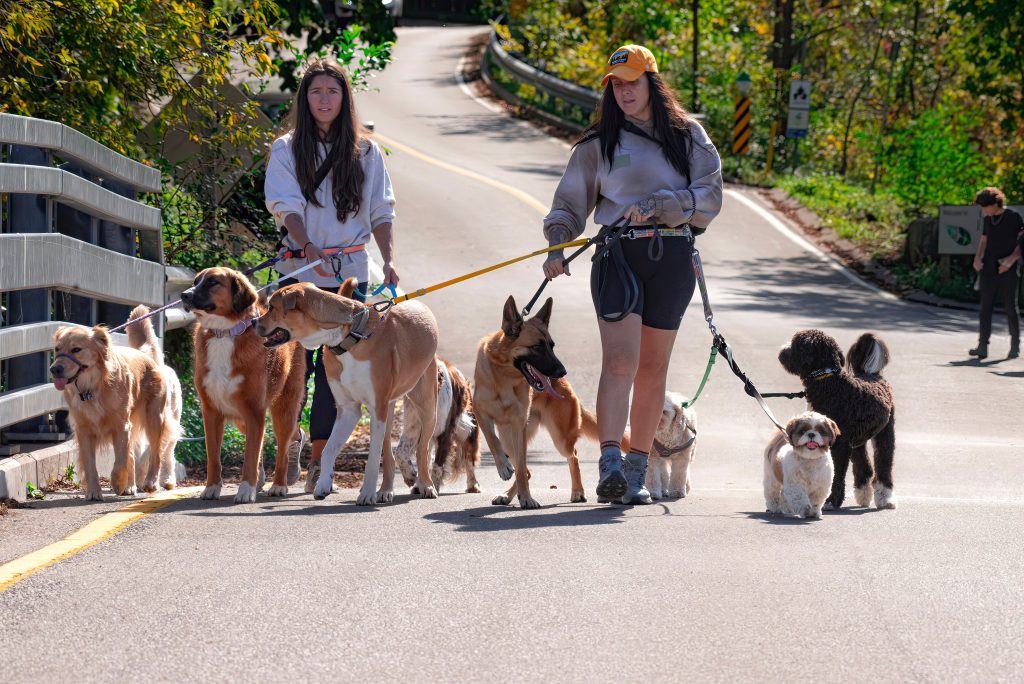
Breed tendencies offer clues, not guarantees. High-energy herding, sporting, and working dogs often need movement plus mental work, such as scent searches. Small dogs also require exercise, although stride length and hot pavement affect route choices.
Flat-faced, heavy-coated, overweight, or unconditioned dogs may tolerate exertion poorly. Their Dog Walking Schedule should favor cooler hours, moderate intensity, pauses, and gradual conditioning.
Health Conditions That Change the Plan
Arthritis, heart or lung disease, obesity, pain, neurological conditions, and surgical recovery can change walking needs. A veterinarian who knows your dog is more useful than a generic target.
Do not dismiss limping, repeated stopping, coughing, weakness, dragging nails, or difficulty rising as “just aging.” After inactivity, increase only one variable—duration, distance, terrain, or speed—at a time so the response is easier to judge.
Potty Breaks Are Not the Same as Exercise Walks
A quick trip to the nearest grass rarely replaces a purposeful walk. Bathroom breaks prioritize elimination; walks provide sustained movement, exploration, and training.
This matters for apartment dogs, puppies, seniors, and dogs without yard access. For one week, note toilet trips, walking minutes, pace, weather, and behavior afterward. You may find that frequent outings provide little meaningful activity—or that several short walks already create a satisfying day.
How Long Should Each Walk Last?
Some dogs benefit from 15 focused minutes; others enjoy 45 minutes or more. Begin with a duration your dog finishes easily, then adjust based on recovery.
Quality changes the workload. Hills, leash training, or a stimulating neighborhood may demand more than a familiar flat route. A balanced Dog Walking Schedule might pair one longer outing with a short sniff walk. Stop early when heat, footing, fatigue, or body language makes the plan unwise.
Make Sniffing and Training Part of the Walk
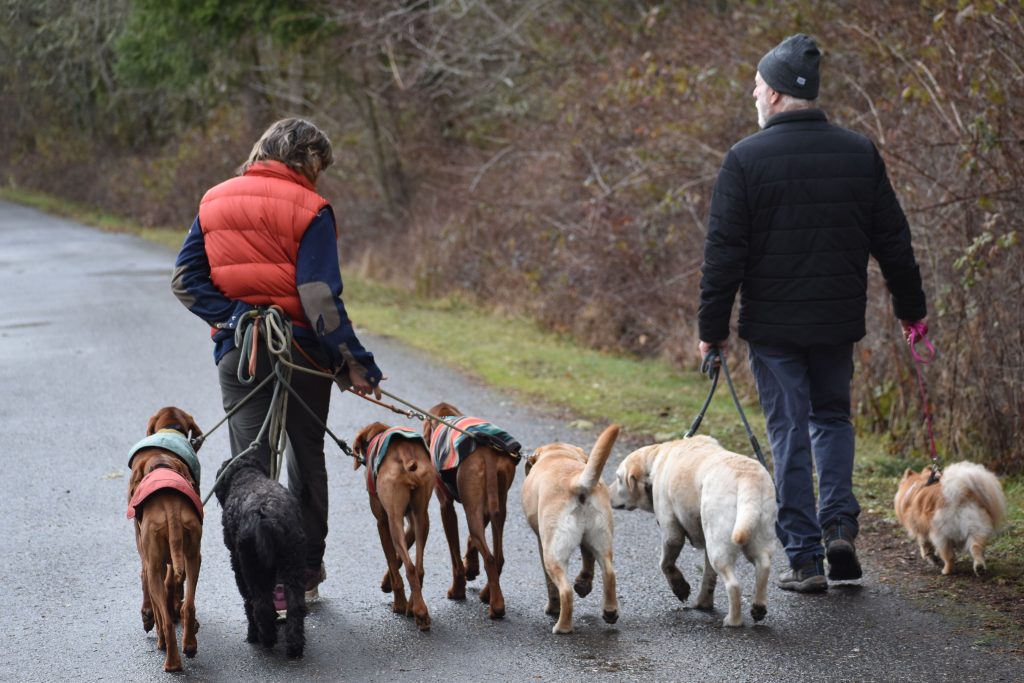
A slow sniff walk provides information, choice, and mental engagement. Mix structure with exploration: reward loose-leash steps or check-ins, then release your dog to sniff safely.
On lower-mileage days, add these dog mental stimulation ideas for happy, calm dogs for purposeful sniffing, problem-solving, and training. Enrichment supports dogs with exercise limits, although it does not automatically replace outdoor time or toilet opportunities.
Sample Dog Walking Schedules for Real Households
Use these templates as starting points, not medical prescriptions.
| Household or dog | Morning | Midday | Evening |
| Healthy adult | 20–30-minute walk | Toilet break or play | 20–30-minute walk |
| Energetic adult | 30–45-minute walk | Training or walker visit | 30-minute walk plus enrichment |
| Puppy | Toilet trip and short outing | Frequent toilet trips | Short calm outing |
| Senior dog | 10–20-minute gentle walk | Toilet/sniff break | 10–20-minute gentle walk |
| Apartment dog | Purposeful walk | Toilet trip(s) | Purposeful walk |
Use repeatable time windows and keep a backup plan for overtime, illness, or severe weather. Indoor scent games can help on a shortened-walk day, but they do not remove toilet needs.
Weather, Darkness, and Route Safety
In heat, choose cooler hours, shorten the route, seek shade, and bring water when appropriate. Flat-faced, thick-coated, older, and overweight dogs need extra caution. Weakness, confusion, vomiting, collapse, or severe breathing distress requires emergency help.
After dark, use well-lit routes and visible gear. Watch for traffic, loose dogs, wildlife, and uneven pavement. A safe Dog Walking Schedule always allows an early return.
Signs Your Dog Needs More—or Less—Walking
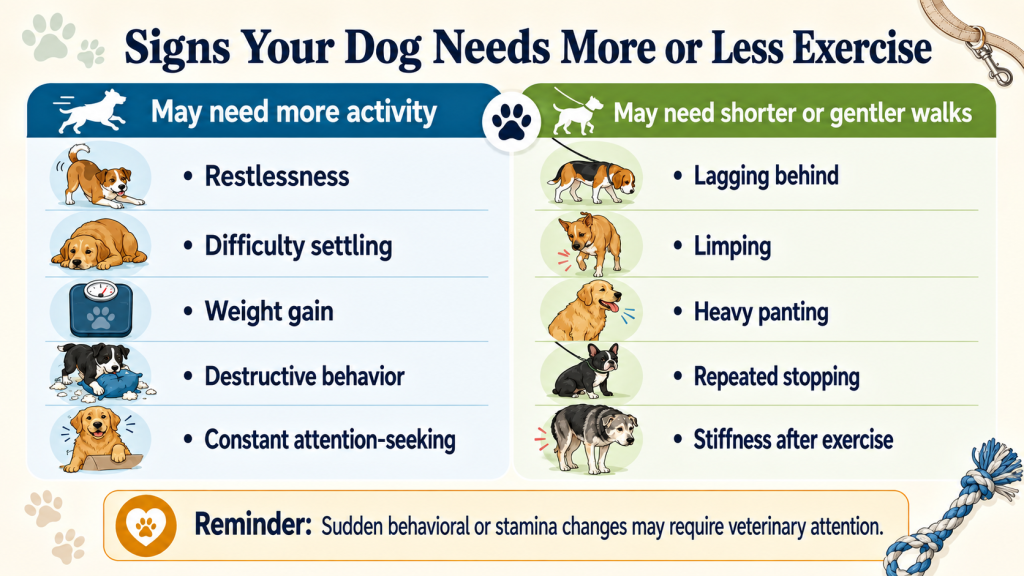
Restlessness, difficulty settling, weight gain, or destructive behavior can accompany an underfilled routine. Yet anxiety, pain, or training gaps can look similar, so more mileage is not always the answer.
Lagging, repeated sitting, limping, sore paws, stiffness, or slow recovery suggest excessive workload. Change the Dog Walking Schedule in small steps. If stamina or behavior changes suddenly, contact your veterinarian.
Useful Products for a Safer Dog Walking Schedule
Choose gear that solves a specific issue—fit, control, hydration, cleanup, or training—not equipment that promises to replace good handling.
| Product | Best fit | Notable feature |
| PetSafe Easy Walk Harness | Dogs that pull | Front chest attachment |
| BAAPET 5-Foot Dog Leash | Everyday value | Padded handle, reflective threads |
| PetAmi Hands-Free Dog Leash | Running or hands-busy walks | Bungee waist system |
| Earth Rated Poop Bag Holder | Simple cleanup | Used-bag hook |
| Chuckit! Treat Tote | Walk training | One-hand reward access |
| Springer Dog Water Bottle | Longer or warm walks | Built-in bowl |
PetSafe Easy Walk Harness for Dogs – Pull-Free Walks – Patented Martingale Loop Design – Front Chest Leash Attachment – Adjustable Comfort Straps – Breathable Harness Design – Large, Black/Silver
Best for: Dogs learning not to pull
Its front chest leash attachment and martingale-style loop redirect forward pulling, while adjustable straps help refine the fit. It is a practical aid for stronger dogs learning leash manners. Careful measuring and gradual introduction matter, and the harness should accompany reward-based training rather than replace it.
BAAPET 2/4/5/6 FT Dog Leash with Comfortable Padded Handle and Highly Reflective Threads for Small Medium and Large Dogs (5FT-1/2”, Purple)
Best for: Budget-conscious everyday walkers
This five-foot rope leash combines a padded handle with reflective threads, offering a straightforward neighborhood-walk setup. It suits owners who want simple control and hand comfort without extra features. However, its half-inch rope may feel heavier than necessary for a very small dog.
PetAmi Hands Free Dog Leash Waist Belt Bag Fanny Pack, Single, Heather Navy | Shock-absorbing Bungee Softens Pulls with Small Medium Large Dog; Built-in Dispenser, Reflective Trim for Running & Walking
Best for: Runners and owners who need free hands
A waist belt, shock-absorbing bungee, reflective trim, and built-in bag dispenser combine several functions. It can simplify controlled jogging or stroller walks. However, hands-free equipment does not suit every dog; sudden lunging or undeveloped leash skills may require a conventional leash and closer handling.
Earth Rated Dog Poop Bag Holder & Leash Dispenser, 15 Bags, Unscented | Durable and Guaranteed Leakproof Bags
Best for: Convenient cleanup on daily routes
This compact dispenser attaches with a silicone strap, closes with a click mechanism, and includes a hook for carrying a tied bag until you reach a bin. It keeps supplies attached to the leash. The tradeoff is a little extra movement and bulk on lightweight setups.
Chuckit! Treat Tote Dog Treat Pouch for Puppy Training, 1 Cup Capacity, Assorted Colors
Best for: Reward-based walk training
The one-cup pouch clips to clothing and has a one-hand drawstring opening. Its water-resistant outer fabric and wipeable liner suit small training rewards during walks. It is deliberately simple, so owners who need phone storage, several compartments, or a waist strap may prefer a larger pouch.
Springer Dog Water Bottle | Portable Travel Drinking Feeder Dispenser for Dogs & Puppies | As Seen on Shark Tank | Leak-Proof Bowl | BPA-Free | Outdoor Walking, Hiking & Travel | 22oz Lilac
Best for: Longer outings and warm-weather walks
Squeezing the bottle fills its attached bowl, while a shutoff valve helps limit leaks. The 22-ounce capacity suits parks, travel, and longer routes, and the bottle fits many cup holders. It is bulkier than a small flask, and carrying water does not make strenuous high-heat exercise safe.
What Research Says About Dog Walking Frequency
Research supports regular dog walking, but not one perfect canine dose. A 2019 Scientific Reports study found a median of seven walks and 220 walking minutes weekly. Owners were more likely than non-owners to meet physical-activity guidelines, although self-reporting and observational design limit causal conclusions.
A 2024 PLOS ONE study of 1,041 owners associated stronger owner-dog attachment with more frequent walking and greater owner activity; its cross-sectional design cannot prove causation.
Meanwhile, AVMA walking guidance favors short, frequent starting walks and rest. AKC Canine Health Foundation heat guidance identifies humidity, strenuous activity, limited water, obesity, age, coat, and flat-faced anatomy as risk factors.
Use evidence to support regularity, then individualize the Dog Walking Schedule by health, life stage, fitness, environment, and response.
Frequently Asked Questions
Is one walk per day enough for a dog?
It may be enough for some low-energy or medically limited dogs when they also receive appropriate toilet breaks, play, and enrichment. Many healthy adults benefit from two purposeful outings because activity is spread across the day. Judge the Dog Walking Schedule by health, behavior, and recovery rather than the number alone.
Should dogs be walked at the same time every day?
Predictable time windows can help dogs anticipate bathroom and activity opportunities, but the clock need not be exact. Keep a dependable morning and evening pattern while allowing changes for weather and work. A dog distressed by minor timing changes may need gradual variation or professional help for underlying anxiety.
How do I create a Dog Walking Schedule for an apartment dog?
Plan one or two purposeful walks, then add brief toilet trips based on age and health. Because a hallway-to-curb outing may offer little exercise, track walking and sniffing time separately. A midday walker, trusted household member, or nearby relief area can help during long workdays.
Can playtime replace a walk?
Play provides movement and interaction, but it does not always offer outdoor sniffing, environmental exposure, or steady walking. Indoor games and training can replace part of the workload during unsafe weather or temporary restriction. For most healthy dogs, combine play with regular outdoor opportunities rather than treating them as identical.
When should I change my dog’s walking routine?
Adjust it when age, fitness, weather, medication, weight, health, or work hours change. Increase activity gradually, and reduce it if you notice limping, unusual fatigue, breathing trouble, paw injury, or reluctance. A sudden or lasting drop in stamina deserves veterinary attention.
Final Recommendation: Choose a Consistent Dog Walking Schedule
The best Dog Walking Schedule is not the most ambitious one; it is the routine your dog can enjoy and your household can maintain safely. Begin with one or two purposeful daily walks for a healthy adult, separate those from bathroom breaks, and adjust duration for age, fitness, build, health, weather, and behavior. Puppies need brief positive outings, energetic adults often need training and enrichment alongside mileage, and seniors may prefer shorter walks more often.
Choose gear only when it solves a real need. The PetSafe Easy Walk Harness can support pull-management training, while the Springer bottle suits longer routes. Observe recovery, change the plan gradually, and involve your veterinarian when stamina or movement changes. Consistent, responsive walking beats chasing a perfect number.