Dog Training Tools Every Pet Owner Should Try
We may earn a commission for purchases made using our links. Please see our disclosure for more details.
Training a dog sounds simple until your sweet pup turns into a tiny tornado with paws.
One minute, you’re picturing peaceful walks and cute “sit” moments. The next, your dog is chewing the slipper you needed, barking at a leaf like it owes rent, or dragging you down the sidewalk like you signed up for sled racing.
That’s where dog training tools can help.
Not magic tools. Not “fix my dog overnight” gadgets. Real, practical tools that make communication clearer between you and your dog. Because training is not about controlling your dog. It is about helping them understand what you want, while building trust, patience, and confidence.
Why Dog Training Tools Matter
Good training tools work like subtitles for your dog.
You may think you’re saying, “Please stop jumping on Grandma.” Your dog may hear, “Wow, everyone is excited, so I should bounce harder.”
The right tools help you mark good behavior, reward quickly, guide safely, and practice in real-life situations.
They can help with:
- Leash pulling
- Recall practice
- Puppy manners
- Crate training
- Focus around distractions
- Reward-based obedience training
- Confidence building
Still, tools are only helpers. Your timing, patience, and consistency matter most.
What Makes a Dog Training Tool Worth Buying?
A good training tool should make life easier for both of you.
Before buying anything, ask:
- Is it comfortable for my dog?
- Does it support positive training?
- Is it easy for me to use?
- Will it help with a specific behavior?
- Is it safe for my dog’s size, age, and temperament?
The best tools do not scare your dog into listening. They help your dog feel safe enough to learn.
Consider it similar to teaching a child how to ride a bike. You would not yell at the bike. You would add training wheels, hold the seat, and cheer when they wobble forward.
Dogs need that same patient support.
Start With Positive Reinforcement Dog Training
Positive reinforcement means you reward the behavior you want to see again.
That reward might be a treat, praise, play, or access to something your dog loves. For one dog, chicken is currency. For another, a squeaky toy is basically the stock market.
Research and veterinary behavior experts strongly support reward-based methods. The American Veterinary Society of Animal Behavior says reward-based techniques should be used for dog training and behavior modification, and that aversive methods are not necessary.
Clickers: Small Tool, Big Clarity
A clicker is one of the simplest dog training tools, but it can feel surprisingly powerful.
How a Clicker Works
A clicker makes a quick, consistent sound. When your dog does the proper thing, you click on it and then reward them.
For example:
- Dog sits.
- You click.
- You give a treat.
Over time, your dog learns, “That sound means I nailed it.”
Amazon lists options like the PetSafe Clik-R Training Tool, which is designed as a positive reinforcement marker with a clear click sound.
Treat Pouches Make Training Less Chaotic
Have you ever tried training with treats stuffed in your pocket?
Cute idea. Terrible reality.
You end up with crumbs, greasy fabric, and a dog who knows exactly which pocket smells like cheese.
A treat pouch keeps rewards easy to reach. That matters because timing is everything. If your dog sits and you reward 10 seconds later, your dog may think they’re being rewarded for standing up, sniffing the floor, or blinking dramatically.
Look For These Features
- Easy-open design
- Secure closure
- Washable material
- Room for treats and poop bags
- Clip or waist strap
The PetSafe Treat Pouch Sport is one Amazon-style option often listed as a durable dog training accessory with easy access storage.
Training Leashes for Safer Practice
A standard leash is great for walks. A longer training leash is better for practicing recall, distance cues, and outdoor focus.
Long lines usually come in lengths like 15, 20, 30, or even 50 feet. Amazon listings include long nylon training leads for obedience recall, camping, and outdoor practice.
Best Uses for a Long Training Leash
Use it for:
- “Come” practice
- Backyard training
- Park work
- Loose-leash skills
- Safe sniffing freedom
Do not use a long line near roads or crowded spaces. It can tangle fast, and nobody needs a leash spaghetti situation.
No-Pull Harnesses for Better Walks
If your dog pulls like they’re late for a business meeting, a no-pull harness can help.
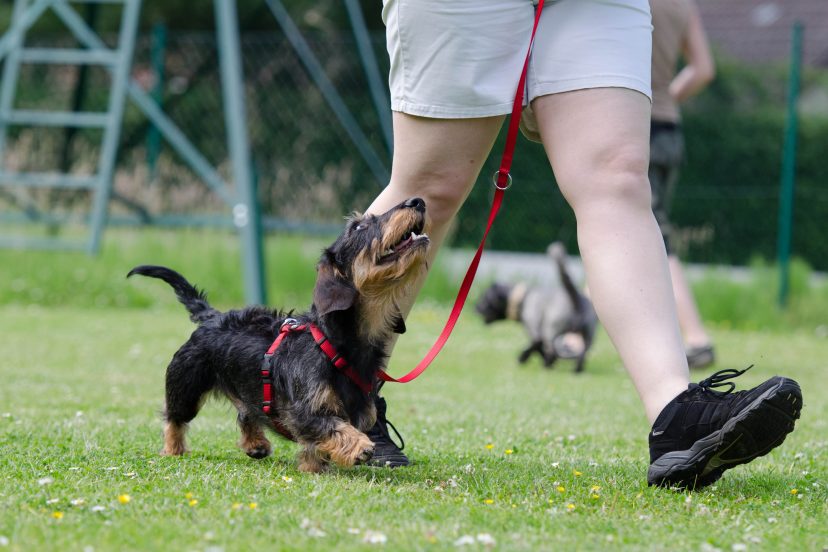
When your dog pulls, a front-clip harness gently redirects them. It does not train your dog by itself, but it gives you more control while you teach loose-leash walking.
The PetSafe Easy Walk No-Pull Dog Harness is one well-known option listed for leash and harness training and helping reduce pulling.
A Harness Is Not a Shortcut
You still need to reward your dog when they walk near you.
Try this simple pattern:
- Dog walks beside you.
- Say “yes” or click.
- Give a treat.
- Keep walking.
Little by little, your dog learns that walking near you is more rewarding than dragging you toward every mailbox.
Crates and Playpens for Calm Training
Crates and playpens are not punishments when used correctly. They are safe spaces.
A crate can help with:
- House training
- Rest routines
- Travel comfort
- Preventing chewing when unsupervised
- Teaching calm independence
A playpen can help puppies explore safely while you answer emails, cook dinner, or sit down for two blessed minutes.
The key is to make the space positive. Add a comfy bed, safe chew, and calm energy. Never shove your dog inside after they misbehave.
Toys as Training Rewards
Not every dog works for food all the time.
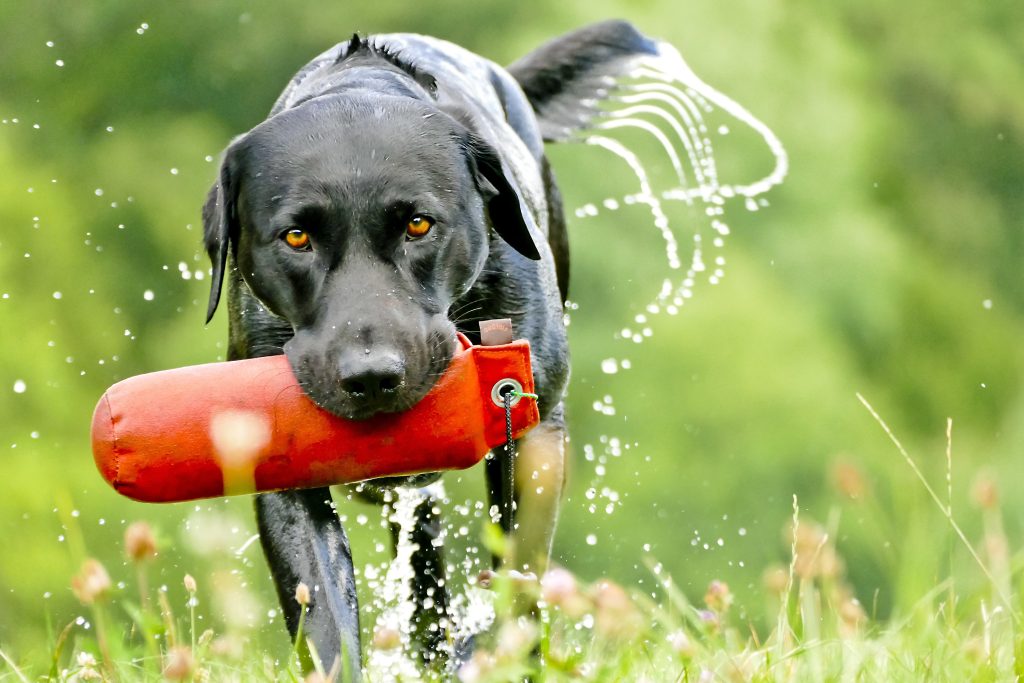
Some dogs will do backflips for a tennis ball. Others want tug, chase, or a squeaky plush toy that sounds like a tiny haunted goose.
Toys can be excellent training rewards, especially for high-energy dogs.
Best Toy Rewards
- Tug toys for impulse control
- Balls for recall games
- Squeaky toys for attention
- Food puzzles for calm focus
Use toys carefully if your dog gets overexcited. The goal is happy energy, not full goblin mode.
Training Mats for Place Command
A training mat teaches your dog where to settle.
This is useful when you want your dog to relax during dinner, when guests visit, or while you work.
You can use a small mat, bed, towel, or blanket. It doesn’t have to be pricey. Your dog just needs a clear “this is your spot” cue.
How to Start
Place the mat down. When your dog steps on it, reward. Then reward again when they stay. Slowly build duration.
This teaches calm behavior without constantly saying, “No, stop, leave it, please don’t lick the guest.”
Dog Whistles and Verbal Cues
A dog whistle can help with recall training, especially outdoors. However, it only works if you condition it properly.
The sound must mean something good.
Start close. Reward your dog, blow the whistle, and repeat. Later, use it from a few steps away. Then add distance.
Never use a whistle only when fun ends. If your dog hears the whistle and thinks, “Oh no, park time is over,” they may suddenly develop selective hearing. A true artist.
Puppy Socialization Tools
Training is not only about commands. It is also about helping your dog feel safe in the world.
For puppies, socialization can include gentle exposure to people, sounds, surfaces, places, and other friendly dogs.
Use treats, a harness, a leash, and calm encouragement. Go slowly. A puppy does not need to meet every person at the market like they’re running for mayor.
For a deeper guide, read this helpful post on how to properly socialize a puppy.
Product Section: 5 Dog Training Tools to Consider
1. PetSafe Clik-R Training Tool
This is a small clicker-style marker tool for reward-based training. It helps you tell your dog exactly when they did the right thing.
Features:
- Clear click sound
- Comfortable finger strap
- Small and lightweight
- Useful for tricks, obedience, and manners
Best for: Beginners, puppy parents, and anyone who wants cleaner communication during training.
2. PetSafe Treat Pouch Sport
This pouch keeps treats ready, so you can reward quickly without digging through your pockets like you lost treasure.
Features:
- Easy-access design
- Storage for treats and small items
- Good for walks and training sessions
- Practical for daily use
Best for: Walk training, puppy classes, and owners who use food rewards often.
3. PetSafe Easy Walk No-Pull Dog Harness
This harness helps manage leash pulling while you teach better walking manners.
Features:
- Front-clip design
- Helps reduce pulling
- Useful for leash training
- Available in multiple sizes
Best for: Dogs who pull on walks, especially medium and large dogs.
4. 30ft Dog Training Leash
A long training leash gives your dog more freedom while still keeping them safe.
Features:
- Longer range for recall work
- Great for yards and open spaces
- Useful for “come” practice
- Helps bridge leash walking and off-leash skills
Best for: Recall training, outdoor practice, camping, and young dogs learning boundaries.
5. EliteField 3-Door Folding Soft Dog Crate
A soft crate can support calm training, travel routines, and safe rest.
Features:
- Foldable design
- Multiple doors
- Soft-sided structure
- Good for travel and supervised crate comfort
Best for: Dogs already comfortable in crates, travel training, and calm rest routines.
Research-Backed Reasons to Choose Reward-Based Dog Training Tools
Good dog training tools should make learning clearer, not scarier. That is why many trainers and veterinary behavior experts recommend reward-based methods, especially when you are using clickers, treat pouches, harnesses, long leads, and other everyday training aids.
A 2020 study published in PLOS ONE found that dogs trained with aversive methods showed more stress-related behaviors than dogs trained with reward-based methods. The study also looked at welfare beyond the training session, which makes it especially useful for pet owners choosing safe, humane training tools. You can read the full study here: negative impact of aversive-based methods on companion dog welfare.
Another 2021 PLOS ONE study compared reward-based and mixed training methods. It found that reward-based training can be effective while avoiding the welfare concerns linked with punishment-heavy methods. In plain English, your treat pouch and clicker are not “soft” tools. They are smart tools that help your dog learn without fear. Read the study here: efficacy and efficiency of reward-based dog training methods.
How to Match Tools to Your Dog’s Personality
Every dog has a learning style.
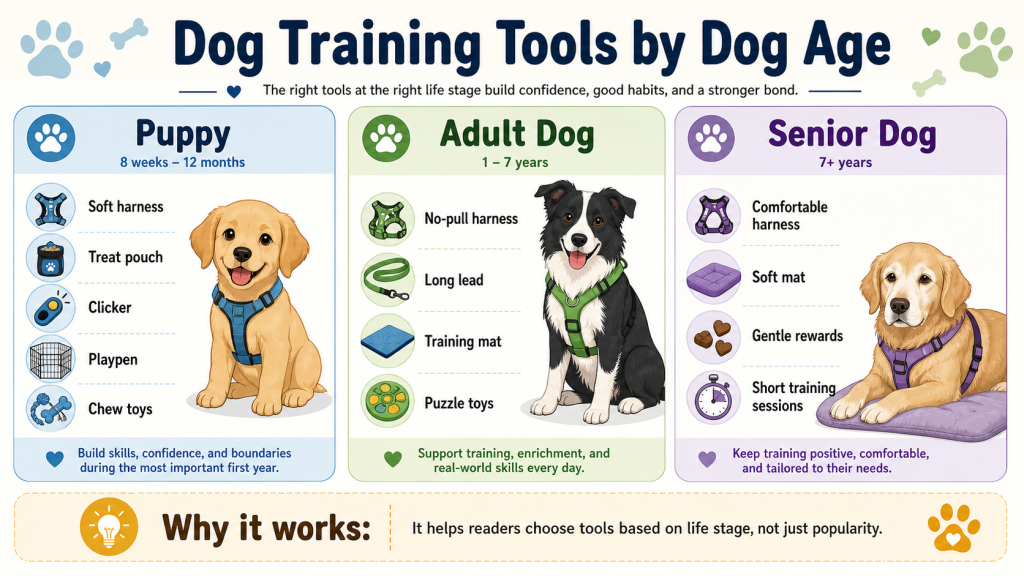
A shy rescue may need slow, gentle confidence work. A bouncy Lab puppy may need food rewards, toy breaks, and short sessions. A small senior dog may need comfort, patience, and fewer repetitions.
Ask yourself:
- Does my dog love food?
- Does my dog get nervous easily?
- Does my dog pull, bark, jump, or avoid?
- Does my dog learn better indoors first?
- Does my dog need more exercise before training?
The best tool is the one that fits your actual dog, not the imaginary perfect dog from product photos.
Common Mistakes When Using Dog Training Tools
Even great tools can fail if used poorly.
Avoid these mistakes:
- Training too long
- Rewarding too late
- Repeating cues over and over
- Using tools as punishment
- Expecting instant results
- Skipping practice in real-life settings
Keep sessions short. Five minutes of focused practice beats 30 minutes of frustration.
Dogs learn through repetition, but they also learn through emotion. If training feels safe and rewarding, your dog comes back ready to try again.
Quick Buying Guide for Dog Training Tools
Before checkout, think about your main goal.
For Pulling
Choose a front-clip harness, strong leash, and high-value treats.
For Recall
Choose a long training leash, clicker, and exciting reward.
For Puppy Basics
Choose a clicker, treat pouch, soft leash, playpen, and chew toys.
For Calm Behavior
Choose a mat, crate, puzzle toy, and slow training plan.
For Focus Around Distractions
Choose better treats, shorter sessions, and distance from the distraction.
FAQs About Dog Training Tools
What are the best dog training tools for beginners?
The best beginner tools are a clicker, treat pouch, standard leash, front-clip harness, and training treats. These tools are simple, affordable, and easy to use for basic commands like sit, stay, come, and loose-leash walking.
Do dog training tools really work?
Yes, but only when you use them consistently. Tools support training, but they do not replace patience, timing, and repetition. A clicker, for example, works because it marks the right behavior clearly before you reward your dog.
What dog training tools help with leash pulling?
A front-clip no-pull harness, sturdy leash, treat pouch, and high-value rewards can help. Reward your dog when they walk near you, stop before they pull harder, and practice in low-distraction areas first.
Are shock collars good dog training tools?
Many veterinary behavior experts recommend reward-based training instead of aversive methods. Shock collars and other punishment-based tools can increase fear, stress, or confusion in some dogs. Reward-based tools are usually safer and better for trust-building.
What dog training tools do I need for a puppy?
For a puppy, start with a lightweight leash, comfortable harness, clicker, treat pouch, safe chew toys, crate or playpen, and training treats. Keep sessions short and cheerful because puppies have tiny attention spans and enormous opinions.