5 Dog-Proof Backyard Ideas
We may earn a commission for purchases made using our links. Please see our disclosure for more details.
You know that tiny panic moment when your dog bolts toward the fence like they just spotted a squirrel with unpaid debts? A backyard should feel like freedom, not a daily security drill.
A Dog-Proof Backyard gives your pup space to sniff, zoom, nap, and play while helping you avoid escapes, toxic plants, overheating, and backyard chaos. The goal is not to turn your yard into a fortress. It is to make it safer, smarter, and more enjoyable for both of you.
What a Dog-Proof Backyard Really Means
A Dog-Proof Backyard is not about bubble-wrapping your dog’s whole life. Dogs need adventure. They need smells, movement, and a little “main character energy.”
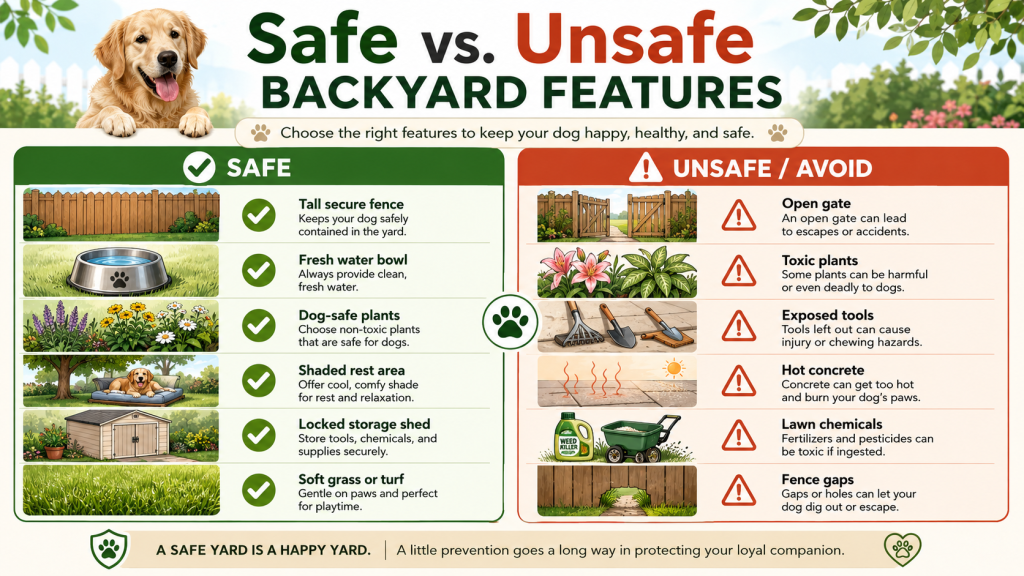
Instead, dog-proofing means reducing the risks you can control. That includes loose fence boards, open gates, sharp tools, unsafe plants, lawn chemicals, standing water, and places where your dog can dig out or squeeze through.
Think of it like childproofing, but for a four-legged roommate who thinks mulch is a snack.
Start With a Backyard Safety Walkthrough
Before buying anything, walk your yard like your dog would. Better yet, crouch down and look from their height. You may suddenly notice gaps, exposed nails, low branches, or that suspicious corner under the fence.
Check for:
- Loose boards or broken fencing
- Holes near gates
- Sharp garden edging
- Toxic plants or mushrooms
- Open trash bins
- Lawn chemicals
- Standing water
- Small objects your dog could chew
This simple walkthrough helps you build a dog-safe yard based on your actual space, not a generic checklist.
Build a Fence Your Dog Cannot Turn Into a Puzzle
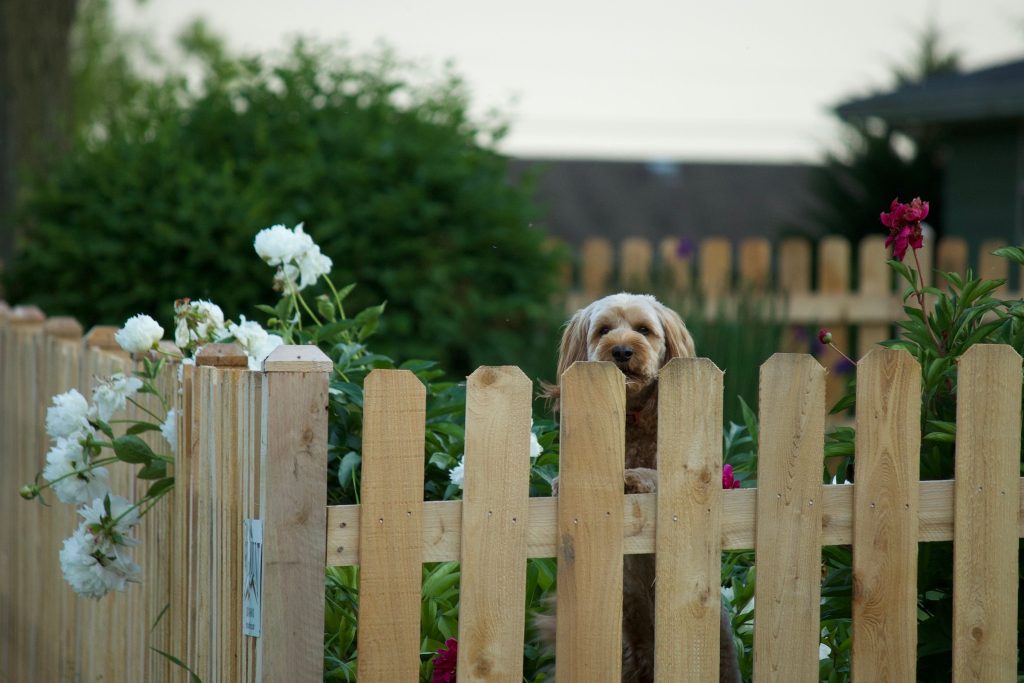
A good backyard dog fence is your first line of defense. However, the “best” fence varies depending on your dog.
A tiny terrier may need bottom protection because digging is basically their side hustle. A large athletic dog may need height. A reactive dog may need privacy screening so every passing bike does not become breaking news.
For better dog escape prevention, inspect:
- Fence height
- Gaps under the fence
- Weak boards
- Loose chain link sections
- Areas near sheds, trees, or furniture your dog could climb
If your dog is a jumper, avoid placing benches, planters, or storage boxes near the fence. To a clever dog, that is not furniture. That is a launchpad.
Stop Digging Before It Becomes an Escape Route
Digging is normal dog behavior. Some dogs dig to cool down. Some dig because they smell something underground. Some dig because they woke up and chose archaeology.
For a stronger Dog-Proof Backyard, block digging zones near fences with buried wire mesh, pavers, gravel trenches, or an anti-dig barrier for dogs.
You can also give your dog a legal digging zone. Fill a small sandbox or dirt patch, bury a toy, and praise them when they use it. It is much easier to redirect a dog than argue with their instincts.
Secure Gates Like They Are Front Doors
Many backyard escapes happen through gates, not fences. A visitor forgets to latch it. A kid runs through. A delivery person leaves it slightly open. Then suddenly your dog is touring the neighborhood like a local politician.
Use a sturdy self-latching gate lock, and consider adding a backup clip or carabiner. For busy households, add a small sign that says, “Please close the gate. Dog in yard.”
It sounds simple, but simple is often what saves the day.
Create Shade, Water, and Cooling Zones
A pet-friendly backyard needs cooling spots, especially during warm months. Shade, airflow, and fresh water matter more than a fancy setup.
The American Veterinary Medical Association’s warm-weather safety guidance recommends making sure pets have protection from heat and sun, along with access to water. A doghouse alone is not always enough because it can trap heat.
Use trees, shade sails, covered patios, or breathable pet shelters. An elevated outdoor bed can also help keep your dog off hot ground while allowing airflow underneath.
Choose Dog-Safe Plants and Landscaping
Pet-safe landscaping is one of the most overlooked parts of building a Dog-Proof Backyard. Some plants look harmless but can make dogs sick if chewed.
The ASPCA toxic and non-toxic plants database is a helpful starting point when checking your garden. Common plants that may be unsafe for dogs include sago palm, azalea, oleander, tulips, and some lilies.
Safer landscaping choices may include dog-friendly grasses, sturdy ground cover, raised planters, and fenced-off garden beds. Also, avoid cocoa mulch because it can be risky for dogs if ingested.
Keep Lawn Chemicals, Tools, and Compost Out of Reach
A beautiful lawn should not come at the cost of dog yard safety. Fertilizers, pesticides, herbicides, sharp tools, and compost piles can all create problems.
The National Pesticide Information Center advises keeping pets out of treated areas until products are dry or until the label says it is safe. That label matters. It is not decorative reading material, unfortunately.
Store chemicals in locked cabinets. Keep rakes, shears, and hoses organized. Cover compost bins securely, especially if they contain food scraps.
Create a Dedicated Play and Potty Zone
Dogs love routine. A designated outdoor dog play area helps your yard stay cleaner and easier to manage.
You might create:
- A potty corner with gravel or washable turf
- A play zone with durable toys
- A shady rest spot
- A water station
- A digging-friendly sandbox
This works especially well for families, renters, or anyone with a small backyard. Even a modest space can feel enriching when each zone has a purpose.
Add Enrichment So Your Dog Wants to Stay
Sometimes dogs escape because the yard is boring. A flat patch of grass may look peaceful to us, but to a smart dog, it can feel like watching the same TV episode every day.
Add outdoor enrichment with:
- Snuffle games
- Treat-dispensing toys
- Scent trails
- Tug toys
- Short training sessions
- Rotating toys
A mentally tired dog is less likely to test the fence like a tiny escape artist.
Think About Seniors, Puppies, and Small Breeds
A Dog-Proof Backyard should match your dog’s age, size, and mobility. Puppies chew everything. Senior dogs may slip more easily. Small breeds can squeeze through gaps that larger dogs would not even notice.
Use ramps, non-slip paths, and low steps when needed. If your dog struggles with jumping on beds or furniture indoors, this guide to choosing a safe dog ramp for a high bed can also help you think about safer movement around the home.
Outside, keep paths clear and avoid surfaces that get too hot, slick, or uneven.
Product Section: 5 Amazon Finds for a Dog-Proof Backyard
Dig Defence Original Animal Barrier Fence – X-Large Decorative Garden Fence
Short description: This underground-style barrier helps block digging near fence lines.
Features:
- Metal barrier design
- Works along fence bottoms
- Helps stop dogs from digging out
Use cases: Best for diggers, escape-prone dogs, and yards with fence gaps near the soil.
HILLMASTER Self Locking Gate Latch for Wooden Fence
Short description: A self-locking gate latch adds extra security to backyard gates.
Features:
- Heavy-duty latch design
- Suitable for outdoor gates
- Helps prevent accidental gate openings
Use cases: Great for families, busy homes, side yards, and gates used by guests or kids.
Amazon Basics Foldable Metal Exercise Dog Playpen, Indoor/Outdoor
Short description: This foldable playpen creates a controlled space for outdoor play.
Features:
- 8-panel metal design
- Indoor/outdoor use
- Ground anchors for outdoor setup
Use cases: Best for puppies, small dogs, supervised patio time, or temporary play zones.
K&H Pet Products Outdoor Elevated Dog Cot
Short description: An elevated cot gives dogs a cooler place to rest outside.
Features:
- Raised frame
- Breathable mesh center
- Washable cover
Use cases: Ideal for warm climates, shaded patios, senior dogs, and dogs that love lounging outdoors.
Neater Pet Brands Extra Large Water Bowl for Dogs
Short description: This large outdoor water bowl helps keep fresh water available during backyard time.
Features:
- 1.25-gallon capacity
- Outdoor-friendly design
- Good for medium to large dogs
Use cases: Helpful for multi-dog homes, warm weather, long play sessions, and dogs that drink a lot.
Research-Backed Backyard Safety Tips
A safe Dog-Proof Backyard is not just about fences. Research shows heat can be dangerous for dogs, especially during warm weather, so shade, airflow, and fresh water are must-haves. This study on protecting dogs from heat-related illness explains why outdoor cooling matters.
Plants also deserve attention. Before adding new landscaping, check the ASPCA’s dog-safe and toxic plant guide to avoid risky choices.
Lawn products can be another hidden hazard. The National Pesticide Information Center shares helpful pet-safe lawn treatment guidance, including when pets should stay off treated grass.
Dog-Proof Backyard Maintenance Checklist
Once your Dog-Proof Backyard is set up, keep it that way with a weekly check.
Look for:
- New holes near fences
- Loose gate latches
- Broken toys
- Chewed branches
- Standing water
- Pest activity
- Damaged screens or panels
- Slippery walkways
- Exposed wires or tools
Backyard safety is not one big heroic project. It’s more like brushing your teeth. Small, consistent habits prevent larger messes later.
FAQs About Creating a Dog-Proof Backyard
How do I make my backyard safe for my dog?
Start with fencing, gate security, shade, water, and plant safety. Remove toxic plants, store chemicals away, block digging spots, and check for sharp objects or escape gaps.
What is the best fence for a Dog-Proof Backyard?
The ideal fence will depend on your dog. Jumpers need height, diggers need bottom barriers, and reactive dogs may need privacy screening. A secure gate latch is just as important as the fence itself.
How can I prevent my dog from digging under the fence?
Use anti-dig barriers, buried wire mesh, gravel trenches, or pavers along the fence line. You can also create a safe digging area to redirect the behavior.
What backyard plants are unsafe for dogs?
Common risky plants include sago palm, azalea, oleander, tulips, and some lilies. Always check a trusted pet poison resource before planting.
Can I leave my dog outside in a fenced yard?
A fenced yard is helpful, but supervision still matters. Dogs can overheat, dig, chew unsafe items, or escape through small openings. Provide shade, water, and regular check-ins.
Conclusion: Build a Backyard That Loves Your Dog Back
A Dog-Proof Backyard does not have to be perfect. It just needs to be thoughtful.
Start with the biggest risks first: fence gaps, open gates, heat, toxic plants, and chemicals. Then add comfort, enrichment, and dog-friendly zones that make your yard feel like a safe little adventure park.
Your dog does not need a luxury resort. They need a space where they can sniff the breeze, stretch their legs, and be their goofy, wonderful self without you worrying every two minutes.
Build it one fix at a time, and soon your backyard can become the safest happy place on the property.