7 Winter Care For Dogs Tips
We may earn a commission for purchases made using our links. Please see our disclosure for more details.
Winter care for dogs sounds simple until your pup starts lifting one paw on an icy sidewalk, licking rock salt off their feet, or turning a normal walk into a firm, fluffy protest. That is when cold-weather dog care gets real.
The good news is that Winter Care For Dogs does not have to feel complicated. With the right routine, you can protect your dog’s paws, skin, energy, comfort, and safety without turning every winter outing into a survival movie.
Affiliate note: This article includes product suggestions that may help you care for your dog in cold weather.
Why winter can feel harder on dogs than many owners expect
Dogs are not all built for winter in the same way. A heavy-coated northern breed may treat snow like a personal amusement park, while a small short-haired dog may act like stepping outside is a betrayal. A major scientific review found there is no single thermal comfort threshold that works for all dogs because breed, coat type, body size, and activity level all matter.
That is why cold-weather dog care should be personal. Your dog is not a generic “dog.” They are your dog, with their own body type, age, health history, and tolerance for cold.
Know which dogs need extra winter protection
Puppies, senior dogs, short-haired breeds, lean breeds, and dogs with medical issues usually need more help staying warm. AKC notes that small, delicate, and short-haired dogs often benefit from a winter coat, and that puppies and older dogs have a harder time regulating body temperature.
So if you live with a Chihuahua, Whippet, Boxer, senior Beagle, or a dog recovering from illness, winter care should be more proactive, not more casual.
Dress for function, not just the cute photo
Yes, a dog coat can be adorable. But the real goal is warmth, dryness, and comfort.
A good winter coat matters most for dogs with thin coats, low body fat, or low cold tolerance. AKC specifically recommends sturdy winter outerwear for small and short-haired dogs during cold weather.
What to look for in a dog winter coat
- Water-resistant outer layer
- Warm lining without being bulky
- Reflective trim for dark walks
- Easy fit around shoulders and chest
- Coverage from neck to base of tail
If your dog freezes up like a tiny statue the second the coat goes on, size or fit may be the problem, not the concept.
Protect paws from salt, ice, and chemical residue
This is one of the biggest winter dog walking tips people overlook.
De-icers can irritate paw pads, and some products can also upset the stomach if licked off after a walk. ASPCA warns that rock salt can be harsh on paws and that calcium, potassium, and magnesium chloride products may irritate the GI tract if ingested. They recommend wiping paws, using booties, and keeping dogs away during de-icing.
AKC also notes that sodium chloride and calcium chloride on city streets can damage paw pads, and recommends rinsing feet with warm water after walks.
A simple paw routine that works
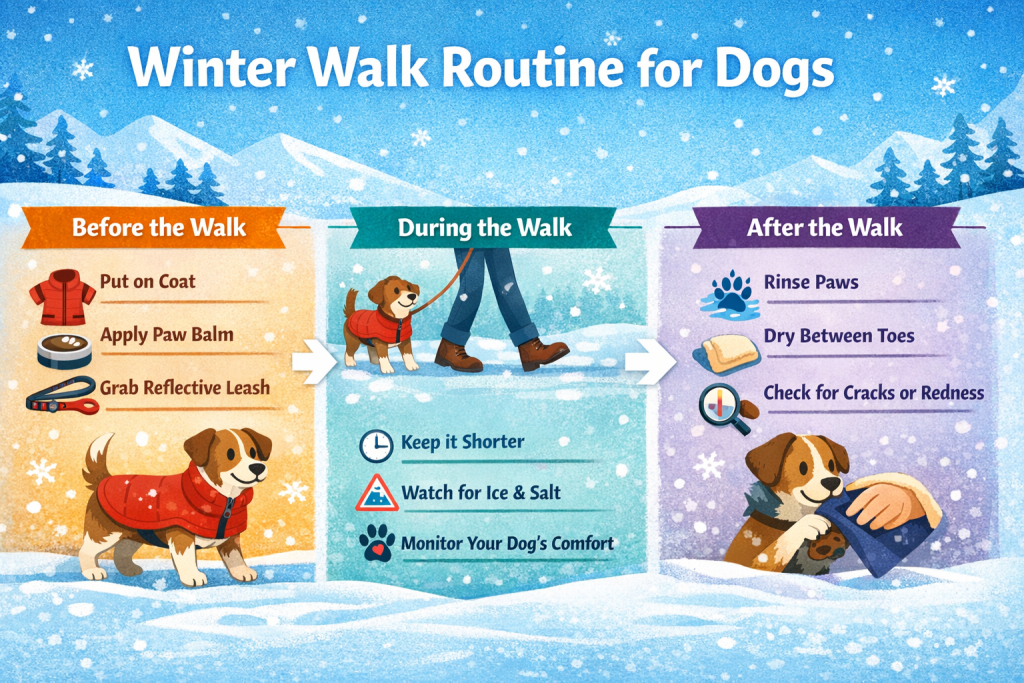
Before the walk, apply paw balm or use boots.
When the walk is over, wash your dog’s paws with warm water.
Then dry between the toes well.
That tiny routine can save you from cracked pads, limping, and the classic “why is my dog suddenly eating their own feet?” moment.
Keep walks shorter, but make them better
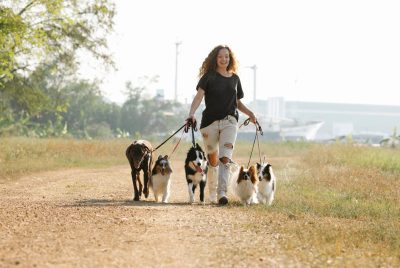
Winter walks do not always need to be long to be good. In fact, shorter and more purposeful is often smarter.
A 2021 survey of 3,153 owners found that people were 48.2% less likely to exercise their dog in cold weather and 64.0% less likely in icy conditions, which shows how much winter changes normal routines for both dogs and humans.
Smarter winter walks
- Walk during the warmest part of the day
- Choose cleared sidewalks over snowy shortcuts
- Use sniff-heavy routes for mental stimulation
- Cut the walk short if your dog slows down, shivers, or lifts paws repeatedly
Think quality over mileage. A 15-minute safe, happy walk beats a miserable 40-minute one every time.
Do not assume your dog will “just push through” the cold
Some dogs will. Some dogs absolutely will not.
Merck Veterinary Manual notes that frostbite is more likely in wet or windy conditions and often affects ears, feet, and tails. Signs can include pale or red skin, swelling, pain, and in severe cases, blackened tissue.
If your dog suddenly seems weak, confused, or unusually quiet outside, that is not “being dramatic.” Merck also notes that pets with hypothermia may act weak or disoriented, breathe shallowly, and in severe cases collapse.
Hydration still matters in winter
People usually worry about water in summer, but dogs still need steady hydration in winter. Heated indoor air, dry conditions, and exercise in cold weather can all add up.
Keep fresh water available all day. Bring water on longer winter outings. And if your dog is eating less or their nose is dry plus they seem low-energy, pay attention. AKC notes that a dry nose can sometimes be associated with dehydration when it appears alongside other symptoms.
Food changes should be thoughtful, not random
Some very active outdoor dogs may need more calories in winter. Many indoor dogs do not. That is where people get tripped up.
When activity drops but treats increase, winter weight gain sneaks in quietly. If your dog already struggles with weight, this helpful guide to a low-fat dog diet is worth bookmarking.
A good rule of thumb
Adjust food based on:
- activity level
- body condition
- age
- health status
- your vet’s guidance
Your dog does not need “holiday portions.” They need the right fuel for their routine.
Winter skin and coat care needs a gentler approach
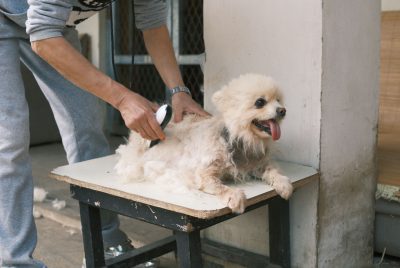
Cold air outside and heated air inside can be rough on skin. ASPCA advises against shaving pets down during winter and says bathing too often during cold spells can strip essential oils and increase dry, flaky skin. They recommend trimming long-haired dogs enough to reduce ice and salt buildup, not shaving them down.
AKC also recommends trimming foot fuzz so ice balls do not collect between the toes.
Winter grooming basics
- Brush regularly
- Trim paw hair neatly
- Bathe less often if skin gets dry
- Use moisturizing products only if your vet agrees
In winter, your dog’s coat is less “fashion statement” and more “built-in insulation system.”
Build a warmer sleep setup indoors
Even indoor dogs can get chilly, especially seniors, tiny breeds, and dogs with arthritis.
AKC notes that heated dog beds can be a good option when they are made specifically for dogs and include safety features like auto shutoff. ASPCA also recommends giving pets a warm sleeping spot off the floor and away from drafts.
A raised or insulated bed, extra blanket, and draft-free corner can make a real difference. Sometimes winter care is not dramatic. Sometimes it is just moving the bed away from the cold tile.
Winter hazards are not only about temperature
Cold season brings a weird little collection of risks: antifreeze, rock salt, thin ice, dark evenings, and slippery stairs.
Merck states that ethylene glycol antifreeze is often fatal, has a sweet taste, and has a small lethal dose in dogs. Signs can begin quickly and progress to severe kidney failure if untreated.
AKC also warns against thin ice and notes that even a small amount of antifreeze can cause kidney failure.
Keep these winter dangers on your radar
- Antifreeze spills in garages or driveways
- Ice melt residue on sidewalks
- Frozen ponds and lakes
- Cold cars left unheated
- Reduced visibility on evening walks
Dark winter walks need visibility upgrades
Winter often means early sunsets and dim morning walks. That alone can make dog walking less safe.
Reflective coats, reflective leashes, clip-on lights, and brighter collars help drivers, cyclists, and other walkers see your dog sooner. This is especially useful if your dog is small, dark-coated, or walks low to the ground like a furry speed bump.
Indoor enrichment matters more than people think
When the weather is bad, dogs do not just miss physical exercise. They miss novelty.
That same 2021 survey on seasonal weather and canine activity showed that winter conditions reduce normal activity patterns for many dogs and owners. So indoor enrichment is not a bonus. It is part of good winter pet care.
Easy cold-weather enrichment ideas
- Snuffle mats
- Puzzle feeders
- Short indoor training sessions
- Hide-and-seek with treats
- Scent games with towels or boxes
A bored dog in winter can become a sock thief, a couch excavator, or a professional hallway sprinter. Better to give that brain a job.
Watch for the small signs that winter is bothering your dog
Dogs rarely send a formal memo. They show you in tiny ways.
Common red flags
- Paw lifting or limping on walks
- Excess paw licking after coming inside
- Shivering
- Refusing to go out
- Dry, flaky skin
- Low energy after cold exposure
- Redness between toes
- Confusion or weakness
If something feels off, trust that instinct and call your vet sooner rather than later.
Best products for Winter Care For Dogs
1) Musher’s Secret Dog Paw Wax 60g
A classic winter pick for protecting paw pads from salt, snow, and cracking.
Features: all-natural paw barrier, moisturizing formula, easy to apply.
Best for: dogs who hate boots but still need paw protection. Amazon-family listings show 4.6 stars and 46,332 global ratings.
2) Kuoser Warm Dog Coat
A practical winter jacket with warmth, weather resistance, and visibility-friendly design.
Features: reversible build, water-resistant shell, adjustable fit.
Best for: short-haired, senior, lean, or small-to-medium dogs that chill easily. Amazon-family listings show 4.3 stars and 60,697 global ratings.
3) Furhaven ThermaNAP Self-Warming Pet Bed Pad
A self-warming mat that reflects body heat without cords or electricity.
Features: self-warming core, washable design, good for crates and quiet corners.
Best for: small dogs, seniors, and dogs that sleep cold indoors. Amazon-family listings show 4.5 stars and 41,761 global ratings.
4) Dexas MudBuster Portable Dog Paw Cleaner
A smart little gadget for messy winter paws after slush, salt, and sidewalk grime.
Features: soft internal bristles, portable cup design, quick rinse cleanup.
Best for: dogs who come home looking like they fought a puddle and lost. Amazon-family listings show 4.4 stars and 62,493 global ratings.
5) MalsiPree Dog Water Bottle Portable
Winter walks still call for hydration, especially on longer outings or road trips.
Features: built-in bowl, one-hand use, leak-resistant travel design.
Best for: active dogs, hiking days, car rides, and winter travel. Amazon-family listings show 4.7 stars and 28,219 global ratings.
Research-backed takeaways that make winter care smarter
A useful takeaway from the seasonal weather and canine activity survey is that winter weather clearly changes exercise habits for many dogs, especially in icy conditions. That supports having an indoor backup plan instead of relying only on outdoor walks.
A second helpful takeaway comes from this scientific review on thermal thresholds and dog welfare, which concluded that there is no one universal cold threshold for all dogs because breed, body type, fur, and activity level vary so much. In plain language: copy-paste winter advice is not enough. Your dog’s winter plan should fit their body and lifestyle.
Winter Care For Dogs FAQs
How cold is too cold for dogs in winter?
There is no single temperature that fits every dog. Breed, size, coat type, age, health, wind, and wetness all matter. Small, short-haired, senior, and medically fragile dogs usually need extra caution.
Should dogs wear boots in snow and on salted sidewalks?
Often, yes. Boots can protect paws from ice abrasion, rock salt, and chemical residue. If your dog hates boots, a paw balm plus a good rinse after the walk is a solid backup.
Can winter weather dry out my dog’s skin?
Yes. Cold weather and indoor heating can contribute to dry, flaky skin, especially if you bathe too often or shave the coat too close. Gentler grooming and preserving the coat’s natural insulation help.
Is antifreeze truly that harmful to dogs?
Yes. Ethylene glycol antifreeze is highly toxic, acts fast, and even small amounts can be lethal. If you think your dog may have been exposed, call a veterinarian right away.
How do I keep my dog active when it is icy outside?
Use shorter outdoor walks and add indoor enrichment like puzzle feeders, sniff games, and short training sessions. Winter weather often reduces regular exercise, so having an indoor plan matters.
Final thoughts
The best Winter Care For Dogs plan is not fancy. It is observant. It notices cold paws, dry skin, shorter daylight, and the fact that winter asks your dog to work a little harder just to stay comfortable.
Start with the basics: protect the paws, watch the weather, keep sleeping spaces warm, adjust walks, and stay alert to hazards like salt and antifreeze. A few small habits can make winter feel a lot safer and kinder for your dog.
And honestly, that is the goal. Not perfection. Just a warm, healthy dog who can enjoy the season right beside you.