5 Exercises To Improve Dog Recall Training
We may earn a commission for purchases made using our links. Please see our disclosure for more details.
Few things test your patience like calling your dog and watching them sprint in the opposite direction like they just remembered an urgent squirrel appointment.
That is why Dog Recall Training matters so much. It is not just a cute trick. It is a safety skill, a confidence builder, and a way to give your dog more freedom without turning every walk into a dramatic chase scene.
In this guide, you will learn five simple recall exercises, common mistakes to avoid, helpful tools, and a realistic plan for teaching your dog to come when called.
What Dog Recall Training Really Means
Dog Recall Training teaches your dog to return to you when you use a recall cue, such as “come,” “here,” or a whistle sound.
A strong recall does not happen because your dog “knows better.” It happens because coming back to you feels rewarding, safe, and worth choosing.
Think of recall like building a friendship bank account. Every happy return adds a little trust. Every angry grab, scolding, or boring ending makes your dog think twice next time.
Why Dogs Ignore “Come”
Your dog is not trying to ruin your day. Usually, they are choosing between two things:
- You
- Something more exciting than you
That “something” could be another dog, a blowing leaf, a snack wrapper, or a suspicious patch of grass with neighborhood gossip on it.
Reliable recall training helps you become the better choice. Not by shouting louder, but by making your cue clear, consistent, and rewarding.
The Recall Rule: Never Punish the Return
Here is the golden rule: never punish your dog after they come back.
Even if they took five minutes. Even if you aged emotionally during those five minutes.
If your dog returns and gets scolded, they may connect the punishment with coming back, not with running off. Instead, praise the return, clip the leash calmly, and adjust your setup next time.
Your goal is simple: “Coming to you always feels safe.”
Exercise 1: The Name-And-Come Game
This is the easiest place to start, especially for puppy recall training.
Stand a few feet away indoors. Say your dog’s name once. Say “come” in a happy tone when they glance at you. Then reward them when they reach you.
How To Practice It
Keep the session short:
- Say your dog’s name
- Use your recall cue
- Reward fast
- Release them again
That last part matters. If “come” always ends the fun, your dog may start treating it like bad news in a party hat.
Exercise 2: The Treat Toss Reset
This game teaches your dog to turn around and run back to you.
Throw a goodie a few feet away. Let your dog eat it. As soon as they look back, say “come” and reward them when they return.
It feels like a tiny game of ping-pong, except one player has paws and zero respect for clean floors.
Why It Works
The treat toss creates movement away from you. Then the recall cue brings your dog back. This builds the pattern you actually need outdoors: move away, hear cue, return quickly.
Use soft, small treats so your dog does not spend ten minutes chewing like they found a steak dinner.
Exercise 3: Long-Line Recall Practice
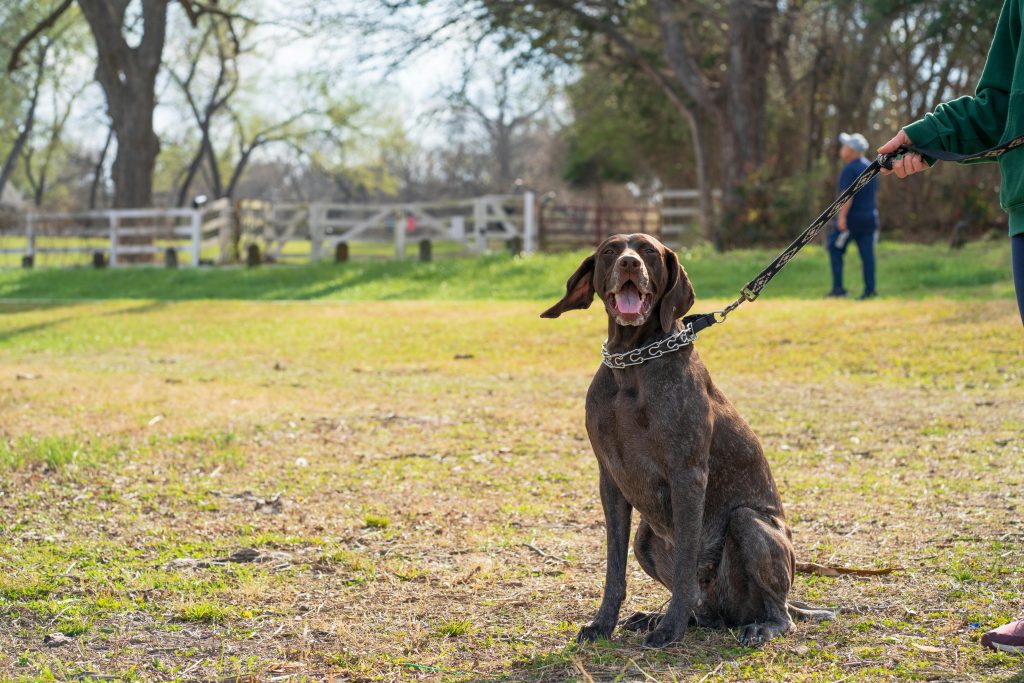
A long line gives your dog freedom while keeping them safe. This is perfect for parks, yards, beaches, or open spaces where off-leash training is not safe yet.
Attach a 15-, 20-, or 30-foot training leash to a harness. Let your dog explore. Then use your recall cue and reward them when they return.
Long-Line Safety Tips
Do not yank the line unless you must prevent danger. The line is a seatbelt, not a steering wheel.
Try this:
- Start with low distractions
- Keep the leash loose
- Reward every successful return
- Avoid wrapping the line around your hand
Long-line training helps your dog practice off-leash behavior before they earn real off-leash freedom.
Exercise 4: Hide-And-Seek Recall
This is one of the most fun recall games, especially for family households.
Hide behind a door, couch, tree, or garden corner. Call your dog once. When they find you, celebrate like they just won a tiny canine Olympics.
Make It A Family Game
Different family members can take turns calling from different rooms. This helps your dog learn that the recall cue applies to everyone, not just the person with the treat pouch.
It also builds attention. Your dog learns to listen, search, and move toward the caller.
Exercise 5: Real-Life Distraction Recall
Once your dog understands the basics, slowly add distractions.
Start with easy distractions, like toys on the floor. Then try the yard. Then a quiet park. Then a busier area from a safe distance.
Use The “Three D’s”
Recall gets harder when you increase:
- Distance
- Distraction
- Duration
Change only one at a time. Do not call your dog from 40 feet away beside a dog park on day two and expect magic. That is not training. That is emotional gambling.
How To Use A Dog Training Whistle For Recall
A dog training whistle can create a clear, consistent recall cue. Unlike your voice, it does not sound tired, annoyed, panicked, or like you skipped coffee.
The key is conditioning. Blow the whistle, reward your dog, repeat. Over time, the whistle means, “Run to me because something good is waiting.”
For a deeper guide, check out this helpful dog training whistle guide for using whistles in a clear and practical way.
Best Amazon Products For Dog Recall Training
The right tools do not train your dog for you, but they make practice safer and easier. Here are five useful Amazon products for Dog Recall Training.
1. Hi Kiss Dog/Puppy Obedience Recall Training Agility Lead
This long training leash comes in multiple lengths and works well for recall practice in yards, parks, camping areas, and open spaces.
Features: Nylon design, reinforced stitching, swivel clip, long-line options.
Best for: Dogs learning outdoor recall before off-leash practice.
2. MANDAO Nylon Training Dog Leash
This is another simple long lead option for obedience recall training and controlled outdoor freedom.
Features: Multiple length options, nylon material, swivel-style bolt snap.
Best for: Beginners who want an affordable leash for safe recall drills.
3. heouvo Dog Treat Pouch with Training Clicker
Fast rewards matter in positive reinforcement dog training. This pouch helps keep treats easy to grab.
Features: Magnetic closure, silicone treat pouch, waist belt, included clicker.
Best for: Walks, puppy recall training, and quick reward timing.
4. ACME 210.5 Professional Dog Training Whistle with Lanyard
A whistle gives you a consistent recall cue that carries farther than a soft voice.
Features: Standardized tone, lanyard, weatherproof design.
Best for: Distance recall, field training, and dogs that respond well to sound cues.
5. Zuke’s Mini Naturals Dog Training Treats
Small, soft treats are useful because your dog can eat them quickly and get back to training.
Features: Small treat size, soft texture, real chicken recipe, low-calorie pieces.
Best for: Repeated recall practice and high-frequency rewards.
Research-Backed Reasons To Use Reward-Based Recall Training
Good recall is built on trust, not fear.
A 2020 study in Frontiers in Veterinary Science compared dog training with and without remote electronic collars. The study included 63 dogs with off-lead behavior problems, including poor recall. Dogs trained mainly with positive reinforcement showed better responses to “come” and “sit” after a single command than dogs trained with e-collars. You can read the full positive reinforcement recall study.
Another 2020 PLOS ONE study looked at 92 companion dogs and found that dogs trained with aversive-based methods showed more stress-related behaviors than dogs trained with reward-based methods. The takeaway from this dog training welfare study is clear: your recall plan should protect both safety and emotional wellbeing.
Common Dog Recall Training Mistakes To Avoid
Even loving dog owners make recall harder without realizing it.
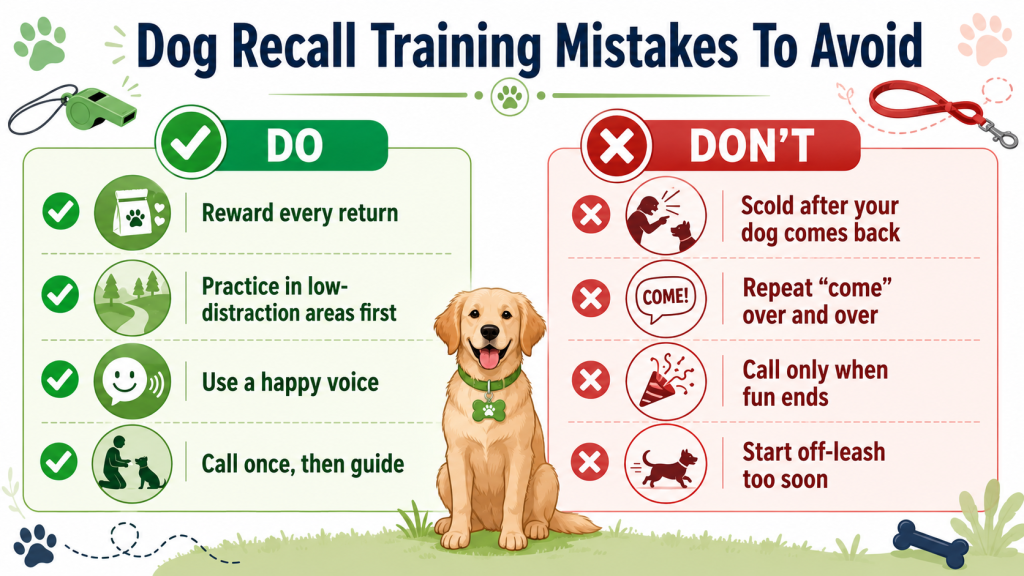
Avoid these common mistakes:
- Repeating “come” ten times
- Calling only when fun ends
- Scolding after your dog returns
- Practicing too soon around big distractions
- Using boring rewards
- Letting your dog ignore the cue without adjusting the setup
Instead, call once, reward well, and practice where your dog can succeed.
Sample 7-Day Dog Recall Training Plan
Here is a simple starter plan.
Day 1: Practice name-and-come indoors.
Day 2: Add the treat toss reset game.
Day 3: Practice in the hallway or yard.
Day 4: Add a long line in a quiet outdoor space.
Day 5: Play hide-and-seek recall.
Day 6: Add mild distractions.
Day 7: Review easy wins and reward generously.
Keep sessions around 5–10 minutes. Short, happy practice beats one long, frustrating session.
FAQs About Dog Recall Training
How Long Does Dog Recall Training Take?
Most dogs improve within a few weeks of consistent practice, but reliable recall takes longer. Practice daily in short sessions and slowly increase distractions.
What Is The Best Recall Cue For Dogs?
Choose a short cue like “come,” “here,” or a whistle signal. The best cue is the one you use consistently and reward every time during training.
Can Recall Training Be Learned by Older Dogs?
Yes. Older dogs can absolutely learn recall. Start indoors, use high-value rewards, and rebuild the cue with patience.
Should I Give My Dog Treats Each Time He Comes?
In the beginning, yes. Later, you can mix treats with praise, toys, sniff breaks, and play. However, surprise rewards help keep recall strong.
Why Does My Dog Come Indoors But Ignore Me Outside?
Outside has more distractions. Practice with a long line, increase difficulty slowly, and use better rewards outdoors than you use indoors.
Conclusion: Build A Recall Your Dog Wants To Choose
Dog Recall Training is not about controlling every move your dog makes. It is about creating a habit your dog trusts.
Start small. Reward often. Use a long line before giving freedom. Make your recall cue clear, happy, and worth running toward.
Some days will feel messy. That is normal. Dogs learn through repetition, not perfection. Keep showing up, keep the sessions light, and celebrate every little win. One day, your dog will hear your cue, spin around, and race back like you are the best thing in the whole park.
Honestly? That moment is worth every treat crumb in your pocket.