How To Clean Dogs Ears Properly
We may earn a commission for purchases made using our links. Please see our disclosure for more details.
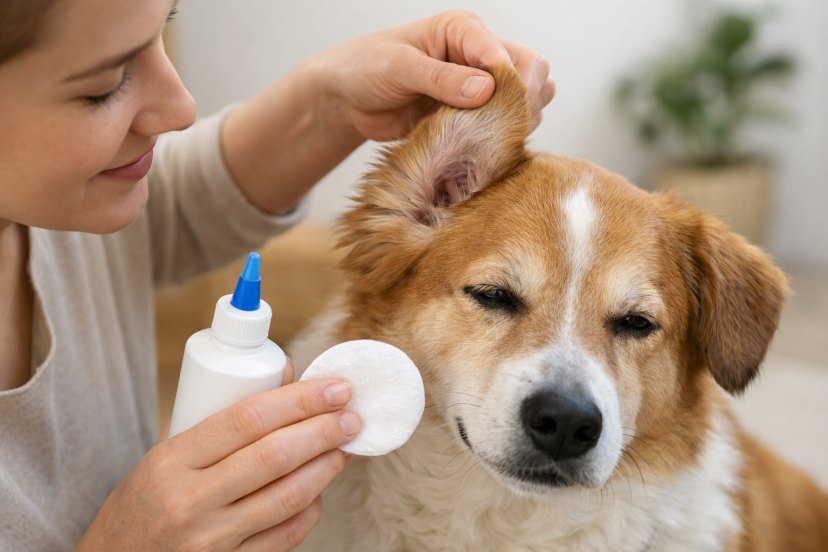
If your dog turns into a tiny furry escape artist the second you reach for the ear cleaner, you are not alone. A lot of loving dog owners want to help, but they are scared of doing it wrong. That makes sense. Ears feel delicate, and one bad experience can make the next attempt feel like a wrestling match in socks.
Learning How To Clean Dogs Ears the right way makes the whole thing less stressful for both of you. You will learn when to clean, when to stop, what to use, what to avoid, and how to make the process calm instead of chaotic. And yes, you can do this without feeling like you need a veterinary degree.
This article includes product suggestions, and I may earn a small commission if you shop through affiliate links, at no extra cost to you.
Why Dog Ears Need Cleaning Sometimes
Dog ears are not all the same. Some stay clean for long stretches. Others seem to collect wax, moisture, and debris like they are running a tiny storage business. VCA notes that not all dogs need routine ear cleaning, but dogs with discharge or odor may need it, while over-cleaning can irritate the ear canal.
This is one reason ear trouble can sneak up on owners. The 2023 AAHA guidelines explain that itchy dogs are one of the most common reasons people seek veterinary care, and those guidelines include a full section on allergic otitis externa because ear problems often show up alongside broader skin issues.
Signs Your Dog’s Ears Need Attention
A healthy ear usually looks pale pink, feels calm, and does not smell funky. If you notice a stronger odor, visible wax, discharge, head shaking, scratching, or sensitivity when you touch the ear, it is time to pay attention. VCA also notes that black discharge, scratching, and head shaking can be seen with ear mites, especially in younger pets.
Here is a simple gut check: if one ear smells noticeably worse than the other, or your dog keeps tilting their head like they are confused by life itself, do not ignore it. Those little signals matter.
When You Should Not Clean at Home
This part matters a lot. If your dog’s ears are red, swollen, painful, bleeding, or producing thick discharge, pause the home cleaning plan and call your vet first. VCA specifically warns against cleaning before a vet exam when the ears are red, inflamed, or painful because infection or a ruptured eardrum may be involved.
Also watch for bigger red flags like sudden hearing loss, stumbling, head tilt, facial droop, or pus-like or bloody discharge. Those can point to deeper ear problems and need veterinary care, not a DIY fix.
What You Need Before You Start
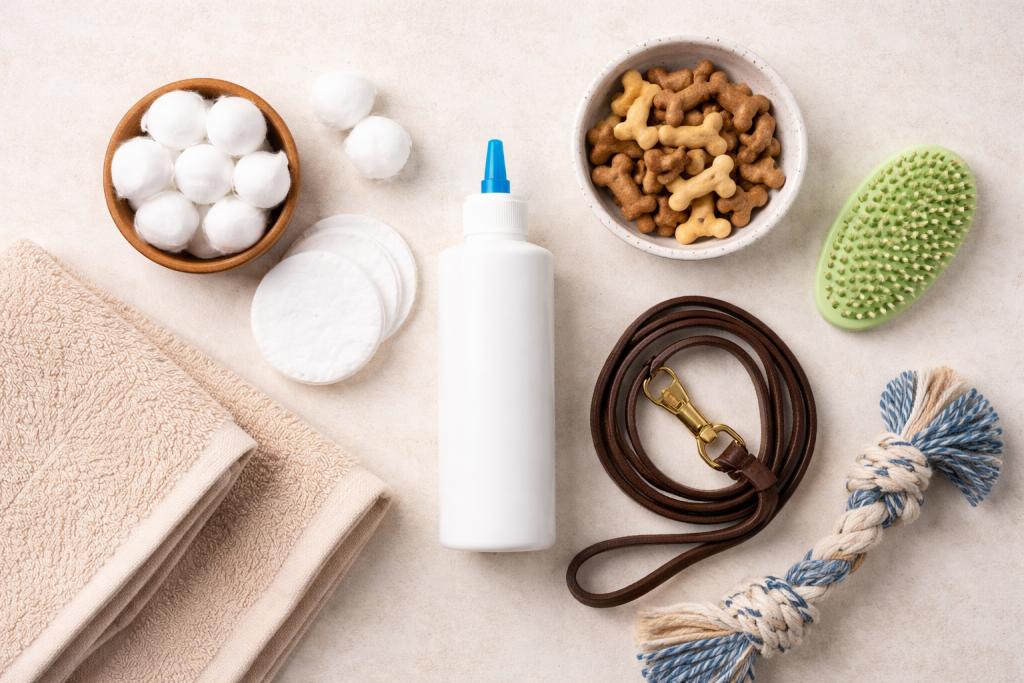
The good news is that you do not need a fancy grooming cart. VCA says a good-quality ear cleaning solution, cotton balls or gauze, and treats are enough for most home ear-cleaning sessions.
Keep your setup simple:
- Vet-approved dog ear cleaner
- Cotton balls or gauze
- A few treats
- A towel for the inevitable head shake
- A calm room with no drama
Think of it like brushing a child’s hair before school. The fewer moving parts, the better the odds of peace.
Help Your Dog Feel Safe First
Before you clean, slow down. VCA’s behavior guidance recommends staying in your dog’s comfort zone, gradually practicing head and ear touches, and pairing the process with treats or play. That is huge. Ear cleaning is not just a hygiene job. It is a trust exercise.
For some dogs, the first win is not “both ears cleaned.” The first win is “my dog let me lift the ear flap without filing a formal complaint.” Count that as progress.
Step-by-Step: How To Clean Dogs Ears
VCA lays out a clear home-cleaning method, and it is refreshingly practical.
1. Get your dog into a stable position
Small dog on your lap. Medium dog in front of you. Large dog tucked into a corner or beside a wall so they feel secure and cannot keep backing away.
2. Lift the ear flap gently
Hold the tip of the ear and pull the flap straight up to help straighten the ear canal. No yanking. No speed run.
3. Fill the canal with cleaner
VCA says to use enough solution to fill the ear canal. Do not jam the bottle tip into the ear. If the tip touches the ear, clean it before using it again.
4. Gently rub the base of the ear.
Gently massage the area for around 30 seconds, and listen for a light squishing noise. That is the cleaner loosening debris, not your dog turning into a science experiment.
5. Let your dog shake
Yes, really. Let the shake happen. It helps move loosened debris toward the outer ear where you can wipe it away. Then use gauze or a cotton ball to clean what you can see.
6. Reward generously
Treats at the end help your dog remember that ear cleaning is annoying, sure, but not the end of civilization.
How Deep Should You Go?
Only as far as your finger naturally reaches with gauze or a cotton ball. That is it. VCA and Merck both warn against using cotton-tipped applicators because they can damage the ear canal or eardrum and push debris deeper inside.
If you remember one thing from this whole article, make it this: do not clean dog ears with Q-tips. It is a little like using a chopstick to fix a watch. Wrong tool. Risky outcome.
How Often Should You Clean Dogs Ears?
There isn’t a single cleaning routine that works for every dog. According to VCA, some dogs with healthy ears may hardly ever need cleaning, while others should have their ears cleaned when you notice odor or discharge. Over-cleaning can irritate the canal.
Merck adds that infected ears with thick, dry, or waxy debris may need cleaning more often, sometimes several times weekly, and ears with heavy discharge may require even more frequent cleaning under veterinary direction. Translation: routine maintenance is one thing; active disease is another.
A practical rule:
- Clean only when your dog needs it
- Ask your vet for a schedule if your dog has repeat ear issues
- Recheck sooner if odor, discharge, or pain comes back
Common Mistakes to Avoid
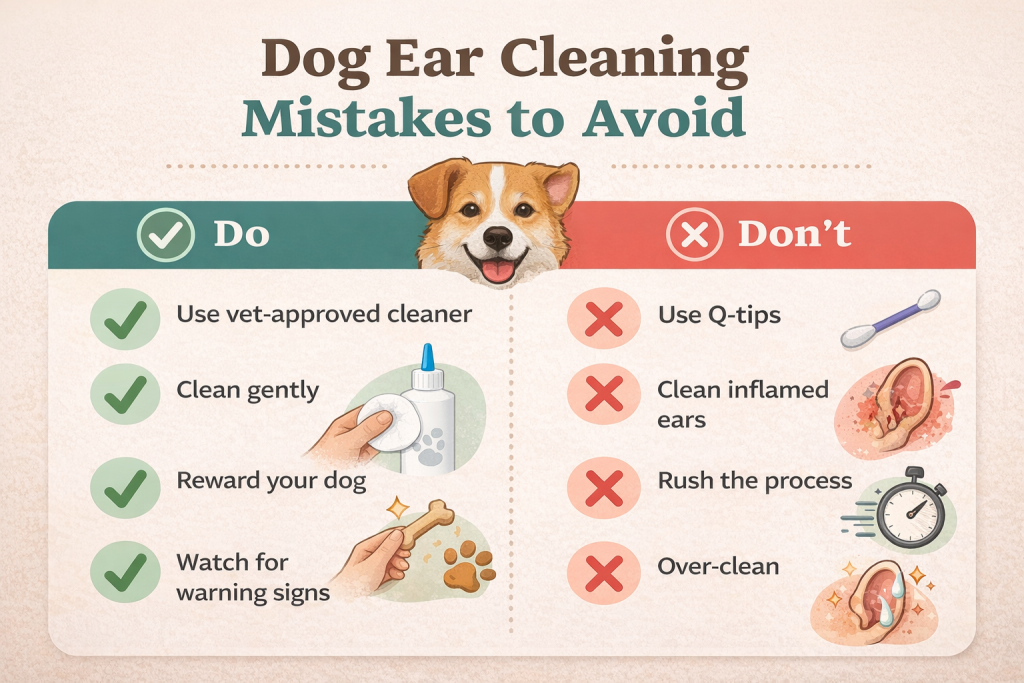
A lot of owners mean well and still accidentally make things worse. The biggest mistakes are:
- Using Q-tips
- Cleaning a red or painful ear before a vet exam
- Over-cleaning healthy ears
- Using harsh products not made for canine ears
- Forgetting to ask whether medication should be applied after cleaning
VCA notes that some cleansers may weaken certain ear medications, so timing matters if your dog is on treatment.
Breed and Lifestyle Differences Matter
Some dogs just need more ear care than others. Swimmers, dogs with floppy ears, dogs with allergy-prone skin, and dogs who love mud like it pays rent may need more frequent ear checks. That does not mean daily cleaning. It means paying attention sooner and spotting trouble before it becomes a bigger problem. This is a practical care inference, and it fits with AAHA’s emphasis on history, skin disease workups, and ear cytology when ear disease is present.
So ask yourself: does your dog live a low-dirt sofa life, or a chaotic outdoorsy life with puddles, pollen, and pond water? That answer changes the care routine.
What Healthy Dog Ears Look Like
Healthy ears are usually light pink, not angry red. They should not smell sour, yeasty, or rotten. A little wax can be normal. Thick discharge, strong odor, obvious discomfort, and repeated scratching are not. VCA and Merck both frame cleaning as a response to visible need, not a compulsory beauty ritual.
Many owners make the mistake of thinking “clean” means “sterile.” It does not. Your goal is comfort and normalcy, not turning your dog’s ears into polished marble.
5 Products That Can Help
These are solid, relevant picks for an affiliate section. I chose them because they fit common home ear-care needs: liquid cleansers, rinse options, and quick-clean wipes.
Virbac Epi-Otic Advanced Ear Cleaner
Short description: A well-known liquid ear cleaner for routine use.
Features: Liquid format, easy for full-canal flushing, strong all-around maintenance pick.
Best for: Dogs who tolerate ear cleaning well and owners who want a classic rinse-style dog ear cleaner.
Pet MD Dog Ear Cleaner Wipes
Short description: Convenient pre-moistened wipes for quick outer-ear cleanups.
Features: Wipe format, portable, simple for travel or between deeper cleanings.
Best for: Dogs who hate bottles or owners who want an easy clean dog ears at home option.
MalAcetic Otic Cleanser for Dogs and Cats
Short description: A rinse-style cleanser often chosen when owners want a stronger-feeling clean.
Features: Large bottle, liquid application, useful for dogs with regular wax buildup.
Best for: Multi-pet homes or dogs who need consistent ear maintenance.
Vet’s Best Ear Relief Wash
Short description: A wash-format cleaner that suits routine ear care.
Features: Straightforward rinse style, familiar brand, easy fit for home grooming routines.
Best for: Owners who want a simple wash to add after baths or outdoor adventures.
TropiClean Dual Action Ear Cleaner for Pets
Short description: A dual-action rinse option for everyday ear freshness.
Features: Liquid cleanser, easy squeeze-bottle use, helpful for ongoing upkeep.
Best for: Dogs who get smelly ears after swimming, hiking, or humid weather.
What the Research and Expert Reviews Say
One of the most helpful expert resources on this topic is the 2023 AAHA Management of Allergic Skin Diseases in Dogs and Cats Guidelines. The guidelines explain that when a dog has ear disease, the diagnostic workup should include ear cytology, and they also cover allergic otitis externa in detail. That is an important reminder that itchy, smelly, or repeatedly dirty ears are not always a simple cleaning issue. In many dogs, they can be part of a larger allergy pattern.
Another valuable source is the 2023 JAVMA review on managing recurrent otitis externa in dogs, which describes recurrent otitis externa as a common problem and notes that treatment often includes ear cleaning along with appropriate topical therapy. In other words, cleaning matters, but it is usually only one piece of the puzzle when infection or inflammation keeps coming back.
That is why home care works best as part of a bigger plan. Clean your dog’s ears when needed, pay attention to patterns like odor or repeated scratching, and if the same ear keeps flaring up, ask your vet to look for the root cause instead of treating each episode like a one-time mess.
A Small Handling Trick That Makes Ear Checks Easier
Sometimes the hardest part is not the cleaner. It is keeping your dog calm and steady long enough to look properly. For bigger dogs or nervous walkers, a supportive walking aid like a dog harness with a handle can make handling and repositioning easier before you start your ear check. It is not an ear-cleaning tool, of course, but it can make the whole routine feel safer and less slippery.
That little bit of control can be especially helpful if your dog is wiggly, senior, or recovering from discomfort.
FAQs About How To Clean Dogs Ears
Can I use hydrogen peroxide to clean my dog’s ears?
It is smarter to use a vet-approved ear cleaner made for dogs. Harsh liquids can irritate the canal, especially if the ear is already inflamed.
How can I tell whether my dog has an ear infection or if the ears are simply dirty?
Dirty ears may have mild wax or a slight smell. Infection is more likely when you see redness, pain, thick discharge, repeated head shaking, or strong odor. If you are unsure, get a vet exam.
Should I clean my dog’s ears after every bath or swim?
Not always. Some dogs benefit from a quick post-swim check, especially if they are prone to moisture buildup. But routine over-cleaning can irritate healthy ears.
What if my dog cries when I touch the ear?
Stop and call your vet. Pain, swelling, or severe sensitivity can point to infection, injury, or a ruptured eardrum.
Can I clean my puppy’s ears the same way as an adult dog?
The basic method is similar, but be extra gentle and go slowly. Puppies also get ear mites more often than adult dogs, so dark discharge or intense scratching deserves attention.