5 Smart Dog-Friendly Living Room Ideas
We may earn a commission for purchases made using our links. Please see our disclosure for more details.
You know that moment when your living room almost looks magazine-nice… and then your dog storms in like a fuzzy tornado? Hair on the throw pillows, mystery smudges on the coffee table, and that one corner of the rug that now lives permanently flipped up.
A Dog-Friendly Living Room doesn’t mean you have to give up style. It just means you design for real life—claws, zoomies, naps, and yes… the occasional “oops.”
In this guide, you’ll learn how to pick forgiving fabrics, stop rug slip, hide cords, reduce odor (without perfume-bombing your home), and set up a space that feels calm for both of you. Also: a short list of Amazon finds that make the whole thing easier.
Start With a “Dog Map” of Your Living Room
Before you buy anything new, do this tiny, weird, surprisingly helpful exercise: walk your living room like your dog.
Where do they sprint? Where do they skid? Where do they flop like a dramatic Victorian poet?
Watch the traffic lanes
Most mess happens in the same 2–3 paths: door → couch, couch → window, window → “I heard something” corner.
Fix: keep those lanes open. Fewer tight corners = fewer hip-checks into side tables.
Pick a “base camp” spot
Dogs love a consistent home base. When they have one, they stop claiming your sofa as their “official nap office.”
Fix: choose one spot where a bed, mat, or blanket always lives. Make it predictable.
Choose Furniture Materials That Forgive
If your dog treats the couch like a second body, you need materials that don’t panic.
Fabrics that usually hold up well
- Performance fabric / tightly woven microfiber: resists snags better than loose weaves.
- Leather (or quality faux leather): easy wipe-down, but claws can leave marks if nails get sharp.
Fabrics that tend to suffer
- Loose weaves (hello, pulled threads)
- Delicate linen blends
- Anything you’d describe as “cloud-soft and luxurious” (dogs hear: “challenge accepted”)
Quick trick: if you can catch your fingernail in the fabric, your dog’s nails can too.
Use a Washable Layer Strategy
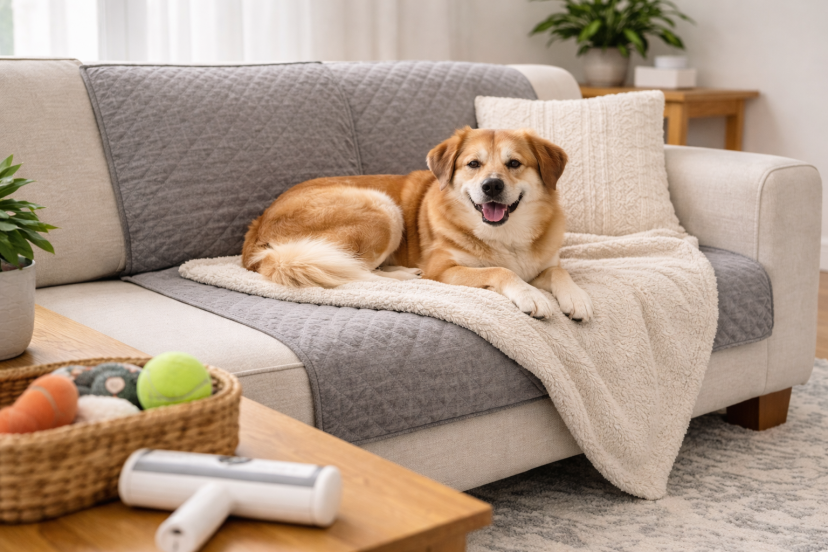
This is the secret sauce of a Dog-Friendly Living Room: layers you can remove fast.
The “two-layer” couch method
- A fitted couch cover or protector (stays on)
- A washable blanket or throw (swaps out easily)
So when your dog jumps up after a rainy walk, you’re not deep-cleaning cushions—you’re just tossing a blanket in the wash.
Pick colors that hide fur
If your dog is light, go oatmeal/cream/gray. If your dog is dark, go charcoal/navy.
And patterns? Patterns are basically “camouflage for real life.”
Choose Rugs That Don’t Slip or Trap Funk
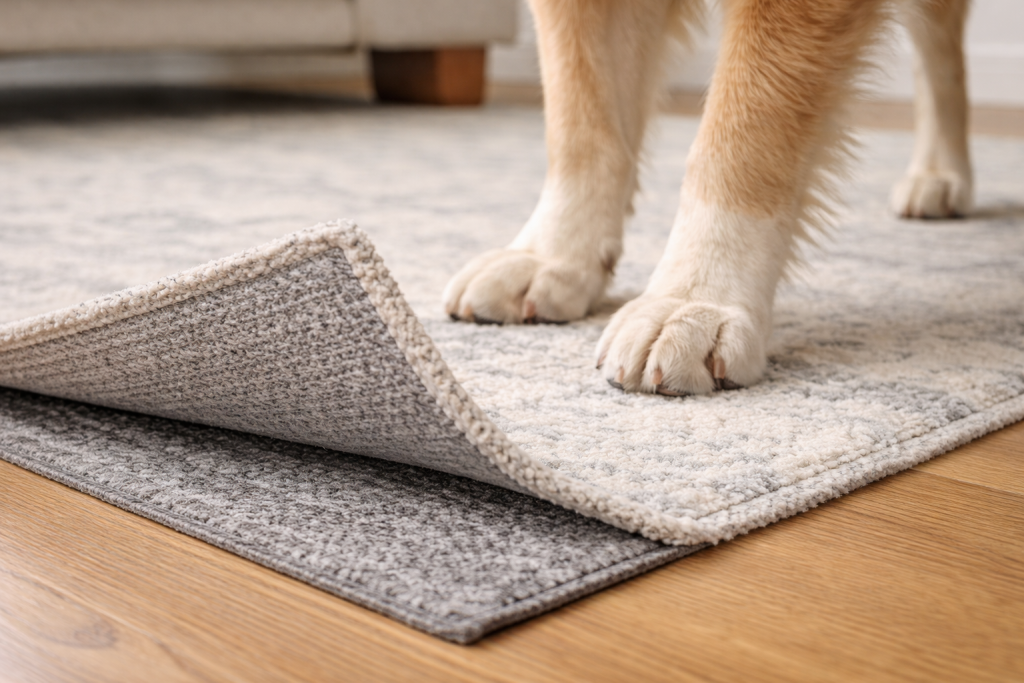
A sliding rug is how dogs learn fear. It’s also how humans learn pain.
Non-slip matters more than you think
If your dog ever does the cartoon-leg-scramble on tile or hardwood, add traction.
Fix options:
- Rug pad
- Rug grippers
- Low-pile rug with a non-slip backing
Washable rugs are your best friend
If your dog sheds or drools or tracks mud, washable rugs make your living room feel “resettable,” not doomed.
Dog-Proof the Coffee Table Zone
The coffee table area is where cords, remotes, crumbs, and chewable chaos gather… like it’s a party.
Hide cords like you’re baby-proofing
Because honestly, you kind of are.
- Route cords behind furniture
- Use cord sleeves
- Keep charging stations off the floor
Make surfaces boring (in a good way)
Dogs get curious when there’s clutter.
Fix: one tray, one basket, one “drop zone.” When the room looks calmer, dogs act calmer.
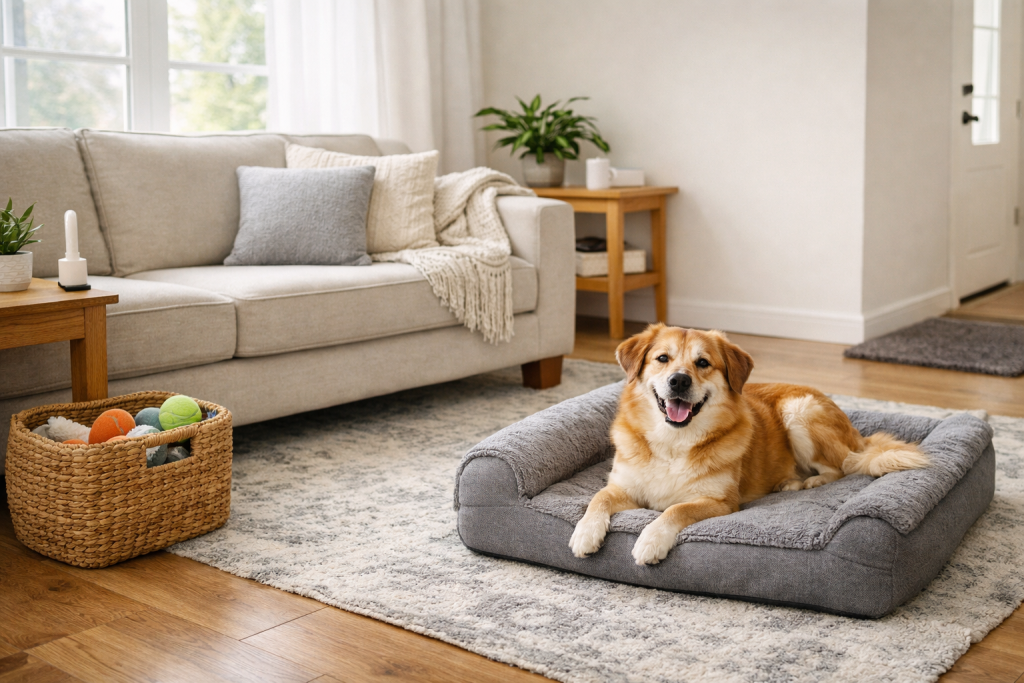
Set Up a Cozy “Place” Zone (That Isn’t a Punishment)
A Dog-Friendly Living Room works best when your dog has a spot that feels like theirs.
What makes a “place” feel safe
- A bed with a clear edge (dogs love boundaries)
- A throw blanket that smells like home
- A consistent location (no moving it daily)
Help your dog succeed
If your dog only gets “place” when they’re in trouble, they’ll avoid it.
Instead, give random rewards when they use it naturally. That builds the habit without drama.
Calm the Room With Light, Sound, and Temperature
Some dogs get overstimulated fast—especially puppies, herding breeds, and anxious rescues.
Lighting tweaks that help
- Softer warm lighting at night
- Avoid harsh glare on shiny floors (it can make skidding worse)
Sound matters too
If your dog loses it at every hallway noise, try:
- A steady fan sound
- Calm background music
- Curtains that soften echoes
Small changes can make the room feel like “nap mode,” not “alert mode.”
Create a Cleaning Rhythm That Doesn’t Eat Your Life
You don’t need a perfect house. You need a repeatable system.
The 90-second reset (daily)
- Quick lint/hair pass on the couch
- Toss toys into one bin
- Wipe the obvious paw prints
That’s it. Stop there. Consistency beats marathon cleaning.
The weekly “living room refresh”
- Vacuum floors + upholstery
- Wash couch blanket/cover
- Spot-clean any “high traffic” corners
When you do small upkeep regularly, nothing becomes a full-blown weekend project.
Beat Dog Smell Without Perfume Bombing Your Home
If your living room smells like “air freshener fighting dog,” nobody wins.
Use the right kind of cleaner
For accidents and organic smells, enzymatic cleaners break down the source instead of masking it.
Simple airflow hacks
- Open windows for 10 minutes (even briefly)
- Add a washable doormat by the entry
- Keep a towel near the door for quick paw wipes
Fresh air + quick routines = a living room that smells like a home, not a kennel.
Organize Toys and Gear Without Making It Ugly
Dogs come with stuff. Toys, leashes, brushes, wipes, treats, sweaters (if you have a tiny dog with a big personality).
The “one-basket rule”
Choose one attractive basket and make it the official toy home.
When toys live in one place, your dog learns where to find them—and where to put them back (eventually… with practice… maybe).
Make “drop zones” intentional
A small tray for keys and remotes keeps items off the couch.
A slim bin for wipes keeps cleanup easy without cluttering your surfaces.
Keep Your Decor “You” (Not Just “Dog”)
A Dog-Friendly Living Room can still look like your taste—not a pet store aisle.
Go higher with breakables
Put fragile decor on shelves, not coffee tables.
If you love floor vases, choose heavier ones that won’t tip when a tail swings by.
Choose textures that hide life
- Bouclé looks cute but traps hair
- Smooth fabrics wipe down easier
- Matte finishes hide nose smudges better than glossy ones
Design isn’t about perfection. It’s about choosing what you can live with happily.
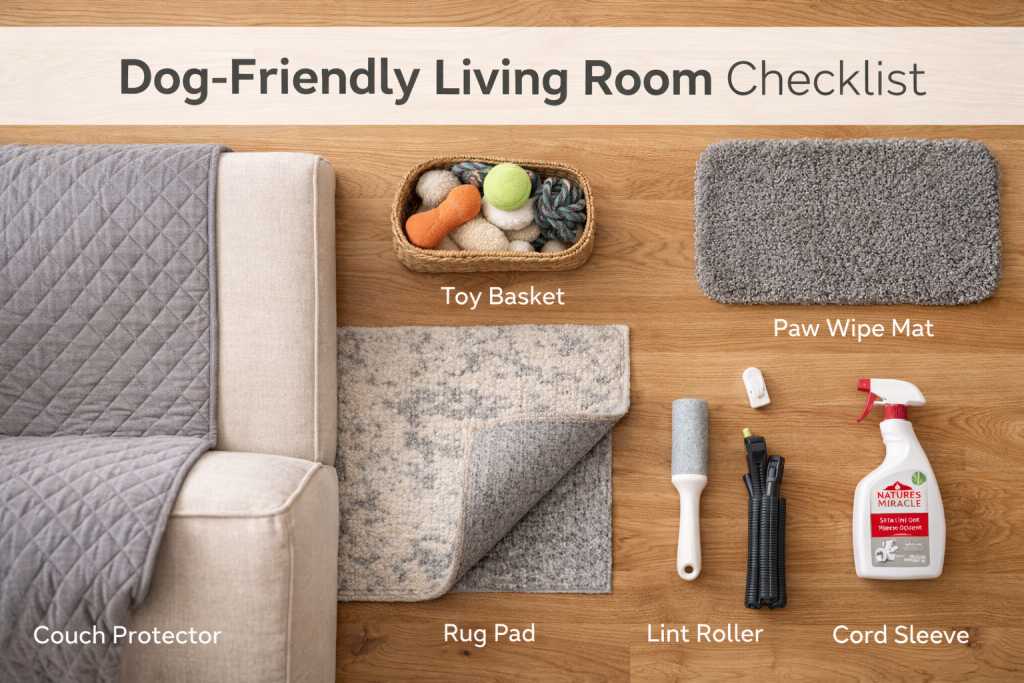
Affiliate Picks: 5 Amazon Finds for a Dog-Friendly Living Room
Below are five practical upgrades that support a Dog-Friendly Living Room—without making your space feel like a vet clinic.
1) PureFit Reversible Quilted Sofa Cover (Water Resistant)
Short description: A quilted, reversible cover that protects from fur, dirt, and daily wear.
Features:
- Water-resistant quilted layers
- Elastic straps + foam anchors to reduce slipping
- Machine-washable
Use cases (who it’s for):
- You want couch protection without a full slipcover look
- Great for households with big shedders or “couch loungers”
2) Bedsure Waterproof Dog Blanket (Washable)
Short description: A cozy, washable barrier for couches and chairs—especially for droolers and “post-walk floppers.”
Features:
- Waterproof layer helps block moisture
- Soft fabric that still looks living-room-friendly
- Easy wash-and-repeat care
Use cases (who it’s for):
- Puppies, seniors, or dogs who love couch naps
- Renters who want protection without changing furniture
3) GORILLA GRIP Felt + Rubber Rug Pad Gripper
Short description: A rug pad that helps stop sliding and bunching—key for traction and safety.
Features:
- Grippy rubber bottom
- Cushions the rug slightly (more comfy under paws)
- Helps rugs lay flatter
Use cases (who it’s for):
- Homes with hardwood/tile where dogs slip
- Anyone tired of fixing a rug corner 9 times a day
4) ChomChom Roller Pet Hair Remover
Short description: A reusable hair remover that works especially well on couches, chairs, and car seats—no sticky refills.
Features:
- Reusable, no tape
- Quick back-and-forth pickup
- Easy empty compartment
Use cases (who it’s for):
- Anyone who wants fast “guest is coming” cleanup
- Works best on upholstery and fabric surfaces
5) Nature’s Miracle Advanced Stain & Odor Eliminator for Dogs
Short description: A go-to enzymatic cleaner for accidents, tough odors, and repeat spots.
Features:
- Enzymatic action (targets organic messes)
- Multi-surface use (carpet, sealed floors, fabrics—always spot test)
- Helps discourage re-soiling by removing odor cues
Use cases (who it’s for):
- Puppies in training
- Multi-dog homes where “mystery smells” appear out of nowhere
Research-Backed Ways to Keep Your Living Room Healthier
You don’t need to turn your house into a laboratory. Still, a little science can help you make choices that actually work.
1) Cleaner air: why vacuuming + filtration matters
A 2024 review on indoor allergen control notes that HEPA filtration and frequent vacuuming can reduce exposure to furry-animal allergens (especially important for asthma/allergy-sensitive households). The big takeaway: consistency beats “deep clean once in a while.”
Source: dog and cat allergen control research review (2024)
How to use this in your living room:
- Vacuum on a schedule (even quick passes help)
- Wash soft layers (throws, blankets) regularly
- If allergies are a concern, consider a HEPA air purifier in the living space
2) Safer surfaces: flooring choices can affect paws and comfort
A 2025 study looking at dogs in kennel environments found associations between flooring substrates and issues like foot/skin abnormalities and cleanliness. While your living room isn’t a kennel, the design lesson still holds: surfaces and traction matter for comfort and health—especially for seniors.
Source: flooring substrate study and dog health (2025)
How to use this in your living room:
- Add traction (rug pads, runners) on slippery paths
- Choose surfaces that are easy to clean and easy to walk on
- If your dog is older, prioritize stability over aesthetics
Gentle Training + Treats That Protect Your Setup
No matter how perfectly you design, habits make or break a Dog-Friendly Living Room.
Here are two tiny habits that save your furniture fast:
- Teach “place” (bed = default chill zone)
- Teach “off” + “leave it” (so your dog doesn’t sample cords or décor)
And if you want to reward those wins, use treats intentionally—small, frequent, and tied to calm behavior. If you’re picky about ingredients (as you should be), this guide to bacon dog treats (what to look for, what to avoid, and safe picks) can help you choose options that feel good to give.
FAQs About a Dog-Friendly Living Room
What is the best flooring for a Dog-Friendly Living Room?
If you can, choose flooring that’s easy to clean and gives decent traction. If you already have slippery floors, add rugs/runners with a non-slip pad to create safe walking lanes.
How do I protect my sofa from dog hair and scratches?
Use a two-layer strategy: a fitted couch cover underneath, plus a washable throw on top. Keep nails trimmed, and give your dog a “place” option so the couch isn’t the only comfy spot.
How can I keep my living room smelling fresh with a dog?
Skip heavy fragrances. Clean accidents with an enzymatic cleaner, wash soft layers regularly, and do a quick daily reset (hair pickup + airflow). A predictable routine beats emergency deodorizing.
What decor is safest in a living room with a puppy?
Go sturdy and stable. Avoid small breakables at tail-height, hide cords, and choose heavier décor that won’t tip easily. If it looks chewable, a puppy will test that theory.
How do I make a small apartment living room dog-friendly?
Think vertical and multi-purpose: a slim toy basket, a washable blanket, and a defined bed zone. Keep a clear traffic lane for zoomies, and use rug pads so nothing slides.
Conclusion: You Can Have “Nice” and “Dog” in the Same Room
A Dog-Friendly Living Room isn’t about controlling every hair or preventing every muddy paw print. It’s about building a space that bounces back.
Start with one win—maybe a rug pad that stops slipping, or a washable couch layer that saves you from stress-cleaning. Then add one habit, like a 90-second reset or a cozy “place” zone.
Your living room can be warm, stylish, and lived-in… with your dog right in the middle of it. And honestly? That’s the best version.