Dog Car Safety: Seats, Tethers, and Travel Setups Explained
We may earn a commission for purchases made using our links. Please see our disclosure for more details.
A quick trip to the park can become risky when your dog is free to climb between seats, lean out a window, or jump toward an opening door. Dog Car Safety starts with one simple decision: where and how your pet will be restrained before the engine starts.
The choices can be confusing. Booster seats, tethers, crash-tested harnesses, and kennels do different jobs. This guide explains the differences, helps you match gear to your dog and vehicle, and shows how to put together a setup you can use on every ride. It also explains what independent safety testing can and cannot tell you about a product.
Why Dog Car Safety Starts With Restraint
Loose dogs can distract the driver, interfere with controls, or be thrown forward during a sudden stop.
The goal is to manage movement without pressuring the dog’s neck. A well-chosen system holds your dog in a designated space and stays attached to the vehicle. Look beyond a product’s reassuring name and examine how it actually works.
Where Should Your Dog Ride in the Car?
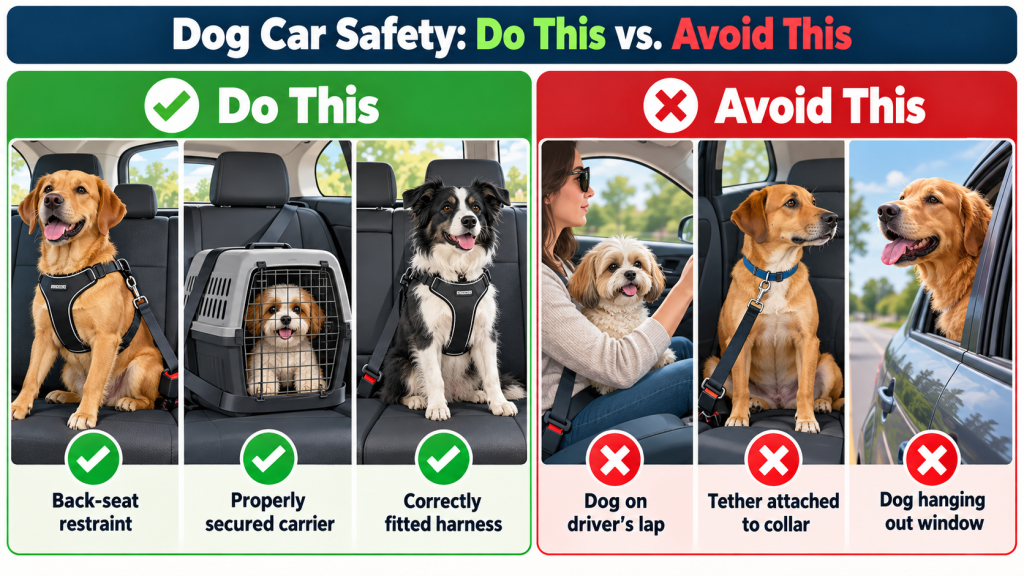
The rear seat is usually the practical choice for a dog wearing a vehicle harness or traveling in a secured carrier. Keep dogs out of the front passenger position, where a deploying airbag can cause serious injuries.
A cargo area may accommodate a properly anchored travel kennel, but only if the space, attachment points, and vehicle design support the manufacturer’s installation instructions.
Before buying anything, check seat-belt routing, rear-seat geometry, headroom, and whether an installed crate blocks visibility or passenger access.
Dog Booster Seats: Comfort Versus Crash Protection
Booster seats elevate small dogs so they can see outside and may encourage them to settle in one place.
However, a booster is not automatically a crashworthy restraint. A tether attached to the seat may restrict roaming without preventing injury in a collision. Never clip it to a collar; sudden force against the neck can be dangerous.
For a closer look at comfort-focused models, compare pet car seats for small dogs while remembering that elevation and a sewn-in tether are not proof of crash protection.
How Crash-Tested Dog Harnesses Work
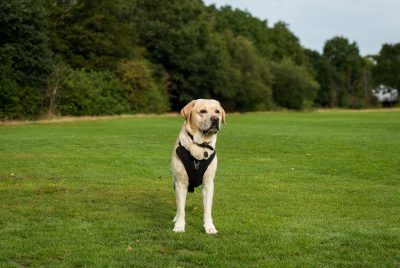
A vehicle harness is designed to connect the dog’s body to the car’s restraint system. Models with documented crash testing aim to limit forward travel and distribute forces across stronger parts of the torso.
Check whether the vehicle’s own seat belt threads through the harness or whether a separate connector is required. Follow the exact approved routing rather than improvising with a leash clip.
Comfort still matters. The harness should stay correctly positioned while your dog sits or lies down, without rubbing under the legs or restricting breathing.
Dog Seat-Belt Tethers: What They Can and Cannot Do
Clip-in tethers are convenient, especially for owners who frequently move between vehicles. They can stop a dog from wandering into the front seats and may reduce driver distraction.
Their major limitation is uncertain crash performance. Lengthy, stretchy, or zipline-style attachments can allow substantial movement during impact, even when the metal clip looks sturdy.
If a crash-tested harness specifies direct seat-belt routing, do not add an aftermarket extension. Use a tether only within the restraint maker’s approved setup, and never attach it to a neck collar.
Travel Crates and Carriers: When Containment Makes Sense
An enclosed carrier suits many small dogs that settle better in a den-like space. A properly sized rigid kennel can work well for larger dogs, particularly in vehicles with suitable cargo-room anchoring points.
The enclosure must fit both your dog and the car. Your pet should have room to change position comfortably, while excess interior space can increase movement during a sudden stop. Check ventilation, door security, and whether the kennel can be secured without sliding.
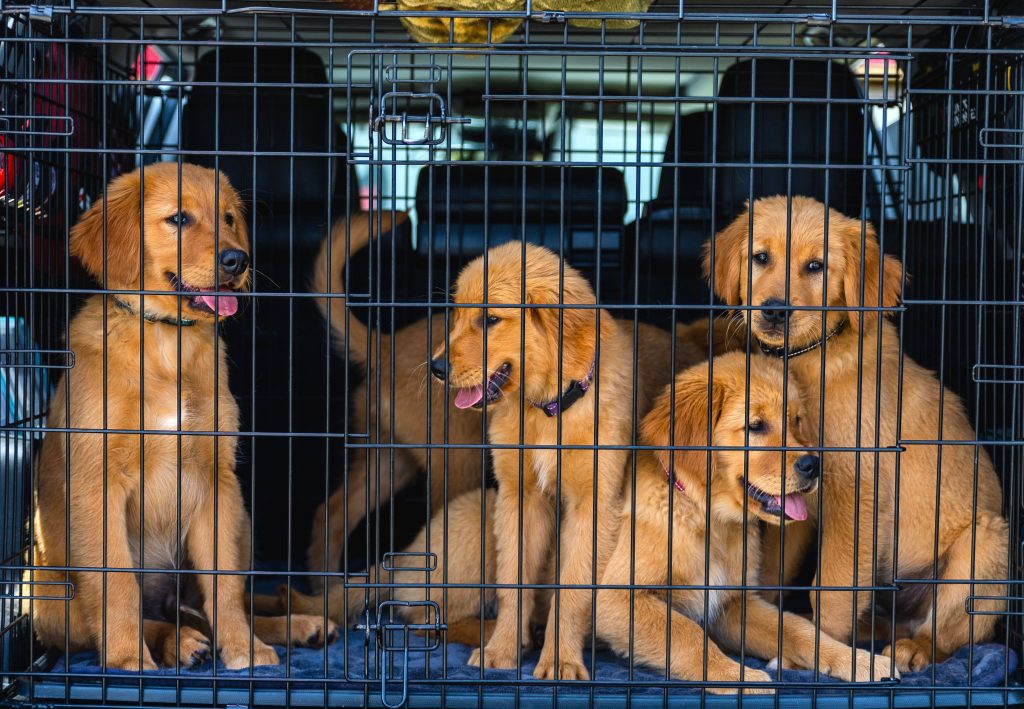
Ordinary household wire crates should not be assumed to provide crash protection simply because they contain a dog.
Choosing the Right Setup for Your Dog’s Size
For a tiny dog, a certified carrier may be a better fit than a harness designed around larger chest measurements. Measure the dog’s body and compare those numbers with the maker’s actual sizing guide, not just a breed label.
Medium dogs may have good harness options if the chest shape and vehicle belt path are compatible. Larger dogs often require more planning: a substantial kennel needs room for its door, ventilation, and secure tie-downs.
Also consider age and mobility. A senior dog may need a stable ramp or help getting into the car before being restrained.
How to Install a Restraint Correctly
Set up the system with the car parked. For harnesses, thread the vehicle belt exactly as directed, buckle it, and check that webbing lies flat rather than twisted.
For carriers, use the stated belt guides or approved anchors. For kennels, follow the tested tie-down arrangement and use straps rated for that purpose; ordinary bungee cords are not substitutes.
Then check for loose hardware, blocked exits, and reachable buckles your dog might press. Give the dog a chance to sit and lie down before departure. Recheck installation whenever you move the restraint to another vehicle.
SUVs, Small Cars, and Multiple-Dog Setups
In a small car, a compact carrier or properly fitted back-seat harness may use space more efficiently than a large kennel. Measure your available floor and seat area before ordering.
SUVs offer more cargo room, but a kennel still needs approved anchors; resting it against the rear hatch is not a secure installation.
When transporting two dogs, provide each with an individual restraint or appropriately sized enclosure. Avoid sharing one tether or letting dogs twist around each other. Keep luggage from striking their space.
Preparing Dogs for Longer Car Rides
Start with the restraint at home, rewarding calm investigation rather than forcing your dog inside. Progress to sitting in a parked vehicle, then try short, pleasant drives.
For longer trips, schedule breaks for water, toileting, and stretching. Always attach a leash before opening a door.
If your dog drools, vomits, shakes, or panics repeatedly, talk to your veterinarian. Motion sickness and travel anxiety can require different approaches; neither should be managed by letting the dog ride loose.
Common Car Travel Mistakes to Avoid
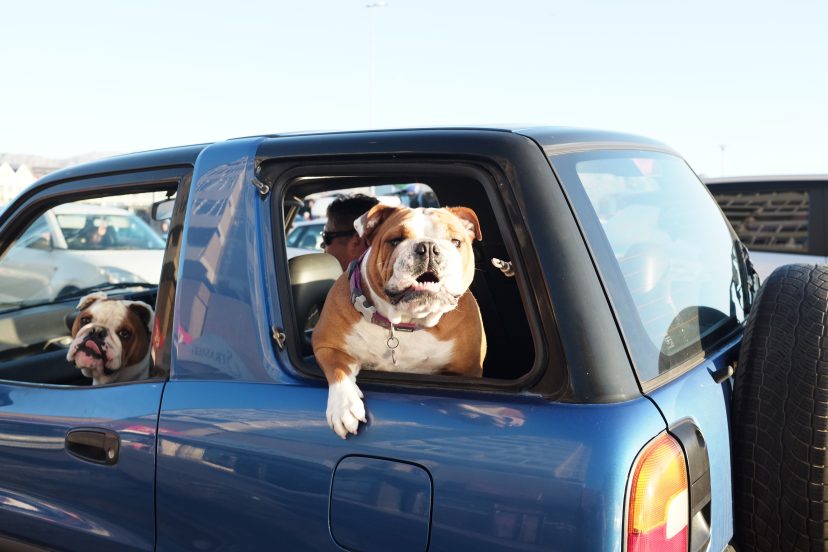
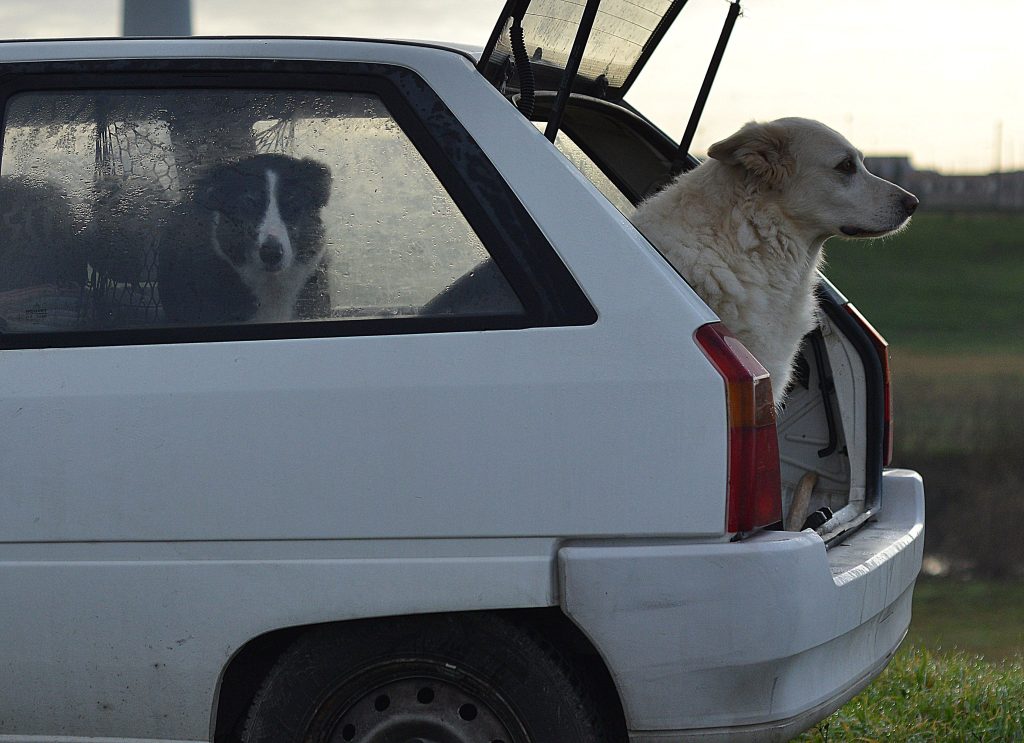
Never allow a dog to ride on the driver’s lap, put their head through an open window, or roam between seats.
Do not assume that a product described as “crash-tested” passed an independent standard. Check the exact model, size, test results, and instructions.
Never leave your dog alone in a parked car. Cabin temperatures can become dangerous quickly, and partly open windows do not make an unattended vehicle safe.
Recommended Products for Dog Car Safety
These five options cover different body sizes and travel routines. Confirm current fit guidance and installation requirements before choosing; certification applies to specified configurations, not every possible use.
1. Sleepypod Clickit Sport Plus Crash-Tested Harness
Best for: Dogs that fit a vehicle harness and travel on the back seat.
Its three-point seat-belt design and padded vest help control torso movement during a crash. The Clickit Sport line has independent Center for Pet Safety certification, and the harness also works for short walks. It takes more fitting and belt-threading than a simple clip-on strap, so measure chest girth carefully and practice installation.
2. Lucky Duck Lucky Kennel – Medium
Best for: Medium-sized dogs traveling in an SUV or vehicle with suitable cargo space.
The Lucky Duck Lucky Kennel features a durable, one-piece rotomolded shell, a reversible locking door, and built-in tie-down points. It has earned independent crash-test certification from the Center for Pet Safety when secured with the Lucky Ratchet Strap Kit. Its sturdy construction provides an enclosed travel space, although the kennel’s size and required securing straps need consideration.
3. Sleepypod Mobile Pet Bed Crash-Tested Carrier
Best for: Small dogs that prefer a familiar, enclosed resting spot.
This rounded carrier converts from an everyday bed into a zippered travel enclosure. Its removable plush lining helps keep the same resting space familiar between home and car trips. Center for Pet Safety certification applies to pets weighing up to 15 pounds.
4. Sleepypod Air Crash-Tested Pet Carrier
Best for: Small dogs whose owners combine driving with occasional air travel.
The Air has seat-belt routing for vehicle use, ventilated mesh sides, washable bedding, and adjustable ends that shorten for some under-seat airline spaces. Its verified testing makes it a useful dual-purpose option, but check airline rules, pet weight, and usable interior dimensions before traveling.
5. Sleepypod Atom Crash-Tested Pet Carrier
Best for: Very small dogs needing a compact carrier that travels easily.
The Atom features mesh ventilation, a stable base, a padded carrying strap, and a luggage-handle pocket. Its Center for Pet Safety certification applies to pets weighing up to 12 pounds. The compact interior makes measuring especially important, even for a dog below that weight limit.
What Independent Crash Testing Reveals
The Center for Pet Safety’s 2013 harness study found major performance differences among tested restraints. Some allowed the test dog to launch from the seat or showed failures in stitching and hardware. Tests used weighted dog simulants rather than live animals.
Its 2015 travel-crate research also found that attachment methods matter: the Gunner G1 Intermediate remained secured with its reinforced straps, while some competing setups failed. These are controlled crash tests, not guarantees of injury prevention in every real collision.
Use the organization’s current certified-products directory to confirm exact products and sizes. The CDC’s pet travel guidance reinforces back-seat restraint and properly secured, ventilated crates.
Frequently Asked Questions About Dog Car Safety
Are dog booster seats safe in a crash?
A padded booster seat alone does not establish crash protection. Some mainly offer elevation and comfort, while their attached straps reduce roaming. Look for independent testing of the exact seat and its restraint system, not claims based only on materials or a tether. For many small dogs, a verified travel carrier is a clearer safety-first option.
Can a dog seat belt be safely connected to a collar?
No. A car tether pulling against a collar can concentrate force on the neck and throat during hard braking or a crash. Use a correctly fitted restraint harness and only the connection method approved by its manufacturer. If a harness requires direct routing of the vehicle seat belt, avoid adding a leash or extension.
Is a crate or dog harness the safer option for car travel?
Neither design is universally safer. A certified harness can suit a dog on the rear seat, while a certified, anchored kennel can suit a vehicle with suitable cargo space. A loose crate and a basic walking harness are not equivalent alternatives.
How frequently should I take breaks when traveling by car with my dog?
Plan a break about every two hours as a starting point, adjusting for your dog’s age, health, and needs. Use stops for water, bathroom time, and a short walk. Secure the leash before opening the car door, especially at unfamiliar rest areas.
Does my dog need a seat belt by law?
Requirements differ by state and locality, and some rules focus on distracted driving or transporting dogs in pickup trucks rather than specifying a particular restraint. Check the current laws wherever you travel. Even where no specific pet seat-belt rule applies, securing your dog protects the driver from interference and reduces avoidable travel risks.
Conclusion: Build a Safer Setup for Every Ride
Good Dog Car Safety is less about buying the plushest seat and more about choosing equipment that fits your dog, anchors correctly, and has credible performance evidence. A back-seat crash-tested harness such as the Sleepypod Clickit Sport Plus may suit dogs comfortable wearing a vest. Smaller pets may do better in the Sleepypod Mobile Pet Bed, while suitable vehicles can accommodate a securely installed travel kennel.
Measure your dog, inspect your car’s restraint points, and follow the exact manufacturer’s instructions. Remember that boosters and basic tethers may limit distraction without providing demonstrated collision protection. Build familiarity through short practice trips, then keep the same buckling routine for quick errands and long drives alike. Choose the independently tested setup you can install correctly every single time.