Pet Odor Remover Guide: How to Choose the Right Formula for Your Home
We may earn a commission for purchases made using our links. Please see our disclosure for more details.
Pet smells have a stubborn way of outlasting the mess that caused them. You blot the carpet, wash the blanket, open a window—and a day later, that familiar odor is back. Cleaning what you can see does not always remove what soaked into fibers, padding, grout, or wood.
A good pet odor remover should match both the type of mess and the surface underneath it. This guide explains how enzyme and oxygen-based formulas differ, how to treat fresh and old accidents, which products suit different households, and when recurring odor points to a bigger pet-care issue. The aim is to remove the source, not simply perfume the room.
Why Pet Odors Linger After You Clean
Urine, vomit, feces, drool, and other biological messes can move below the visible surface. On carpet, liquid may pass through the pile into the backing or pad, leaving odor-producing residue after the top looks clean.
Moisture in the air can cause an old stain or odor to become noticeable again. A pet odor remover works best when it reaches the original mess instead of merely adding fragrance. citeturn919660search8
What a Pet Odor Remover Actually Needs to Do
For organic accidents, choose a formula intended for urine, feces, or vomit and check its approved surfaces, dwell time, and deep-cleaning directions. If the label says to saturate the area, a quick mist may not be enough.
For general pet smell without a specific accident, routine laundering and cleaning may matter more than repeated deodorizing. Removing dirty bedding, fur, saliva residue, and tracked-in grime tackles the source instead of layering fragrance over it.
Enzyme, Oxygen, and Odor-Neutralizing Formulas Compared
Enzymatic cleaners use enzymes, often with bacteria-based systems, to break down components of organic messes. They are common choices for urine, feces, and vomit.
Oxygen-based formulas use oxidizing chemistry to tackle stains and odor-causing material, especially on compatible carpets and upholstery. Odor neutralizers vary by formula, while fragrance mainly changes what you smell. Surface directions still matter.
How to Choose a Pet Odor Remover for Your Surface
Start with the surface, not the bottle. Carpet can hide contamination below its fibers, while sealed hard floors usually need less liquid. Untreated wood, wool, silk, leather, and delicate fabrics often need special care.
Check the manufacturer’s surface guidance and spot-test first. For a carpet extractor, use a formula made for that machine type. A cleaner that works well as a direct spray is not automatically suitable for putting inside cleaning equipment.
Best Pet Odor Remover Products for Different Homes
The best pet odor remover depends on the mess and how you plan to clean it. These five options cover general accidents, severe dog messes, deep carpet treatment, cat urine, and portable carpet machines.
| Product | Best fit | Formula |
| Rocco & Roxie Enzyme Stain & Odor Eliminator | Versatile use | Bio-enzymatic |
| Nature’s Miracle Advanced Dog Stain & Odor Eliminator | Severe dog messes | Enzymatic |
| Simple Solution Extreme Stain & Odor Remover | Carpet and padding | Enzyme + Pro-Bacteria |
| urineOFF Kitten & Cat Odor & Stain Remover | Cat urine | Bio-enzymatic |
| Bissell PET PRO OXY Spot & Stain Formula | Portable carpet machines | Oxygen-based |
Rocco & Roxie Enzyme Stain & Odor Eliminator, 32 Fl Oz
Best for: All-around use on common pet accident areas
This bio-enzymatic formula is intended for urine, feces, vomit, and other organic stains on areas including carpets, upholstery, bedding, crates, and laundry. Its practical strength is versatility. Deep carpet odors still require enough liquid to reach the contaminated layer and adequate contact time, so a quick surface mist may not solve a pad-level problem.
Nature’s Miracle Advanced Dog Stain & Odor Eliminator, Severe Mess, 32 oz
Best for: Households dealing with severe dog accidents
This enzymatic formula targets severe dog messes on carpets, hard floors, furniture, and compatible fabrics. The manufacturer directs users to wait 15 minutes before blotting severe stains. It works well for homes that need a more powerful spot-cleaning solution, but avoid using it on untreated hardwood, leather, suede, silk, or specialty wool fabrics.
Simple Solution Extreme Stain & Odor Remover, Enzyme Stain Cleaner, 32 oz
Best for: Deep urine spots in carpet and padding
Simple Solution combines enzymes with Pro-Bacteria and instructs users to saturate beyond the visible carpet spot so the treatment reaches backing and padding. That suits odor returning from below the pile. It is intended for water-safe surfaces, while the manufacturer excludes wool and leather.
urineOFF Kitten & Cat Odor & Stain Remover
Best for: Cat and kitten urine
This cat-specific bio-enzymatic cleaner is formulated for feline urine, with the manufacturer listing carpets, rugs, hardwood, and other surfaces among its uses. It is a focused option for cat households rather than a general room deodorizer. As with any treatment, follow the surface directions and keep the area undisturbed for the recommended contact and drying time.
Bissell PET PRO OXY Spot & Stain Formula for Portable Carpet Cleaners, 32 oz., 2034
Best for: People using a portable carpet extractor
This oxygen-based formula is designed for portable carpet-cleaning machines and for pet stains and odors on surfaces such as carpet, rugs, upholstery, stairs, and pet beds. The manufacturer also states that it meets EPA Safer Choice standards. Its limitation is simple: it is most useful when you already own compatible extraction equipment.
How to Treat Fresh Urine Before It Sets
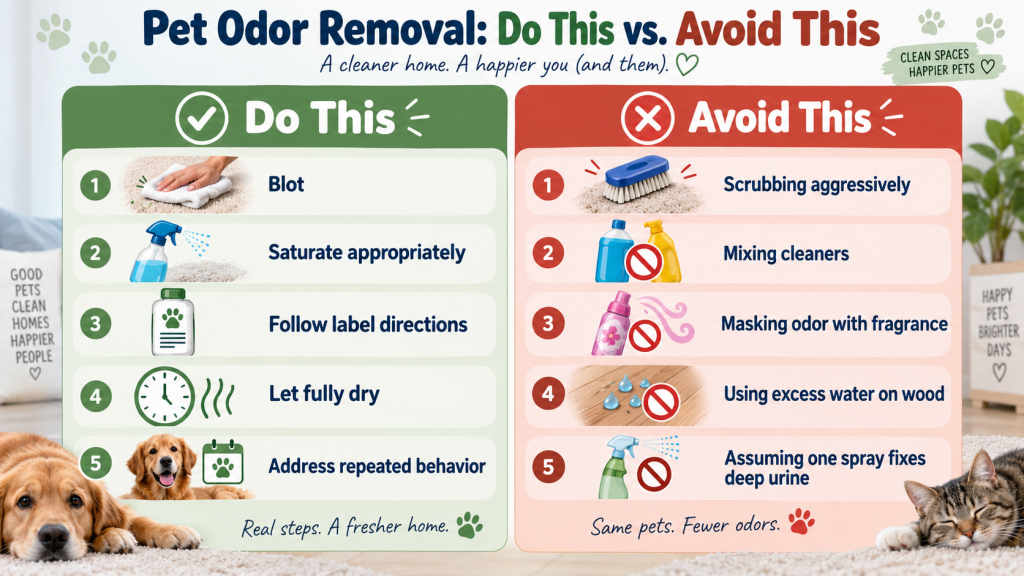
Move quickly, but do not scrub. Absorb as much liquid as possible with clean towels, pressing rather than rubbing so you do not spread the mess through the fibers.
Then apply a pet odor remover according to its label, treating the full affected area rather than only the darkest spot. Allow the specified contact time, then blot or extract as directed. Keep pets and children away from the wet area until the product instructions allow access.
How to Handle Old or Repeated Pet Odor
Old odor is often a depth problem. If urine reached carpet padding, a thin spray across the surface cannot fully contact the residue underneath. Using the correct amount, allowing the full dwell time, and extracting moisture when appropriate can matter more than switching products repeatedly.
A UV flashlight may help locate missed urine spots. If treatment repeatedly fails, padding, subfloor, unfinished wood, or cushion foam may need professional cleaning.
Carpet, Rugs, and Upholstery: Getting Below the Surface
Blot first, test for colorfastness, and give the cleaner its full working time. On carpet, remember that the visible stain may be smaller than the contaminated area beneath it.
Avoid high heat on untreated urine unless the surface and cleaner instructions specifically allow it. Wash removable covers or pet bedding after pretreatment when permitted. For fixed cushions, avoid adding more moisture than you can reasonably dry or extract. citeturn722086search1
Hard Floors, Crates, Bedding, and Laundry
On sealed hard floors, wipe liquid promptly and use a cleaner approved for that finish. Avoid flooding wood seams or leaving excess moisture on laminate or hardwood. Untreated wood is harder because urine can soak into the material.
For washable blankets, crate pads, and covers, pretreat before the normal wash cycle when the label allows it. A pet odor remover handles accidents, while routine washing controls the everyday buildup of saliva, oils, dirt, and fur.
Research-Backed Pet Odor Remover Guidance
Veterinary guidance favors removing the odor source rather than disguising it. The ASPCA’s urine-marking guidance recommends thoroughly cleaning cat urine accidents with an enzymatic cleanser and avoiding ammonia-based cleaners. The Merck Veterinary Manual guidance on feline marking likewise notes that enzymatic or antimicrobial cleaning can help reduce urine marking in some cats. citeturn330085view0turn385965view2
The 2014 AAFP/ISFM house-soiling guidelines add useful context: urine-removal products vary widely in efficacy, and some guidance relies partly on clinical experience because controlled evidence is limited. A 2001 UC Davis study of 47 cats found that environmental management—including daily cleaning of new marks plus better litter-box hygiene—reduced marking frequency. Because the interventions were bundled, the study cannot isolate the effect of a particular cleaner. citeturn385965view0turn592671search0
For ingredient-conscious shoppers, the EPA Safer Choice Standard and Criteria evaluates qualifying products and ingredients against defined health and environmental criteria. Certification is product-specific, so verify the individual label. citeturn385965view4
Safety, Fragrance, and Ingredient Considerations
A surface cleaner labeled for pet odors is not a product to spray on your pet. Use it only on approved materials and keep animals away for as long as the directions require.
Never mix cleaners unless the manufacturer explicitly instructs you to do so. CDC guidance specifically warns against mixing household bleach with other cleaners or disinfectants because dangerous vapors can be released. citeturn382709search0
If fragrance bothers your household, consider lower-fragrance or fragrance-free choices, but still judge them by cleaning method and surface compatibility. A pleasant scent does not prove the residue is gone.
Why Odor Keeps Returning—and When Cleaning Isn’t Enough
Repeated odor or house-soiling deserves a wider look. Cats may mark because of stress, litter-box setup, social conflict, or medical issues; dogs can have behavioral, mobility, housetraining, or health-related reasons for accidents. Sudden or persistent changes merit veterinary attention. citeturn330085view0turn385965view2
Odor control is also easier when fur and dander do not keep collecting in blankets and upholstery, so homes with heavy-shedding dogs may benefit from a practical guide to dog shedding tools. Reducing routine buildup supports the deeper cleaning you do after accidents.
Mistakes That Make Pet Odor Harder to Remove
Common mistakes include scrubbing instead of blotting, treating only the visible spot, using too little cleaner on deep carpet contamination, ignoring dwell time, skipping a colorfastness test, and choosing a product that does not suit the surface. Even a good pet odor remover can fail when the application method is wrong.
Also avoid judging an enzymatic cleaner before the treated area has fully dried. Follow one set of directions completely, then decide whether the spot needs another application or a different approach.
Pet Odor Remover FAQs
What is the best pet odor remover for urine?
An enzymatic formula is a strong starting point for most biological urine accidents because veterinary guidance specifically recommends enzymatic cleaning for urine-marked areas. The best product still depends on the surface and depth of contamination. For carpet, choose directions that address deeper fibers, backing, or padding when the urine soaked below the visible pile. citeturn330085view0
Are enzyme cleaners better for pet odors?
They are particularly useful for organic messes such as urine, feces, and vomit because they are designed to break down components of those residues. They are not automatically best for every stain or material. Oxygen-based formulas can also be useful on compatible surfaces, especially when visible staining matters. Follow the label and match the chemistry to the job.
Is it safe to use a pet odor remover on hardwood floors?
Only when the product specifically permits use on your type of hardwood or finish. Sealed and untreated wood behave differently, and excess liquid can damage seams or cause swelling. Wipe accidents promptly, use controlled moisture, and test a hidden area first. If urine has soaked into unfinished wood, surface cleaning may not reach the entire odor source.
Why can the smell of cat urine return even after cleaning?
The cleaner may not have reached all the urine, particularly if it spread into carpet padding, floor seams, wood, or upholstery foam. Humidity can also make remaining odor more noticeable. A cat may return to a marked area if scent remains, so thorough cleaning matters. Repeated house-soiling also calls for attention to litter-box, behavioral, and medical causes.
How long should a pet odor remover sit before I blot it?
There is no universal dwell time. Formulas use different chemistry and directions: some require only several minutes, while others need longer contact for old or deep odors. Use the timing printed on the specific label. Blotting too soon can limit contact with the residue, while leaving an unsuitable product too long may damage delicate materials.
Final Recommendation: Choosing the Right Pet Odor Remover
Choose a pet odor remover by matching the mess, surface, and cleaning method. Rocco & Roxie is a versatile bio-enzymatic option for several common accident zones, while urineOFF is more targeted to cat urine. If you already use a portable carpet extractor, Bissell PET PRO OXY fits that workflow better.
How you apply the product can be just as important as the product itself. Blot fresh accidents, treat the full affected area, respect dwell time, and wait until the surface dries before judging the result. If odor keeps returning, investigate what lies below the surface. If accidents keep returning too, address your pet’s health, environment, or behavior rather than relying on cleaner alone.