
Dog Toxicity Signs: How to Recognize Poisoning and Act Fast
We may earn a commission for purchases made using our links. Please see our disclosure for more details.
When your dog suddenly vomits, staggers, drools, or simply seems “off,” it is easy to wonder whether you are overreacting. With possible poisoning, however, waiting for certainty can waste valuable time. Dog toxicity signs vary because chocolate, medications, pesticides, plants, and household chemicals affect the body differently. Some trigger symptoms within minutes; others quietly damage organs before anything obvious appears.
This guide explains the warning signs, which symptoms require emergency care, what your veterinarian needs to know, and which preparedness products may help. It also explains why dog toxicity signs can be delayed or easy to miss. This guide cannot diagnose poisoning, but it can help you recognize when professional advice should not wait.
What Dog Toxicity Signs Can Look Like
Poisoning has no single unmistakable appearance. One dog may vomit after eating an irritant, while another becomes sleepy, restless, unsteady, or shaky. Some dogs initially look normal even though internal damage has started.
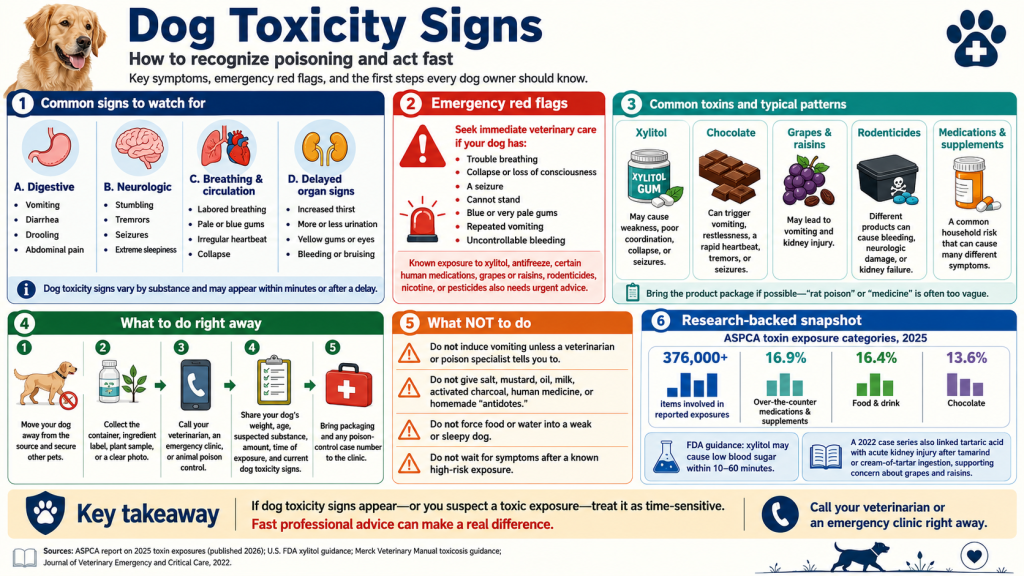
Common dog toxicity signs include drooling, vomiting, diarrhea, appetite loss, weakness, wobbling, tremors, seizures, unusual breathing, pale gums, collapse, and changes in thirst or urination. Because many illnesses cause similar symptoms, look for exposure clues such as a chewed bottle, torn package, missing food, spilled cleaner, or residue on the coat.
When Dog Toxicity Signs Mean an Emergency
Call an emergency veterinarian immediately if your dog struggles to breathe, collapses, loses consciousness, has a seizure, cannot stand, develops blue or very pale gums, vomits repeatedly, or bleeds uncontrollably. Rapidly worsening weakness, severe agitation, or extreme sleepiness also needs urgent attention.
Do not wait for dog toxicity signs after a known exposure to xylitol, antifreeze, certain human medications, grapes or raisins, rodenticides, concentrated nicotine, or pesticides. Risk depends on the substance, dose, product strength, your dog’s weight, health, and time since exposure.
Stomach and Digestive Warning Signs
Many ingested toxins first cause vomiting, diarrhea, repeated swallowing, lip smacking, drooling, abdominal pain, gagging, or appetite loss. Blood in vomit, black tar-like stool, or severe pain increases the urgency.
A single vomit does not prove poisoning. Concern rises when digestive trouble appears suddenly after a possible exposure or alongside weakness, neurological changes, or abnormal gums. Save packaging, plant fragments, or tablet remnants safely; your veterinarian may need the details.

Neurologic and Behavioral Changes
Toxins affecting the brain or nerves may cause stumbling, poor coordination, confusion, staring, agitation, unusual fearfulness, profound sleepiness, twitching, tremors, or seizures. Some dogs become unusually sensitive to touch or sound.
Neurological dog toxicity signs require prompt advice because affected dogs can aspirate vomit, overheat, or injure themselves. Move your dog away from stairs, water, and sharp furniture. During a seizure, keep hands away from the mouth, time the episode, record video when safe, and arrange emergency care.
Breathing, Heart, and Circulation Problems
Breathing trouble may appear as rapid or labored breaths, open-mouth breathing at rest, coughing, or blue-gray gums. Circulatory problems can cause pale gums, weakness, cold limbs, an irregular heartbeat, fainting, or collapse. Treat these as emergencies.
Some toxins depress breathing; others stimulate the heart or interfere with oxygen transport. Internal bleeding can produce pale gums and collapse before blood is visible. Because these patterns overlap with other emergencies, focus on reaching veterinary care rather than naming the toxin yourself.
Delayed Kidney, Liver, and Bleeding Signs
Kidney injury may cause vomiting, appetite loss, increased thirst, frequent urination, or later, very little urine. Liver injury can lead to weakness, yellow gums or eyes, abnormal behavior, vomiting, or bleeding. Anticoagulant rodenticides may cause bruising, bloody stool, pale gums, coughing blood, or breathing difficulty after a delay.
A dog that “seems fine” may still need assessment. Delayed dog toxicity signs can appear hours or days later. A veterinarian or poison specialist can decide whether observation is reasonable or whether testing and preventive treatment should begin early.
Common Toxins and Their Typical Patterns
Frequent hazards include human medications, supplements, foods, chocolate, veterinary products, toxic plants, rodenticides, cleaners, insecticides, and recreational drugs. Xylitol may cause weakness, poor coordination, collapse, or seizures. Chocolate can trigger vomiting, restlessness, a rapid heartbeat, tremors, or seizures. Grapes and raisins may lead to vomiting and kidney injury.
Rodenticides vary: some cause bleeding, others neurological damage or kidney failure. Bring the package because “rat poison” is not specific enough. For plant prevention, choosing non-toxic pet-safe house plants can remove one avoidable household risk.

What to Do Right Away
Prevent further exposure without endangering yourself. Move your dog away, secure other pets, and collect the container, ingredient label, plant sample, medication strength, or product photo. Then call your veterinarian, an emergency clinic, or an animal poison-control service.
Provide your dog’s weight, age, health conditions, medications, suspected substance, estimated amount, exposure time, route, and current dog toxicity signs. Follow the instructions exactly. If a chemical touched the coat or eyes, ask how to rinse it. Bring the packaging and any poison-control case number to the clinic.
Mistakes That Can Make Poisoning Worse
Do not induce vomiting unless a veterinarian or poison specialist specifically tells you to. Vomiting can worsen damage from corrosive cleaners or petroleum products and may cause aspiration when a dog is sleepy, seizing, or unable to swallow normally.
Do not give salt, mustard, oil, milk, activated charcoal, human medicine, or homemade “antidotes.” Hydrogen peroxide is also inappropriate in some cases. Avoid forcing food or water into a weak dog. Proper decontamination depends on the exact substance, timing, symptoms, and aspiration risk.
What Information Your Veterinarian Needs
Explain events in order: when your dog was last normal, when exposure may have occurred, when symptoms began, and how they changed. Mention all medications and medical conditions, especially kidney, liver, heart, or seizure disorders.
Photograph the product’s front and ingredient panel. Count missing tablets when possible and estimate the original amount, but do not delay the call chasing precision. A recent weight is especially useful because toxicology decisions often depend on dose relative to body weight.
Research-Backed Facts About Dog Poisoning
The ASPCA’s 2026 report on 2025 toxin exposures recorded calls involving more than 376,000 items. Over-the-counter medications and supplements represented 16.9% of exposures, food and drink 16.4%, and chocolate 13.6%. Those figures show why locked medication storage and careful food handling matter.
The U.S. Food and Drug Administration’s xylitol guidance states that low blood sugar may develop within 10 to 60 minutes. The peer-reviewed Merck Veterinary Manual toxicosis guidance centers treatment on limiting absorption, supportive care, and a specific antidote when available.
A 2022 six-dog case series linked tartaric acid with acute kidney injury after tamarind or cream-of-tartar ingestion, supporting concern about the likely toxic component in grapes and raisins. Because this was a small case series rather than a controlled dose study, it does not establish a safe amount. Call after any suspected exposure.
Recommended Products for Dog Toxicity Signs and Preparedness
These products cannot diagnose poisoning, neutralize toxins, or replace veterinary care. They can help secure hazards, organize supplies, and provide useful information during an urgent call.
| Product | Best for | Main role |
| Adventure Medical Kits Trail Dog | Hikers and campers | Compact first-aid organization |
| ARCA PET Cat & Dog First Aid Kit | Home and vehicle readiness | Broad emergency supply set |
| Master Lock 5900D Portable Safe | Travel medication storage | Combination storage |
| Safety 1st Magnetic Lock System | Hazardous cabinets | Access deterrence |
| Greater Goods Digital Pet Scale | Small-to-medium dogs | Recent weight records |
Adventure Medical Kits Trail Dog First Aid Medical Kit
Best for: Hikers, campers, and road-trip dog owners
This sub-one-pound kit includes wound-care supplies, a tick remover, a sprain wrap, and a pet first-aid handbook in a water-resistant inner bag. Its compact shape suits backpacks and vehicle consoles. However, it supports general first aid rather than toxin treatment, so suspected poisoning still requires veterinary or poison-control guidance.
ARCA PET Cat & Dog First Aid Kit, 108-Piece
Best for: Owners building a complete home or car kit
The high-visibility case contains 108 pieces, including a thermometer, emergency card, first-aid manual, wound supplies, and handling tools. It offers more variety than a minimalist trail kit and is easy to spot in a trunk. Its larger inventory adds bulk, and safe thermometer or muzzle use requires careful instruction.
Master Lock Portable Small Lock Box 5900D
Best for: Securing small medications while traveling
This water-resistant portable safe uses a resettable four-digit combination and includes a cable for attaching it to a fixed object. It can keep pill bottles, gum, or small items away from curious dogs in hotels and shared spaces. The shallow interior limits capacity, and it should not replace locked, elevated storage at home.
Safety 1st Adhesive Magnetic Lock System HS294
Best for: Pet-proofing kitchen, bathroom, or utility cabinets
This set includes eight internal magnetic locks, two keys, adhesive installation, and optional screws. The hidden design can restrict access to cleaners, medicines, and pest-control products. Allow the adhesive to cure fully and test each lock regularly; cabinet latches are deterrents, not a substitute for dedicated locked storage of severe hazards.
Greater Goods Digital Pet Scale for Cats & Dogs
Best for: Keeping a current weight for small-to-medium dogs
This scale supports pets up to 44 pounds and stabilizes readings when animals move. Its removable tray and tare function simplify routine weighing. A recent weight can help an emergency professional assess exposure, but the capacity excludes larger dogs, and home readings should never guide treatment or dosing without veterinary direction.
How Veterinarians Diagnose and Treat Toxicity
Veterinarians combine exposure history with an examination, vital signs, neurological findings, bloodwork, urinalysis, imaging, and toxin-specific testing when available. Treatment may include selected decontamination, intravenous fluids, oxygen, seizure control, heart monitoring, temperature support, blood products, or an antidote.
There is no universal treatment for dog toxicity signs. Activated charcoal helps with some substances but creates risks in vomiting, dehydrated, or neurologically impaired dogs. Calling early lets the clinic prepare and consult a veterinary toxicologist if needed.
FAQs About Dog Toxicity Signs
How soon do symptoms of dog toxicity appear?
They may begin within minutes or take hours to days. Xylitol can cause rapid low blood sugar, while some rodenticides and organ-damaging toxins produce delayed symptoms. Call after a credible exposure instead of waiting for illness. Timing depends on the substance, amount, formulation, route, and your dog’s health.
Can a dog be poisoned without vomiting?
Yes. Some dogs first show weakness, wobbling, tremors, abnormal breathing, agitation, sleepiness, bleeding, or changes in thirst and urination. Others remain outwardly normal during an early treatment window. A known exposure deserves professional assessment even when the stomach seems unaffected.
So what if my dog ate something poisonous? Should I give them hydrogen peroxide?
Only when a veterinarian or animal poison specialist directs you for that specific incident. Hydrogen peroxide can irritate the stomach and is dangerous when the substance is corrosive, oily, or likely to be aspirated. It is also unsuitable for dogs with seizures, weakness, breathing trouble, or impaired swallowing.
What should I pack for the emergency room?
Bring the container, ingredient label, remaining material, plant sample, photographs, and poison-control case number. Also provide your dog’s recent weight, medications, medical history, estimated exposure time, possible amount, and symptom timeline. Seal contaminated items and ask the clinic how to transport hazardous chemicals safely.
Can dog toxicity signs go away without treatment?
Some mild exposures resolve, but improvement does not prove the danger has passed. Symptoms can fluctuate, and kidney, liver, or bleeding problems may appear later. A poison professional may approve home monitoring, but that decision should reflect the exact substance, dose, and your dog’s risk factors.
Final Recommendation: Treat Dog Toxicity Signs as Time-Sensitive
The key decision is not whether you can identify a toxin from symptoms alone. It is whether your dog needs immediate professional guidance. Known exposure, breathing trouble, collapse, seizures, abnormal gums, severe weakness, repeated vomiting, bleeding, or rapidly changing behavior should end “watch and wait.”
Keep hazards locked away, maintain a current weight, and store emergency numbers where everyone can find them. The Adventure Medical Kits Trail Dog kit suits travel, while the ARCA PET kit offers broader home or vehicle organization. Above all, when dog toxicity signs appear—or a credible exposure occurs—call promptly and follow case-specific veterinary instructions.