Natural Probiotics for Dogs and Gut Health
We may earn a commission for purchases made using our links. Please see our disclosure for more details.
You know that sinking feeling when your dog’s stomach sounds like a tiny washing machine? Maybe they have loose stool, extra gas, itchy skin, or they suddenly turn their nose up at food they usually love. As a pet parent, you want to help without overcomplicating things. That is where natural probiotics for dogs can be worth understanding.
Probiotics are not magic fairy dust for every tummy problem. Still, they may support a healthier gut, better digestion, and a more balanced microbiome when used wisely. In this guide, you’ll learn what probiotics do, which natural options are safest, what research says, how to choose supplements, and when to call your vet.
Affiliate disclosure: As an affiliate, I may earn from qualifying purchases at no extra cost to you.
What Are Natural Probiotics for Dogs?
Natural probiotics are live beneficial microorganisms that may help support your dog’s gut flora. Think of your dog’s gut like a busy neighborhood. Some bacteria are helpful neighbors. Others are the noisy ones throwing trash over the fence.
A good probiotic may help support balance in that neighborhood. According to the NIH Office of Dietary Supplements, probiotics are live microorganisms that may provide a health benefit when given in adequate amounts.
For dogs, probiotics may come from:
- Dog-specific probiotic supplements
- Plain fermented foods, when vet-approved
- Probiotic powders, capsules, or chews
- Synbiotic blends with probiotics and prebiotics
Why Dog Gut Health Matters
Your dog’s gut does more than process dinner. It plays a role in digestion, nutrient absorption, immune response, stool quality, and overall comfort.
A 2025 review on the canine gut microbiome notes that gut microbes are connected with digestion, metabolism, immune regulation, skin health, and even behavior-related pathways.
That does not mean every mood swing or itch starts in the belly. Dogs are wonderfully complicated little creatures. But it does mean the gut deserves more respect than it usually gets.

Signs Your Dog’s Gut May Need Support
Some dogs show digestive imbalance clearly. Others give you tiny hints, then leave you guessing like a detective with a lint roller.
Common signs include:
- Loose stool or irregular poop
- Excessive gas
- Occasional diarrhea
- Sensitive stomach after diet changes
- Bad breath linked to digestion
- Itchy skin or seasonal discomfort
- Poor appetite
- Stool changes after antibiotics
If symptoms are severe, bloody, painful, or persistent, skip the guessing game and call your veterinarian.
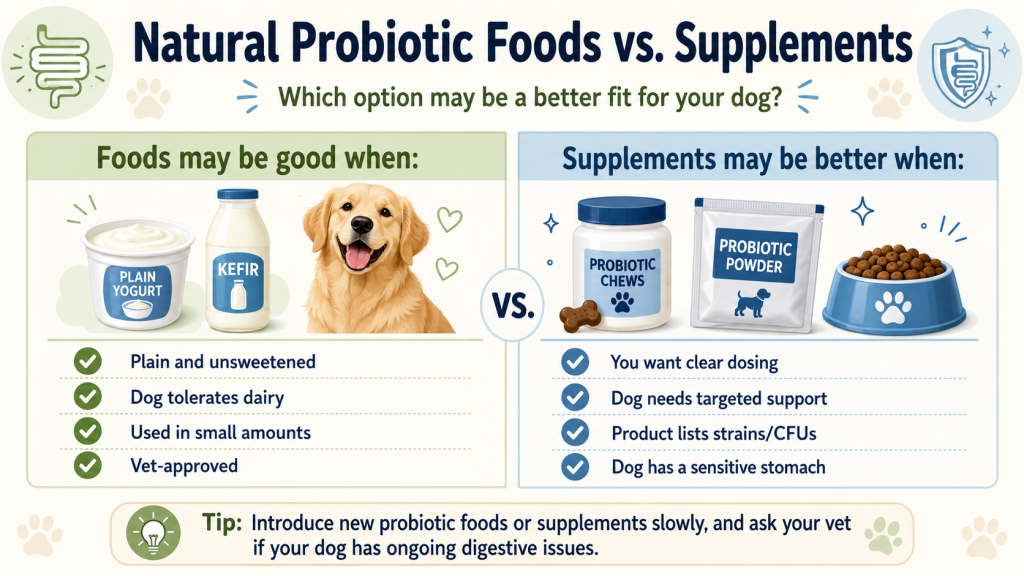
Natural Probiotic Foods vs. Dog Probiotic Supplements
Natural foods sound simple, but they are not always the best fit. Plain yogurt and kefir can contain live cultures, but dairy may upset some dogs. Also, flavored products can include added sugars or dangerous sweeteners. WebMD notes that yogurt and kefir may contain probiotics, but lactose and artificial sweeteners can create problems for pets.
Dog-specific probiotic supplements are usually more targeted. They may list strains, CFU amounts, feeding directions, and whether the product is made for dogs.
Simple rule
Food can be a small bonus. A quality dog probiotic supplement is usually more predictable.
Best Natural Sources of Probiotics for Dogs
Some natural options may be safe for many dogs when introduced slowly and approved by your vet.
Good options may include:
- Plain unsweetened Greek yogurt
- Plain kefir
- Fermented vegetables made without garlic, onion, or heavy salt
- Dog-safe probiotic toppers
- Probiotic dog treats
Start tiny. For some dogs, even a spoonful of dairy can turn into a backyard emergency. No one wants that plot twist.
How Probiotics May Help Canine Digestive Health
Research suggests probiotics may help support the gut barrier, beneficial bacteria, stool consistency, and immune function. A 2023 review in Microorganisms reported that probiotic use in dogs and cats has shown positive effects on gut health and may help with some intestinal disorders, although the exact mechanisms still need more study.
Cornell’s Riney Canine Health Center also describes probiotics as a common therapy for diarrhea and gastrointestinal upset in dogs.
So, should every dog take them? Not always. But for dogs with sensitive stomachs, stress-related digestive changes, or post-antibiotic tummy trouble, probiotics may be a helpful conversation with your vet.

What Research Says About Probiotics and Dog Gut Health
Research suggests probiotics may support a healthier gut balance in dogs, but results depend on the strain, dose, and your dog’s needs.
A 2024 review on probiotics and prebiotics for canine gut balance found that they may support gut bacteria, immune function, inflammation response, and intestinal barrier health.
Cornell’s Riney Canine Health Center also explains how beneficial bacteria may help dogs with digestion and tummy upset.
Prebiotics for Dogs: The Food for Good Bacteria
Prebiotics are not probiotics. They are fibers that help feed beneficial gut bacteria.
Imagine probiotics as garden seeds. Prebiotics are the compost. Without the right environment, those good bacteria may not thrive.
Common prebiotic ingredients in dog supplements include:
- Fructooligosaccharides
- Inulin
- Pumpkin fiber
- Chicory root
- Beet pulp
Some products combine probiotics and prebiotics. These are often called synbiotics.
Choosing the Best Natural Probiotics for Dogs
When shopping, look beyond the cute label. Dogs do not care if the jar has rustic farmhouse vibes. Their belly cares about what is inside.
Check for:
- Dog-specific formula
- Clearly listed probiotic strains
- CFU count
- Prebiotics or digestive enzymes, if needed
- No xylitol
- No unnecessary artificial sweeteners
- Clear feeding directions
- Third-party testing or quality standards
Also, match the format to your dog. A picky senior may prefer powder mixed into food. A treat-loving Labrador may happily accept soft chews and then ask for “just one more” with Oscar-worthy eyes.
Amazon Product Picks for Dog Gut Support
Amazon listings can change, so check the current label, seller, ingredients, and feeding directions before buying.
1. Zesty Paws Probiotics for Dogs
Zesty Paws Probiotics for Dogs are soft chews made to support gut flora, normal digestive function, and immune health. The Amazon listing notes 3 billion CFU per chew and digestive support for small, medium, and large dogs.
Features:
- Soft chew format
- Probiotics for gut flora
- Immune support
- Multiple flavor options
Best for: Dogs who prefer treat-style supplements.
2. Purina Pro Plan Veterinary Supplements FortiFlora Canine Probiotic
Purina FortiFlora is a popular powder-style probiotic supplement. Amazon’s listing says it contains a guaranteed level of live microorganisms and uses microencapsulation to help probiotic stability.
Features:
- Powder packets
- Live probiotic microorganisms
- Often recommended by veterinarians
- Easy to sprinkle on food
Best for: Dogs who need simple daily digestive support under vet guidance.
3. NaturVet Advanced Probiotics & Enzymes Soft Chews
NaturVet Advanced Probiotics & Enzymes is designed for dogs over 6 weeks and includes probiotics, prebiotics, and digestive enzymes. The Amazon listing mentions Bacillus subtilis, Bacillus coagulans, and fructooligosaccharides.
Features:
- Soft chews
- Prebiotic support
- Digestive enzymes
- Made for sensitive stomachs
Best for: Dogs that may need both probiotics and enzyme support.
4. PetLab Co. Probiotics for Dogs
PetLab Co. Probiotics for Dogs are soft chews positioned for gut health, occasional diarrhea, digestive health, and seasonal allergies. The Amazon listing describes pork-flavored soft chews in 30-count packaging.
Features:
- Soft chew format
- Gut and digestive support
- Seasonal allergy support claims
- Pork flavor
Best for: Dogs who need a chewable probiotic with skin-and-gut positioning.
5. Doggie Dailies Probiotics for Dogs
Doggie Dailies Probiotics for Dogs include five probiotic strains and prebiotics. The Amazon listing highlights digestive, gut, and immune support, plus weight-based dosing in 15-pound increments.
Features:
- Five probiotic strains
- Prebiotic blend
- Pumpkin flavor
- Size-based dosing
Best for: Multi-dog households or owners who want more dosing flexibility.
How to Introduce Probiotics Slowly
Start low and go slow. Your dog’s gut is not a light switch. It is more like a playlist that needs gentle adjusting.
Try this approach:
- Start with a smaller amount than the full serving
- Give it with food
- Watch stool quality for a few days
- Increase gradually if tolerated
- Stop and call your vet if symptoms worsen
This matters even more for puppies, seniors, small breeds, and dogs with medical conditions.
Safety Tips Before Giving Your Dog Probiotics
Most healthy dogs tolerate probiotics well, but “natural” does not always mean risk-free.
Talk to your vet first if your dog:
- Has chronic diarrhea
- Is vomiting
- Has bloody stool
- Has pancreatitis history
- Is immunocompromised
- Takes medication
- Is pregnant or nursing
- Is a very young puppy
Avoid products with xylitol, garlic, onion, heavy sugar, or vague ingredient labels. And please do not give your dog random human supplements from your kitchen cabinet. That cabinet has seen enough chaos.
Gut Health Beyond Supplements
Probiotics help most when the rest of your dog’s life supports digestion too.
Focus on:
- Consistent meal times
- High-quality dog food
- Slow diet transitions
- Clean water
- Regular exercise
- Stress reduction
- Safe outdoor spaces
A healthy routine matters indoors and outdoors. If your dog spends time outside, these dog-proof backyard tips can help create a safer, calmer space for play, potty breaks, and daily movement.
Common Mistakes Dog Owners Make
The most common mistake is expecting instant results. Some dogs need several days or weeks to show changes.
Other mistakes include:
- Switching products too quickly
- Giving too much too soon
- Ignoring diet quality
- Using sweetened yogurt
- Choosing human probiotics without vet guidance
- Treating serious symptoms at home for too long
Probiotics are support tools. They are not replacements for diagnosis, parasite checks, allergy care, or treatment when something deeper is going on.
FAQs About Natural Probiotics for Dogs
Can I give my dog natural probiotics every day?
Many dog probiotic supplements are designed for daily use, but your dog’s needs depend on age, diet, health, and symptoms. Ask your veterinarian before starting daily probiotics, especially if your dog has ongoing digestive issues.
What is the best natural probiotic food for dogs?
Plain unsweetened yogurt or kefir may be options for some dogs, but not all dogs tolerate dairy. Choose products with live cultures and no xylitol, added sugar, chocolate, or artificial sweeteners.
Do probiotics help dogs with diarrhea?
Probiotics may help some dogs with diarrhea or digestive upset. Cornell describes them as a well-known therapy for diarrhea and gastrointestinal upset, but persistent or severe diarrhea needs veterinary care.
How long do natural probiotics take to start working for dogs?
Some dogs show stool changes within a few days, while others may need a few weeks. Results depend on the strain, dose, diet, and the reason your dog needs gut support.
Are dog probiotics better than yogurt?
Dog probiotics are usually more targeted because they are made for canine digestive health and often list strains and dosing. Yogurt may help some dogs, but it can cause gas or diarrhea in lactose-sensitive pets.
Conclusion: A Happier Gut Can Mean a Happier Dog
Natural probiotics for dogs can be a gentle, practical way to support gut health, digestion, stool quality, and overall comfort. The key is choosing dog-safe options, introducing them slowly, and remembering that every pup is different.
Start with the basics: good food, clean water, steady routines, safe play, and vet guidance when symptoms do not feel normal. Your dog does not need a perfect wellness routine. They need a thoughtful one.
And honestly, if a calmer belly means fewer mystery smells under the coffee table, that is a win for everyone.