Dog Ramp for High Bed: Benefits and Safety Tips
We may earn a commission for purchases made using our links. Please see our disclosure for more details.
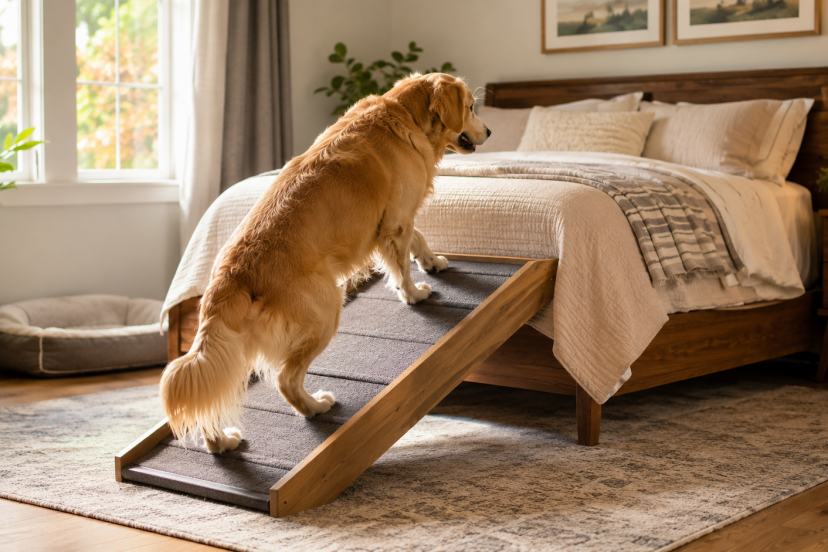
If your dog sleeps beside you, you already know the nightly routine: the stare, the little paw tap, the dramatic sigh that says, “Human, lift me.” A dog ramp for high bed can make that moment easier, safer, and a lot less like a tiny emotional hostage situation.
High beds can be tricky for puppies, senior dogs, small breeds, large dogs, and pups with joint or back concerns. In this guide, you’ll learn why ramps help, how to choose one, how to train your dog to use it, and which Amazon ramp options are worth considering.
Affiliate disclaimer: This article may include affiliate product suggestions, meaning we may earn a small commission if you buy through qualifying links, at no extra cost to you.
What Is a Dog Ramp for a High Bed?
A dog ramp for a high bed is a sloped walkway that helps your dog climb onto and off the bed without jumping. Think of it like a tiny accessibility bridge between your dog’s favorite sleeping spot and the floor.
Most ramps are made from wood, plastic, foam, or metal. Many include non-slip carpet, rubber grip, side rails, or adjustable height settings.
The goal is simple: help your dog move safely while keeping their independence.
Why High Beds Can Be Hard on Dogs
Jumping down from a tall bed may not look like much, especially when your dog acts like a furry superhero. But repeated impact can be rough on joints, backs, and paws.
Small dogs may struggle because the bed is several times their leg height. Senior dogs may hesitate because of stiffness. Long-bodied breeds, like dachshunds and corgis, may need extra care because jumping can stress the spine.
According to Cornell veterinary guidance on intervertebral disc disease, reducing repeated jumping on and off beds or sofas can help lower strain for dogs prone to back issues.
Benefits of Using a Dog Ramp for High Bed Access
A ramp is not just a cute bedroom accessory. It can genuinely improve your dog’s daily comfort.
Key benefits include:
- Less jumping impact
- Easier access for small or senior dogs
- More confidence for nervous pets
- Better support after injury or surgery
- Less lifting for you
- Safer nighttime movement
It also helps preserve your dog’s dignity. Nobody wants to be scooped up every time they want a nap. Dogs like independence too, even if they still expect room service.
Which Dogs Benefit Most from a Bed Ramp?
A pet ramp for bed access can help many dogs, but some benefit more than others.
Small breeds
Chihuahuas, Yorkies, Maltese, toy poodles, and other small dogs often deal with furniture that feels mountain-sized.
Senior dogs
Older dogs may move slower because of arthritis, muscle loss, or general stiffness.
Long-bodied breeds
Dachshunds, basset hounds, corgis, and similar breeds may need extra support because of their body structure.
Large dogs
Big dogs can also benefit, especially if lifting them is difficult or unsafe for your back.
Dog Ramp vs Dog Stairs: Which Is Better?
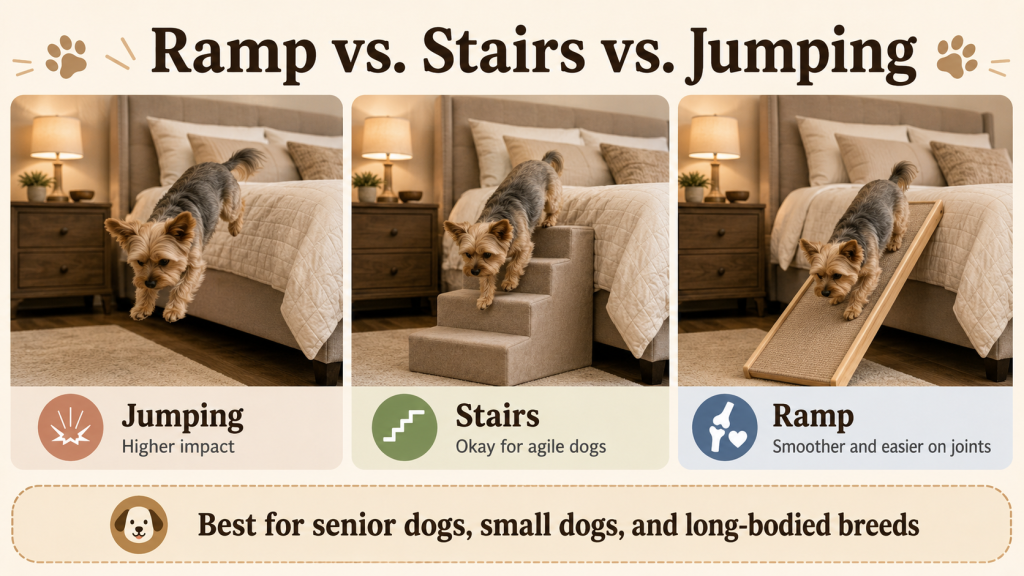
Dog stairs can work well for agile small dogs. However, a ramp is often better for dogs with arthritis, back issues, or limited mobility because the movement is smoother and less choppy.
A ramp is like a gentle sidewalk. Stairs are more like climbing a ladder in tiny pajamas.
Choose a ramp if your dog:
- Hesitates before jumping
- Has joint pain
- Has back problems
- Is recovering from surgery
- Slips on stairs
- Has short legs or a long body
Choose stairs only if your dog is steady, confident, and comfortable climbing.
How to Choose the Right Dog Ramp for Your Bed
Start with your bed height. Measure from the floor to the top of the mattress. Then choose a ramp long enough to create a gentle slope.
A short ramp on a tall bed becomes too steep. Your dog may look at it like you just installed a ski jump.
Look for:
- Proper length
- Strong weight capacity
- Non-slip surface
- Stable base
- Side rails if your dog is nervous
- Easy storage
- Washable or easy-clean materials
The Best Ramp Angle for Safety
A gentler angle is usually safer. For small, senior, or injured dogs, a longer ramp with a lower incline is ideal.
As a simple rule, if the ramp looks steep to you, it probably feels steeper to your dog.
For high beds, look for ramps around 60–74 inches long when possible. Adjustable ramps are helpful because they let you match your bed, couch, or other furniture.
Non-Slip Surfaces Matter More Than You Think
Traction is one of the most important ramp features. A slick ramp can scare your dog and cause slipping.
Good traction options include:
- Carpet
- Rubber grip
- Textured mats
- Ridged walking surfaces
If your dog has fluffy paw pads, trim the fur between the toes when needed. It is like removing fuzzy socks before walking across tile.
Side Rails Can Help Nervous Dogs
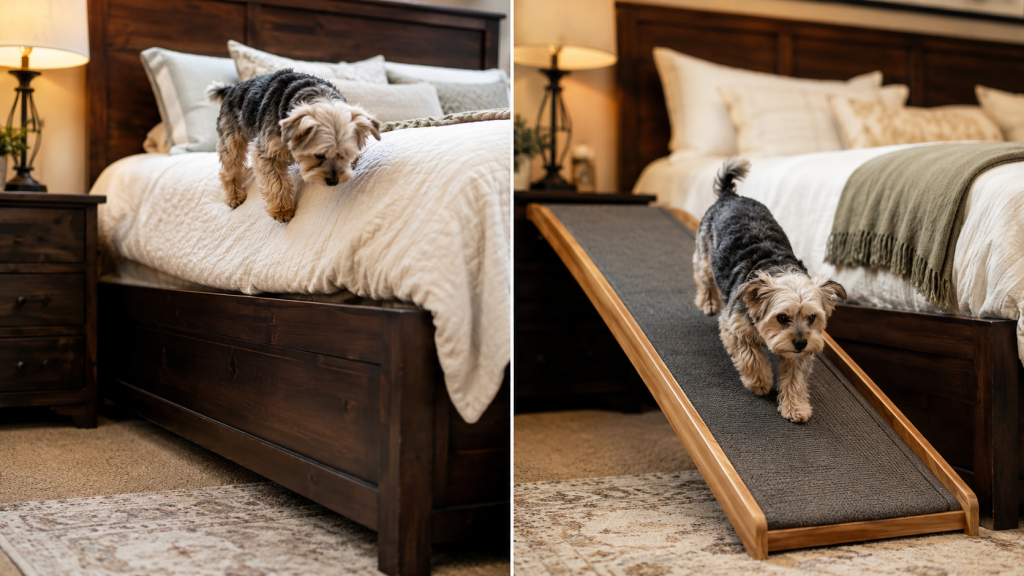
Some dogs march up ramps like royalty. Others freeze halfway and look betrayed.
Side rails help dogs feel guided and secure. They are especially useful for small breeds, senior dogs, dogs with vision changes, or pets who wobble when turning.
If your dog is anxious, choose a ramp with rails, a wider walking surface, and a stable top platform.
How to Train Your Dog to Use a Ramp
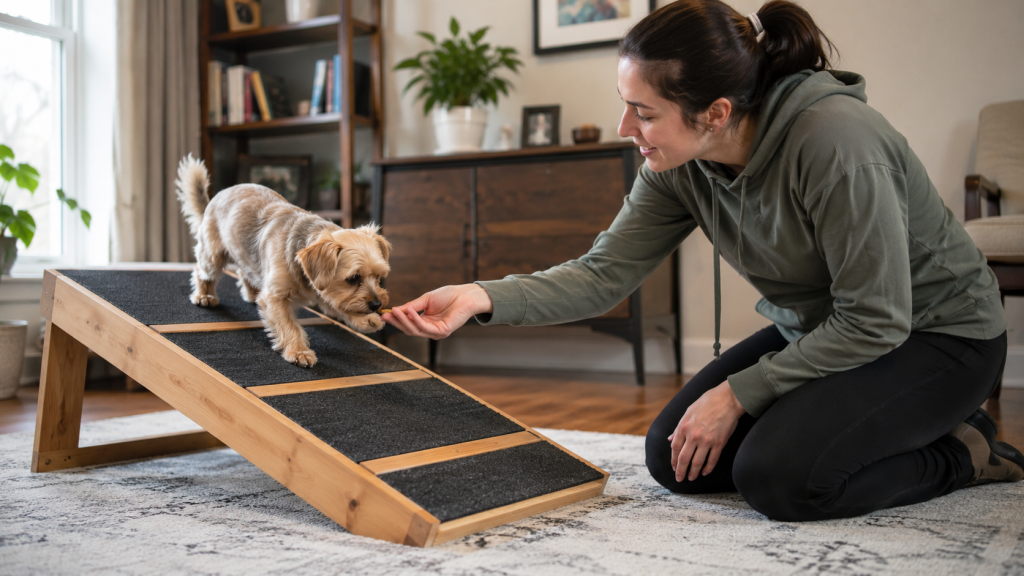
Training should feel calm and positive. Do not force your dog up the ramp. That can make the ramp feel scary.
Try this:
- Place the ramp flat on the floor.
- Let your dog sniff it.
- Reward any interest.
- Lure them across with treats.
- Slowly raise the ramp to a low surface.
- Practice short sessions.
- Use praise, patience, and snacks.
If your dog learns better outdoors or during play, that is okay. Every dog has a different “learning language.” Some want treats. Some want praise. Some want the cheese tax paid immediately.
Where to Place a Dog Ramp in the Bedroom
Place the ramp where your dog naturally gets on and off the bed. If they always approach from one side, do not place the ramp on the opposite side and expect instant genius.
Keep the area clear of laundry baskets, cords, shoes, and midnight toe-stub traps.
Also, make sure the ramp does not slide. If it shifts even once, your dog may lose trust in it.
Common Mistakes to Avoid
A ramp only helps if your dog feels safe using it.
Avoid these mistakes:
- Buying a ramp that is too short
- Ignoring the weight limit
- Choosing a slippery surface
- Moving the ramp too often
- Forcing your dog to use it
- Placing it on slick flooring
- Skipping training
Most ramp “failures” are really setup problems. Fix the setup, and your dog may surprise you.
Research-Backed Reasons to Reduce Jumping
Canine mobility is a real health concern, not just a comfort issue. A review on canine osteoarthritis risk factors notes that osteoarthritis is commonly reported in dogs and can affect comfort, movement, and quality of life.
Another expert resource from Canine Arthritis Management on home environment adaptations explains that furniture access can become risky for arthritic dogs because impact forces may worsen discomfort.
That does not mean every jump is a disaster. Dogs are meant to move. But repeated high-impact jumping, especially from tall furniture, deserves attention.
A ramp gives your dog a lower-impact option without removing the joy of being close to you.
Amazon Product Options for a Dog Ramp for High Bed
Below are five relevant Amazon product options to consider. Always check current dimensions, weight capacity, and availability before buying.
Dog Ramp for Bed, by DoggoRamps – Solid Hardwood Dog Ramp for High Beds
This premium wooden dog bed ramp is designed for high beds and small dogs, especially dachshunds and other short-legged breeds.
Features:
- Adjustable up to 37 inches tall
- Solid hardwood design
- Side rails
- Non-slip grip surface
- Furniture-style look
Best for: Small dogs, stylish bedrooms, high beds, and pet parents who want a sturdy long-term ramp.
HOOBRO Dog Ramp for Bed, 63 Inch Long Dog Ramp for Couch and Bed
This adjustable dog ramp works for beds, couches, and older dogs that need a gentler climb.
Features:
- 63-inch length
- Adjustable height
- Non-slip mat
- Safety side rails
- Foldable design
Best for: Small, large, or senior dogs that need an adjustable indoor ramp.
HOOBRO Dog Ramp for Bed, Large Wooden Pet Ramp with Top Platform
This larger wooden ramp includes a platform at the top, which can help dogs pause before stepping onto the bed.
Features:
- 70.9-inch length
- Non-slip carpet surface
- Safety rails
- Top landing platform
- Wooden frame
Best for: Dogs who need a wider, more confidence-building ramp for high furniture.
PawHut Dog Ramp for Bed with Non-Slip Carpet and Top Platform
This ramp is designed for indoor furniture access and includes a top platform for smoother entry onto the bed.
Features:
- Non-slip carpet
- Top platform
- Wooden-style structure
- Indoor-friendly design
- Supportive walking surface
Best for: Small to medium dogs that need help reaching beds or couches.
Onelike Wooden Dog Ramp for Bed with Removable Side Rail
This long wooden ramp offers a stable design with a removable side rail and non-slip carpet.
Features:
- 74-inch ramp length
- Non-slip carpet
- Removable side rail
- Stable wooden frame
- Brown finish
Best for: Senior dogs, cautious dogs, and homes where a longer ramp is needed for a softer slope.
Safety Tips Before Your Dog Uses a Ramp Daily
Before making the ramp part of your dog’s routine, test it yourself by pressing gently on the walking surface. It should not wobble, slide, or bend.
Add a rug under the base if your floor is slick. Check screws or hinges often if the ramp folds. Wash or vacuum the grip surface so dirt and fur do not reduce traction.
And if your dog suddenly avoids the ramp, pause. They may be sore, scared, or unsure. A sudden behavior change can be your dog’s quiet way of saying, “Something feels off.”
When to Talk to Your Veterinarian
A ramp can help, but it is not a replacement for veterinary care.
Talk to your vet if your dog:
- Limping
- Whining when picked up
- Refusing to jump or climb
- Dragging paws
- Moving stiffly after rest
- Slipping often
- Showing sudden fear of furniture
Your vet can check for arthritis, injury, back pain, hip problems, or other mobility issues.
Also, remember that movement, training, and safety all work together. If your dog also struggles outdoors, this helpful guide on building a safer dog recall training routine can support better habits beyond the bedroom.
How to Make Your Home More Mobility-Friendly
A ramp is a great start, but your dog’s whole environment matters.
Try these small changes:
- Add rugs on slippery floors
- Keep nails trimmed
- Use orthopedic bedding
- Keep food and water easy to reach
- Avoid cluttered walkways
- Use night lights for older dogs
- Keep your dog at a healthy weight
Small changes can add up. Your home does not need to become a doggy hospital suite. It just needs a few thoughtful upgrades.
FAQs About Dog Ramps for High Beds
Is a dog ramp for high bed better than stairs?
Yes, for many dogs. A ramp usually creates smoother movement than stairs, making it better for senior dogs, dogs with arthritis, long-bodied breeds, and pets with back concerns.
What size dog ramp do I need for a high bed?
Measure from the floor to the top of your mattress. For taller beds, choose a longer ramp so the incline stays gentle. Many high beds need ramps around 60 inches or longer.
How do I get my dog to use a bed ramp?
Start with the ramp flat on the floor. Use treats, praise, and short practice sessions. Slowly raise the ramp only after your dog feels confident.
Are dog ramps safe for senior dogs?
Yes, when they are stable, non-slip, and properly sized. Senior dogs often benefit from ramps because they reduce the need to jump onto or off furniture.
Can a dog ramp help prevent injuries?
A ramp can reduce repeated impact from jumping, which may lower strain on joints and the back. It cannot prevent every injury, but it can make daily movement safer.
Conclusion
A dog ramp for high bed access is one of those small changes that can make your dog’s life feel easier, safer, and more independent. It helps reduce jumping, supports aging joints, and gives small or cautious dogs a calmer way to reach their favorite spot.
Choose a ramp with the right height, length, traction, and stability. Then introduce it slowly, with patience and plenty of encouragement.
Your dog does not need a perfect home. They just need a thoughtful one. And honestly, if a simple ramp helps them stay close to you without risking a dramatic midnight leap, that is a pretty beautiful little upgrade.