Low Fat Dog Diet: Benefits, Foods, and Feeding Tips
We may earn a commission for purchases made using our links. Please see our disclosure for more details.
If your dog seems to gain weight by just looking at snacks, or gets an upset stomach after rich food, you are not imagining things. Weight issues are common in dogs, and they are tied to lower quality of life, more disease, and shorter lifespan. One recent review notes that rates of canine overweight and obesity are about 56% in the United States.
A low fat dog diet can help in the right situation. It may support weight loss, help some dogs with chronic pancreatitis or certain GI problems, and make feeding feel a lot less confusing. But it is not the right answer for every dog, and that part matters just as much.
This article may include affiliate product suggestions, which means a commission may be earned at no extra cost to you.
Why this topic gets so much attention
Dog nutrition can feel like a noisy room where everyone is talking at once. One friend says “more protein,” another says “grain free,” and your dog is just over there hoping you drop chicken.
Veterinary guidance is a lot calmer than the internet. The AAHA nutrition and weight management guidelines recommend individualized nutrition plans based on a dog’s body condition, muscle condition, health status, and lifestyle instead of one-size-fits-all advice.
What a low fat dog diet actually means
Here is the part most people skip: “low fat” is not just a vibe.
A review on canine pancreatitis describes a low-fat diet as less than 20% fat on a metabolizable energy basis, while the Merck Veterinary Manual notes that for dogs with pancreatitis, a ration with less than 20 g fat per 1,000 kcal should be chosen. That is why label-reading matters more than front-of-bag marketing.
In plain English
A low fat dog diet usually aims to:
- reduce the fat load per meal
- keep calories under better control
- stay complete and balanced
- still give your dog enough protein and nutrients
Think of it like changing from buttery restaurant food to a lighter home-cooked plate. Your dog still needs a real meal, not a sad bowl of compromise.
Which dogs may benefit from a low fat dog diet
Some dogs have very obvious reasons to go lower in fat. Others are more subtle.
VCA notes that dogs with chronic pancreatitis or other chronic GI disease may tolerate a lower-fat diet better, sometimes long term. Low-fat or weight-management diets are also commonly used when a dog is overweight and needs a structured calorie plan.
Common situations where vets may suggest it
- overweight or obesity
- chronic pancreatitis
- recurrent digestive flare-ups after rich meals
- dogs who do better on controlled calories and measured portions
If your dog has had pancreatitis before, this is not the time to freestyle.
Which dogs need a different conversation
This is where a lot of well-meaning owners get tripped up.
A low fat dog diet is not automatically best for every dog with digestive issues. Merck specifically says low-fat diets are not recommended for dogs with exocrine pancreatic insufficiency because they can further reduce fat absorption and lead to deficiencies in fat-soluble vitamins and essential fatty acids.
So if your dog has ongoing weight loss, greasy stools, extreme hunger, or a diagnosed medical condition, step away from the guesswork and call your vet.
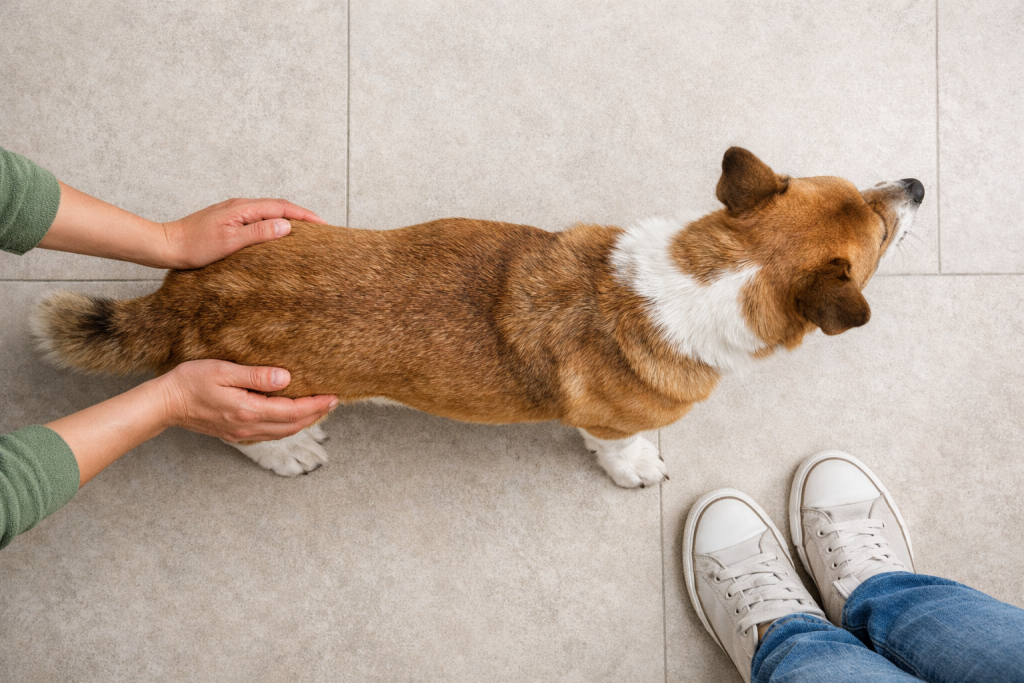
Start with your dog’s body condition score
Before you buy a new bag of food, look at the dog in front of you.
WSAVA’s body condition score charts and the AAHA guidelines both emphasize regular body condition and muscle checks. In a healthy dog, ribs should be easy to feel with a light fat covering, the waist should be visible from above, and the belly should tuck up from the side.
A quick home check
Ask yourself:
- Can you feel the ribs without pressing hard?
- Can you see a defined waist when viewed from above?
- Does your dog show a noticeable belly tuck?
- Has your dog lost muscle even if body fat is high?
That last one matters. A dog can be chunky and still be losing muscle.
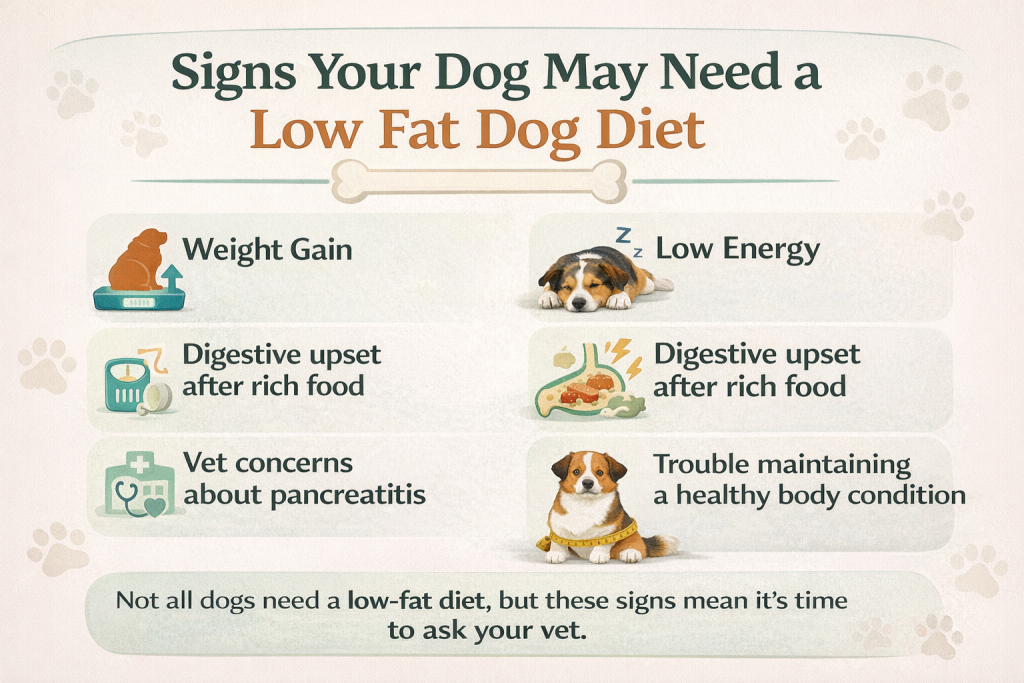
Signs your current meals may be too rich
Sometimes the bowl tells the story before the scale does.
If your dog gets digestive blowback after fatty leftovers, richer treats, or sudden food changes, that is worth noticing. Dogs with pancreatitis or chronic GI problems often do better with more digestible, lower-fat feeding strategies.
Watch for patterns like these
- loose stools after rich foods
- vomiting after table scraps
- weight creeping up even with “normal” meals
- begging that has more to do with habit than hunger
- low stamina because extra weight is dragging things down
What to look for in the bowl
A smart low fat dog diet is not just “less fat.” It should still be balanced, digestible, and satisfying.
The AAHA guidelines stress complete nutritional assessment and individualized feeding plans, while VCA emphasizes highly digestible nutrition for dogs dealing with GI issues.
Helpful qualities
- complete and balanced nutrition
- moderate to high protein for muscle support
- controlled calories
- digestible ingredients
- fiber levels that help satiety and stool quality
This is why random “diet hacks” for dogs usually age badly.
What to limit or skip
If you are trying to make a low fat dog diet work, the extras matter.
Rich table scraps, greasy meat trimmings, buttery leftovers, and “just one more treat” habits can quietly wreck progress. Owner feeding habits, over-treating, and table scraps are all linked to canine overweight and obesity in the literature.
The usual troublemakers
- bacon, sausage, fried meat
- cheese-heavy scraps
- oily toppers
- oversized dental chews
- training sessions that accidentally become second dinner
Your dog may act like every snack is emotionally necessary. Respectfully, it is not.
How to read the label without getting a headache
Dog food labels are not written for calm people.
Start with calorie information, feeding directions, and whether the food is complete and balanced. The AAHA guidelines note that calorie content should be part of the conversation for both foods and snacks, and that the main source of complete nutrition should make up about 90% of intake.
Focus on these details
- kcal per cup or can
- guaranteed analysis
- life stage
- feeding guide
- whether it is for weight management or a therapeutic purpose
Do not obsess over a single number while ignoring portion size. That is like buying a salad and pouring half a bottle of dressing on it.
Portion control matters as much as formula
A lower-fat food can still cause weight gain if the scoop gets generous.
AAHA emphasizes comparing calorie intake with a dog’s maintenance energy needs, and the guidelines also highlight the need for regular reassessment rather than “set it and forget it” feeding.
Easy wins
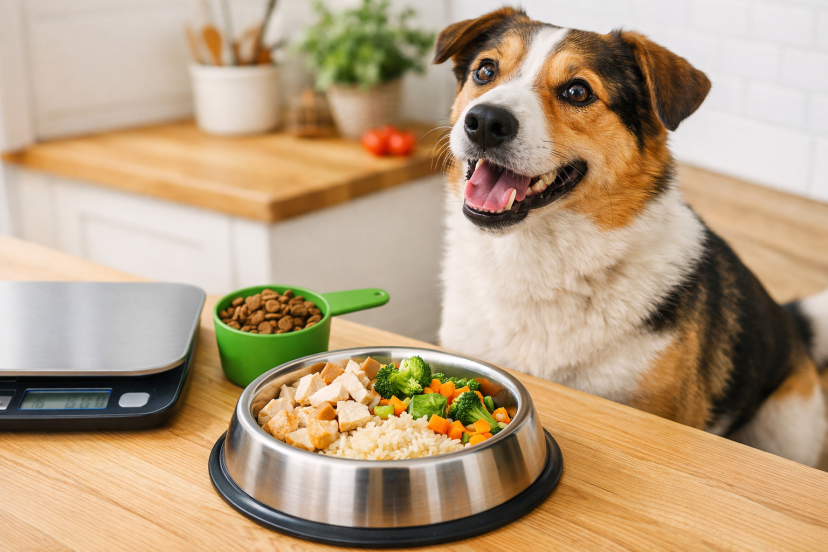
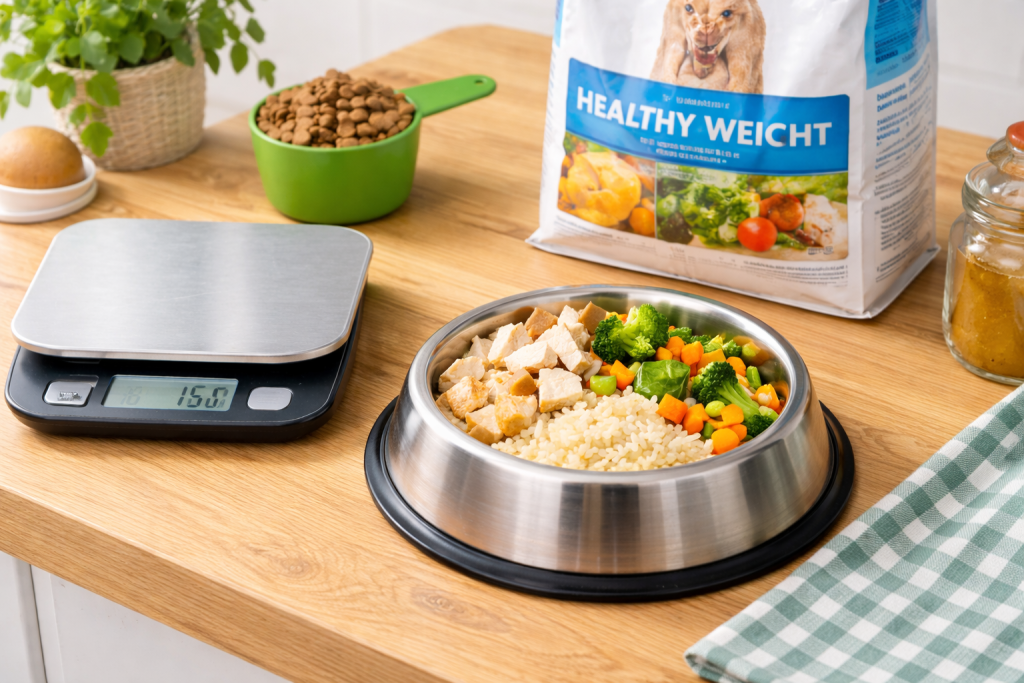
- use a real measuring tool or kitchen scale
- feed meals, not free-pour refills
- recheck portions after switching foods
- adjust for activity level, age, and neuter status
Honestly, the scoop is where good intentions go to party.
How to switch foods without chaos
Even the best low fat dog diet can flop if you change too fast.
VCA advises transitioning a dog’s food gradually over 7 to 14 days, and AKC similarly recommends a gradual switch over about 5 to 7 days to reduce digestive upset.
A simple transition
- Days 1–2: mostly old food, a little new
- Days 3–4: about half and half
- Days 5–7+: mostly new food, then fully new if stools stay normal
If your dog has a sensitive stomach or a history of pancreatitis, go slower and loop in your vet.
Treats, toppers, and table scraps still count
This is the sneaky part.
WSAVA says treats should make up no more than 10% of a dog’s daily calories, and AAHA gives the same basic 90/10 framework for complete nutrition versus extras. VCA adds that aiming even lower can be safer in some cases.
Better treat habits
- use tiny low-calorie treats
- reserve richer chews for special cases, if your vet is okay with them
- count topper calories
- let praise do some of the work
A blueberry-sized reward often works just as well as a “small” treat that is secretly a meat brick.
Daily movement and home habits matter too
Food is the headline, but lifestyle is the supporting cast.
Weight management works better when diet and movement work together. Research on overweight dogs notes that increased activity helps energy expenditure and supports better health during weight loss. And if your dog lounges near the kitchen like a tiny food lobbyist, your home setup can either help or sabotage you.
You can also make your space easier to manage with routines, feeding stations, and calmer boundaries. A more organized setup like a dog-friendly living room can reduce begging chaos and make healthy habits easier to keep.
Helpful finds for a low fat dog diet routine
I skipped prescription GI diets here because those are better matched by your vet. These five are practical, mainstream picks that looked strong on Amazon US when I checked.
1) Hill’s Science Diet Perfect Weight, Adult 1-6, Chicken Recipe, 4 lb Bag
Short description: A weight-management formula for adult dogs.
Features: 4.7/5 stars, 3,175 reviews, 2K+ bought in the past month on Amazon search results.
Use case: Great for dogs who need a structured healthy-weight food without jumping straight to a prescription formula.
2) Purina ONE Plus Healthy Weight High-Protein Dog Food Dry Formula
Short description: A high-protein healthy-weight kibble from a big, easy-to-find brand.
Features: Amazon search results showed 4.6/5 stars and about 34.9K reviews.
Use case: Good for owners who want broad availability and a familiar mainstream option.
3) Blue Buffalo Life Protection Formula Healthy Weight Adult Dry Dog Food, Chicken & Brown Rice
Short description: A popular healthy-weight formula with strong review volume.
Features: 4.6/5 stars and 51,029 reviews on Amazon search results.
Use case: Useful for households that want a natural-ingredient style weight-control food with lots of buyer feedback.
4) Blue Buffalo True Solutions Weight Control Natural Dry Dog Food for Adult Dogs, Chicken, 24-lb. Bag
Short description: A more targeted weight-control formula.
Features: 4.5/5 stars, 966 reviews, and 300+ bought in the past month on Amazon search results.
Use case: Good for dogs who need a more focused weight-management option but not necessarily a prescription diet.
5) Etekcity 0.1g Food Kitchen Scale with Bowl
Short description: Not dog food, but incredibly helpful for feeding accuracy.
Features: 4.7/5 stars and 46,448 reviews on Amazon.
Use case: Perfect for owners who need tighter portion control, especially when a “small extra scoop” keeps happening.
What research says about a low fat dog diet
Two especially helpful sources stand out.
A meta-analysis on low fat dog diet strategies for weight loss found that hypocaloric diets with lower fat, higher protein, and higher fiber were associated with better weight-loss and body-composition outcomes in obese dogs.
A review on low fat dog diet decisions for canine pancreatitis notes that high-fat diets can worsen pancreatitis severity in dogs and describes low fat as under 20% fat on a metabolizable energy basis.
That combo tells a pretty practical story: for the right dog, lower fat works best when it is part of a thoughtful, balanced plan rather than a random ingredient panic.
FAQs About Low Fat Dog Diet
Can a low fat dog diet help with pancreatitis?
It often can, especially for dogs with chronic pancreatitis or dogs that need lower-fat feeding after veterinary assessment. Merck and VCA both support lower-fat strategies in appropriate canine pancreatitis cases.
Is a low fat dog diet good for every overweight dog?
Not automatically. Many overweight dogs do well with calorie-controlled, weight-management food, but the right plan still depends on age, medical history, muscle condition, and how many extras they get.
What foods are usually avoided on a low fat dog diet?
Greasy leftovers, fatty meats, rich toppers, and too many treats are the big ones. The goal is not deprivation. It is reducing unnecessary fat and controlling calories.
How long does it take to switch to a low fat dog diet?
Usually about 5 to 14 days, depending on your dog’s stomach and medical history. Sensitive dogs often need the slower end of that range.
Can I make a homemade low fat dog diet?
Only with professional guidance. WSAVA advises involving a board-certified veterinary nutritionist for homemade diets, and published analyses show homemade recipes can end up nutritionally imbalanced.
Final thoughts
A good low fat dog diet is not about putting your dog on punishment food. It is about choosing meals that fit their body, their health, and their real daily needs.
Start with body condition, read the label, measure portions honestly, and keep treats in their lane. Most of all, remember this: progress usually comes from steady habits, not dramatic overhauls. A lighter bowl, a smarter scoop, and a few better choices can make your dog feel a whole lot better.