5 Ways To Keep Your Dog Warm Outside In Winter
We may earn a commission for purchases made using our links. Please see our disclosure for more details.
You know that moment when you step outside and the air feels like it slapped you awake? Winter can feel like that for dogs too—especially the little ones, the seniors, and the “I’m basically a short-haired baby deer” breeds.
If you’re here because you’re worried about walks, potty breaks, backyard time, or working/outdoor dogs, you’re in the right place. This guide will help you Keep Your Dog Warm Outside In Winter without turning your life into a 47-step routine.
Affiliate disclaimer: This post may contain affiliate links, which means I may earn a small commission at no extra cost to you.
What temperature is considered excessively chilly for a dog outdoors?
There isn’t one magic number, because “too cold” depends on your dog’s size, coat, body fat, age, and health. Still, most vets agree on the big idea: small dogs, short-haired dogs, puppies, seniors, and sick dogs get cold fast—sometimes faster than we expect.
A helpful rule: if you’re thinking, “Okay… this is getting uncomfortable,” your dog is probably feeling it too—especially if they’re standing still.
Also, cold can become dangerous quickly because of wind chill and wet fur, which makes the body lose heat faster.
Why some dogs get cold faster (breed, size, age, health)
Let’s be real: winter is not an equal-opportunity season.
Dogs who usually struggle most:
- Small breeds (more surface area compared to body mass)
- Short-haired breeds (less insulation)
- Puppies and seniors (harder time regulating body heat)
- Dogs with arthritis, heart issues, diabetes, or thyroid problems
- Very lean dogs (less natural insulation)
Meanwhile, northern breeds (like Huskies and Malamutes) are built for cold… but even they can get frostbite if conditions are harsh enough.
Wind chill + wet fur: why “feels like” matters
If you’ve ever worn damp clothes in cold wind, you already understand this. Wet fur + wind is basically winter’s cheat code.
Snow melting on the coat, drizzle, slush puddles, and even heavy fog can cool your dog down fast. The colder it gets, the more your goal becomes simple:
Keep them dry. Block the wind. Limit the time.
That combo is underrated and extremely effective.
Signs your dog is getting too cold (before it’s an emergency)
Your dog won’t always “tell you” in an obvious way. Sometimes they’ll still try to be brave because… dogs.
Watch for:
- Shivering or trembling
- Lifting paws repeatedly / refusing to walk
- Tucking tail, hunching body, looking “small”
- Whining, anxiety, or suddenly wanting to go home
- Slowing down, lagging behind, or sitting/lying down
- Cold ears/paws, pale gums, stiff movement
The AP reported cold-weather vet guidance that hypothermia can show up with weakness and shivering, and they noted frostbite risk increases in freezing conditions—especially on ears, tails, and paws AP News
If your dog seems confused, extremely weak, or can’t stop shivering, that’s not a “wait and see” moment—get them warm and call a vet.
The pre-winter checklist: gear + grooming + ID
This one is boring… and also the one that saves you later.
Quick winter checklist:
- Collar tag + microchip info updated (dark, storms, and snow can separate dogs fast)
- Trim paw fur (ice balls love long paw fluff)
- Brush regularly (matted fur can trap moisture and reduce insulation)
- Keep nails trimmed (better traction on slick ground)
- Reflective gear if you’re walking at dawn/dusk
Think of it like winter tires for your dog. You hope you won’t need the “extra,” but you’ll be glad you have it.
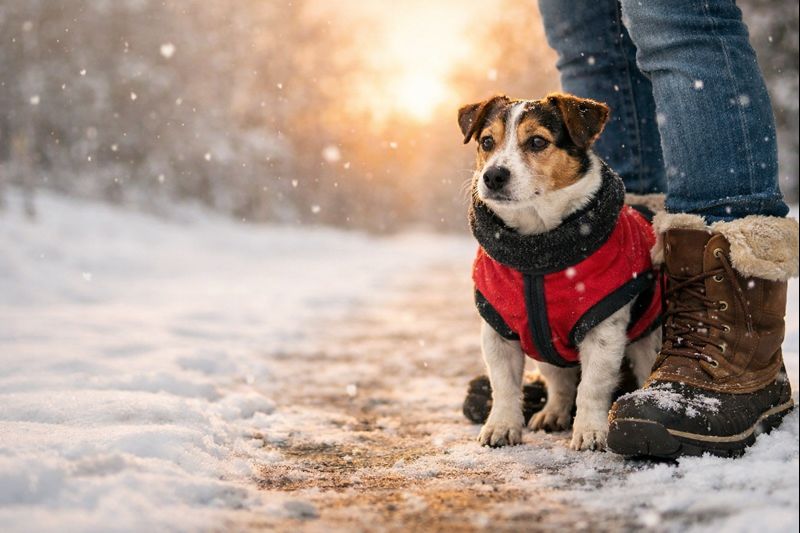
Coat or sweater? How to choose the right layer
You don’t need 12 outfits. You need the right one.
When a sweater is enough
- Cool but dry days
- Short potty breaks
- Dogs with medium coats who just need a little help
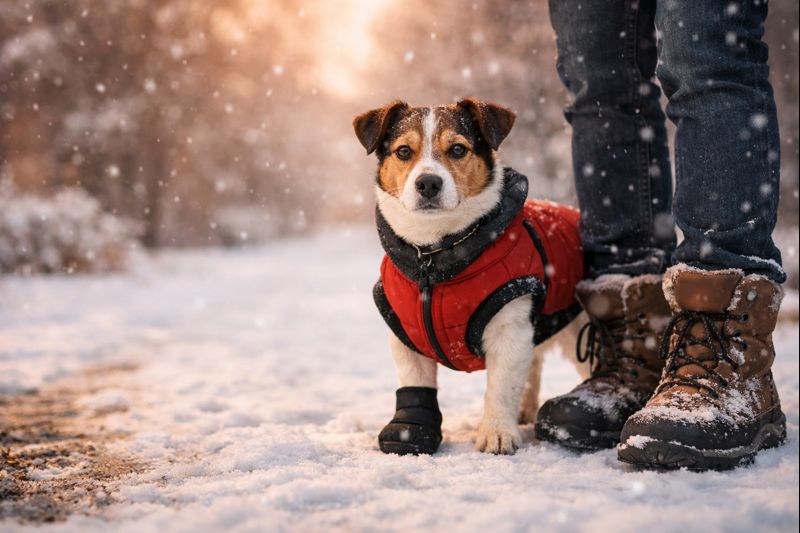
When you want a real winter coat
- Windy days
- Snow, sleet, or freezing rain
- Longer walks or outdoor work time
- Short-haired or senior dogs
Fit matters more than brand. You want:
- Snug but not tight
- Covers chest and belly (where heat escapes)
- Doesn’t rub armpits
- Easy to move in
If your dog walks like a stiff little robot, the coat isn’t “cute,” it’s a problem.
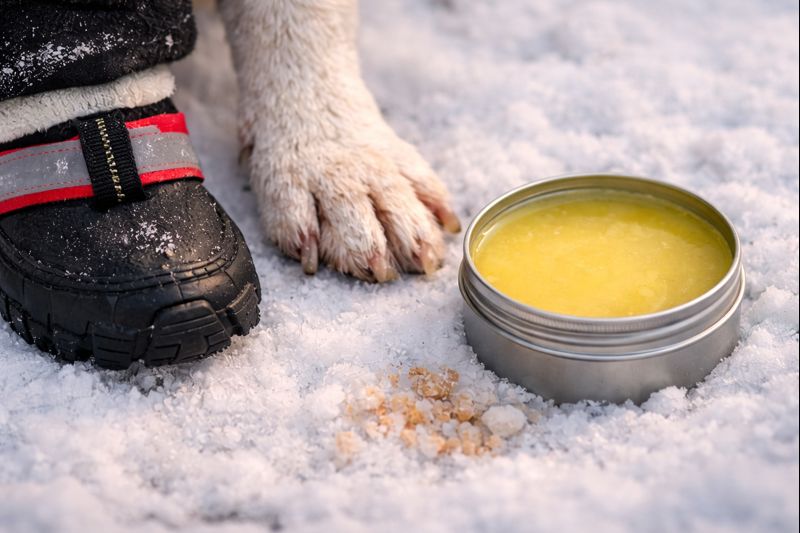
Paw protection: boots, balm, and salt safety
Paws are the first thing winter tries to wreck.
What makes paws miserable:
- Ice and crusty snow
- Salt and chemical de-icers
- Frozen sidewalks that feel like walking on cold metal
Options that actually work
- Boots: best for deep snow and salted streets
- Paw balm/wax: great for light snow, dry cold, and adding a protective layer
- Rinse + dry after walks: underrated, quick, and effective
Also, if your dog licks their paws like it’s their part-time job, be extra careful with salt exposure.
Smart timing: how long to stay out and when to call it
Winter success is less about toughness and more about timing.
Try this simple rhythm:
- Short, frequent outings instead of one long one
- Move first, then sniff (a slow sniff-fest at the start can chill them quickly)
- If your dog starts lifting paws or shivering, end it early
You’re not “ruining the walk.” You’re being the adult in the relationship.
Warm shelter basics for backyard dogs
If your dog spends time outside (even for a couple hours), shelter can’t be an afterthought.
A winter-ready shelter needs:
- Dry floor (no direct contact with frozen ground)
- Wind blocking entrance or flap
- Small enough to hold body heat (bigger isn’t always better)
- Raised design if possible
- Ventilation to prevent dampness buildup
Merck Veterinary Manual notes cold exposure risks (including frostbite and hypothermia) and emphasizes practical prevention—especially for vulnerable dogs.
Bedding + insulation that actually keeps heat in
Here’s the secret: blankets alone aren’t always enough, especially if they get damp.
Better bedding strategy:
- Straw (insulates well, stays warmer than many fabrics, and sheds moisture)
- Thick, insulating pads (especially self-warming styles)
- Elevate bedding to avoid ground cold
- Replace anything that stays wet or smells musty
Avoid cedar shavings or anything dusty/irritating for sensitive dogs.
Food and water in the cold (and preventing frozen bowls)
Cold burns calories. Some dogs genuinely need a bit more food in winter—especially active/outdoor dogs. If your dog is outside a lot, ask your vet whether a small calorie bump makes sense.
Water matters even more than food. Dehydration can sneak up because dogs may drink less when water is icy.
A big winter upgrade is using the right bowl setup (and a bowl that doesn’t freeze as easily). If you want a quick guide on choosing a bowl that’s practical and easy to clean, here’s my favorite breakdown:dog food bowl buying guide.
After-outside routine: dry, check, and rewarm
This is where you prevent the “winter problems” before they start.
Do this every time:
- Dry the coat and belly (especially slush zone)
- Check paws (cracks, redness, salt, ice balls)
- Warm-up inside with a blanket or bed
- Offer room-temp water
- Quick body scan: ears, tail, toes
It’s basically the dog version of coming home and taking off wet socks. Immediate relief.
Cold-weather enrichment: keep them happy without freezing
Some days are just… not walk days. And that’s okay.
Try:
- 5–10 minutes of indoor training (sit, place, touch, leash manners)
- Snuffle mat or treat scatter “find it”
- Frozen-safe chew time (indoors)
- Puzzle toys
- Short driveway walks + indoor play breaks
A tired dog is a warm dog… because they’re indoors, on the couch, living their best life.
Product picks to keep your dog warm outside in winter
Below are 5 practical, high-intent items (the kind you actually use, not the kind you forget in a drawer):
1) Farm Innovators Heated Pet Bowl (1 Quart)
What it does: Helps keep water from freezing.
Best for: Outdoor time, garages, patios, working-dog setups.
Why it’s useful: If your dog won’t drink cold water, this removes the battle.
2) K&H Pet Products Self-Warming Pet Pad
What it does: Reflects your dog’s body heat back to them (no electricity).
Best for: Dog houses, crates in cold rooms, sheltered porches.
Why it’s useful: Simple, safe warmth boost—especially for seniors.
3) Carhartt Firm Duck Insulated Dog Chore Coat
What it does: Durable insulation + weather resistance for wind and cold.
Best for: Active dogs, outdoor dogs, “we go out no matter what” owners.
Why it’s useful: Tough material holds up to real winter wear.
4) QUMY Waterproof Dog Boots (Reflective Straps)
What it does: Protects paws from ice, salt, and frozen ground.
Best for: Snowy sidewalks, salted streets, sensitive paws.
Why it’s useful: Paw injuries are a common winter walk-ender.
5) Musher’s Secret Paw Protection Wax
What it does: Creates a breathable barrier to help protect paws.
Best for: Light snow, dry cold, dogs who hate boots.
Why it’s useful: A great “middle option” when boots are a no-go.

Research-backed winter safety + FAQs
What the experts consistently agree on
- Cold exposure can lead to frostbite and hypothermia, especially in vulnerable dogs. Practical prevention (dryness, wind protection, limiting time outside) matters a lot. You can read the expert overview in the Merck Veterinary Manual’s guidance on hypothermia and frostbite prevention.
- Winter safety isn’t only about temperature—it’s also about ice, toxins (de-icers), and shelter setup. Cornell’s vet school shares clear winter tips in Cold-weather safety advice for dogs and cats.
FAQs
Keep Your Dog Warm Outside In Winter: How long can my dog stay outside?
It depends on breed, size, coat, and wind/wetness. Start with short outings, watch for paw lifting or shivering, and bring them in early if they look uncomfortable.
When is it too cold for dogs to go on walks?
If it’s freezing, windy, or wet—and your dog is small, short-haired, young, old, or sick—assume they’ll need a coat and a shorter walk. When in doubt, shorten the walk and add indoor play.
What are the initial symptoms of hypothermia in dogs?
Shivering, weakness, slowed movement, and acting “off” are common early signs. If symptoms are intense or don’t improve quickly after warming up, call your vet.
How can I shield my dog’s paws from salt and snow?
Use boots or paw wax, avoid heavily salted areas when possible, and rinse/dry paws after walks. Check between toes for ice balls.
What should outdoor dogs sleep on in winter?
Dry, insulating materials matter most. Straw often insulates better than thin blankets, and a self-warming pad can add a big comfort boost inside a well-fitted shelter.
Winter doesn’t have to be scary. With the right layering, paw protection, smart timing, and a warm setup, you can Keep Your Dog Warm Outside In Winter and still enjoy the season together—without either of you suffering through it.