5 Homemade Dog Treat Recipes for Sensitive Pups
We may earn a commission for purchases made using our links. Please see our disclosure for more details.
If you’ve ever stared at a treat label and thought, “Why does this read like a chemistry exam?”… you’re not alone.
When your pup has a sensitive stomach, itchy skin, or mysterious “why am I licking my paws again?” vibes, treats can feel like a gamble. The good news: a Homemade Dog Treat routine can make things simpler, gentler, and way more personal. You control the ingredients, the texture, and the portion size—so you can spoil your dog without playing digestive roulette.
In this guide, you’ll get 5 sensitive-pup-friendly recipes, smart ingredient swaps, storage tips, and a few research-backed notes (in plain English) so you feel confident—not confused—while baking.
What “Sensitive” Really Means for Dogs
Some pups react to certain proteins (like chicken or beef). Others struggle with rich fats, dairy, or too many ingredients at once. And some dogs are just… dramatic about change (honestly relatable).
Common signs you may need gentler treats:
- Itchy skin or paw licking
- Soft stool, gas, or tummy gurgles
- Ear redness or recurring yeast smell
- Vomiting after new snacks
- “I’m not eating that” pickiness (yes, it counts)
If your dog has severe symptoms or sudden changes, loop in your vet—especially before trying brand-new proteins.
The Treat Rule That Saves You From Accidental Overfeeding
Here’s the sneaky part: treats add up fast.
Veterinary guidance commonly recommends treats stay at ~10% or less of daily calories so your dog’s main diet stays balanced.
And it matters because many dogs are already carrying extra weight—one U.S. reference cites an obesity-prevalence survey where about 59% of dogs were overweight or obese.
Easy win: make treats smaller. Dogs don’t count. They just celebrate.
Pantry Staples That Usually Work for Sensitive Pups
Think of treats like a calm playlist for your dog’s belly—simple, predictable, and not full of surprises.
Often gentle, depending on the dog:
- Pumpkin (plain, not pie filling)
- Oats or oat flour
- Sweet potato
- Banana
- Applesauce (unsweetened)
- Plain rice flour
- Single-protein options (turkey, salmon, etc.) if tolerated
Common triggers to watch:
- Dairy
- Highly processed treats
- Multi-protein mixes
- Too much fat (heavy peanut butter, lots of oil)

Swap This, Not Your Whole Life: Simple Ingredient Substitutions
You don’t need a gourmet dog bakery setup.
If your dog can’t do wheat: Try oat flour or rice flour instead.
If eggs are questionable: try a “flax egg” (1 tbsp ground flax + 3 tbsp water).
If peanut butter is too rich: use a thinner smear or switch to pumpkin-based treats.
The goal is calm digestion, not perfection.
Recipe #1: Pumpkin Oat “Calm Belly” Buttons (Baked)
Why it’s good: mild flavor, simple ingredients, easy to portion.
Ingredients
- 1 cup oat flour (or blended oats)
- ½ cup plain pumpkin purée
- 1 mashed banana (optional for softness)
- Water as needed (1–3 tbsp)
Steps
- Mix into a dough. Add a little water if crumbly.
- Roll into tiny balls, flatten slightly.
- Bake at 350°F (175°C) for roughly 15–18 minutes.
- Cool fully.
Tip: Make them pea-sized for training. Your dog will still act like they’re priceless jewels.
Recipe #2: Sweet Potato Chews (Dehydrator or Oven)
Why it’s good: single-ingredient treats are chef’s kiss for sensitive pups.
Ingredients
- 1–2 sweet potatoes
Steps (oven)
- Slice into ¼-inch strips.
- Cook them at a low temperature (about 250°F / 120°C) for 2–3 hours, turning the pieces over once halfway through.
- Cool and test chewiness.
Dehydrator method is even easier and more consistent (more on tools below).
Recipe #3: Salmon & Rice Mini Bites (Soft Training Treats)
Why it’s good: helpful for dogs who do better with fish and need softer textures.
Ingredients
- 1 can salmon in water (drained)
- 1 cup cooked rice (white or brown)
- 2–3 tbsp rice flour (to bind)
Steps
- Mash salmon + rice.
- Stir in rice flour until you can form small nuggets.
- Bake at 350°F (175°C) for about 12–15 minutes.
Note: Keep them small and store chilled.
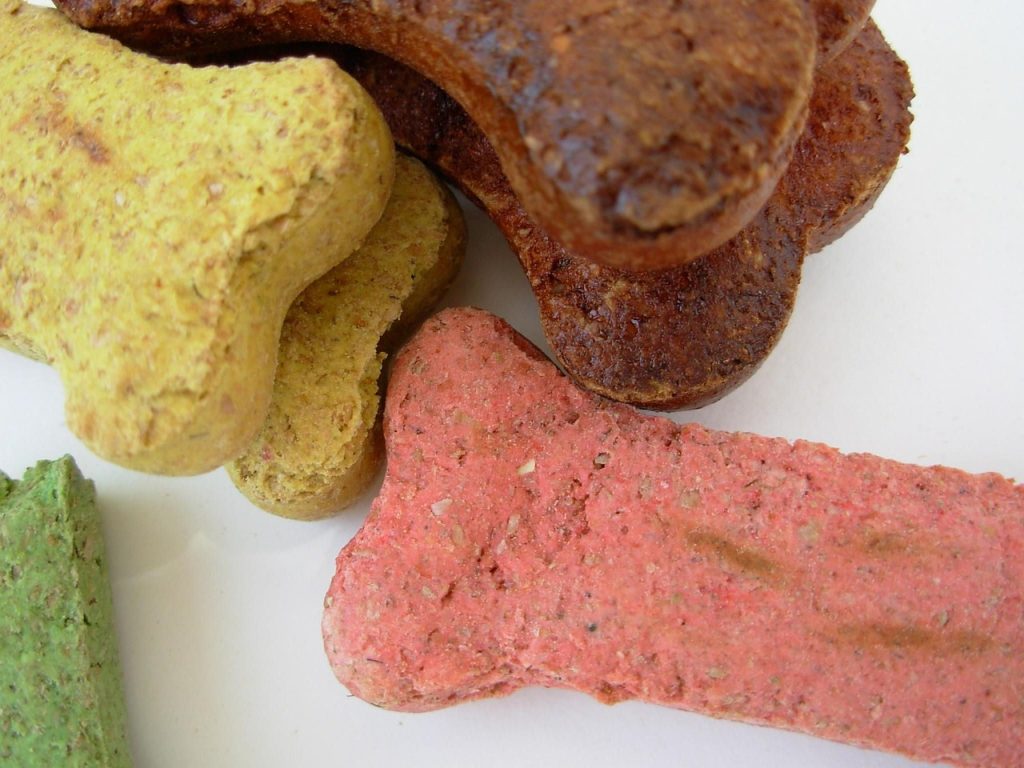
Recipe #4: Banana-Oat “No-Fuss” Biscuits (Egg-Free Option)
Why it’s good: easy, gentle, and smells like you’re making snacks for a tiny roommate.
Ingredients
- 2 ripe bananas
- 1½ cups oats (or oat flour)
- 2 tbsp applesauce (optional)
Steps
- Mash bananas.
- Mix in oats until thick.
- Spoon onto a tray and flatten.
- Bake 18–22 minutes at 350°F (175°C).
Texture hack: Bake longer for crispier, shorter for softer.
Recipe #5: Frozen Lick Cubes (Great for Itchy Days)
Why it’s good: cold + lick time can feel soothing, and it slows fast eaters.
Ingredients (choose 1 base)
- Pumpkin purée
- Plain unsweetened applesauce
- Optional: tiny pinch of turmeric (ask your vet if your dog has conditions/meds)
Steps
- Spoon into a mold.
- Freeze 2–4 hours.
- Serve as a cool “lick treat.”
Portioning for Training, Walks, and “Just Because You’re Cute” Moments
Sensitive dogs often do better with micro-treating:
- Training: tiny soft bites
- Walks: low-crumb options
- After grooming: calming lick cube
- “Just because”: one biscuit, not a handful
If you want an easy routine, pre-portion a day’s treats into a small container so you don’t accidentally overdo it.
Storage & Food Safety (So Your Treats Don’t Get Weird)
Homemade treats don’t have preservatives, so treat them like real food (because they are).
General storage tips
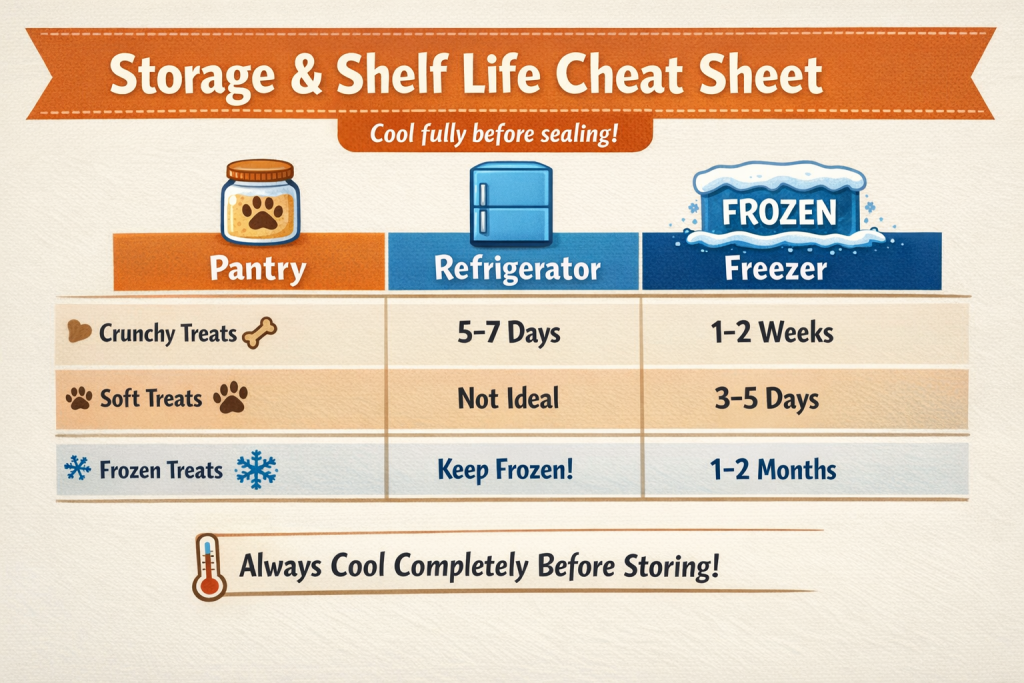
- Crunchy baked biscuits: airtight container 5–7 days
- Soft treats: fridge 3–5 days
- Frozen treats: freezer up to 2–3 months
- Always cool fully before sealing (steam = soggy + faster spoilage)
When in doubt: smell test. If it smells “off,” it’s out.
When Treats Might Be a Teething Lifesaver (Puppies Especially)
If you’ve got a puppy, sensitive or not, teething turns them into tiny land sharks. Pair gentle treats with safe chewing options so they’re not sampling your furniture like it’s a buffet.
You can also check out these puppy teething toy ideas for safer chewing and calmer gums.
Product Picks That Make Homemade Treats Easier
Below are 5 tools/ingredients that can make your Homemade Dog Treat routine smoother, cleaner, and more consistent.
1) BUDDY BUDDER Superberry Snoot (Dog Peanut Butter)
Short description: Dog-focused peanut butter style treat spread (no xylitol) you can use in tiny amounts.
Features: Dog-friendly formulation notes; easy to smear, mix, or freeze into cubes.
Use cases: Great for picky eaters, stuffing toys, or bonding “lick treats.”
2) KONG Easy Treat (Peanut Butter flavor)
Short description: A squeezable paste-style treat that’s convenient for controlled portions.
Features: Easy to dispense; useful for quick rewards and toy stuffing.
Use cases: For busy training sessions, travel days, or adding a small “high value” boost without crumbs.
3) Aichoof Silicone Dog Treat Mold
Short description: Mold tray for freezing pumpkin cubes or making uniform bite sizes.
Features: Fun shapes; consistent sizing; great for frozen recipes.
Use cases: Perfect for dogs who do better with cold lick-style treats (and for portion control).
4) OXO Good Grips Pet POP Container (Airtight storage with scoop)
Short description: Airtight container that helps keep treats fresher and less stale.
Features: Airtight seal; included scoop; easy pantry organization.
Use cases: For households that batch-bake treats weekly and want fewer “mystery crumbs” everywhere.
5) COSORI Food Dehydrator (dog-treat-friendly dehydrating)
Short description: A dehydrator can make sweet potato chews and simple dried treats more consistent than an oven.
Features: Multi-tray drying space; useful for jerky-style treats and chews.
Use cases: For treat-preppers who want easy, repeatable batches without constant oven babysitting.
Research-Backed Notes (No Science Headache)
If you suspect your dog’s issues are tied to food allergies, many vets suggest doing a strict elimination diet trial—which means your pup eats only the prescribed trial food, with zero extra treats or table bites that could blur the results. Here’s a solid overview on how a food allergy diet trial works: elimination diet trial for dogs.
You’ll also see vets recommend hydrolyzed-protein diets in allergy testing. These diets use proteins broken down into smaller pieces, which may reduce the chance of the immune system reacting in certain dogs. More on hydrolyzed-protein diets for allergy workups here: hydrolyzed protein diets in dogs.
So what does this mean for treats?
If you’re trying to pinpoint a trigger, keep treats as simple as possible (sometimes even single-ingredient only) or temporarily skip treats during the strict trial period. It’s a little inconvenient, yeah—but it’s the fastest way to get clean, reliable answers instead of guessing forever.
Homemade Dog Treat FAQs
Can I give a homemade dog treat every day?
Yes—if you keep portions small and stay within the common “treats ≈ 10% of daily calories” guideline.
What’s the best homemade dog treat for allergies?
Usually, single-ingredient treats (like sweet potato chews) are easiest to troubleshoot. For true allergy testing, vets often recommend strict elimination trials, which may mean pausing most treats temporarily.
Do grain-free homemade dog treats always make them healthier?
Not automatically. Some dogs do great with oats; others need grain-free. The “best” treat is the one your dog digests comfortably and fits their overall nutrition plan.
What’s the safest way to store homemade dog treats?
Crunchy treats do best in airtight containers for about a week. Soft treats need to be kept in the fridge and eaten within a few days. Frozen treats can last a couple of months if sealed well.
What homemade dog treat is best for training?
Tiny, soft bites win—think salmon & rice mini bites or small pumpkin-oat buttons. Smaller pieces keep calories low and motivation high.
Conclusion
A Homemade Dog Treat doesn’t have to be complicated to be meaningful. Start with one recipe, keep the ingredient list short, and pay attention to how your pup feels over the next day or two. That’s your real “review section.”
You’re not just making snacks—you’re building trust, comfort, and a little daily joy your dog can actually handle. Try one batch this week, keep portions tiny, and let your pup be your very enthusiastic taste-tester.