Dog Food Bowls: Best Picks for Mess-Free Meals
We may earn a commission for purchases made using our links. Please see our disclosure for more details.
If you’ve ever stepped on a crunchy kibble “landmine” barefoot… you already know this: dog food bowls aren’t just bowls. They’re the tiny, daily thing that can make mealtime calm and clean—or loud, messy, and mildly annoying.
In this guide, I’ll help you choose the right bowl for your dog (speed-eater, messy drinker, senior pup, flat face, big drooler… all welcome). You’ll also get my best product picks, plus a quick research-backed reality check on slow feeders and bowl hygiene.
Affiliate note: If you buy through the product picks I mention, I may earn a small commission at no extra cost to you.
The real reason dog food bowls matter
A bowl seems simple until your dog turns dinner into a sport.
The right bowl can help you:
- Reduce spills (and that swampy water trail to the couch)
- Slow down gulping
- Support comfort for tall dogs or older joints
- Make cleaning easier (so you actually do it)
- Prevent “bowl bullying” in multi-dog homes
Think of it like shoes. Any shoe covers your foot… but the right pair changes your whole day.
Pick the right size and stop guessing
Most bowl problems start with the wrong size.
How to size a bowl in 30 seconds
- Measure your dog’s meal volume (cups per meal).
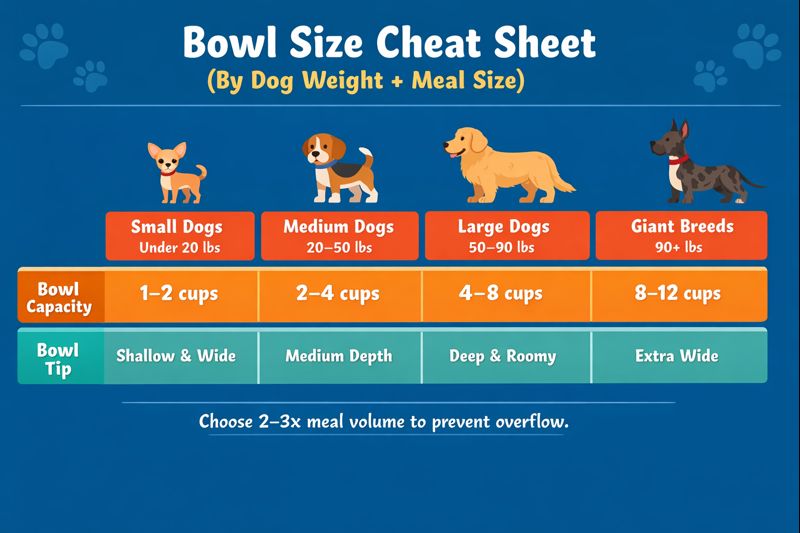
- Choose a bowl that holds about 2–3x that amount.
- Why? It prevents overflow, but it’s not so deep your dog has to “face-dive.”
Quick bowl size cheat sheet
- Small dogs (under 20 lbs): 1–2 cups capacity
- Medium dogs (20–50 lbs): 2–4 cups
- Large dogs (50–90 lbs): 4–8 cups
- Giant breeds (90+ lbs): 8–12 cups
If your dog’s ears dip into food or water, go wider instead of deeper.
Stainless steel vs ceramic vs plastic: what I’d actually buy
If you want the safest “default choice,” go stainless steel.
Stainless steel dog bowls
- Durable, dishwasher-safe, and usually the most hygienic.
- Great for most dogs, especially messy eaters.
Ceramic dog bowls
- Heavy and harder to tip (nice).
- Can chip if dropped, and chips can hold bacteria.
Plastic dog bowls
- Cheap and light, but they scratch easily.
- Scratches can trap gunk (and sometimes smell like yesterday’s fish dinner).
If you’re torn: stainless for everyday, ceramic if you want a heavier “stay put” option and you don’t mind being careful with it.
Non-slip, no-spill, and “my dog drags the bowl” problems
Some dogs eat like they’re training for a construction job.
If your dog pushes bowls across the floor
Look for:
- Rubber bases
- Silicone ring bottoms
- Heavier bowls
If water ends up everywhere
Try:
- No-spill water bowls (with a floating disc or inward lip)
- A raised edge feeding mat under the bowl
And yes—some dogs genuinely enjoy splashing. In that case, your bowl choice is basically “damage control with dignity.”
Slow feeder dog bowls for gulpers and “vacuum cleaners”
If your dog inhales food like it’s a magic trick, a slow feeder can be a game-changer.
Signs your dog needs a slow feeder
- Finishes meals in under 20–30 seconds
- Gags, coughs, or burps after eating
- Gets gassy or seems uncomfortable after meals
Tips so slow feeders don’t backfire
- Start with gentler grooves (not the hardest maze on day one)
- If your dog gets frustrated, smear a little wet food or toppers to encourage licking
- Keep portions realistic—overfilling makes it messy and defeats the point
Slow feeders are like speed bumps for dinner. Your dog may not love them at first… but their stomach usually does.
Elevated dog bowls: comfort tool or overhyped?
Elevated dog bowls can help some dogs—especially seniors or dogs with neck/back strain. But they aren’t automatically “better.”
Here’s the caution: a well-known study on large/giant breeds found raised feeding bowls were associated with increased GDV risk, and the paper estimated a notable portion of cases could be attributed to raised bowls.
When elevated bowls can make sense
- Older dogs who struggle to bend
- Very tall breeds (when the setup reduces strain)
- Dogs with arthritis (comfort matters)
When I’d be careful
- Large/giant breeds with other GDV risk factors
- Dogs that already eat too fast (raising the bowl doesn’t slow them)
If you want elevation without going “full pedestal,” try a low stand plus a slow feeder.
Flat-faced breeds need different bowls
Bulldogs, pugs, boxers, and other brachycephalic pups often do better with:
- Wide, shallow bowls
- Tilted bowls (slight angle helps access)
- Raised edges that keep food from sliding away
A deep bowl can make them work too hard for every bite. Dinner shouldn’t feel like an obstacle course.
Puppies and seniors: making meals easier
Different life stage, different bowl needs.
Puppies
- Smaller bowls that don’t overwhelm them
- Non-slip bases (because puppies treat bowls like toys)
- Slow feeders if they eat too fast
Senior dogs
- Wider bowls for easier access
- Consider mild elevation if bending is uncomfortable
- Easy-clean materials (because immune systems aren’t always as robust)
If your senior dog seems “picky” lately, sometimes it’s not the food. It’s the effort.
Multi-dog households: bowls that reduce drama
If you have more than one dog, you’ve probably seen:
- The faster dog “helping” with the slower dog’s meal
- Guarding, hovering, and side-eye energy
Simple fixes that actually work
- Use separate feeding stations
- Pick bowls that are easy to identify (different colors or shapes)
- Consider slow feeders for the speed demon so the other dog can finish in peace
You’re not running a restaurant… but also, you kind of are.
Sensitive skin and “dog chin acne”: what to switch first
If your dog gets red bumps around the chin or muzzle, bowls can play a role—especially if you’re using old plastic or not washing often.
Try this first:
- Switch to stainless steel
- Wash bowls daily (yes, really)
- Replace heavily scratched bowls
It’s the cheapest “maybe fix” you can try before spiraling into a 12-step skincare routine for your dog.
A cleaning routine that actually sticks
The best bowl is the one you can keep clean without hating your life.
The easy routine
- After each meal: quick wash with hot water + soap
- Daily: dishwasher if the bowl allows it
- Weekly: sanitize (especially if you feed wet/raw)
Research backs the hygiene part: studies on pet bowls and feeding practices highlight contamination risk and the importance of better dish hygiene habits.
If you’re immunocompromised, have small kids, or feed wet/raw food, bowl hygiene matters even more.
Travel and outdoor bowls for cars, hikes, and hotel rooms
For travel, you want something that’s:
- Lightweight
- Easy to rinse
- Packable
Best travel options
- Collapsible silicone bowls (great for walks)
- Hard-sided portable bowls (better for car trips)
- No-spill water bowls for hotel rooms (because carpet + water = stress)
Keep one in your car. Future-you will feel like a genius.
Add-ons that keep floors clean
Not every problem needs a new bowl. Sometimes you need a bowl “support team.”
Bowl mats
A silicone mat catches spills and keeps bowls from sliding. It’s basically insurance for your floors.
Bowl stands
A simple stand can reduce pushing and tipping. Just keep height appropriate.
Storage
If kibble bags make you sneeze or go stale fast, a sealed container helps—but don’t store food long past its freshness.
Product Picks: 5 dog food bowls worth buying
1) YETI Boomer 8 Stainless Steel Non-Slip Dog Bowl (64 oz)
Why it’s solid: Heavy-duty, steady, and built like it’ll outlive us all.
Features:
- Stainless steel
- Non-slip ring
- Dishwasher safe
Best for: Medium-to-large dogs, messy eaters, “I destroy bowls” dogs.
2) UPSKY 70oz No-Spill Dog Water Bowl (2L)
Why it’s loved: Cuts splashing and “water beard drips” around the house.
Features:
- No-spill design (floating/anti-splash style)
- Large capacity
- Helps slow water gulping
Best for: Sloppy drinkers, long-haired dogs, travel/hotel stays.
3) Neater Feeder Deluxe (Mess-Proof Elevated Feeder)
Why it’s practical: The setup catches spills and keeps bowls in place.
Features:
- Elevated design with spill containment
- Reduces pushed-around bowls
- Easier floor cleanup
Best for: Dogs that scatter kibble, homes with nicer floors, busy pet parents.
4) Neater Feeder Express (Mess-Proof Elevated Feeder)
Why it’s a good “lighter” option: Similar idea, usually a simpler footprint.
Features:
- Elevated bowls + splash control
- Less mess tracking
- Straightforward to rinse/wipe
Best for: Small-to-medium dogs, apartments, “I need less chaos” kitchens.
5) Slow Feeder Ceramic Dog Bowl (Weighted, Slow-Feed Design)
Why it stands out: Ceramic weight + slow-feeding grooves = fewer flips and faster cleanups.
Features:
- Heavy/weighted ceramic
- Slow feeder pattern
- Often dishwasher safe (check listing)
Best for: Speed eaters who tip plastic bowls, dogs who need slower meals without plastic.
Bonus (mealtime mood support): If your dog gets jumpy, whiny, or anxious around feeding time, pairing the right bowl with a calming routine can help—these natural calming dog treats for dogs are a good next read.
What the evidence says about slow eating and clean bowls
Slow feeder dog bowls can genuinely slow down eating
A Veterinary Evidence poster study (Buckley & Lees, 2016) found “go slow” feeding bowls reduced eating speed, even though dogs may adapt over time as they learn the pattern.
If your dog gulps meals, a slow feeder is one of the simplest “try this first” changes.
Here’s the source: slow feeder dog bowl research review.
Dog bowls can hold bacteria if you don’t wash them
A PLOS ONE study (Luisana et al., 2022) suggests many owners benefit from clearer education on pet food dish hygiene to reduce contamination risk.
This doesn’t mean you should panic. It means your bowl choice should make cleaning easy enough that you’ll actually do it.
Here’s the source: dog food bowl hygiene study.
FAQ: dog food bowls
What are the best dog food bowls for messy eaters?
Choose wider bowls with non-slip bases, or use a feeder system that catches spills. A silicone mat helps a lot.
Are stainless steel dog food bowls better than plastic?
For most homes, yes—stainless is durable, easy to sanitize, and less likely to hold odors than scratched plastic.
Are slow feeder dog bowls genuinely effective?
They often do, especially early on. Start with an easier slow feeder and increase difficulty only if your dog stays relaxed.
Is it appropriate to use elevated dog bowls for huge dogs?
It depends. Some dogs find them more comfortable, but research has linked raised feeding bowls to increased GDV risk in large/giant breeds. Talk with your vet if your dog has GDV risk factors.
How frequently should dog food dishes be cleaned?
Ideally after each meal, especially for wet food. At minimum, wash daily and sanitize regularly to reduce contamination risk.
Conclusion
The “best” bowl isn’t the fanciest one—it’s the one that fits your dog’s body, eating style, and your real life.
If you want a simple plan: start with stainless steel, add non-slip, upgrade to a slow feeder if your dog gulps, and choose a no-spill water bowl if your floors keep suffering. Then make cleaning easy enough that it becomes automatic.
Your dog doesn’t need perfection. They need consistency, comfort, and a setup that makes mealtime feel safe. You’ve got this.