Dog Food Bowl Review: Stainless vs Ceramic vs Plastic
We may earn a commission for purchases made using our links. Please see our disclosure for more details.
You’d think a dog food bowl is just… a bowl. Then you watch your dog inhale dinner like a tiny vacuum, flip the dish like it owes them money, or wake you up at 2 a.m. because the “water bowl became a swimming pool.”
Yeah. The right bowl matters.
In this guide, I’ll help you pick a dog food bowl that actually fits your dog’s eating style, your space, and your sanity—without overthinking it. We’ll compare materials, talk slow feeders, elevated bowls, cleaning (the gross part), and I’ll share a few Amazon picks that are genuinely worth it.
Why a dog food bowl can make or break mealtime
A dog food bowl affects more than “where the kibble goes.” It can influence:
- Speed eating (hello, gulping and gassiness)
- Mess level (spills, splashes, sliding bowls)
- Comfort (neck strain, awkward posture)
- Hygiene (biofilm and bacteria build-up—yum…)
Think of it like shoes. Any pair covers your feet, but the right pair makes life smoother. Same idea here—just with less fashion and more drool.
Stainless vs ceramic vs plastic: the real-world differences
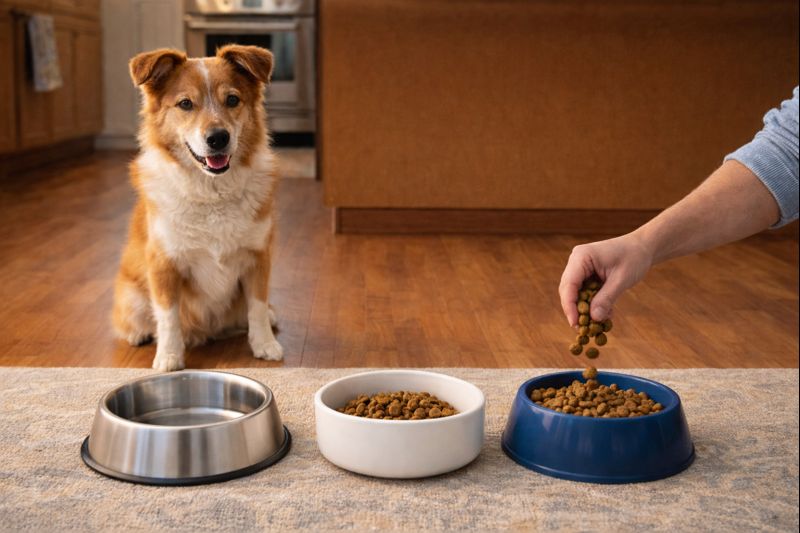
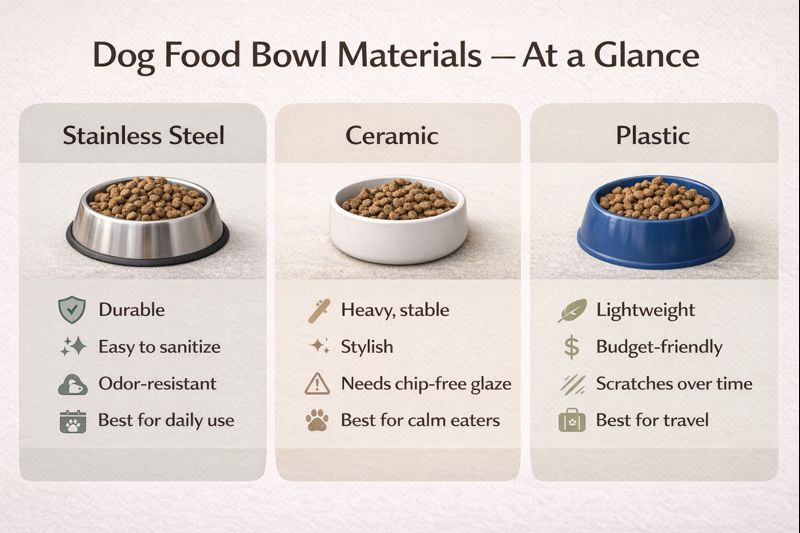
Let’s simplify the big three materials:
Stainless steel dog bowl
- Best for hygiene and durability
- Doesn’t hold odors easily
- Usually dishwasher-safe
- Great for most dogs (and most owners)
Ceramic dog bowl
- Heavy and stable (less sliding)
- Cute, homey, “I care about aesthetics” vibes
- Must be glazed and chip-free to stay safe
- Can crack if dropped (ask me how I know)
Plastic dog bowl
- Cheap and lightweight
- Easy to replace
- Can scratch over time (scratches = bacteria hangout)
- Some dogs react to it (chin acne, irritation)
If you’re stuck? Start with stainless steel. It’s the most “boring but reliable” option—and boring is beautiful when it keeps your floors clean.
Pick the right size (and avoid the “too-deep bowl” face)
Size isn’t just about how much food you want to put in there. It’s about how your dog eats.
A quick way to choose:
- Small dogs / short snouts: smaller diameter, not too deep
- Big dogs: wider bowl so they’re not scraping the sides like a spoon in a narrow jar
- Wet food feeders: slightly wider is easier to clean and less “gunk in corners”
If your dog keeps pushing food out of the bowl, it might be too deep or too narrow. If they can’t finish without chasing kibble around the rim? Same.
Shape matters: wide, shallow, and “easy face access”
Some bowls look pretty but feel annoying to eat from—kind of like drinking from a fancy glass that spills on your shirt.
Look for:
- Wide + shallow bowls for flat-faced breeds (pugs, bulldogs, shih tzus)
- Rounded interior so food doesn’t get trapped in sharp corners
- Low-lip edges if your dog is sensitive around the mouth
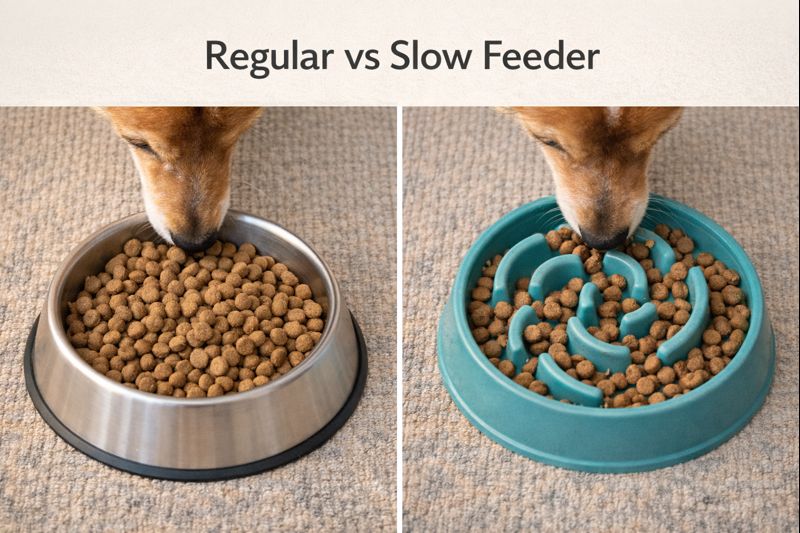
If you’ve ever watched a dog give up on the last 10 kibbles like it’s a hard level in a video game… shape is usually why.
Non-slip and tip-resistant bowls for “enthusiastic eaters”
If your dog treats dinner like a competitive sport, you’ll want stability.
Helpful features:
- Rubber/silicone non-slip base
- Wider bottom (harder to tip)
- Heavier material (ceramic or weighted stainless)
For messy floors, pair any non-slip dog bowl with a simple mat. It’s not glamorous, but it saves you from mopping like it’s a part-time job.
Slow feeder dog food bowls for fast eaters
If your dog gulps food like it might disappear (relatable, honestly), a slow feeder bowl can help.
A good slow feeder:
- Forces “pause and navigate” eating
- Helps reduce scarf-and-barf moments
- Works well for dogs who get gassy after meals
Pro tip: Start with the easiest maze pattern first. Some dogs get frustrated and just… flip the whole thing. Which is impressive, but not the goal.
Elevated dog bowls: comfort, posture, and the bloat question
An elevated dog bowl can be amazing for:
- Tall dogs who hunch to eat
- Seniors with stiff joints
- Dogs with neck/back discomfort
But here’s the honest part: people also talk about elevated bowls and bloat risk (GDV) for large/giant breeds. The evidence isn’t something to panic about—but it is something to discuss with your vet if your dog is in a higher-risk category.
If your dog is older and clearly uncomfortable bending down, elevation may still be the kinder choice. Just choose thoughtfully (and don’t “DIY” a wobbly stand that becomes a hazard).
Mess control: mats, splash guards, and “why is water everywhere?”
Some dogs drink like they’re trying to drown the kitchen.
If that’s your house, you’ll love:
- Spill-proof / no-splash water bowls
- Raised-lip mats (contain puddles)
- “Feeding station” trays that catch scattered kibble
Also—tiny but real tip—place the bowl a little away from walls. It reduces splatter marks and makes cleanup easier. Future-you will be grateful.

Dishwasher-safe cleaning and the biofilm problem
Biofilm is that slimy layer that forms when a bowl looks “fine” but feels… weird. If you’ve ever touched the inside of a water dish and immediately regretted having hands, that’s biofilm.
Basic routine that works:
- Wash food bowls after each meal (especially wet food)
- Wash water bowls daily
- Use the dishwasher (hot cycle) when possible
- Keep a spare set so you’re not stuck hand-washing at midnight
It’s not about being perfect. It’s about keeping your dog’s bowl from turning into a tiny science experiment.
Material safety checklist: coatings, cracks, and hidden issues
Here’s what I’d avoid:
- Chipped ceramic (those cracks trap bacteria)
- Mystery plastics with strong chemical smells
- Painted bowls where the paint can wear down inside
Look for:
- Food-grade materials
- Clear “dishwasher-safe” labeling
- Smooth surfaces that don’t scratch easily
If you’re buying ceramic, a glazed ceramic dog bowl is the safer bet—and replace it if it chips. No guilt. It did its job.
Puppies, seniors, and flat-faced breeds: special picks
Different dogs, different needs:
Puppies
- Non-slip base (they body-check everything)
- Easy-clean material (because… puppy life)
Seniors
- Slightly raised bowl or elevated stand
- Wider bowl so they don’t strain
Flat-faced breeds
- Wide, shallow bowl
- Low rim so they can access food without face-planting
If your dog seems “picky,” sometimes it’s not the food. It’s the bowl being uncomfortable.
Multi-dog homes: separate bowls, separate peace
If you have more than one dog, you already know mealtime can turn into a soap opera.
A calmer setup:
- Separate feeding spots (even if it’s just opposite corners)
- Same bowl style for each dog (less jealousy)
- Remove bowls after eating if resource guarding shows up
This is also where a dog feeding station setup can help—each dog has “their spot,” and the routine becomes predictable (which dogs love).
Research-backed notes: what studies say about bowls and hygiene
Two research points worth knowing (without making it scary):
1) Bowl hygiene and contamination is real—especially with certain feeding habits.
A 2023 study looked at how feeding practices, cleaning methods, food type, and bowl material relate to microbial contamination in dog food bowls. The big takeaway: how you clean (and how often) matters a lot, and contamination can vary by conditions and routines. If you want the details, see this study on dog food bowl contamination and cleaning methods.
2) Elevated bowls and GDV risk has been studied in large and giant breeds.
A well-known 2000 study on non-dietary risk factors for GDV reported an association between raised feeding bowls and GDV in large/giant breed dogs—along with other factors like eating speed and family history. That doesn’t mean “never use an elevated bowl,” but it does mean high-risk dogs deserve a vet conversation.
5 dog food bowls worth buying
Below are five solid, real-world-friendly options—each one fits a specific “type” of dog (and owner).
1) YETI Boomer 8 Stainless Steel Dog Bowl
Best for: durability, stability, indoor/outdoor use
Why it’s good: tough stainless build, non-slip ring, and easy to clean. It’s the bowl you buy when you’re tired of replacing bowls.
Features:
- 18/8 stainless steel
- Dishwasher safe
- Non-slip base ring
2) Loving Pets Bella Bowl (Stainless Steel + Poly-Resin Exterior)
Best for: budget-friendly daily use, smaller dogs, neat setups
Why it’s good: stainless steel inside with a sturdy outer shell. Easy to keep clean, and it looks nicer than a basic metal bowl.
Features:
- Stainless steel interior
- Dishwasher safe
- Durable outer shell
3) Outward Hound Fun Feeder Slo Bowl (Slow Feeder)
Best for: fast eaters, gulpers, “inhale first, think later” dogs
Why it’s good: maze-style design slows eating and makes meals calmer.
Features:
- Puzzle-style ridges
- Non-slip base
- BPA-free (per listing)
4) URPOWER 2-in-1 Elevated Slow Feeder + No-Spill Water Bowl (Adjustable Stand)
Best for: messy drinkers + dogs who benefit from elevation
Why it’s good: combines elevation, slow feeding, and spill control in one setup.
Features:
- Adjustable height stand
- Slow feeder bowl + no-spill water bowl
- Designed to reduce splashing (per listing)
5) Bonza Collapsible Dog Bowls (2-Pack)
Best for: travel, cars, hikes, park days, emergency kits
Why it’s good: folds flat, clips on easily, and saves space.
Features:
- Collapsible design
- BPA-free (per listing)
- Dishwasher safe (per listing)
Bonus (because real life): If your dog finishes dinner and immediately goes digging in the yard like a tiny landscaper, you’ll like this guide on simple ways to keep dogs out of flower beds. It pairs nicely with creating a calmer “feeding zone” routine.
FAQs + Final Thoughts
What is the best dog food bowl material for everyday use?
For most homes, stainless steel wins. It’s durable, easy to sanitize, and doesn’t hold odors like some materials can.
Are plastic dog bowls safe?
Some are, but plastic scratches over time—and scratches can trap bacteria. If your dog gets chin irritation, switching away from plastic can help.
Do slow feeder bowls really help dogs eat slower?
Yes—especially for dogs who gulp. A slow feeder creates natural pauses, which can reduce scarfing and make meals calmer.
Do I need to use a dog bowl that is elevated?
It depends. Elevated bowls can help seniors and tall dogs with comfort. If your dog is a large/giant breed with GDV risk factors, ask your vet before committing.
How often should I wash my dog food bowl?
Ideally, after each meal (especially wet food). Water bowls should be washed daily to prevent slime/biofilm buildup.
Final thought: The “best” dog food bowl isn’t the fanciest one—it’s the one that makes meals calmer, cleaner, and easier for your dog’s body. Pick the bowl that fits your dog’s habits today, and don’t be afraid to upgrade later. Your future floors (and your future mood) will thank you.