Bacon Dog Treats: Benefits and Risks
We may earn a commission for purchases made using our links. Please see our disclosure for more details.
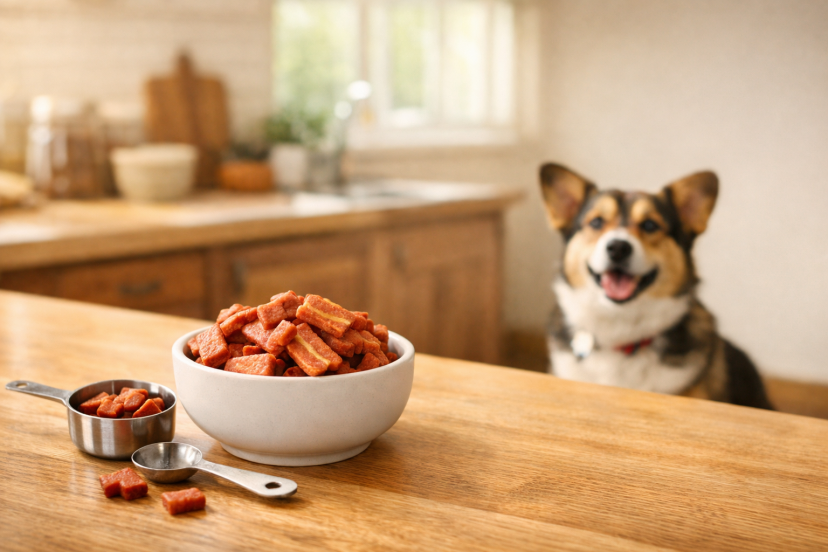
You’re not imagining it—bacon dog treats can turn a “meh” moment into instant tail-wagging chaos. One crinkle of the bag and suddenly your dog is a professional negotiator with very strong opinions.
But if you’ve ever wondered, “Are these actually okay?” or “How much is too much?” you’re in the right place. We’ll break down the real benefits, the not-so-fun risks, and how to use bacon treats in a way that feels smart—not guilt-y.
Bacon Dog Treats Basics: What They Are (and What They’re Not)
Bacon dog treats aren’t all made the same—some include a bit of real bacon, while others don’t. Others use “bacon flavor” (which can still be totally fine). The big difference is what else comes along for the ride—fat, salt, fillers, and mystery extras.
“Real bacon” vs. “bacon flavor”
- Real bacon usually means bacon (or pork) appears somewhere on the ingredient list.
- Bacon flavor often comes from natural flavors or smoke flavor—still appealing, sometimes easier on sensitive stomachs.
Common forms you’ll see
- Crunchy biscuits
- Soft training bites
- Jerky strips
- Freeze-dried pieces
- “Meaty” chews
Each type can fit a different goal—training, enrichment, or just a little “I love you” snack.
Why Dogs Love Bacon (and Why You Care)
Bacon hits your dog’s senses like a billboard in a quiet town: big smell, big flavor, big excitement. That’s why bacon-flavored dog treats often work when nothing else does.
The smell factor is real
Dogs experience the world through scent first. Bacon aroma = high-value reward in their brain.
It can help picky eaters—carefully
If your dog turns their nose up at everything, a bacon-y treat can kickstart interest. Just don’t let treats become the only “fun food,” or your dog may start holding out like a tiny, furry foodie.
Bacon Dog Treats Benefits: When They’re Actually Useful
Used the right way, bacon dog treats can be more than a snack—they can be a tool.
Training motivation
High-value treats shine for:
- Recall (“come!”)
- Leash training
- Grooming cooperation
- Vet visit practice
Bonding and enrichment
Treats can be part of a routine that helps your dog feel safe and connected—especially rescues, anxious pups, or dogs adjusting to a new home.
Bacon Dog Treats Risks: Fat, Salt, and Additives
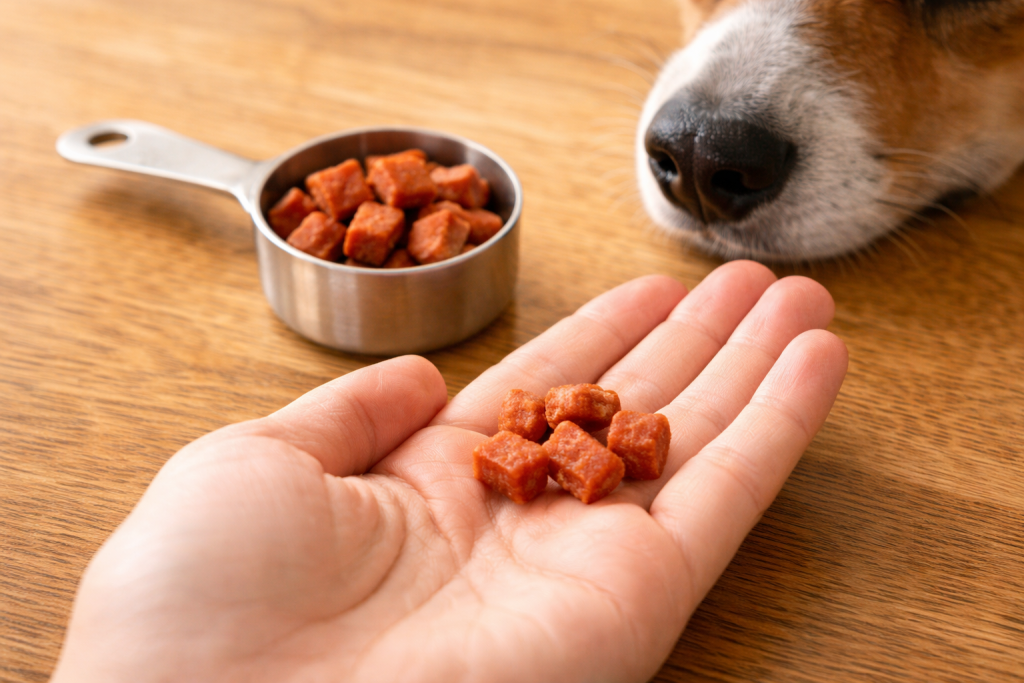
Okay, real talk: the risks aren’t “bacon is evil.” The risks are dose + dog-specific sensitivity + ingredients.
Fat can be too much for some dogs
Some dogs tolerate richer treats. Others… do not. High-fat treats can upset digestion, and in prone dogs, fatty foods can contribute to pancreatitis flare-ups.
Salt can sneak up
Bacon is naturally salty, and some bacon-style treats keep that vibe. Extra sodium can mean more thirst, more potty breaks, and not-so-great choices for dogs with certain health issues.
Watch for seasoning-style ingredients
Dog-safe treats shouldn’t include things like onion/garlic powders or heavy spice blends. (Those belong in human kitchens, not dog snacks.)
Who Should Avoid Bacon Dog Treats
This isn’t about being strict. It’s about being kind to your dog’s body.
Dogs who should skip (or get vet approval first)
- Dogs with a history of pancreatitis
- Dogs on a prescription diet
- Dogs with kidney or heart concerns (often sodium-sensitive)
- Dogs who get frequent GI upset
- Dogs who are already overweight (calories add up fast)
What about puppies?
Puppies can have treats, but keep them:
- tiny
- simple
- low in fat
- used for training—not constant snacking
How to Read a Bacon Dog Treat Label
You don’t need a nutrition degree. You only need to pick up a couple of quick habits.
Start with the first 5 ingredients
Ingredients are listed by weight. If the first few items look like “meat + simple carbs,” that’s usually easier to trust than a list that reads like a science fair.
Check calories per treat
The best label detail is also the most ignored: kcal per treat. If it’s not listed, consider contacting the brand—or choosing a treat that’s transparent.
Look for “limited ingredient” when needed
If your dog has allergies or a sensitive stomach, fewer ingredients often means fewer surprises.
The 10% Treat Rule: How Much Is Too Much?
Here’s a rule that keeps things simple: treats should be a small slice of your dog’s daily calories, not a second meal.
A simple way to think about it
If your dog’s daily food is the “main movie,” treats are the “trailers.” Fun, yes. The whole experience, no.
Quick portion tips that actually work
- Use tiny pieces (your dog cares about frequency more than size)
- Break treats into pea-sized bits
- If treats increase today, reduce dinner slightly (not drastically)
Bacon vs Bacon Flavor: Understanding the Difference
This is where people get tripped up: “bacon” sounds like one thing, but it can mean many things.
Bacon bits, bacon grease, bacon drippings
These are the “extra rich” options that can spike fat fast. They’re the ones that most often cause tummy drama.
Bacon-flavored dog treats can be gentler
Many bacon-flavored treats rely on flavoring rather than a heavy amount of bacon fat. That can make them easier to portion and easier to digest—especially for smaller dogs.
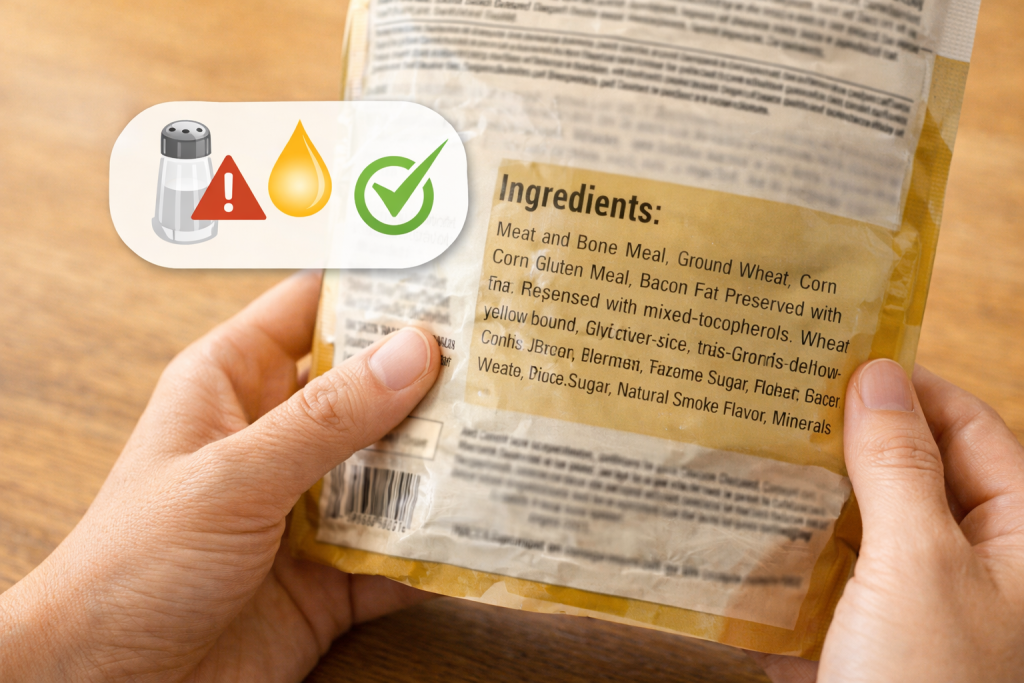
Choosing Safer Bacon Dog Treats (What to Look For)
You don’t have to ban bacon dog treats. You just want to choose the least risky version for your dog.
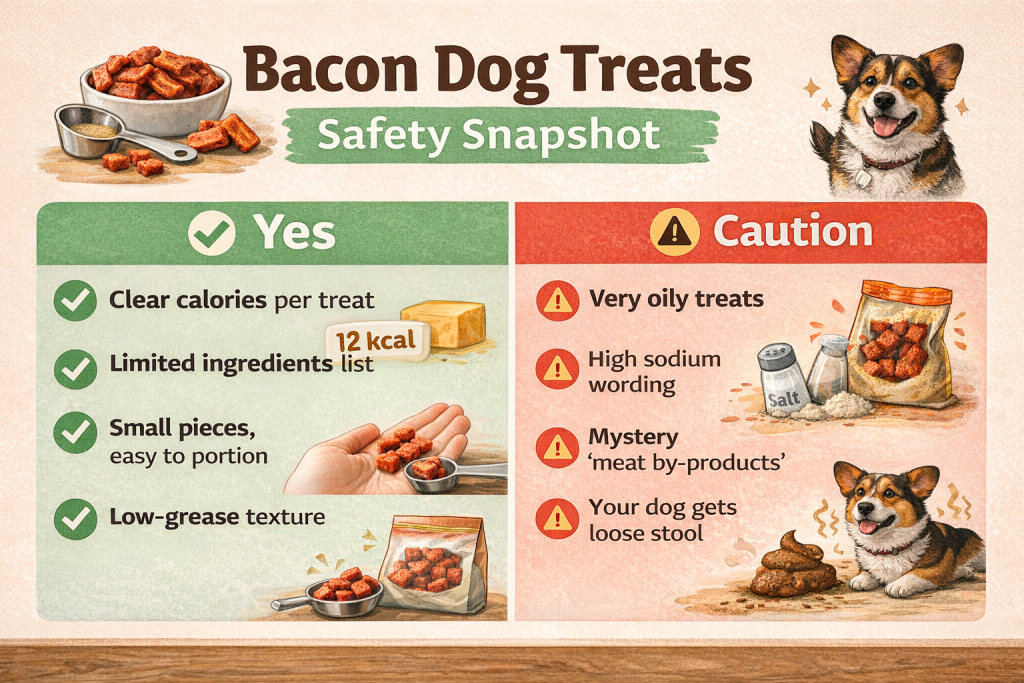
Green flags
- Smaller treat size (easy portion control)
- Clear calorie info
- Simple ingredient list
- No heavy grease smell (often a sign it’s very fatty)
- Consistent texture and freshness
Red flags
- Very oily residue
- Strong “salty meat” smell that lingers on your hands
- Treats that crumble into greasy dust
- Your dog gets loose stool every time (your dog is giving you feedback—listen)
Homemade Bacon Dog Treats: A Smarter DIY Route
If you love the idea of bacon dog treats but want more control, homemade can be a sweet spot.
Why homemade can help
You can:
- cut down salt
- control fat
- avoid sketchy fillers
- make smaller training-friendly pieces
Easy “bacon vibe” upgrades
Instead of actual bacon strips, consider:
- tiny bits of cooked lean meat (very small portions)
- a touch of dog-safe broth flavor baked into treats
- baking treats thinner so one cookie becomes several rewards
(If you want a step-by-step DIY guide, I included a helpful homemade treat resource later in the Amazon picks section.)
Using Bacon Dog Treats for Training Without Overdoing It
Training can burn through treats fast—so let’s make it sustainable.
Treat “micro-dosing” works
Give a tiny piece immediately after the behavior. Your dog connects the dots. They don’t need a huge chunk.
Mix high-value with low-value
Try a “slot machine” approach:
- most reps = lower-cal treat
- big wins (recall, nail trim, crate calm) = bacon treat
Your dog stays motivated, and your treat bag lasts longer.
Keep it fair across dog sizes
A Great Dane and a Chihuahua shouldn’t get the same treat size. Match portions to your dog’s body, not the picture on the bag.
Storage, Freshness, and “My Dog Ate the Whole Bag” Moments
Treat safety is also storage safety.
Keep treats fresh (and less risky)
- Seal bags tightly or use an airtight container
- Store away from heat and humidity
- Watch expiration dates (stale fats can upset stomachs)
If your dog ate too many bacon dog treats
Most dogs will be fine with a mild stomach upset, but watch closely for:
- repeated vomiting
- severe diarrhea
- obvious belly pain (hunched posture, whining)
- lethargy
- refusing water
If you see those signs, call your vet—especially if your dog is small, has a medical history, or ate a high-fat treat.
5 Bacon Dog Treats on Amazon
Below are five bacon dog treats that show strong buyer trust (high star ratings + lots of reviews) and have clear use cases—training, crunchy snacks, or softer treats.
And if you want to DIY instead of buying, here’s a helpful guide I like: homemade dog treat recipe guide
1) Purina Beggin’ Fun Size Original With Bacon Flavor (25 oz)
Short take: Soft, easy-to-break strips that work well for everyday rewards.
Why people buy it: High-value smell, training-friendly texture.
Features
- Soft strip style (easy to tear smaller)
- Big bag for frequent treaters
- Strong aroma (good for motivation)
Best for
- Training sessions
- Multi-dog homes
- Dogs who ignore “boring” treats
2) Milk-Bone MaroSnacks Bacon Flavor (Pack of 2)
Short take: Crunchy outside, marrow-style center—very “special treat” energy.
Features
- Crunch + softer center texture
- Often loved by picky dogs
- Works as a higher-reward snack
Best for
- Weekend “bonus” treats
- Dogs who prefer crunch
- Households that want a treat that feels extra
3) Bocce’s Bakery Bac’n Nutty Soft & Chewy (PB & Bacon)
Short take: Smaller, softer cookies that feel more “simple ingredient” and portion-friendly.
Features
- Soft & chewy texture
- Easy to break into small rewards
- Great “pocket treat” option
Best for
- Training walks
- Smaller dogs
- Owners who want easy portion control
4) Portland Pet Food Company Bacon Brew Biscuit Treats
Short take: Crunchy biscuit vibe with a more boutique feel—nice for owners who like human-grade positioning.
Features
- Biscuit-style crunch
- Convenient small bag size
- Easy to pack for outings
Best for
- On-the-go treats
- Dogs who like crunchy snacks
- People who want a smaller, less-bulky buy
5) Stella & Chewy’s Crav’n Bac’n (Bacon & Chicken Recipe)
Short take: A meat-forward option that’s popular for “high value” treating.
Features
- Strong reward value for many dogs
- Works well for selective eaters
- Good for short training bursts
Best for
- Recall practice
- Distraction-heavy environments
- Dogs who need extra motivation
Research-Backed Guidance: Treat Calories and Fatty Foods
If you want the “grown-up” answer on treats, it’s this: portion matters more than the flavor.
1) The WSAVA treats guide keeps it simple (2025)
The World Small Animal Veterinary Association says treats should stay under 10% of a dog’s daily calorie intake and should never replace balanced meals. That single guideline does a lot of heavy lifting for long-term health. (WSAVA, 2025) bacon dog treats and the “10% daily calories” rule.
2) A 2025 study tested what happens when treats take 10% of calories
A 2025 open-access study looked at whether swapping 10% of daily energy for treats changes nutritional adequacy. In dogs, the modeled diets still met basic protein/fat requirements—but the authors also emphasized that replacing balanced food with snacks can still create problems depending on treat choice and overall diet structure. (Príncipe et al., 2025) bacon dog treats and the 10% snack recommendation study (2025).
Bottom line: You don’t need to fear treats. You just need a plan: small portions, consistent totals, and a base diet that stays complete.
Bacon Dog Treats FAQs
Are bacon dog treats safe for dogs?
Usually, yes—in small amounts and if the treat is made for dogs (not leftover human bacon). The safest approach is choosing treats with clear calories and using them sparingly.
Can bacon dog treats cause pancreatitis?
They can contribute to problems in dogs who are prone, especially if the treats are high-fat or your dog eats a lot at once. If your dog has a pancreatitis history, ask your vet before offering bacon-style treats.
How many bacon dog treats is it okay to give each day?
A simple guideline: keep treats to no more than 10% of your dog’s daily calories. Also, use tiny pieces—your dog values the reward moment, not the size.
Are bacon-flavored dog treats better than real bacon treats?
Often, yes. Bacon flavor can deliver the fun without as much fat and salt—depending on the product. Always check calories and ingredients.
What are healthier alternatives to bacon dog treats?
Try smaller, lower-cal training treats, or use a mix: part “high value” bacon treat + part lighter treats. You can also explore homemade options with controlled salt and fat.