5 Tips To Stop Leash Pulling From Your Dog
We may earn a commission for purchases made using our links. Please see our disclosure for more details.
If your dog turns every walk into a full-body workout, you are not failing. You are just dealing with one of the most common dog-walking problems out there. In a 2024 study of U.S. dog guardians, 72% of respondents who reported behavior issues said leash pulling was one of them. So if you have ever been yanked toward a squirrel, a mailbox, or somebody’s front yard hydrangeas, you are in very normal company.
The good news is that you can Stop Leash Pulling without turning walks into a battle. With the right gear, better timing, and a little consistency, you can teach your dog that staying close actually gets them where they want to go faster.
Affiliate note: This article may contain affiliate links, which means the site may earn a small commission at no extra cost to you.
Why your dog pulls in the first place
Most dogs do not pull because they are stubborn or trying to “be the boss.” They pull because walking is exciting, the outside world is full of smells, and pulling often works. If lunging forward gets them to the tree, the dog, or the grass patch faster, that behavior gets rehearsed again and again.
In other words, leash pulling is often a success story from your dog’s point of view. That is why punishment alone usually does not create great leash manners. You need to reward a different behavior.
Set a realistic training mindset
Loose-leash walking is not a one-day fix. It is more like teaching dance steps to a very enthusiastic partner who keeps spotting snacks and birds in the crowd.
That means your goal is not “perfect heel forever.” Your goal is simpler: a dog who learns that a loose leash keeps the walk moving, while tension makes the fun pause. The RSPCA’s loose-lead guidance is built around exactly that pattern: stop when the leash tightens, reward attention and proximity, then move again.
Check pain, fit, and walk comfort
Before you train harder, make sure nothing physical is making the problem worse. A poorly fitted collar, sore joints, skin irritation, or even nails that are too long can make walking feel uncomfortable.
If your dog suddenly started pulling more, or seems stiff, reluctant, or extra frustrated on walks, it is smart to rule out pain with your vet. Training goes better when your dog feels good in their body.
Choose leash gear that supports learning
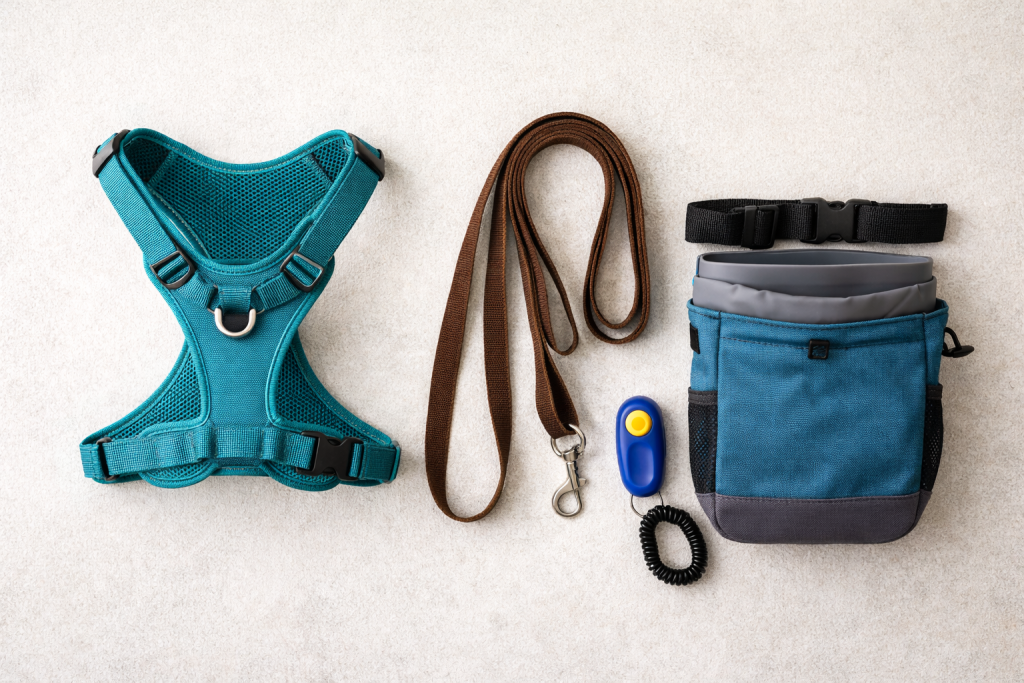
The best gear does not “win” the walk for you. It helps you teach. For most dogs, a well-fitted front-clip harness is a strong starting point because it gives you more steering without relying on throat pressure.
A 2025 review on collars, harnesses, and head collars for companion dogs found that non-tightening front-clip harnesses appear to offer a good balance between reducing pulling and limiting discomfort. That is why they are such a popular recommendation for loose-leash walking.
Build calm before you open the door
A lot of pulling starts before the walk even begins. Leash comes out, dog loses their mind, and now everyone leaves the house already overstimulated.
So pause here. Wait for four paws on the floor. Clip the leash on when your dog is calmer. Open the door only when the leash is loose. It feels small, but this teaches your dog that calm behavior opens doors and chaos delays the adventure.
Teach your dog the reward zone
Pick a side. Left or right does not matter. What matters is consistency.
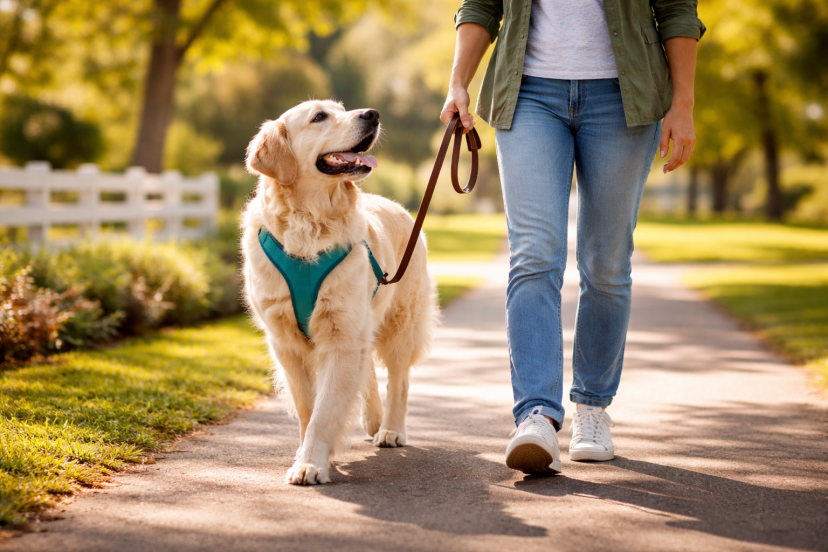
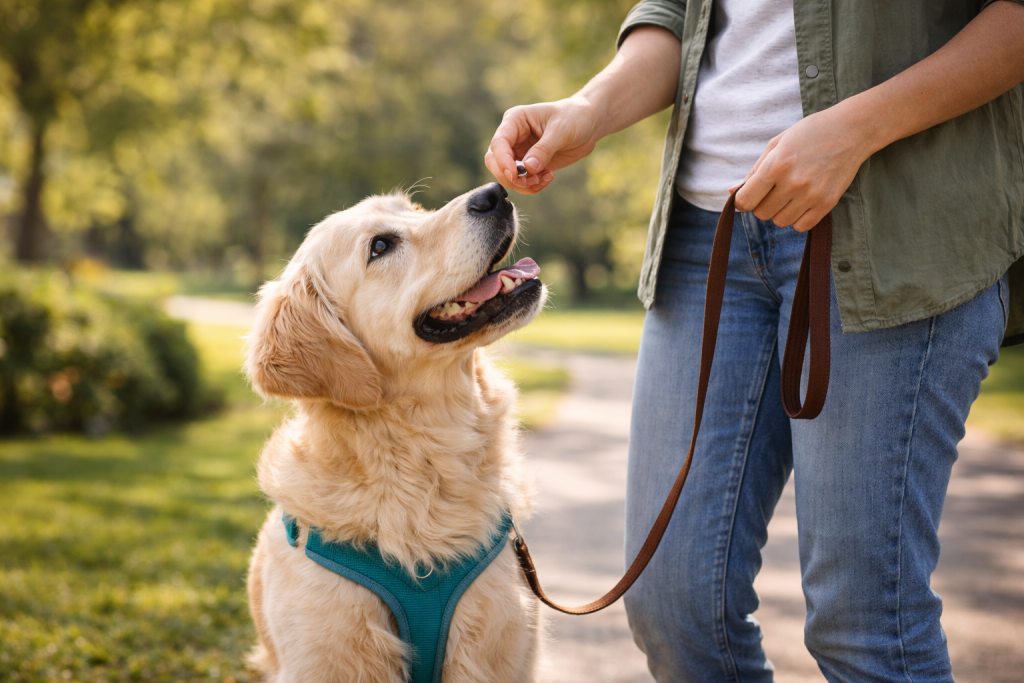
Now decide where you want your dog to be. Usually that is beside you, with a loose leash and easy check-ins. Every time your dog appears in that “sweet spot,” mark it with praise or a click and give a treat. You are basically drawing a little invisible sidewalk next to your leg and paying your dog for using it.
Use treats like tiny paychecks
When you want to Stop Leash Pulling, treats are not bribes. They are communication. They tell your dog, “Yes, that right there. Do that again.”
Use small, soft, high-value treats at first. Pay often in easy environments. Then gradually space rewards out as your dog improves. AVSAB’s humane dog training position states that reward-based methods offer the most advantages and least harm to welfare, and that there is no evidence aversive methods are necessary for dog training or behavior modification.
Stop moving when the leash goes tight
This is one of the simplest loose-leash walking rules, and one of the most effective.
The second the leash tightens, stop. Do not yank back. Do not lecture. Just become a tree. When your dog turns back, softens tension, or returns toward you, reward and continue. The RSPCA specifically recommends this stop-and-reward pattern because it teaches dogs that pulling slows them down, while a loose leash gets them moving again.
Change direction before frustration builds
Sometimes standing still is enough. Sometimes your dog is too locked in on a distraction and needs help resetting.
That is when a cheerful turn works well. Say your cue, turn away, and reward your dog for following. Think of it like gently changing the conversation before it becomes an argument. You are not dragging your dog out of the moment. You are helping them rejoin you.
Train around distractions in layers
Do not start beside the world’s most interesting squirrel convention.
Begin in a quiet place like your driveway, hallway, or backyard. Then move to a calm sidewalk. Then a slightly busier route. Then park edges. Build difficulty in layers. Dogs learn better when the challenge is just hard enough to be interesting, not so hard that their brain checks out.
Keep sessions short and repeatable
You do not need heroic 45-minute training marches every day. Often, brief training sessions are even more effective.
Try:
- 5 to 10 minutes of focused loose-leash practice
- a few resets if pulling starts
- a decompression sniff break after good work
This rhythm keeps you from getting cranky, keeps your dog from getting fried, and gives you more chances to end on a win.
Avoid the leash-pulling mistakes that slow progress
A few habits make training harder than it needs to be:
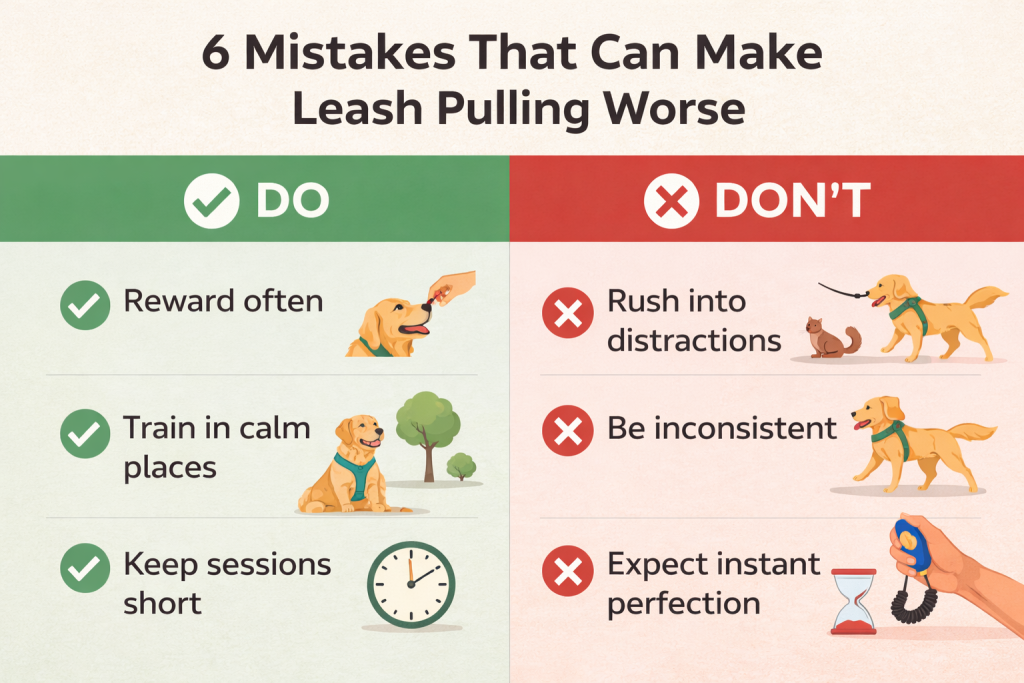
- letting your dog pull sometimes and not others
- walking too close to big distractions too soon
- using rewards too late
- expecting calm behavior on days your dog is overtired or under-exercised
- relying on gear alone instead of teaching skills
Mixed messages confuse dogs. Clear patterns teach them faster.
What to do with big, excited, or reactive dogs
If your dog is powerful, highly aroused, or also dealing with reactivity, do not wait until walks feel unsafe. Bigger dogs are not “bad dogs.” They are just harder to physically manage once habits are strong.
This is where management matters. Create more distance from triggers. Walk at quieter times. Use a harness that gives you control without escalating stress. And if pulling comes with barking, lunging, or panic, bring in a qualified force-free trainer or veterinary behavior professional.
That caution matters because welfare research keeps pointing in the same direction. A 2020 PLOS ONE study found that dogs trained with aversive-based methods showed poorer welfare during training than dogs trained with reward-based methods, with more stress-related behaviors and, in some cases, higher cortisol.
5 Tools that can make training easier
If your household has both dogs and cats, keep species-specific rewards separate. For the feline side of the family, this guide to best treats for cats can help.
1) PetSafe Gentle Leader Headcollar No-Pull Dog Collar
Short description: A no-pull headcollar designed to gently redirect pulling behavior.
Features: Padded nose loop, adjustable fit, quick-snap neck strap.
Who it’s for: Handlers who need more steering control on strong pullers and are willing to introduce it slowly and properly.
2) BARKBAY No Pull Dog Harness Front Clip Heavy Duty Reflective Easy Control Handle
Short description: A front-clip harness built for everyday walks and training.
Features: Front clip, reflective design, easy-control handle, heavy-duty build.
Who it’s for: Dogs who need a better first-line harness for loose-leash walking without pressure on the throat.
3) HALTI Control Leash – Multifunctional Double-Ended Dog Leash with 2 Handles
Short description: A versatile leash that offers extra handling options.
Features: Double-ended design, two handles, lightweight build.
Who it’s for: Owners who want more flexibility while teaching leash manners or managing busy environments.
4) Gobeigo Dog Treat Pouch, Magnetic Closure & Sealable Silicone Bag Insert, 4-Cup Capacity
Short description: A roomy treat pouch that makes rewards easy to reach.
Features: Magnetic closure, silicone insert, multiple wear options, clicker included.
Who it’s for: Anyone doing regular reward-based training and tired of crumbs in their pockets.
5) OYEFLY Dog Training Clicker with Wrist Strap
Short description: A simple clicker for marking the exact moment your dog gets it right.
Features: Wrist strap, lightweight build, easy-to-use button.
Who it’s for: Owners who like precise timing and want cleaner communication during leash training.
What research and experts say about how to stop leash pulling
The strongest evidence does not support making walks more intimidating. It supports making them clearer.
The AVSAB humane dog training position says reward-based training offers the most benefits with the least harm, and it does not find aversive methods necessary for behavior change. That lines up well with loose-leash walking, because the skill is really about teaching your dog what works, not scaring them out of trying.
A widely cited 2020 PLOS ONE study on aversive vs reward-based dog training found that dogs trained with aversive-based methods showed poorer welfare indicators during training and poorer welfare outside the training context when aversive methods were used in higher proportions. In plain English: stress-heavy training may suppress behavior in the moment, but it can cost your dog more than it gives back.
FAQs about how to stop leash pulling
How do I stop leash pulling without using punishment?
Use reward-based training, stop when the leash tightens, and restart when your dog reconnects with you. That teaches the behavior you want instead of only reacting to the behavior you dislike.
Which harness works best for stopping leash pulling?
For many dogs, a well-fitted front-clip harness is the best starting point because it helps with steering and reduces throat pressure. A 2025 review found front-clip harnesses seem to strike a strong balance between reducing pulling and limiting discomfort.
How much time does it usually take to train a dog to walk calmly on a loose leash?
It depends on your dog’s age, history, environment, and consistency. Some dogs improve in days, while others need weeks of short, repeated practice. The key is repetition in settings your dog can actually handle.
Should I use a headcollar for a dog that pulls hard?
A headcollar can help some strong pullers, especially for safety, but it should be fitted correctly and introduced gradually. It works best as a training aid, not a magic shortcut.
Why does my dog seem to pull harder at the start of a walk?
Because that is often when excitement is highest. Your dog is fresh, stimulated, and eager to get moving. A calmer start at the door and early rewards for position can make the rest of the walk much easier.
Final thoughts on calmer walks
If you want to Stop Leash Pulling, remember this: your dog does not need a harsher walk. They need a clearer one.
Pick gear that supports learning. Reward the position you want. Stop when the leash goes tight. Practice in easier places before harder ones. Then keep showing up. Bit by bit, your dog learns that staying connected to you is what makes the walk work.
And honestly, that is the real goal. Not robotic perfection. Just calmer, safer, happier walks for both of you.