Dog Bone Toy for Small Dogs: Safe, Easy-to-Chew Picks
We may earn a commission for purchases made using our links. Please see our disclosure for more details.
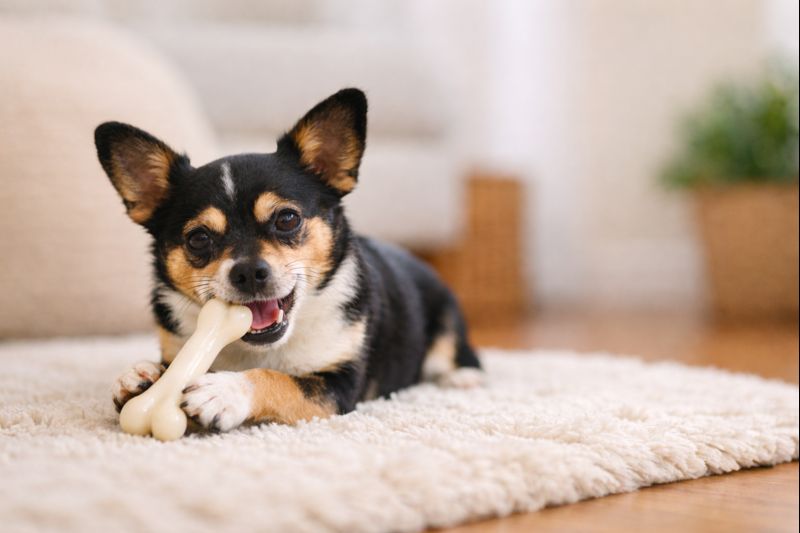
If you’ve ever watched a small dog go full “tiny dinosaur” on a chew, you know the vibe: big determination, little jaw, and you standing there thinking, “Please don’t swallow anything weird.” 😅
A good dog bone toy can be a lifesaver—make your pup happier, keep your hands (and shoes) safer, and give you a calm five-minute break that feels like a spa day.
In this guide, you’ll learn how to pick a dog bone toy that’s safe for small dogs, how to match it to your dog’s chewing style, and which bone-toy types tend to work best for teething pups, adults, and seniors.
Affiliate disclosure: This post includes an Amazon product section; I may earn from qualifying purchases.
Why a dog bone toy matters more than “just chewing”
A dog bone toy isn’t just a distraction. It can be a daily regulator for your dog’s mood and energy—like how some people need a workout, others need a journal, and some of us need a snack we can’t stop thinking about.
Chewing can help:
- Release pent-up energy (especially in small dogs that live in apartments or condos)
- Reduce boredom chewing (aka: “Why is my slipper missing?”)
- Build a calming routine (after walks, after meals, during your Zoom calls)
And here’s the not-so-fun truth: dental issues are incredibly common in dogs, especially small breeds. Studies often report very high rates of periodontal disease in dogs over age 3. (BMC Veterinary Research, 2020).
So yes—choosing the right chew stuff matters.
Two safety checks before you buy any dog bone toy
Let’s keep this simple and practical.
The size check: “No-gulp rule”
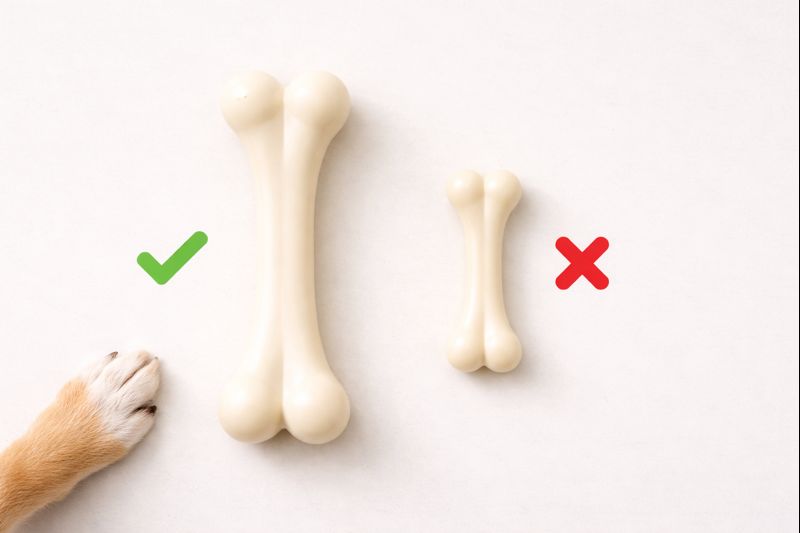
If a dog bone toy can fit fully behind your dog’s back molars, it’s too small. For small dogs, choking risks can sneak up fast because “cute mouth” also means “small airway.”
The hardness check: “Teeth-first thinking”
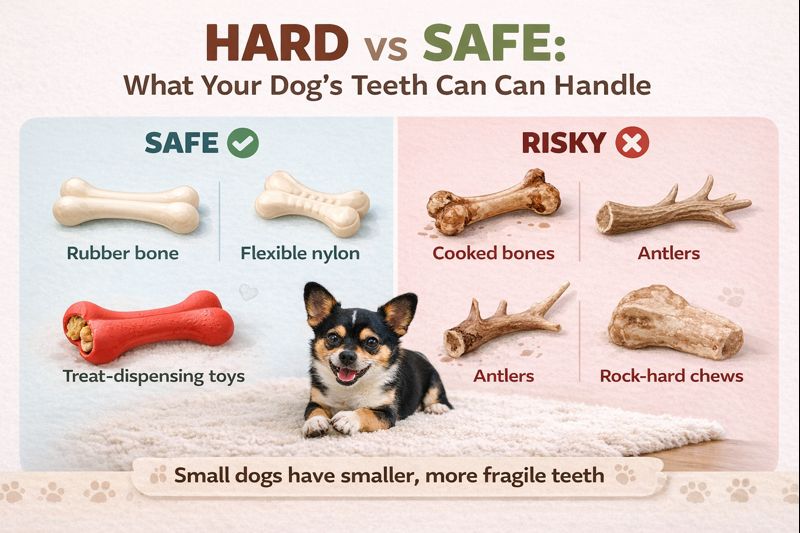
Super-hard chews can crack teeth. The AAHA Dental Care Guidelines specifically point out that fractured teeth can often be prevented by choosing dental chews and toys appropriately (AAHA, 2019).
If you’re unsure, choose a slightly more forgiving material (like rubber) over rock-hard options.
Dog bone toy materials, explained like a friend
Different dogs like different “chew feelings.” (Yes, that’s a technical term now.)
- Rubber bones: springy, safer on teeth, great for treat stuffing
- Nylon bones: long-lasting, satisfying for strong chewers, but can be too hard for some dogs
- Rope bones: good for gentle chewers + light tug, but need supervision (strings can be a hazard)
- Edible bones/chews: high motivation, but you must monitor for gulping and sensitivity
If your small dog is a power chewer, you’re usually choosing between rubber vs. nylon—and the “right” answer depends on their jaw strength, age, and bite style.
Right size for small dogs: the “no-gulp” rule in real life
Here’s a quick way to picture it:
If the dog bone toy is the size of a chicken wing bone for a dog who thinks swallowing is a sport… that’s a problem.
Safer sizing tips for small dogs:
- Go longer and wider than you think, especially for “fast eaters”
- Pick shapes that are hard to wedge into the back of the mouth (wishbone styles help)
- Avoid tiny bone nubs that can become “one last chomp” swallow moments
When in doubt, size up (within the brand’s small-dog range).
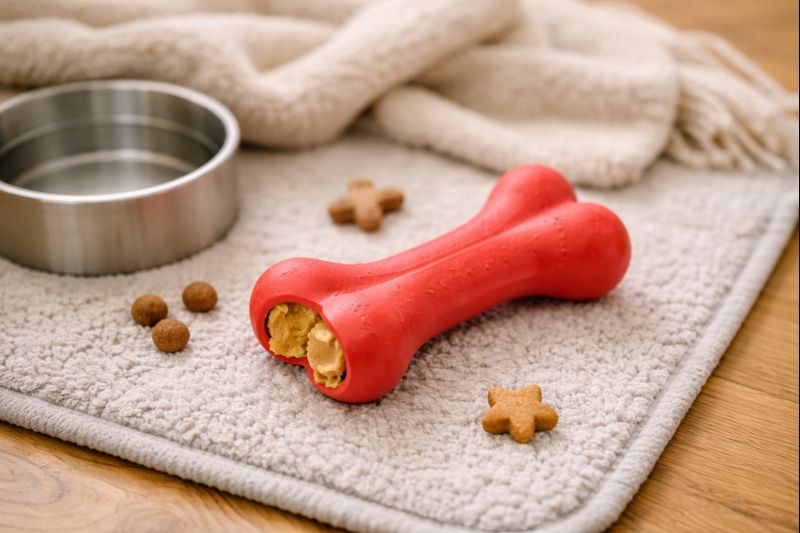
Choose toughness based on chewing style (not just breed)
Breed gives clues, but your dog’s personality is the real blueprint.
Gentle chewer
- Loves softer rubber
- Doesn’t shred toys
- Best match: treat-dispensing rubber bone
Medium chewer
- Chews daily, but not obsessed
- Best match: medium rubber or moderate nylon with texture
Power chewer (in a small body!)
- The “I will defeat this object” type
- Best match: durable nylon made for strong chewers, plus strict inspection routines
And yes, small dogs can absolutely be power chewers. (Chihuahuas are basically 4 pounds of confidence.)
Real bones, rawhide, and “mystery chews”: what to skip
This is where I get gently bossy, because safety matters.
- Cooked bones can splinter.
- Very hard natural chews (like certain antlers/bones) may increase tooth fracture risk in some dogs—especially small breeds with tiny teeth and crowded mouths. (AAHA, 2019).
- Unclear-ingredient chews are a gamble: digestion issues, choking risk, inconsistent quality.
If your goal is a dog bone toy that’s safer and consistent, stick with reputable rubber or nylon products made for dogs.
Texture, flavor, and shape: how to make chewing actually interesting
Your dog isn’t picky. Your dog is discerning. (They’d like you to respect that.)
A dog bone toy gets used more when it has:
- Texture (bumps, ridges, nubs)
- Curves (easy to hold with paws)
- Scent/flavor infusion (especially for nylon bones)
If your dog ignores chews, don’t assume they “don’t like toys.” Sometimes the toy is just… boring.
Try rotating 2–3 options like a tiny chew buffet:
- One rubber bone for calm time
- One nylon bone for serious chewing
- One “special” bone toy only when you need focus (guests, calls, rainy days)
Life-stage picks: teething puppies, adults, and seniors
Teething puppies
Puppies want relief, not a jaw workout.
- Choose a softer dog bone toy (rubber or puppy-grade)
- Bonus if you can stuff it with soft treats
Adult small dogs
Adults usually want durability + fun.
- Rubber for treat play
- Nylon for longer chew sessions (if teeth tolerate it)
Seniors
Seniors may have gum issues or weaker teeth.
- Prioritize gentler materials and shorter sessions
- If your senior has dental disease, ask your vet before offering tougher chews
AAHA notes dental issues in small/older dogs can be significant and impact overall health (AAHA, 2023 senior care dentistry section).
Chew time as a behavior tool (this is the secret sauce)
This is my favorite part because it’s so underrated.
A dog bone toy can become a cue for calm, like:
- “Chew time means settle.”
- “Chew time happens when humans are busy.”
- “Chew time = safe alone time.”
Try this routine:
- Short walk
- Water
- Dog bone toy in a consistent spot (mat, bed, crate)
- You do your thing (work, dishes, life)
Over time, your dog starts associating the chew with regulation, not chaos.
And if your pup struggles with being left alone, structured enrichment tools (like feeding toys) have been studied for stress-related measures including cortisol and behavior (Animals, 2023).
Cleaning and replacing: keeping germs and splinters out
Even the best dog bone toy isn’t “buy once, forget forever.”
Quick rules:
- Inspect daily for sharp edges, deep cracks, or missing chunks
- Wash rubber toys routinely (many are dishwasher-safe—check the label)
- Retire damaged toys early, not “after one more week”
If your dog is a chunk-biter (not just a chewer), move toward safer rubber or larger, sturdier designs.
Winter and outdoor chewing: safe play when it’s cold
Cold weather changes the game—especially for small dogs with less body mass.
If your dog likes to chew outside (yard, balcony, porch), keep sessions short and cozy. Cold can make muscles stiff and can also make some materials feel harder on teeth.
If you need a quick refresher on keeping small dogs comfortable outdoors, this guide on how to keep your dog warm outside in winter is a solid, practical read.
Product picks: 5 Friendly dog bone toy options for small dogs
Below are five dog bone toy picks that are widely available on Amazon (and commonly well-reviewed). Ratings/review counts can vary by size/flavor listing, so treat them as directional—not absolute.
Benebone Wishbone Durable Dog Chew Toy (Small, Real Bacon Flavor)
Short take: Great for small dogs who want a “serious chew” and like a paw-friendly grip.
Features:
- Wishbone shape for easier holding
- Flavor-infused nylon style
- Built for strong chewers
Best for: Adult small dogs who destroy softer toys fast.
KONG Goodie Bone (Small)
Short take: A classic rubber bone that can turn into a mini puzzle with treats.
Features:
- Natural rubber feel (more tooth-friendly than ultra-hard chews)
- Treat-holding ends for engagement
- Good for enrichment routines
Best for: Small dogs who get bored easily or need calm-time structure.
West Paw Zogoflex Hurley Dog Bone (Small)
Short take: Durable, floatable, and usually a nice middle ground for strong chewers who still need some “give.”
Features:
- Tough rubber-like material
- Easy to clean
- Works for chew + fetch
Best for: Small dogs who chew hard and love bringing toys back like proud little athletes.
Nylabone Chicken-Flavored Bone (X-Small / Small-dog range)
Short take: A textured nylon-style chew that can satisfy the “must gnaw” urge.
Features:
- Textures for interest
- Flavor infusion helps motivation
- Long-lasting for many dogs
Best for: Small dogs who prefer nylon and don’t have a history of tooth issues.
Benebone Puppy Wishbone & Dental Chew (2-Pack)
Short take: A puppy-friendly set for teething stages, with shapes designed for grip and chewing.
Features:
- Puppy-focused sizing and shapes
- Two chew styles for rotation
- Helpful for teething routines
Best for: Small-breed puppies who need an outlet that isn’t your fingers. (Because… yeah.)
Research-backed credibility: what vets and studies say about chew toys
Let’s keep this grounded and not fear-based.
Chew selection helps prevent broken teeth
Veterinary dental guidance emphasizes that fractured teeth can often be prevented with appropriate selection of dental chews and toys. That’s a big deal for small dogs, whose teeth are—frankly—tiny and precious.
Source: dog bone toy dental safety guidance (AAHA Dental Care Guidelines, 2019)
Enrichment-style toys can support calmer behavior
Research comparing standard feeding bowls to feeding toys has examined behavior and physiological stress measures like cortisol and heart rate variability—supporting the idea that “work-to-eat / work-to-get” toys can be meaningful enrichment.
Source: dog bone toy-style enrichment and stress measures study (Animals, 2023)
And one more practical note: periodontal disease is commonly reported as very prevalent in adult dogs (especially small breeds), which is why gentle, smart chew choices matter. (BMC Veterinary Research, 2020).
Dog bone toy FAQs (quick, practical answers)
What is the safest dog bone toy for a small dog?
Look for a dog bone toy that’s too large to swallow, made of a slightly flexible material (often rubber), and matched to your dog’s chewing strength. Avoid anything that splinters or chips.
Are nylon dog bone toys safe for small dogs?
They can be, if the toy is sized correctly and your dog isn’t prone to tooth issues. If you notice heavy wear, sharp edges, or your dog has sensitive teeth, switch to rubber.
How can I tell if a dog bone toy is too hard for my dog’s teeth?
If your dog’s chewing sounds like rocks clacking or you notice chipped teeth, it’s too hard. When uncertain, choose a more flexible chew and ask your vet—especially for seniors.
Can I leave my dog alone with a dog bone toy?
Some dogs can handle it, but supervision is safest—especially at first. Once you know your dog’s chewing style (shredder vs. steady chewer), you can make smarter choices about solo chew time.
When should I replace a dog bone toy?
Inspect daily. Replace immediately if it has sharp edges, deep cracks, or missing chunks. For heavy chewers, replacement might be frequent—and that’s normal.
Conclusion: your next best dog bone toy move
Here’s the heart of it: the “best” dog bone toy isn’t the toughest one or the cutest one. It’s the one your small dog can chew safely, enjoy consistently, and use to settle their body and brain.
If you take only three things from this:
- Size matters (no-gulp rule).
- Hardness matters (protect those tiny teeth).
- Routine matters (chew time can become calm time).
You’re not just buying a toy—you’re building a safer daily rhythm. And honestly? That’s a gift to both of you.