How To Keep Dogs Out Of Flower Beds
We may earn a commission for purchases made using our links. Please see our disclosure for more details.
You finally get your flower beds looking gorgeous… and then your dog blasts through them like a tiny, joyful wrecking ball. Tulips crushed, mulch everywhere, and you standing there wondering if “professional squirrel chaser” is your dog’s true calling.
If you’re trying to keep dogs out of flower beds without being the bad guy, this is your gentle, practical game plan.
Note: This guide mentions some Amazon products as examples to help you choose gear. They’re suggestions, not personal endorsements.
Why Dogs Love Your Flower Beds So Much
From your dog’s point of view, your flower bed isn’t a “design project.” It’s:
- Soft, diggable soil
- A buffet of smells
- A shortcut to chase birds, cats, or squirrels
They’re not being “bad” on purpose; they’re just being dogs. Once you accept that, it gets much easier to work with them instead of fighting a losing battle.
The Big Picture: Kind Ways to Keep Dogs Out Of Flower Beds
The goal isn’t a perfect garden or a happy dog—it’s both.
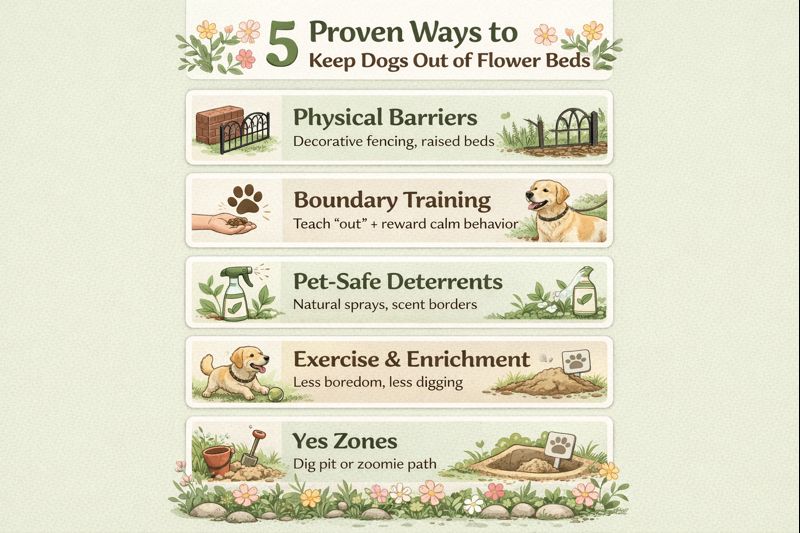
The most effective, humane approach blends:
- Management – controlling access so the habit doesn’t keep repeating
- Training – clear cues and boundaries like “out” and “leave it”
- Enrichment – better outlets for digging, searching, and zoomies
When you combine all three, your dog learns where they can be wild, and your flowers finally get to live their best life.
Understand Why Your Dog Is Digging or Trampling
Before you fix anything, ask: Why here? Why this bed?
Common reasons dogs dig in flower beds:
- Boredom and excess energy
- Cooling down on hot days
- Burying toys or treats
- Chasing smells or critters
- Taking the fastest route across the yard
Notice patterns:
- Is it always the same corner?
- Mostly when you’re gone?
- After they get excited by something (like a squirrel)?
Those little clues help you pick the right solution.
Manage the Space So Your Dog Can’t Practice the Habit
Management = “you can’t mess up what you can’t reach.”
Try:
- Supervised yard time near flower beds at first
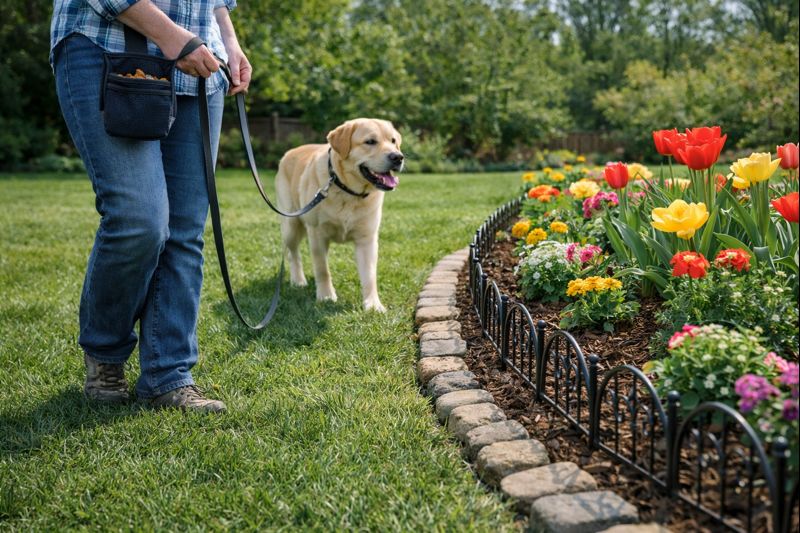
- A leash or long line when reintroducing access to the garden
- Temporary barriers (exercise pens, baby gates, low fencing) around beds
- Blocking access when you’re not home or can’t watch
If your dog never gets to rehearse stomping through your lilies, the habit fades instead of getting stronger.
Dog-Safe Physical Barriers That Actually Look Nice
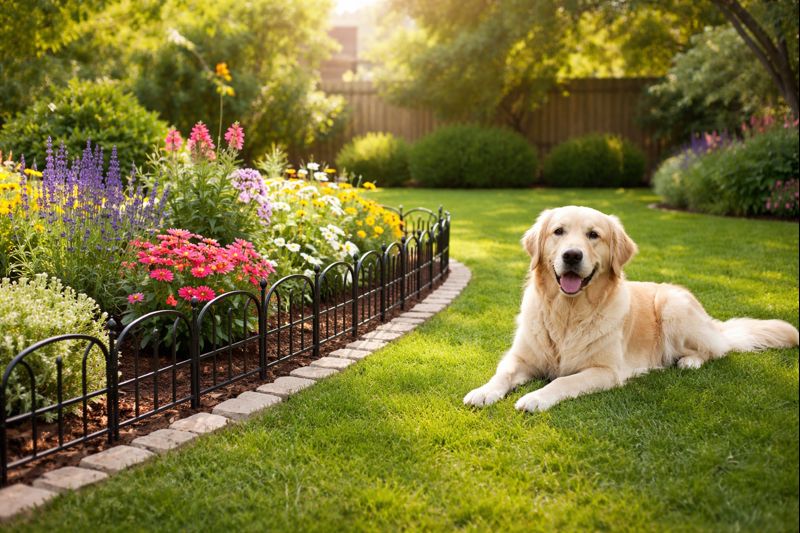
Physical barriers are the most reliable way to keep dogs out of garden areas—and they don’t have to look ugly.
Ideas:
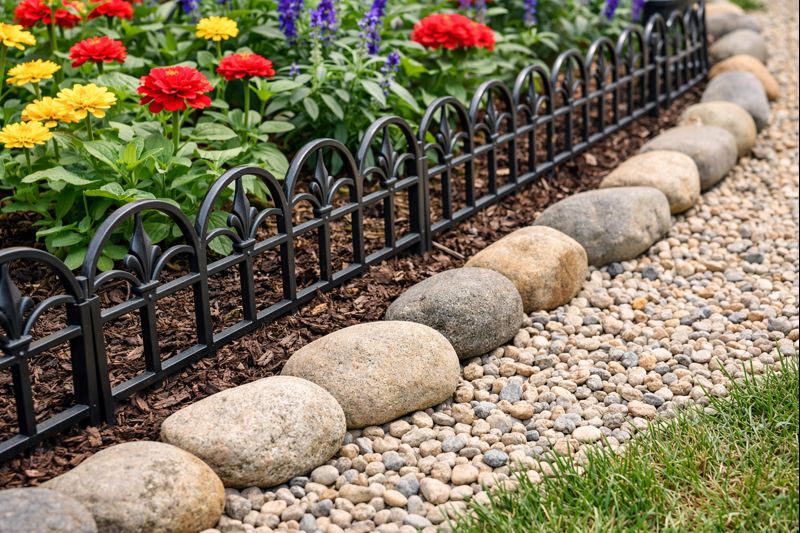
- Decorative metal edging
- Low arched or picket-style borders that clearly mark “no paws here.”
- No-dig animal barrier fencing
- Panels that push into the soil so dogs can’t nose under.
- Raised beds
- Wood, stone, or metal beds that make stepping in awkward or difficult.
Think: hard to jump, hard to dig under, and visually obvious. That alone fixes the problem for many dogs.
Use Scents and Textures Dogs Don’t Like (But Plants Do)
Some dogs hate certain smells and surfaces. You can gently turn that to your advantage.
Pet-safe options:
- Herb or citrus borders
Plant rosemary, thyme, lavender, or lemon balm around the edges. Many dogs are less interested in pushing through strong herbal scents. - Texture lines
Use pea gravel, river stones, or firmer mulch along the border so it feels less comfy under paws. - Pet-safe dog deterrent for flower beds
Granules or sprays labeled as safe for use around dogs and ornamental plants.
Skip harsh chemicals and anything that could burn paws, skin, or eyes. You want “meh,” not misery.
Train Your Dog to Respect “No-Go” Garden Zones
While management and fencing are doing the heavy lifting, teach your dog the rules.
A simple boundary routine:
- Set a clear visual line (stones, edging, or a temporary rope).
- Walk your dog on leash beside the beds.
- If they step in, calmly guide them back out and reward when all four paws are on the allowed side.
- Add a cue like “Out of the flowers” or “Out.”
- Repeat short sessions daily until they naturally avoid crossing the line.
Reward-based training is well supported by behavior experts and organizations like the American Veterinary Society of Animal Behavior, which recommends positive methods as the safest and most effective way to teach dogs. You’re not just stopping them—you’re teaching them what to do instead.
Start Early: Puppy Training and Garden Manners
If you’ve got a puppy, you’re in the perfect window to prevent bad garden habits from ever forming.
You can:
- Reward walking around beds from day one
- Teach “leave it,” “come,” and “place” inside, then use them outside
- Pair yard time with short training games, not random chaos
If you’re unsure when to start, this guide on when to start training a puppy breaks down age-appropriate skills so you can build garden manners right along with basic obedience.
Give Your Dog a “Yes Zone” for Digging and Zoomies
Trying to stop a dig-loving dog from digging anywhere is like trying to stop a toddler from ever getting messy.
Give them a legal chaos zone:
- Dig pit or sandbox
- Fill a corner with sand or loose soil and bury toys or treats there.
- Zoomie lane
- Leave a clear path for running and chasing away from fragile beds.
Reward your dog for using those areas. Over time, they’ll associate fun and rewards with the “yes zones,” not the flowers.
Exercise and Enrichment to Protect Your Garden
A tired brain and body equals a less destructive dog.
Add:
- Daily sniffy walks (slow, nose-led walks burn mental energy)
- Puzzle feeders or snuffle mats before yard time
- Short training sessions in the garden so the space feels structured, not chaotic
When your dog’s needs are met, they’re much less likely to invent “landscaping projects” on their own.
Research-Backed, Humane Ways To Keep Dogs Out Of Flower Beds
Let’s ground this in some expert-backed advice.
- Positive reinforcement works—and protects welfare
The American Veterinary Society of Animal Behavior position statement on humane dog training explains that reward-based training is the recommended approach because it builds trust, improves learning, and avoids the risks of punishment-based methods. - Digging is normal but redirectable
Resources like the Humane Society’s guide on dogs digging explain that dogs dig for reasons like comfort, boredom, and instinct. Their recommendations: provide more exercise, mental stimulation, and a “legal” digging area—along with humane management—rather than punishing the behavior.
Using these principles, your plan to keep dogs out of flower beds becomes kinder, clearer, and much more sustainable.
Amazon Products to Help Keep Dogs Out Of Flower Beds
1. Nature’s MACE Dog MACE Granular Dog Repellent, 2.5 lb – Outdoor Dog Deterrent
What it does:
Sprinkle around the edges of beds to create a scent barrier that discourages dogs from entering or marking.
Best for:
People who want a dog deterrent for flower beds without building more fence and don’t mind reapplying after rain.
2. IMUSTGARDEN Dog and Cat Repellent: All Natural Spray – 32oz
What it does:
Uses natural ingredients to make certain spots less appealing to sniff, chew, or dig.
Best for:
Targeted protection of specific areas—flower pots, borders, or fresh plantings—when you prefer an all-natural dog repellent for garden spaces.
3. Decorative Garden Fence 32″ H x 12 ft L, No-Dig Animal Barrier
What it does:
Creates an attractive metal border that stops small and medium dogs from strolling through beds.
Best for:
Front yards or visible gardens where you want dog proof flower beds but still care about curb appeal.
4. Garden Fence 12 Panel – 30″ H x 23.6 ft L Animal Barrier
What it does:
Offers taller, modular fencing you can shape around beds or along a property line.
Best for:
Larger or athletic dogs who jump low fences. A solid option when you need garden fencing for dogs that’s easy to reconfigure.
5. Hmyomina 16.4FT Scat Mat with Spikes
What it does:
Plastic spike mat (uncomfortable, not harmful) that you place where paws shouldn’t go—like right in front of beds or under fence gaps.
Best for:
Dogs who push the boundaries, literally—those who dig at fence lines or stand with paws right in the flowers.
Landscaping Ideas That Are Naturally Dog-Proof
You can design your garden in a way that gently nudges your dog away from fragile plants.
Try:
- Tough shrubs, ornamental grasses, or low hedges on the outside edge
- Stepping stones or gravel paths where your dog already likes to walk
- Raised planters or pots for extra-delicate flowers
Instead of fighting your dog’s natural routes, you’re redirecting them with smart design.
How to Keep Neighbor Dogs Out Of Flower Beds
When it’s not even your dog flattening your flowers, that frustration hits different.
You can:
- Have a friendly chat with your neighbor about leash use or supervision
- Add taller fencing or no-dig panels along the property line
- Use pet-safe deterrents or motion-activated sprinklers on the outer edge
Start with kindness—most owners genuinely don’t realize there’s a problem until someone tells them.
Common Mistakes That Make Things Worse
A few things tend to backfire:
- Scolding after the fact – Your dog connects your anger with you, not the hole.
- Painful or scary tools – Shock collars, harsh chemicals, or sharp mats damage trust and can harm your dog.
- Inconsistent rules – Letting them “just this once” romp through beds teaches them that flowers are sometimes fair game.
Think prevention and redirection, not punishment.
When to Call in a Trainer or Behavior Pro
If your dog:
- Is obsessed with digging
- Guards certain spots
- Ignores you completely in the yard
…it might be time for professional help.
Look for a force-free, positive reinforcement trainer who understands both behavior and real-life home setups. Sometimes an outside eye spots patterns you’ve gone nose-blind to.
FAQs: Keep Dogs Out Of Flower Beds
How do I keep dogs out of flower beds without harming my plants?
Use a mix of decorative fencing, pet-safe repellents, and training. Avoid harsh chemicals that can damage roots or irritate paws. Focus on clear boundaries and gentle deterrents instead of anything painful.
What’s the best fence height to keep dogs out of flower beds?
For small and medium dogs, 18–24 inches often works. For large or athletic dogs, aim for 30 inches or more with secure stakes so they can’t jump or dig under. Choose fencing marketed as animal barrier or garden fencing for dogs.
How can I prevent my dog from digging in the flower beds while I’m away from home?
Block access with fencing or gates, give them a dig pit or sandbox in another part of the yard, and add more exercise and enrichment. Management is essential when you’re not there to supervise, even if your training is solid.
Are coffee grounds or cayenne pepper safe to keep dogs out of flower beds?
They’re not ideal. Cayenne can irritate skin and eyes, and large amounts of coffee grounds can be harmful if eaten. It’s safer to use pet-safe commercial repellents, physical barriers, or uncomfortable (but not painful) textures like scat mats or gravel.
How long will it take for my dog to learn to stay out of the flower beds?
Most dogs show progress within a couple of weeks of consistent boundary training and good management. Deeply ingrained habits may take a few months. The key is: no unsupervised access to flower beds until your dog reliably respects the rules.
Conclusion
You don’t have to choose between a beautiful garden and a happy dog. With smart barriers, thoughtful landscaping, clear training, and outlets for your dog’s natural instincts, you can keep dogs out of flower beds in a way that feels kind and sustainable. Start small, stay consistent, and remember—you’re not just protecting flowers, you’re building a yard where both blooms and paws can thrive. 🌷🐾