When to Start Training a Puppy and What to Teach First
We may earn a commission for purchases made using our links. Please see our disclosure for more details.
You bring your puppy home, put down the tiny food bowl, snap a few dozen photos… and then reality hits:
“Okay but when do I start training this little chaos gremlin?”
Good news: you’re already training them. Every time you react, reward, laugh, or give in “just this once,” your puppy is learning what works.
In this guide, we’ll talk about when to start training a puppy, what to teach first, how long sessions should be, and how to balance potty breaks, naps, and play. We’ll also look at science-backed tips and a few tools that make the whole process smoother.
Quick note: This article may mention Amazon products; they’re suggestions only, not medical or behaviorist advice. Always check with your vet for health-related questions.
Why Starting Early Matters More Than “Perfect Timing”
A lot of new dog parents wait for the “right age,” but behavior experts say timing is more flexible than you think.
Most veterinarians and behaviorists recommend beginning basic puppy training at home around 7–8 weeks of age, as soon as your pup comes home.
Why?
- Puppies learn incredibly fast in their first few months.
- Habits (good and bad) form quickly.
- It’s easier to prevent problems than to fix them later.
So instead of waiting for a magic age, think: “What can my puppy handle right now?” Spoiler: more than you expect—as long as you keep it gentle and fun.
Puppy Development Stages and What They Mean for Training
Understanding your puppy’s development helps you match your expectations to what’s realistic.
Rough timeline (varies by pup):
- 0–7 weeks (breeder/shelter period)
Puppies learn from mom and littermates. Biting, play, canine manners. - 7–12 weeks (the golden sponge phase)
Ideal time for house training, name recognition, and simple cues like “sit” and “come.” This is also a critical socialization window. - 12–16 weeks (baby teenager)
Confidence + curiosity = perfect for leash training, settle, and practicing calm around distractions. - 4–6+ months (adolescent chaos era)
Hormones kick in, testing boundaries happens. Keep training going—this is where consistency really pays off.
The key: you don’t wait for the “teen” stage to start; you build foundations before that storm rolls in.
When to Start Training a Puppy at Home (Simple Answer)
Let’s answer this head-on:
When to start training a puppy?
Start gentle, positive training from day one at home—usually around 7–8 weeks old—focusing on short, fun lessons.
You’re not running obedience boot camp. You’re teaching:
- “Your name means good things.”
- “Going potty outside = rewards.”
- “Hands and clothes are not chew toys.”
- “Calm behavior gets attention; chaos doesn’t.”
Think of it as teaching kindergarten skills—not university-level calculus.
First Week Home: What to Teach Your Puppy Right Away
During the first week, keep expectations low and connection high.
Focus on:
- Name recognition
Say your puppy’s name once → when they look at you → mark (“Yes!” or click) → treat. - Check-ins
Reward your pup for choosing to look at you, especially in new places. This builds focus later for leash and recall training. - Handling & grooming basics
Briefly touch ears, paws, tail, collar, then treat. You’re training your puppy to think, “Being handled = snacks, not stress.” - Calm in the house
Reward moments of quiet and stillness—on their own bed, in the crate, or just chilling near you.
Tiny sessions, maybe 1–3 minutes at a time, sprinkled across the day. That’s it.
House Training a Puppy Without Losing Your Mind
Potty training is usually priority #1.
Start house training immediately—literally from the first bathroom break at home. Many vets suggest planning housetraining around 6 weeks onward, with most pups capable of learning a routine by 7–8 weeks.
Basic rules:
- Take your puppy out:
- After waking
- After eating/drinking
- After play
- Every 1–2 hours at first
- Go to the same spot each time.
- Use a cue like “Go potty.”
- Reward within 2–3 seconds when they finish.
If accidents happen (they will), skip the scolding. Quietly clean with an enzyme cleaner and tighten the routine. Punishment just teaches your puppy to hide from you when they need to go.
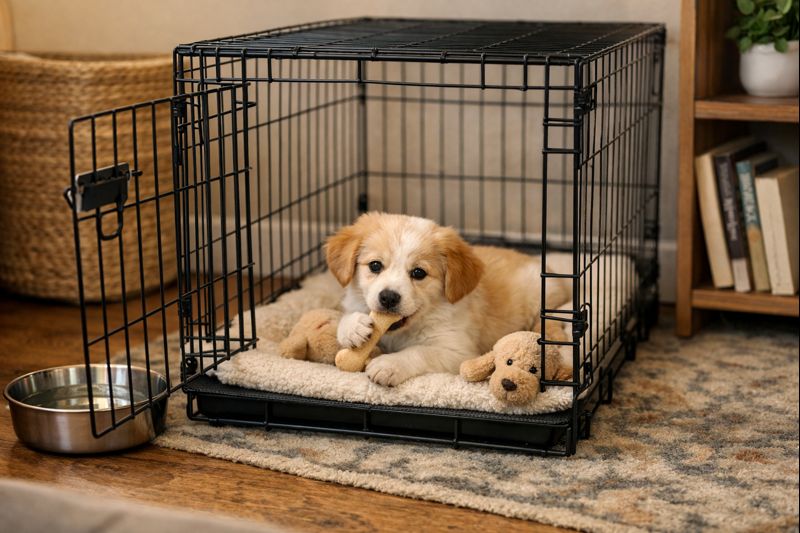
Crate Training a Puppy: Safe Space, Not Doggie Jail
Crates are powerful training tools when used kindly.
Position statements from behavior experts note that crates should be comfortable, safe resting places, not punishment zones.
Start crate training early:
- Feed a few meals in the crate with the door open.
- Scatter a few treats inside and let your puppy wander in and out on their own.
- Once they’re comfortable, close the door for a few seconds, treat, then open again.
Keep early crate sessions short and sweet. The goal: your puppy decides, “Hey, this is my little den.”
Socialization: The Most Important “Class” Your Puppy Will Ever Take
If you remember only one thing, let it be this:
The primary and most important time for puppy socialization is the first three months of life.
That doesn’t mean dog parks and chaos. It means controlled, positive exposure to:
- People of different ages, sizes, clothing (hats, scarves, uniforms)
- Other friendly, vaccinated dogs
- New surfaces, sounds, and environments
- Everyday objects (umbrellas, bicycles, vacuum, etc.)
Keep it gentle: one new thing at a time, lots of treats, lots of exits if they feel overwhelmed.
You can even practice fun things like wearing cute seasonal outfits so they’re comfortable later. If you ever want inspiration, sites that review dog Halloween costumes can help you pick soft, non-restrictive options to pair with your training.
Leash Training for Puppies: Tiny Walks, Big Life Skills
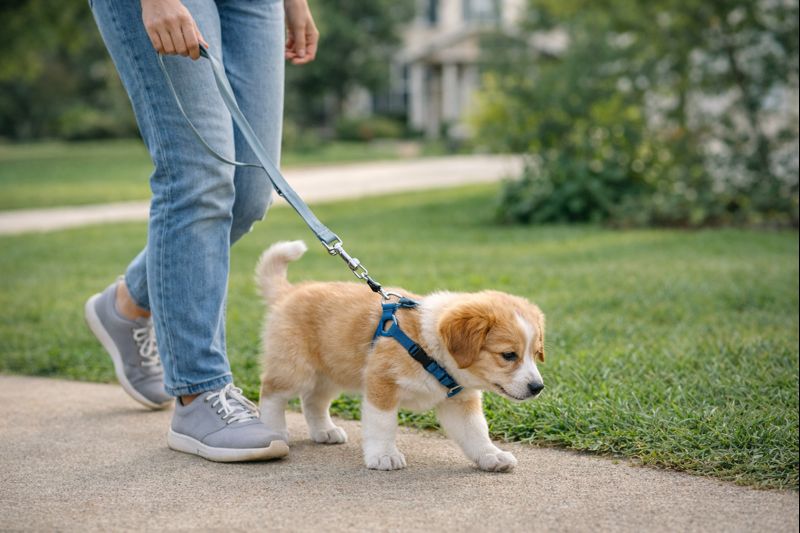
Leash training can start surprisingly early—often as soon as your puppy is comfortable wearing a collar or harness indoors.
Step-by-step:
- Let them wear the harness/collar while playing and eating so it feels normal.
- Attach the leash and let your puppy walk around with it trailing behind—while you keep a close eye on them.
- Reward any time they move with you while you hold the leash.
- Practice tiny “micro walks” in your living room or yard before going out.
Use soft treats and a happy voice. At this age, goals are:
- “Leash = cool things happen.”
- “Staying near you gets rewards.”
Basic Puppy Obedience Cues to Teach First
Once your pup is settled and comfortable (often within the first week or two), you can stack on simple cues:
- Sit – easiest starter cue, great for impulse control.
- Come – start indoors; reward like you’re throwing a party.
- Down – helps with relaxation.
- Leave it – for dropped food, shoes, or questionable treasures.
- Drop it – trade game: toy for treat.
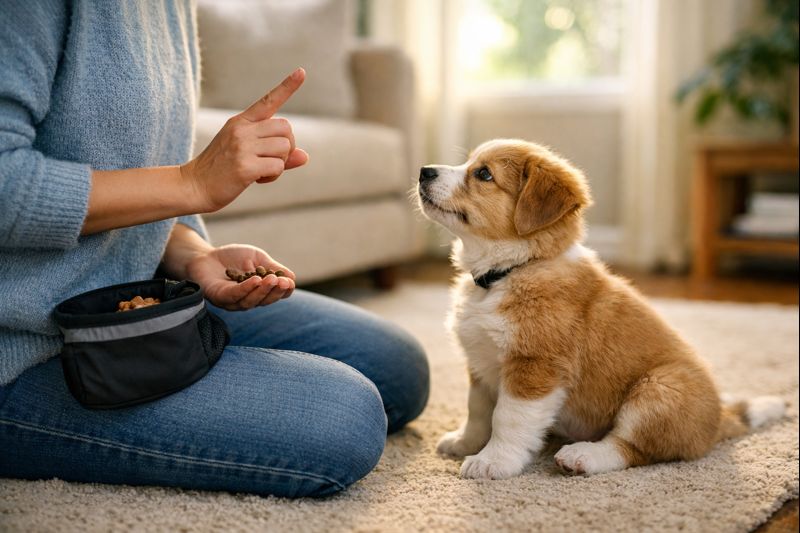
Use tiny, super-tasty rewards and 3–5 repetition bursts. Training a puppy is much more about frequent, fun micro-sessions than long classes.
Positive Reinforcement vs. Old-School Corrections
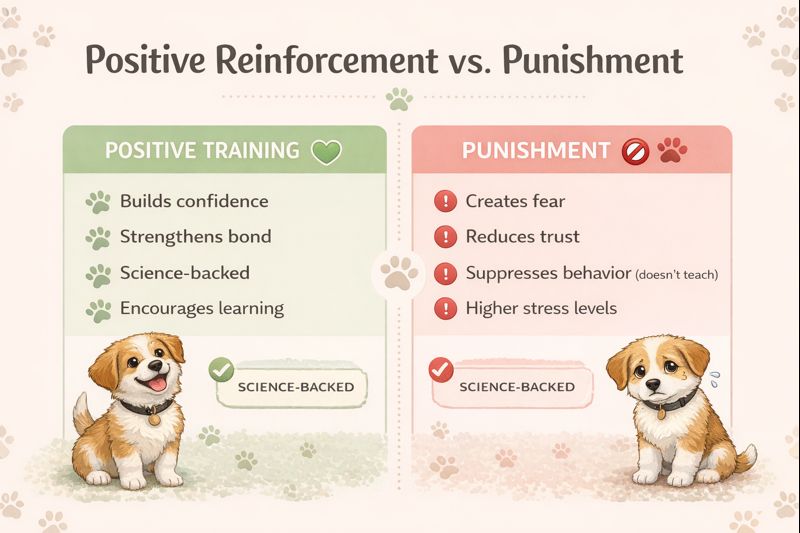
There’s a lot of noise online about “being the alpha” or “showing dominance.” Science… strongly disagrees.
Modern veterinary behavior organizations recommend reward-based training methods and specifically discourage harsh punishment and aversive tools as a first-line approach.
Positive reinforcement means:
- Reward the behaviors you want (sit, come, quiet, walking nicely).
- Prevent or redirect unwanted behaviors instead of punishing them.
- Use consequences like removing attention or access rather than yelling or physical corrections.
You’ll build trust, confidence, and a dog who actually wants to listen—not one who obeys just to avoid trouble.
Sample Daily Puppy Training Schedule by Age
Every puppy and household is different, but here’s a flexible framework.
8–12 Weeks
- Morning: Potty → breakfast → 2–3 minutes of “name + sit” practice
- Midday: Potty → 3 minutes of “come” game in the hallway
- Afternoon: Gentle handling session (paws, ears) + short crate nap
- Evening: Potty → 2–3 minutes of “leave it / drop it” with toys
3–6 Months
- Add:
- Short leash-training walks
- Simple impulse control: “wait” at door or for food bowl
- Calm “settle on mat” while you watch TV
- Short leash-training walks
Total formal training time? Often just 15–20 minutes per day, broken up into tiny pieces. But the real magic is in your day-to-day choices and routines.
Choosing the Right Puppy Training Tools and Gear
Here are five popular, well-reviewed items available on Amazon US that pair nicely with early puppy training. Always check sizes and current reviews before you buy.
1. Zuke’s Mini Naturals Training Dog Treats
Soft, tiny treats that are easy to chew and low in calories—perfect for high-frequency training sessions.
- Features: Bite-sized, ~2 calories each, multiple flavors.
- Best for: Everyday rewards, puppy obedience practice, recall games.
2. PetSafe Clik-R Dog Training Clicker
A simple, ergonomic clicker that helps you mark the exact moment your puppy does the right thing.
- Features: Comfortable finger strap, clear click sound, easy to hold.
- Best for: Clicker training sit, down, come, leash manners, and tricks.
3. MidWest Homes for Pets 30-Inch iCrate Folding Dog Crate
A foldable wire crate with a removable tray and divider panel, great for crate training and safe downtime.
- Features: Foldable design, leak-proof pan, divider to grow with your pup.
- Best for: House training, safe sleeping space, preventing destructive chewing when unsupervised.
4. PetSafe Easy Walk No-Pull Dog Harness
Front-clip harness designed to reduce pulling by redirecting your puppy’s movement toward you.
- Features: Front chest attachment, adjustable straps, multiple sizes and colors.
- Best for: Early leash training, especially for enthusiastic or strong puppies.
5. Amazon Basics Dog and Puppy Pee Pads (5-Layer, Leak-Proof)
Absorbent pads that help prevent messes while your puppy is still learning where to go.
- Features: Multi-layer design, quick-dry surface, various sizes.
- Best for: Apartment living, nighttime backup, bad weather, or managing very young puppies.
Comparison Table
| Model | Key Spec(s) | Best For |
| Zuke’s Mini Naturals Training Dog Treats | Soft, ~2-cal treats; multiple flavors | High-frequency rewards; obedience training |
| PetSafe Clik-R Dog Training Clicker | Ergonomic design; clear click sound | Clicker-based puppy training |
| MidWest Homes for Pets 30-Inch iCrate | Folding crate; divider; leak-proof tray | Crate & house training |
| PetSafe Easy Walk No-Pull Dog Harness | Front-clip; adjustable; no-pull design | Leash manners; reducing pulling |
| Amazon Basics Dog and Puppy Pee Pads (5-Layer) | Leak-proof; quick-dry; multiple sizes | Potty training and indoor backup solutions |
Use these tools to support your training—not replace it. The real “equipment” is your consistency and patience.
What Science Says About Early Puppy Training
If you like to know the why behind the advice, here’s the short version of what research and expert organizations say.
Early Socialization and Behavior
The American Veterinary Society of Animal Behavior (AVSAB) states that the most important socialization period is the first three months of life and encourages early, controlled exposure to people, animals, and environments even before full vaccination is complete (with appropriate vet guidance).
You can read more in their official AVSAB puppy socialization position statement.
Puppy Classes and Long-Term Outcomes
A study published in the Journal of Veterinary Behavior found that dogs who attended structured puppy classes showed better responses to commands and more stable behavior around strangers and novel situations than dogs who did not attend.
You can explore the details in “Importance of puppy training for future behavior of the dog”.
Together, these findings support starting structured, reward-based puppy training and socialization early, rather than “waiting until they’re older.”
FAQs: Real-Life Questions About When to Start Training a Puppy
1. Is 8 weeks considered too young to begin training a puppy?
No. Most experts agree you can begin simple training like name recognition, house training, and short “sit” or “come” sessions as soon as your puppy comes home—often around 7–8 weeks old.
2. What’s the ideal length for puppy training sessions?
Keep them very short—1–5 minutes—several times a day. Young puppies tire quickly, and you want to end on a high note while they’re still having fun.
3. At what age should I begin puppy socialization classes?
Many veterinarians and behaviorists recommend starting well-run puppy classes around 8–12 weeks, once your pup has appropriate vaccinations and your vet gives the okay.
4. Can I train an older puppy or rescue dog that missed early training?
Absolutely. You may need more patience and management, but positive reinforcement works at any age. Start with the same basics—house training, leash skills, and calm behavior—then build up.
5. How many times a day should I train my puppy?
Aim for 3–6 micro-sessions daily, plus plenty of real-life training moments (asking for a sit before meals, practicing “come” in the house, rewarding calm behavior).