How To Choose the Best Dog Harness for Comfort and Control
We may earn a commission for purchases made using our links. Please see our disclosure for more details.
Choosing the Best Dog Harness can feel surprisingly complicated. One design promises better control, another focuses on padding, and another has so many straps that putting it on feels like solving a puzzle. Yet the right choice usually comes down to something simpler: how well the harness fits your dog, how your dog walks, and what you actually need it to do.
A comfortable harness should stay secure without rubbing, choking, or shifting excessively while your dog moves. Meanwhile, the leash attachment and overall design should give you practical control without replacing good leash training. This guide walks you through measurements, fit, harness styles, walking needs, research, and several carefully selected options so you can make a more confident choice.
What Features Make a Dog Harness the Best Choice?
No single harness is the perfect fit for every dog. A calm 12-pound companion taking neighborhood walks has very different needs from a 70-pound adolescent dog that lunges toward squirrels.
Start with five priorities: fit, comfort, security, control, and intended use. A good everyday harness should sit securely against the torso while allowing normal movement. Straps should not dig into the armpits, and the front section should not ride upward toward the throat.
Adjustability matters too. Dogs with deep chests, narrow waists, broad shoulders, or unusual proportions may need several adjustment points before the harness sits correctly.
Finally, remember that equipment is only one piece of leash behavior. The Best Dog Harness may make handling easier, but it does not teach loose-leash walking by itself.
Measure Your Dog Before Choosing a Size
Breed labels and body weight can give you a rough starting point, but manufacturers generally size harnesses using chest or girth measurements.
Wrap a flexible measuring tape around the broadest part of your dog’s chest, usually just behind the front legs. Hold the tape snugly against the body without flattening or compressing the coat. Depending on the harness, you may also need the lower-neck measurement.
Next, match those measurements to the manufacturer’s own sizing guide, since a medium in one brand may fit very differently from a medium in another.
If your dog lands near the edge between two sizes, follow the manufacturer’s recommendation rather than guessing. For growing puppies, check the fit frequently because even a well-adjusted harness can become tight surprisingly quickly.
Choose a Harness Shape That Allows Comfortable Movement
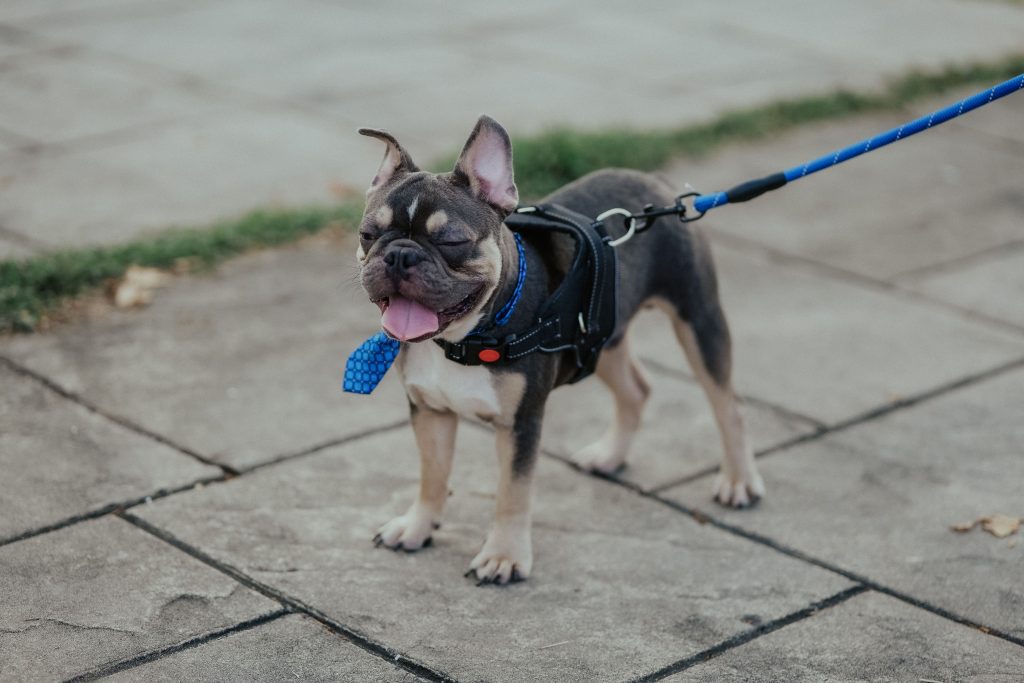
Harness construction deserves more attention than appearance. Some designs place broad horizontal straps across the front of the shoulders, while others create a Y-shaped opening around the neck and chest.
Ideally, your dog should be able to walk, trot, turn, sit, and lower their head without obvious restriction. The harness should remain reasonably stable instead of rotating around the torso whenever the leash changes direction.
Research into canine harnesses and movement is still developing. Studies have found that some harness configurations can influence joint movement or gait, although results vary with harness design and testing conditions.
For that reason, fit the individual dog rather than assuming one shape is automatically best for every animal.
Which Offers Better Control: a Front-Clip or Back-Clip Harness?
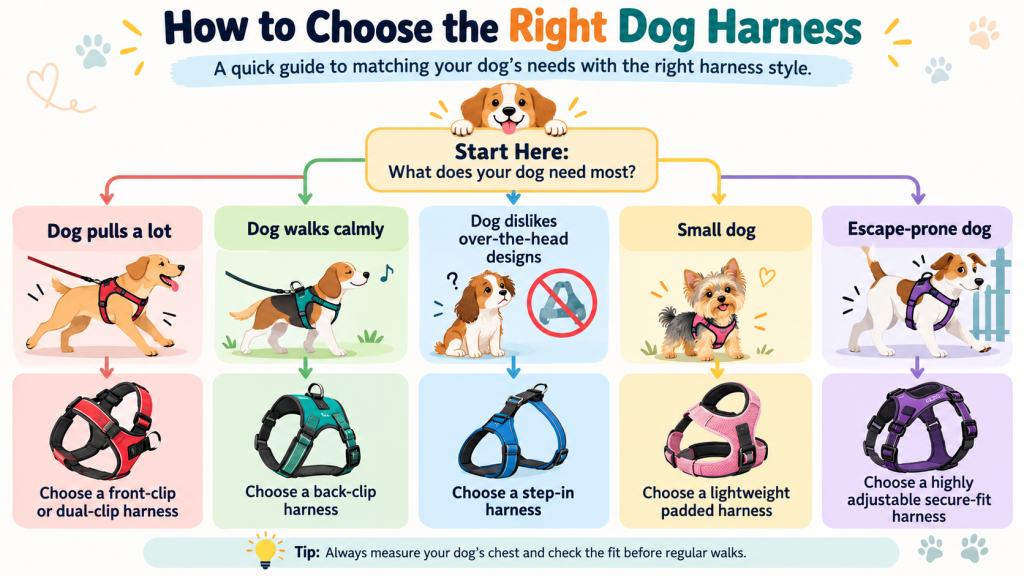
A back-clip harness connects the leash between the shoulders. It is convenient for relaxed walking and reduces the chance of the leash crossing directly in front of the legs. However, a dog that already pulls strongly may be able to lean into a rear connection effectively.
A front-clip harness connects near the chest. When the dog surges forward, the attachment can help redirect the body rather than creating a straight pulling contest.
Some harnesses include both attachment points. This gives you more flexibility and may allow the use of a double-ended leash during training.
However, front clips are not magic brakes. Watch whether the harness twists, interferes with the front legs, or becomes uncomfortable when tension is applied.
Look Closely at Padding, Straps, and Materials
More padding does not automatically mean more comfort. Thick padded panels can distribute contact over a larger area, but bulky designs may also feel warm or restrictive on some dogs.
Check the areas most likely to rub: behind the front legs, across the sternum, around the neck opening, and beneath adjustment hardware.
For warm-weather walks, breathable construction and moderate coverage may be more practical. Reflective trim can also improve visibility during early-morning or evening outings, although reflective material should supplement rather than replace good lighting and situational awareness.
Hardware matters as well. Buckles should close securely, leash rings should feel substantial, and adjustment sliders should hold their position once fitted.
After wet or muddy walks, inspect the harness before storing it so trapped moisture and dirt do not become an ongoing irritation.
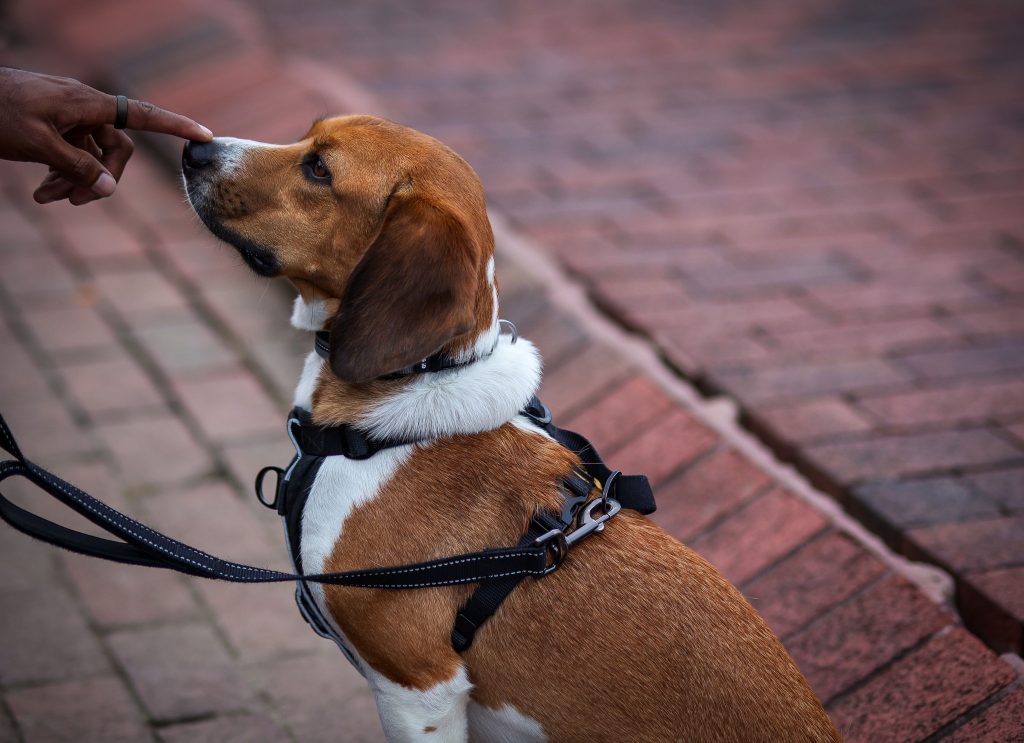
Match Security and Adjustability to Your Dog’s Body
Some dogs seem capable of reversing out of almost anything. Narrow-headed dogs, fearful dogs that pull backward, and dogs with unusual chest-to-waist proportions may need more adjustment and coverage than an easygoing dog with average proportions.
Once the harness is fitted, gently test movement in several directions before going outside. It should not slide over the shoulders or become loose enough for a leg to slip through.
Small dogs need the same careful fit. A harness that looks lightweight can still rub if a buckle lands in the wrong place.
For puppies, prioritize adjustability and monitor growth rather than buying an oversized harness and hoping they eventually grow into it. A loose harness can create its own escape and control problems.
Choose Control Features for Dogs That Pull
Pulling is partly an equipment issue, but mainly a training issue. If your dog routinely drags you down the sidewalk, consider a harness with a front attachment or dual connection points while you work on loose-leash skills.
Avoid relying on constant leash pressure. Instead, reward the behavior you actually want: checking in, following changes in direction, and keeping enough slack in the leash.
Research also complicates the common assumption that harnesses automatically reduce pulling. A study of 52 shelter dogs found greater pulling during certain back-clip harness trials than during collar trials, although the researchers cautioned against broad generalization.
That makes the practical lesson straightforward: choose equipment that gives you manageable control, then combine it with patient training rather than expecting hardware to solve the behavior.
Match the Harness to Everyday Walks, Hiking, and Other Activities
Think about where the harness will actually be used.
For ordinary neighborhood walks, easy adjustment, comfort, and simple leash attachment may matter most. Hiking dogs may benefit from durable materials, visibility features, secure coverage, and a design that remains comfortable during longer outings.
Dogs wearing a harness for extended periods need especially careful monitoring for rubbing or trapped debris.
Your walking equipment should also fit into your broader routine. PetCureWell’s guide to creating a healthy dog daily routine explains how walks can combine exercise, sniffing, toileting, training, and time with you rather than functioning as one isolated task.
An important point to remember is that a standard walking harness should not automatically be considered safe for restraining a dog in a vehicle. Use a product specifically designed and documented for that purpose when car restraint is your priority.
Recommended Products for the Best Dog Harness
These options cover different walking styles, dog sizes, and control needs rather than repeating the same type of harness.
rabbitgoo No Pull Dog Harness
Best for: Everyday walks with flexible leash control
The rabbitgoo harness provides two metal leash attachment points, including one on the chest and another on the back. It also has four adjustment straps, padded construction, reflective material, and a top handle. The multiple adjustment points are useful for fitting different body shapes, although measuring both the neck and chest before choosing a size is important.
PHOEPET No Pull Dog Harness
Best for: Dogs that dislike harnesses being pulled over their heads
The PHOEPET harness uses three buckles, including a neck buckle, so you do not have to slide it over the dog’s head each time. It also provides front and back metal leash attachment rings, reflective material, adjustable straps, and a padded control handle. Its additional buckles make the design especially practical for dogs that resist overhead harnesses.
Puppia Soft Dog Harness
Best for: Small dogs needing a lightweight everyday harness
The Puppia Soft Dog Harness uses polyester mesh construction with a padded neck opening, adjustable chest belt, and quick-release buckle. Its straightforward design works well for smaller dogs and relaxed neighborhood walks. However, it does not provide the front-and-back leash attachment flexibility found on more training-oriented harnesses.
Voyager Step-in Air Dog Vest Harness
Best for: Small dogs that prefer a step-in harness
The Voyager Step-in Air uses lightweight, breathable mesh and allows the dog to step directly into the harness instead of putting it over the head. It features reflective strips, a buckle, a hook-and-loop fastener, and two D-rings. The manufacturer emphasizes measurement rather than selecting a size based only on breed or weight.
What Research Says About Dog Harnesses
Research does not support declaring one universal harness style perfect for every dog.
A 2025 scientific review of collars, harnesses, and head collars found that evidence varies considerably among studies and equipment types. Some studies found greater pulling with back-connected harnesses, while others documented differences in pressure, gait, or behavior. The researchers highlighted the importance of using more consistent and standardized study methods.
A 2021 study involving 52 shelter dogs found greater mean and maximum leash tension during some back-clip harness trials compared with collar trials. Importantly, the authors noted limitations including the study population and experimental setting.
Meanwhile, gait research has found measurable effects from certain harnesses but remains limited by small samples and differences in harness construction.
The practical takeaway is not that harnesses are harmful or ineffective. Instead, choose carefully, fit correctly, observe your dog’s movement, and change equipment when something clearly rubs, restricts, slips, or fails to provide appropriate control.
Common Questions About Choosing the Best Dog Harness
Which is better for a dog: a front-clip or back-clip harness?
It depends on the dog. Back clips are simple and convenient for dogs that already walk comfortably. Front attachments can provide useful redirection for dogs learning not to pull. Dual-clip designs offer both options. Whichever style you choose, confirm that leash tension does not twist the harness excessively or interfere with your dog’s movement.
How snug should a dog harness fit?
The harness should sit snugly enough that your dog cannot slip a leg or shoulder through it, yet it should not compress the body or create rubbing. Follow the manufacturer’s fitting directions because strap placement differs among designs. Check your dog’s skin after early walks and readjust whenever weight, coat thickness, or body shape changes.
Is it okay for a dog to wear a harness throughout the day?
Usually there is little reason for a normal walking harness to remain on continuously. Extended wear can increase the chance of rubbing, trapped moisture, coat matting, snagging, or chewing. Remove it when the walk or activity ends unless you have a specific reason to keep it on and the product is appropriate for that use.
Can the Best Dog Harness help reduce pulling during walks?
A harness may improve handling, especially when it offers a well-positioned front attachment, but it does not teach loose-leash walking automatically. In fact, research has found greater pulling under some back-clip harness conditions. Use appropriate equipment alongside reward-based training that reinforces walking near you and maintaining slack in the leash.
Which type of harness works best for a small dog?
Small dogs generally benefit from lightweight equipment that fits closely without sitting against the throat or restricting the shoulders. Adjustable soft harnesses can work well, but individual proportions matter more than weight alone. Measure the chest carefully and check whether the smallest available adjustment still provides a secure fit without bulky hardware pressing against the body.
Final Recommendation: Choosing the Best Dog Harness
The Best Dog Harness is the one that fits your individual dog, stays secure, allows comfortable movement, and gives you the level of control your walks require. Start with an accurate chest measurement, then consider your dog’s body shape, pulling behavior, activity level, climate, and preferred leash attachment.
For versatile everyday use, the Ruffwear Front Range offers padding plus front and rear connections. Dogs requiring more detailed adjustment may suit the Blue-9 Balance Harness, while the PetSafe Easy Walk or 2 Hounds Freedom can be useful when leash control is a priority.
Whatever you choose, watch your dog rather than relying solely on the label. A secure, comfortable fit paired with patient leash training is the most sensible foundation for better walks.