How To Create A Simple, Healthy Dog Daily Routine
We may earn a commission for purchases made using our links. Please see our disclosure for more details.
Dogs rarely need every minute scheduled, but the important parts of life are easier when they feel predictable. A thoughtful Dog Daily Routine gives your dog regular chances to eat, drink, toilet, move, sniff, learn, rest, and spend time with you. It can also simplify your day because you are not constantly deciding what your dog needs next.
The best routine is not a rigid timetable copied from someone else. It should fit your dog’s age, health, energy, temperament, and household. This guide will help you build a realistic schedule, understand which habits matter most, choose useful routine-supporting products, and adjust the plan when life changes.
Why a Dog Daily Routine Helps Without Making the Day Rigid
Think in dependable anchors. Meals, toilet breaks, walks, training, rest, and bedtime can happen in a familiar order even when their exact timing shifts.
That pattern makes changes easier to notice. If a dog who normally eats, walks, and settles suddenly stops doing one of those things, it stands out. Still, a Dog Daily Routine should survive a late meeting, rainy morning, or weekend outing.
Start With Your Dog’s Age, Health, and Temperament
Build the schedule around the dog in front of you. Puppies usually need more toilet opportunities and shorter activity periods; seniors may prefer gentler movement and more recovery time.
Temperament matters too. One dog may enjoy a lively neighborhood, while another prefers quiet sniffing routes. Mental work and rest count alongside exercise. If your dog has pain, breathing problems, mobility limits, or another medical condition, ask your veterinarian about appropriate activity.
Build the Morning Around Potty, Water, and Movement
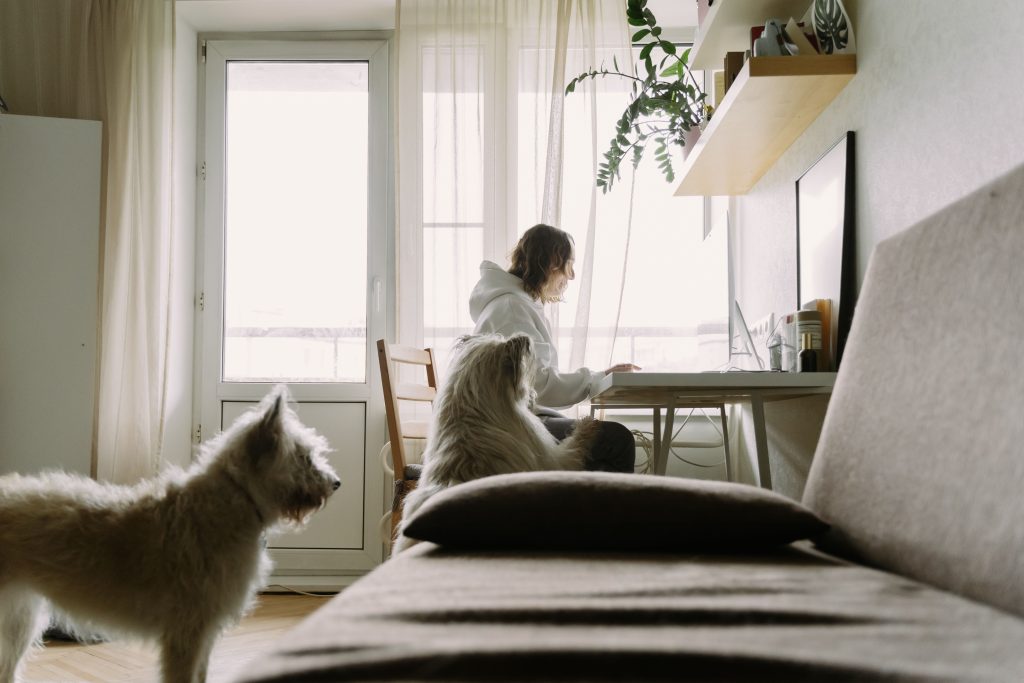
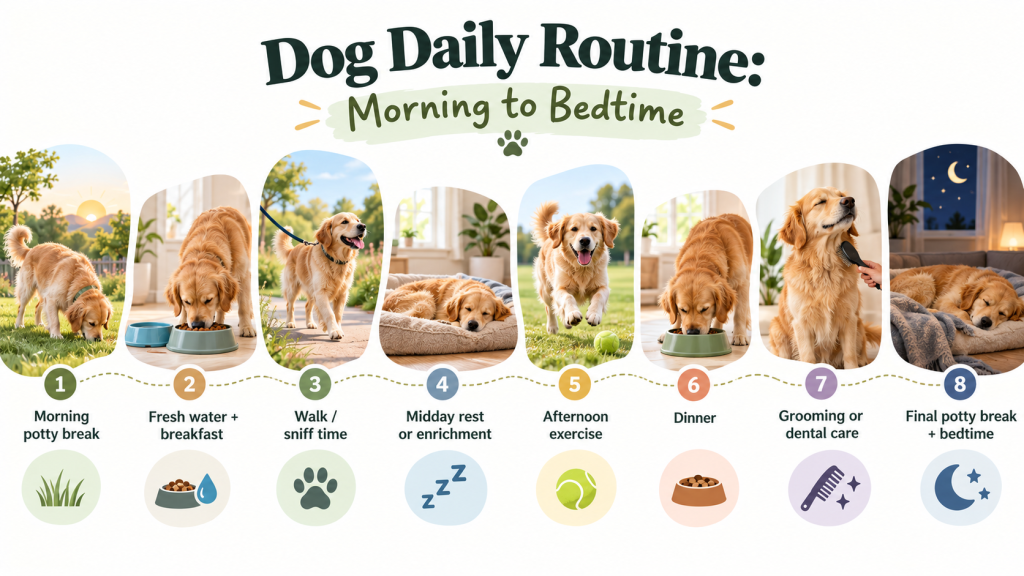
For many homes, morning sets the rhythm of the Dog Daily Routine. Start with an outdoor toilet break after waking, offer fresh water, then move into breakfast, a walk, or both.
A slow sniff walk can be worthwhile without becoming a major workout. If mornings are hectic, prepare the leash, waste bags, food portion, and training treats the night before. Small conveniences make consistency easier.
Keep Feeding Times Consistent but Flexible
Most dogs can have meals within a predictable window rather than at an exact minute. Measure food according to your feeding plan and adjust when body condition, life stage, or activity changes.
Remember that treats, chews, food puzzles, and training rewards contribute to daily intake. If you use part of a meal for training or enrichment, set that portion aside first. This keeps the Dog Daily Routine interesting without quietly adding extra food.
Make Walks Part of Your Dog Daily Routine
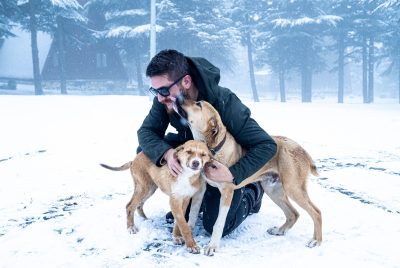
Walks can combine toileting, movement, sniffing, environmental exposure, and time with you. However, no universal duration suits every dog; age, health, fitness, weather, body type, and outing intensity all matter.
If you want a practical way to calibrate those outings, this guide to a dog walking schedule for age, energy, and lifestyle can help you think through frequency and duration without chasing one magic number.
Let some walks be slow and sniff-focused. On dangerously hot, stormy, or otherwise unsafe days, shift more activity indoors.
Add Short Training Sessions Instead of Long Drills
Training fits daily life better when it happens in brief moments. Practice recall before breakfast, reward loose-leash steps during a walk, or ask for a settle while you prepare a meal.
Keep tasks achievable and use rewards your dog values. Two or three focused minutes can be useful, especially when repeated consistently. Treat training as everyday communication rather than a separate event you must somehow squeeze into the Dog Daily Routine.
Schedule Mental Enrichment, Not Constant Entertainment
Dogs do not need nonstop entertainment, but they do benefit from chances to sniff, forage, solve simple problems, chew, explore, and interact. Rotate activities rather than offering everything daily.
You might scatter part of breakfast in grass, hide treats around one room, or use a food puzzle after a walk. Watch your dog’s response. If an activity causes frustration, guarding, or frantic behavior, simplify it or choose another option.
Protect Quiet Time and Sleep
Rest belongs in a healthy schedule. Give your dog a comfortable place where children, guests, and household traffic will not repeatedly disturb them.
After walking or training, lower the energy and allow your dog to disengage. Some dogs need practice settling when nothing exciting is happening. In multi-dog homes, separate rest spaces can help when one dog wants to nap and another wants to play. A Dog Daily Routine needs genuine downtime.
Add Grooming, Dental Care, and Quick Health Checks
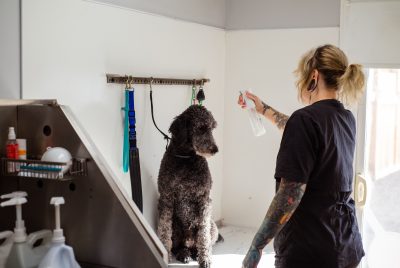
Attach routine care to habits you already have. You might brush teeth during your evening routine, check paws after the last walk, or brush the coat on set days.
Keep handling sessions calm and short while your dog learns what to expect. Meanwhile, notice changes such as sore paws, skin irritation, unusual mouth odor, new lumps, or sensitivity to touch. Home observation does not replace veterinary care, but it can flag changes worth discussing.
Adjust the Routine for Puppies, Adults, and Seniors
Puppies typically need frequent toilet trips, short training, age-appropriate play, and plenty of sleep. Healthy adults often settle into a steadier pattern, though energy levels vary.
Senior dogs may prefer shorter outings, easier access outdoors, and more rest. If an older dog suddenly struggles with stairs, appetite, sleep, toileting, or familiar walks, do not assume age is the only cause. A veterinarian can check whether pain or an underlying health issue may be contributing.
Recommended Products for a Practical Dog Daily Routine
A few well-chosen tools can make walking, training, enrichment, and hydration easier. These six options serve different jobs rather than duplicating the same product type.
KONG Classic Stuffable Dog Toy, Natural Rubber Chew, for Large Dogs
Best for: First-time enrichment
Its hollow natural-rubber design can hold food or treats, turning part of a meal into an activity, while its shape creates an irregular bounce for play. It is a straightforward way to add enrichment without a complicated setup. Choose the correct size and supervise use, particularly with persistent chewers.
Outward Hound Nina Ottosson Dog Brick Dog Toy Treat Puzzle, 12.8″
Best for: Puzzle-ready dogs
This Level 2 puzzle has multiple covered food compartments for dogs to investigate. It works well when you want a short indoor thinking activity in a Dog Daily Routine. Because it is an interactive puzzle rather than a chew toy, supervise play and put it away if your dog starts biting the components.
PetSafe Easy Walk Harness for Dogs – Pull-Free Walks – Patented Martingale Loop Design – Front Chest Leash Attachment – Adjustable Comfort Straps – Breathable Harness Design – Large, Black/Silver
Best for: Larger dogs learning calmer leash walking
This harness uses a front chest leash attachment and a martingale-style loop intended to discourage pulling. Adjustable straps help with fit, making it useful for structured walking practice. Correct sizing is important, and a harness should support reward-based leash training rather than replace it.
Earth Rated Dog Poop Bag Holder & Leash Dispenser, 15 Bags, Unscented
Best for: No-fuss walk cleanup
This compact dispenser attaches to a leash and includes unscented waste bags, so an easy-to-forget essential stays with your walking gear. Its built-in hook can carry a tied bag until you find a bin. Any attached dispenser adds some bulk to a light leash.
Chuckit! Treat Tote Dog Treat Pouch for Puppy Training, 1 Cup
Best for: Short reward-based training sessions
This one-cup pouch clips to clothing and has a drawstring opening for quick treat access. It suits recalls, loose-leash practice, and other brief reward-based sessions without filling your pockets. Its compact size is convenient, although people carrying several reward types or training for longer periods may want more capacity.
Springland 22oz Classic Portable Dog Water Bottle with Built-in Bowl, Lilac
Best for: Longer walks and travel
This 22-ounce bottle combines water storage with a built-in bowl and squeeze-to-fill design, reducing the need for a separate dish. It is designed for one-handed use and fits many cup holders. It is bulkier than a small bottle, and carrying water does not make extreme heat appropriate for exercise.
What Research Says About a Healthy Dog Daily Routine
Evidence supports dependable structure, not one universal timetable. VCA guidance on predictability, scheduling, and enrichment explains that consistency can help dogs anticipate important activities, while enrichment should reflect individual preferences and abilities. AAHA’s 2019 Canine Life Stage Checklists similarly recommend daily exercise and mental enrichment suited to age, breed, and temperament.
The WSAVA Global Nutrition Guidelines emphasize individualized nutrition assessment, while AAHA home dental-care guidance says toothbrushing needs to be daily to provide meaningful plaque-control benefit.
A 2022 pilot study of 10 assistance-dog trainees examined seven enrichment activities and found an overall increase in relaxation behaviors alongside reductions in alert and stress behaviors. However, responses differed between activities, and the small sample limits how broadly the results can be applied.
Meanwhile, a 2023 companion-dog toy study found no significant overall behavioral improvement from short-term provision of new toys over 12 days. Together, these findings suggest that enrichment should be tailored to the individual dog rather than assuming one toy or activity will work equally well for every animal.
A Simple Dog Daily Routine You Can Actually Follow
A sustainable routine has a few fixed points and breathing room between them. For a healthy adult dog, a day might look like this:
| Part of day | Possible routine |
| Morning | Potty, water, breakfast, sniff walk, brief training |
| Midday | Potty or short walk, enrichment, rest |
| Late afternoon | Walk, sniffing, training, or suitable play |
| Evening | Dinner, calm interaction, scheduled grooming or dental care |
| Before bed | Final toilet break, water check, quiet settling |
Night-shift workers, puppy owners, families, and people using dog walkers may arrange those needs differently. Keep the essentials dependable even when the clock changes.
Frequently Asked Questions About a Dog Daily Routine
What should be included in a Dog Daily Routine?
Cover toilet breaks, fresh water, appropriate meals, physical activity, mental enrichment, social interaction, training, and uninterrupted rest. Grooming and dental care can happen at planned times during the week. The amount of each activity should reflect your dog’s age, health, temperament, and lifestyle rather than a rigid universal schedule.
Should my dog follow the same routine every day?
No. Predictable patterns do not require every event to happen at the same minute. Familiar windows for meals, walks, toilet opportunities, and bedtime are usually more practical. Some flexibility also helps your Dog Daily Routine handle weekends, appointments, weather changes, and other normal disruptions without turning every change into a problem.
How much exercise should I put in the routine?
There is no single exercise target for every dog. Age, body type, fitness, health, weather, and activity intensity can change what is appropriate. Puppies, athletic adults, short-nosed dogs, seniors, and dogs recovering from illness may need very different plans. Ask your veterinarian when you are unsure, especially before adding strenuous exercise.
What can I do when I cannot take the usual walk?
Use safe indoor activities that match your dog’s abilities, such as brief training games, scent searches, a food puzzle, or gentle play. Add short toilet-and-sniff breaks outside when conditions allow. One changed day does not ruin the routine; meeting core needs sensibly matters more than forcing a normal walk during unsafe weather.
How can I tell if the routine is working well?
Look at the overall pattern. Your dog should have regular opportunities to eat, toilet, move, engage, and rest without routinely appearing frantic or exhausted. Pay attention to changes in appetite, mobility, sleep, elimination, or behavior as well. Sudden or persistent changes deserve veterinary attention rather than simply adding more exercise or enrichment.
Final Recommendation: Keep Your Dog Daily Routine Consistent, Not Perfect
A healthy Dog Daily Routine is less about following a clock than reliably meeting your dog’s needs. Start with anchors for meals, toilet breaks, movement, mental activity, connection, and rest, then adjust for age, health, temperament, weather, and household life. A KONG Classic can simplify enrichment, while an appropriately fitted PetSafe Easy Walk Harness may support structured leash practice. Most importantly, choose a routine you can maintain on ordinary days rather than an idealized schedule that collapses when life gets busy. Build consistency first, watch how your dog responds, and change the plan as their needs change.