5 Interactive Dog Toys To Keep Them Engaged
We may earn a commission for purchases made using our links. Please see our disclosure for more details.
A dog can have a basket full of toys and still look bored. What often matters is whether those toys give the dog a job. Interactive Dog Toys can turn eating, sniffing, licking, nudging, and problem-solving into purposeful activity, especially on rainy days or during quiet indoor time.
The right choice depends on how your dog plays, handles frustration, and uses their mouth. This guide compares five toy styles, shows how to introduce them, and explains what research actually says about canine enrichment. That way, you can choose something that fits your home and your dog instead of buying another toy that gets ignored after ten minutes.
What Interactive Dog Toys Actually Do for Your Dog
Interactive toys ask your dog to participate before a reward appears. They might roll a feeder, slide a compartment, sniff through fabric, lick a textured surface, or work food from a hollow toy.
That turns eating or play into an activity instead of a quick handoff. Interactive Dog Toys can add variety, but they do not replace walks, training, social contact, rest, or veterinary care.
How to Choose Interactive Dog Toys That Fit Your Dog
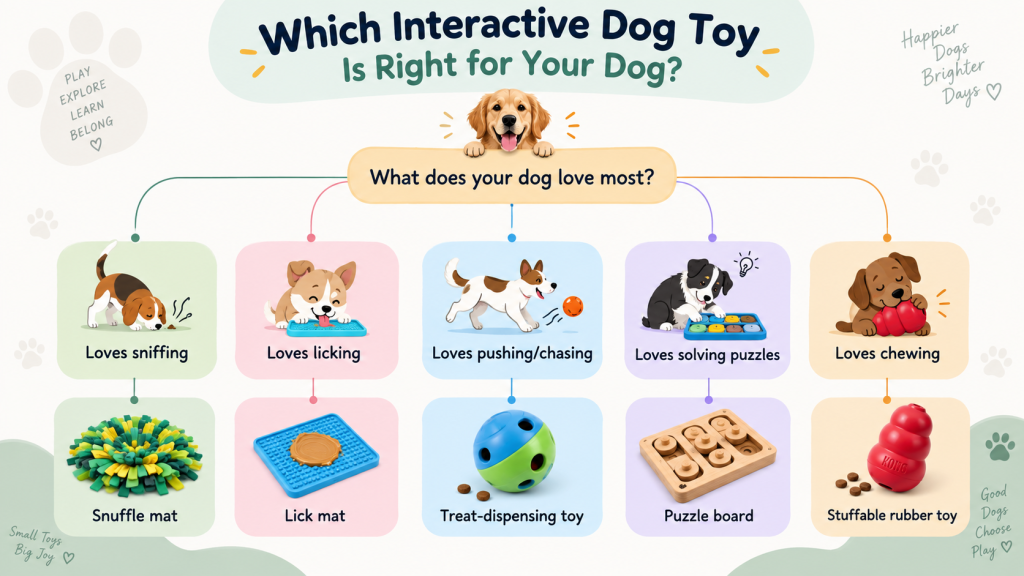
Start with your dog, not the packaging. A persistent dog that loves pushing objects may enjoy a rolling dispenser, while a cautious dog may prefer a stationary lick mat or simple scent search.
Choose a size your dog cannot swallow and a material suited to their chewing style. Also consider cleanup. The best Interactive Dog Toys are practical to maintain and interesting enough to revisit.
Match the Toy to Your Dog’s Play Style
Nose-first explorers often enjoy snuffle mats. Paw-heavy problem solvers may prefer sliders and flip compartments, while dogs that chase movement can enjoy wobbling feeders.
Some puzzles are made for food extraction, not prolonged gnawing. If your dog tries to dismantle one, supervise closely and remove it after the food is gone. The best challenge is one your dog stays motivated to solve.
Start Easy So the Toy Feels Rewarding
A difficult puzzle on day one can feel like a locked door. Instead, leave compartments partly open, use loose kibble in a hollow toy, or scatter food near the top of a snuffle mat.
Demonstrate the movement if needed, then increase difficulty gradually. This keeps Interactive Dog Toys engaging without turning play into a frustration test.
5 Recommended Interactive Dog Toys
These five options cover different play styles instead of repeating the same type of puzzle.
| Product | Best for | Interaction style | Main consideration |
| KONG Classic | First-time enrichment | Stuffing, licking, chewing | Choose the correct size |
| Nina Ottosson Dog Brick | Guided problem-solving | Sliding, flipping, lifting | Not intended as a chew toy |
| KONG Wobbler | Active meal play | Pushing and wobbling | Needs floor space |
| PAW5 Wooly Snuffle Mat | Nose-led foraging | Sniffing and searching | Supervise fabric chewers |
| LickiMat Classic Buddy | Quiet enrichment | Licking | Remove from persistent chewers |
KONG Classic Stuffable Dog Toy, Natural Rubber Chew, for Large Dogs
Best for: First-time enrichment users
Its hollow natural-rubber shape can hold kibble or suitable soft food, while the irregular shape also creates an unpredictable bounce during play. Beginners can start with loosely packed food before making the filling harder to remove. It is versatile, but sizing matters, and the rubber should be checked regularly for damage.
Outward Hound Nina Ottosson Dog Brick Dog Toy Treat Puzzle, 12.8″
Best for: Dogs ready for guided problem-solving
The Level 2 Dog Brick combines several actions: dogs can move sliders, flip lids, and uncover hidden food. That variety suits dogs that already understand simple food searches and are ready to learn multiple mechanisms. Introduce one action at a time if needed. Because it is a puzzle rather than a chew toy, store it after the session.
KONG Wobbler, Interactive Treat-Dispensing Dog Toy, for Medium/Large Dogs
Best for: Dogs that enjoy moving for meals
The Wobbler has a weighted base that tips and returns upright as a dog nudges it, allowing dry food to dispense during play. Its body unscrews for filling and cleaning, which is useful for regular meal use. It works best with some open floor space and may be noisy when repeatedly pushed across hard flooring.
PAW5 Wooly Snuffle Mat
Best for: Scent-focused dogs and smaller living spaces
This fabric mat hides dry food among dense strands, encouraging a dog to search with their nose rather than chase a hard object around the room. It is a useful option for quieter indoor sessions and dogs that enjoy foraging. However, dogs that shred or swallow fabric need especially close supervision, and the mat should be stored afterward.
LickiMat Classic Buddy Slow Feeder for Dogs, Green
Best for: Quiet, stationary engagement
The Buddy uses a textured surface that can hold suitable soft or spreadable food, giving dogs a stationary licking activity. It can work well when a rolling feeder would be too noisy or energetic. The manufacturer specifically states that the mat is not a chew toy, so remove it once the food is finished and supervise known chewers.
What Research Says About Dog Enrichment
Research supports enrichment as a useful concept, not a magic fix.
A 2014 randomized controlled trial of 107 shelter dogs combined daily food-filled toys with twice-daily positive-reinforcement cage training. By day three, 65% of the intervention group increased sitting or lying behavior versus 22% of controls; 57% decreased jumping versus 9%. Because training and food-toy enrichment were combined, the toy’s independent effect is unknown.
That distinction matters. A 2023 study of companion dogs found that 12 days of short toy sessions did not significantly change activity, eating rate, or cognitive-bias measures. Home dogs may respond differently from kennel-housed populations.
A 2022 pilot study of 10 assistance dogs in training found different effects across enrichment types; food toys produced less behavioral change than some social and environmental activities. Variety matters.
Veterinary behavior guidance on enrichment toys recommends size-appropriate toys, manageable difficulty, and initial supervision. Use Interactive Dog Toys as one part of a broader routine, then judge them by your dog’s response.
Safety Matters More Than Difficulty
Check every toy for size, damage, loose pieces, and swallowable material. Supervise early sessions so you can see how your dog actually uses it.
Food can create tension in multi-dog homes, so separate dogs when needed. For resource guarding or aggression, seek individualized professional guidance instead of treating a toy as therapy.
Using Food Without Accidentally Overfeeding
For food-based Interactive Dog Toys, use part of your dog’s daily intake instead of automatically adding extra treats.
For spreadable fillings, account for the whole diet. Dogs with allergies, obesity, pancreatitis, gastrointestinal problems, or prescription diets may need specific ingredients or portions, so ask your veterinarian what fits their plan.
How Long Should an Interactive Play Session Last?
There is no universal timer. A short, successful session can be better than a long one ending in frustration.
Relaxed sniffing and repeated attempts suggest engagement. Frantic scratching, barking, hard biting at the toy, or walking away can mean the challenge is too difficult or unappealing. With new Interactive Dog Toys, start easy and stay nearby until you understand how your dog uses them.
Rotate Toys Instead of Leaving Everything Out
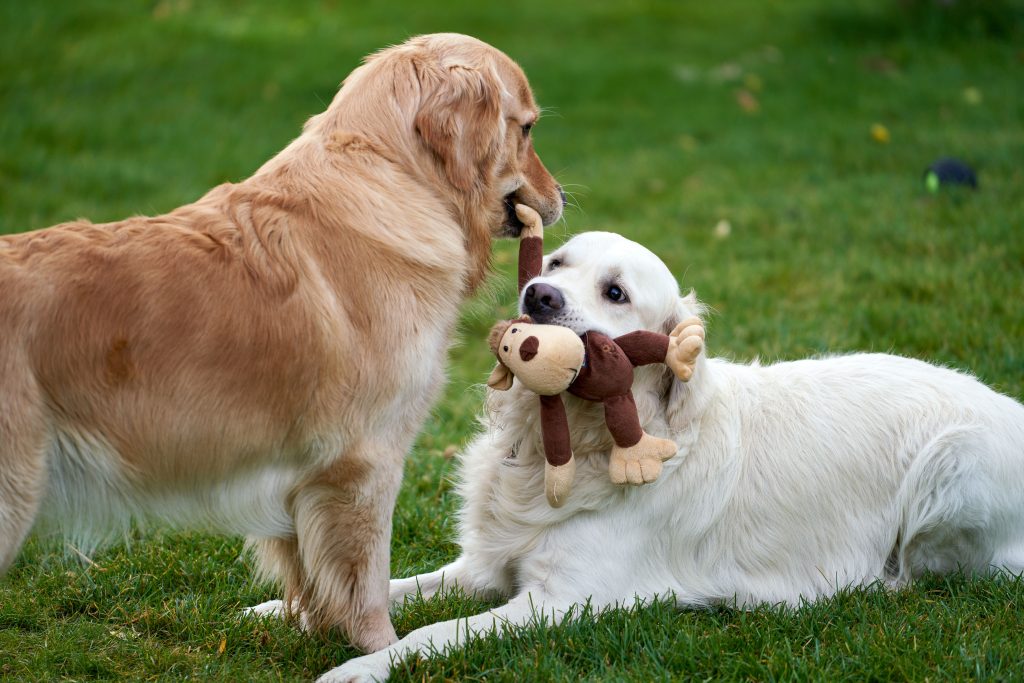
Rotation can keep familiar activities interesting without requiring a complicated schedule. Try a snuffle mat one morning, a wobbling feeder another day, and a stuffed rubber toy during a quieter evening.
Change the activity style, not just the toy’s color. Rotation also gives you time to wash and inspect Interactive Dog Toys. Remove anything cracked, damaged, or holding old food.
Interactive Dog Toys for Puppies, Adults, and Seniors
Puppies need simple, well-sized challenges and close supervision. Healthy adults may enjoy more complexity once they understand the game.
For seniors, comfort should guide the choice. Stationary licking or sniffing may suit reduced mobility better than a toy that rolls across the room. If an older dog suddenly loses interest in familiar Interactive Dog Toys, especially alongside appetite, sleep, or mobility changes, mention it to your veterinarian.
When a Toy Is Not the Right Solution
Boredom and distress can look similar. Pacing, destruction, vocalizing, or poor settling may reflect inadequate activity, fear, separation distress, pain, or another problem.
A puzzle can provide something to do, but it should not be treated as a cure for anxiety or aggression. Use Interactive Dog Toys for enrichment, not diagnosis. If behavior is sudden, intense, dangerous, or persistent, ask your veterinarian or a qualified behavior professional for help.
Build a Simple Weekly Enrichment Routine
Mix activity, social time, training, sniffing, rest, and problem-solving. Attach enrichment to routines that already exist: breakfast in a puzzle, a sniff-focused walk, a short training game, then quiet licking later.
If you want ideas beyond toys, PetCureWell’s dog mental stimulation ideas for happy, calm dogs include scent games, training, and adjustable challenges. Variety helps; a packed activity calendar is unnecessary.
Frequently Asked Questions About Interactive Dog Toys
Are Interactive Dog Toys good for dogs left home alone?
Some may be suitable after you have observed how your dog uses them, but not every toy should be left unsupervised. Fabric mats, puzzles with movable pieces, and items your dog tries to destroy are poor candidates. Separation distress also needs more than a distraction toy, especially when a dog panics, injures themselves, or cannot settle after you leave.
How do I know if a puzzle toy is too hard?
Your dog should be able to make progress. If they repeatedly paw, bark, bite at the toy, look to you for help, or abandon it without getting food, lower the difficulty. Open compartments, use looser filling, or make treats easier to find. Difficulty should rise only after your dog understands how the toy produces a reward.
Can I use my dog’s regular food in Interactive Dog Toys?
Yes, many food-dispensing puzzles work with regular kibble or compatible wet food. Using part of a measured meal can make enrichment easier to fit into the day without automatically adding extra treats. Follow the toy’s filling and cleaning instructions, and ask your veterinarian about ingredients or portions if your dog has dietary restrictions or a medical condition.
How often should I rotate interactive toys?
There is no evidence-based rule that says you must rotate them on a fixed number of days. Rotate when interest drops, when you want to offer a different type of activity, or while another toy is being washed. Some dogs happily repeat a favorite puzzle; others stay more engaged when sniffing, licking, pushing, and problem-solving activities vary.
What should I do if my dog destroys every interactive toy?
Choose simpler, sturdier formats and supervise closely rather than increasing difficulty. Remove the item as soon as your dog shifts from using it to dismantling it. Some dogs need enrichment that relies more on training, scent work, or supervised food searches than on objects they can grab and shred. Repeated ingestion of non-food material warrants veterinary guidance.
Final Recommendation: Choosing Interactive Dog Toys
The best Interactive Dog Toys match the dog in front of you. Start with an easy format, choose a safe size, supervise new products, and make the first few sessions rewarding enough that your dog understands the game. KONG Classic is a flexible starting point for dogs new to food enrichment, while the Nina Ottosson Dog Brick suits dogs that enjoy more structured problem-solving. A snuffle mat or lick mat can be a better fit when you want quieter, nose-led or stationary activity.
Most importantly, do not judge enrichment by how complicated the toy looks. Watch your dog. If they stay curious, make progress, and finish without frustration or destructive chewing, you have probably found a useful addition to their routine.