
Signs of Canine Depression: How to Recognize Changes and Help

We may earn a commission for purchases made using our links. Please see our disclosure for more details.
When a normally eager dog stops greeting you, ignores a favorite toy, or hides for hours, it is natural to worry. The signs of canine depression can resemble sadness, but they may also point to pain, illness, anxiety, grief, or aging. Careful observation matters more than one “sad” expression.
This guide explains meaningful behavior changes, common triggers, veterinary warning signs, and practical home support. It also covers research and enrichment products. The goal is not self-diagnosis, but recognizing changes and responding thoughtfully.
Affiliate disclosure: We may earn a commission from qualifying purchases made through links listed in the research notes, at no additional cost to you.
What Canine Depression Actually Means
“Canine depression” is a practical description, not a simple stand-alone diagnosis. Veterinarians look for sustained changes such as reduced interest, lower activity, withdrawal, or disrupted eating and sleeping while ruling out medical problems.
A dog cannot explain whether arthritis hurts or a household change feels unsettling. Treat the signs of canine depression as clues that need context, not proof of one condition.
Early Signs of Canine Depression to Watch
The clearest warning is a change from your dog’s baseline. One quiet afternoon may mean tiredness; persistent or worsening changes deserve attention.
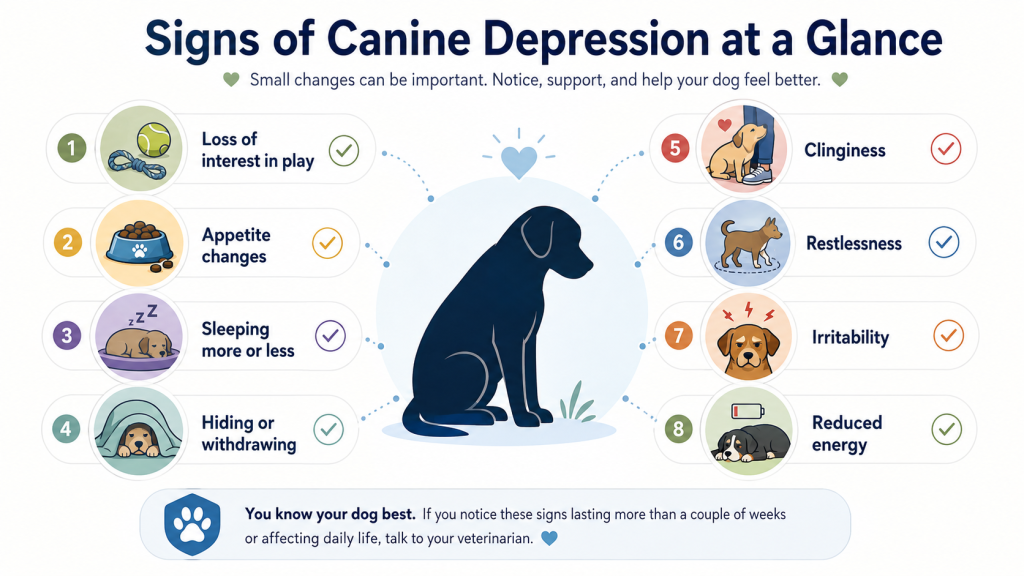
Common signs of canine depression include:
- Less enthusiasm for walks, play, food, visitors, or affection
- Hiding, avoiding family activity, or becoming unusually clingy
- Sleeping much more, sleeping less, or struggling to settle
- Lower energy, slower movement, restlessness, or repeated pacing
- Appetite, weight, toileting, vocalization, or grooming changes
Look for clusters because one symptom rarely tells the whole story.
Loss of Interest in Favorite Activities
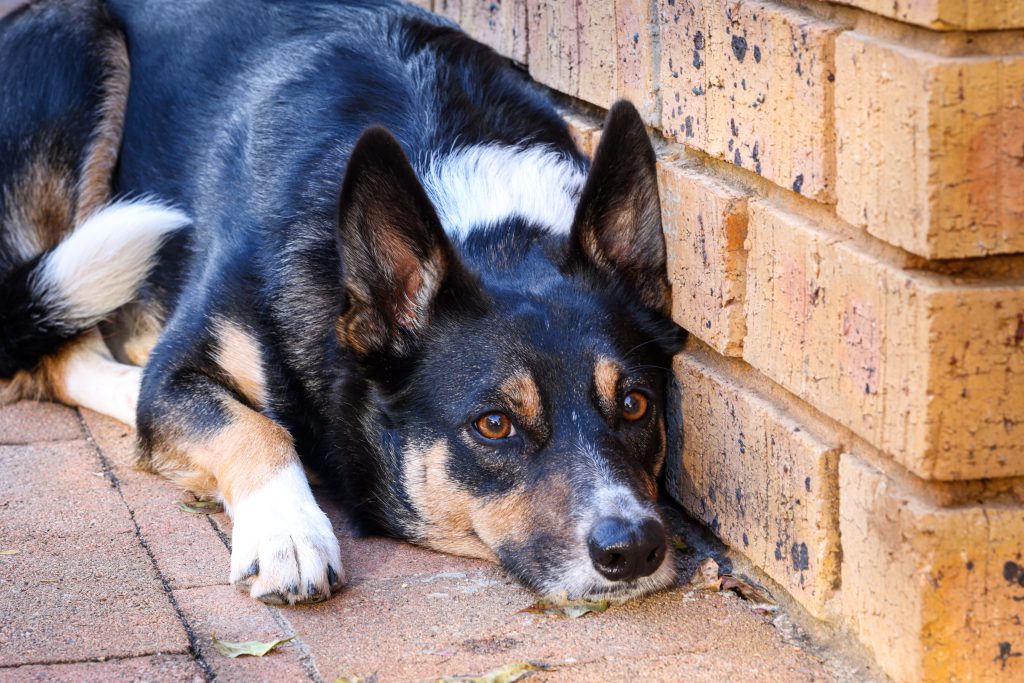
Loss of pleasure or engagement is one of the most meaningful signs of canine depression. Your dog may still go through the motions but stop initiating play, sniff less during walks, abandon a puzzle quickly, or watch family activity without joining.
Weather, a demanding outing, or a temporary disruption can reduce enthusiasm. However, when a food-motivated dog repeatedly ignores meals or a walk-loving dog avoids the leash, arrange a veterinary check rather than assuming stubbornness.
Appetite and Sleep Changes
Among the signs of canine depression, stress-related appetite changes can be easy to miss. Sleep may also shift: a dog might stay in bed, wake repeatedly, roam at night, or seem tired despite resting.
Because appetite and sleep changes also occur with digestive disease, dental pain, medication effects, endocrine conditions, and cognitive decline, note the timing and severity. Contact your veterinarian promptly if your dog stops eating, loses weight, drinks unusually, vomits, has diarrhea, or cannot settle comfortably.
Withdrawal, Clinginess, and Social Changes
The signs of canine depression may include leaving the room, resting alone, avoiding touch, or no longer greeting familiar pets. Another dog may do the opposite, shadowing one person constantly and becoming distressed when separated.
Neither response confirms depression. Social changes can reflect fear, pain, sensory loss, conflict, or separation distress. Stiffness, lip licking, trembling, growling, or avoidance suggest discomfort; do not force cuddling or social exposure.
Restlessness, Irritability, and New Problem Behaviors
Some signs of canine depression do not look quiet. Some dogs become restless, vocal, destructive, short-tempered, or unable to relax. House-soiling, repetitive licking, barking, chewing, and pacing may appear after a loss, move, routine change, or prolonged under-stimulation.
Avoid punishment. Protect people and pets from conflict, reduce obvious stressors, and document when the behavior occurs. Sudden aggression, confusion, or intense agitation requires timely veterinary assessment.
Common Triggers Behind the Behavior Change
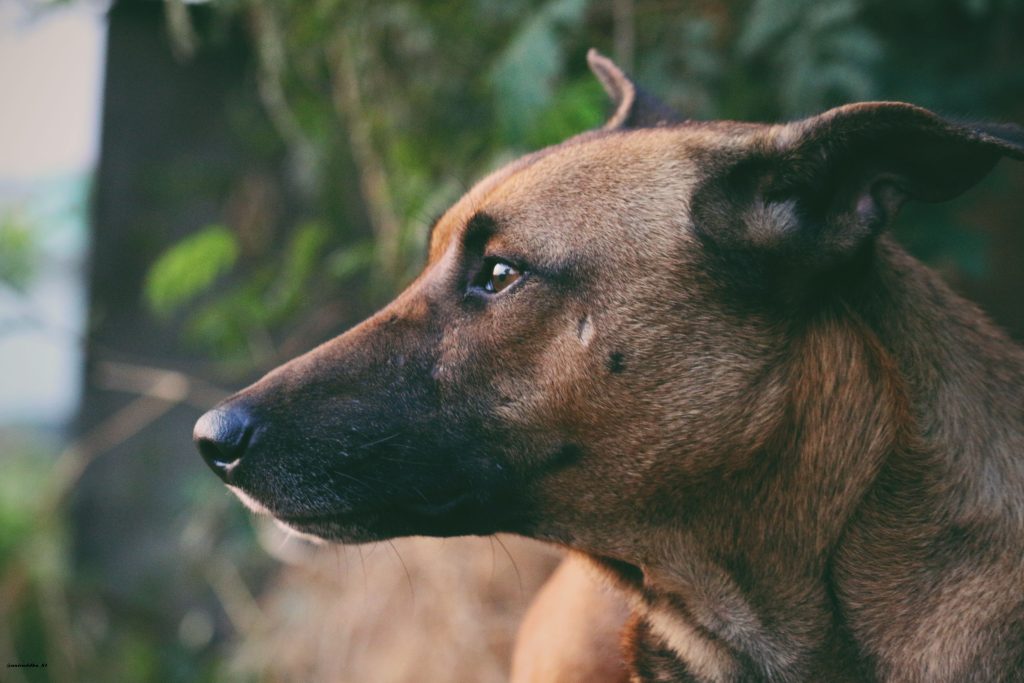
The signs of canine depression may follow bereavement, moving, rehoming, a new baby or pet, boarding, injury, reduced family time, or a major schedule change.
Boredom and isolation may contribute when a dog loses walks, training, sniffing, or companionship. Still, a stressful event and a medical problem can occur together.
Depression, Pain, Anxiety, or Cognitive Decline?
Because signs of canine depression overlap with other conditions, context matters. Pain may cause withdrawal, irritability, sleep disruption, reluctance to climb stairs, or slower walking. Anxiety may involve panting, trembling, escape attempts, vigilance, or distress around predictable triggers.
Older dogs may develop cognitive dysfunction, which can involve disorientation, altered social interaction, house-soiling, nighttime waking, and repetitive wandering. The Merck Veterinary Manual explains that medical causes, especially pain, must be considered in behavior cases. A veterinary exam is the safest way to separate these possibilities.
When Signs Need Urgent Veterinary Attention
Seek urgent care when changes accompany collapse, breathing difficulty, repeated vomiting, a swollen abdomen, seizures, severe weakness, suspected poisoning, inability to urinate, uncontrolled pain, or sudden disorientation.
Call your veterinarian promptly if your dog refuses food, drinks far more or less than usual, loses weight, becomes aggressive without warning, or remains markedly lethargic. PetMD’s veterinarian-reviewed guidance notes that complete food refusal, vomiting, destructive behavior, or extreme lethargy can justify emergency evaluation.
What to Track Before the Appointment
When signs of canine depression appear, a behavior diary gives your veterinarian better evidence than “he seems sad.” Record when the change began and whether symptoms vary by time, person, place, or activity.
Track meals, water, sleep, toilet habits, medication, walking pace, play, interaction, and vocalization. Short videos may help. List recent travel, bereavement, noise, new pets, altered work hours, or reduced exercise.
Research-Backed Findings About Canine Mood
Evidence for a distinct canine depressive disorder remains limited. A 2022 Scientific Reports survey of 426 owners found reported changes in surviving dogs after a companion died, including less play, activity, eating, and sleeping. Because owner grief may influence reports, the study supports possible grief-related change rather than proving human-like depression. Read the peer-reviewed study on dogs after companion loss.
A 2024 controlled study of 60 dogs found that no single behavior identifies emotional state reliably; researchers recommended combining several indicators. Review the study of acute emotional-state indicators in dogs.
The American Animal Hospital Association likewise advises ruling out pain or disease when eating, sleeping, activity, or social behavior changes. See AAHA’s 2025 veterinary discussion of depression and chronic stress in pets.
Helping a Dog Feel More Secure at Home
Start with predictable meals, toilet breaks, sleep, gentle attention, and suitable activity. Offer choices. A sniff walk, easy food search, or brief reward-based training may feel more approachable than intense exercise.
Increase challenge gradually and stop before frustration. Petcurewell’s dog mental stimulation ideas for happy, calm dogs include scent games and adjusted activities for puppies, seniors, and sensitive dogs. Keep treats within the normal diet, supervise equipment, and never give human antidepressants or sedatives unless prescribed.
Recommended Products That Support Dogs Showing Signs of Canine Depression
Products cannot diagnose or treat the signs of canine depression, but matched enrichment tools can support routine, choice, and gentle engagement. Introduce one item at a time and supervise use.
| Product | Best for | Format | Main consideration |
| KONG Classic | Enrichment beginners | Stuffable rubber toy | Choose the correct size |
| Nina Ottosson Dog Brick | Guided problem-solving | Level 2 puzzle | Not a chew toy |
| KONG Wobbler | Active meal dispensing | Wobbling feeder | Needs floor space |
| Starmark Bob-A-Lot | Adjustable challenge | Weighted dispenser | Requires careful cleaning |
| PAW5 Snuffle Mat | Scent-focused dogs | Fabric foraging mat | Avoid for fabric eaters |
| LickiMat Classic Buddy | Quiet engagement | Textured lick mat | Supervise chewing |
KONG Classic Stuffable Dog Toy, Natural Rubber Chew, for Large Dogs | Treat-Filling Fetch & Chew Toy with Erratic Bounce, Made from KONG Durable Natural Rubber for Extended Playtime
Best for: First-time enrichment users
The hollow natural-rubber toy holds kibble or suitable spreadable food and bounces unpredictably. Owners can progress from loose treats to harder fillings, making it approachable for beginners. Choose the correct size, inspect it regularly, and replace damaged rubber.
Outward Hound Nina Ottosson Dog Brick Dog Toy Treat Puzzle, 12.8″ | Level 2 Intermediate, 20 Hidden Treat Compartments, Holds 1-1/2 Cups, Wet or Dry Food, Interactive Enrichment, Dogs & Puppies
Best for: Dogs ready for guided problem-solving
This Level 2 puzzle uses sliders, flip lids, and removable covers to reveal food. It suits dogs who understand simple searches and can learn one mechanism at a time. The varied actions add interest, but supervise and store it after use because it is not a chew toy.
KONG Wobbler, Interactive Treat-Dispensing Dog Toy, for Medium/Large Dogs | Interactive Treat-Dispensing Toy & Slow Feeder That Supports Healthy Eating & Keeps Dogs Mentally Busy
Best for: Dogs that enjoy moving for meals
The weighted Wobbler tips and returns upright when nudged, releasing dry food gradually. Its screw-apart body simplifies filling and dishwasher cleaning. It suits active meal play, but needs open floor space and can be noisy on hard flooring, particularly in apartments.
Starmark Bob-A-Lot Interactive Dog Pet Toy, Large, Yellow/Green/Purple
Best for: Dogs that need adjustable difficulty
The Bob-A-Lot has a weighted base, food chamber, and adjustable openings. Start wide, then narrow the outlet as confidence grows. This personalizes difficulty for persistent nudgers, although the internal chamber needs thorough hand-cleaning and drying after food use.
PAW5 Dog Snuffle Mat for Dogs Small Dog Toys Interactive, Boredom & Anxiety Premium Feeding Mat for Slow Eating & Smell Training, Dog Brain Toy
Best for: Scent-led dogs and smaller living spaces
Dense fabric strands hide dry food for nose-led foraging without a hard toy rolling around. It suits apartments, quieter dogs, and gentle low-impact activity. However, avoid it for dogs that shred or swallow fabric, and supervise every session.
LickiMat Classic Buddy Slow Feeder for Dogs Lick Mat Boredom Anxiety Reducer Perfect for Food Treats Yogurt Liquid Food Peanut Butter Fun Alternative to a Slow Feed Dog Bowl, Green
Best for: Quiet, low-impact enrichment
The textured mat spreads soft food across a patterned surface for slower licking and focused activity. It suits evenings or dogs that prefer stationary enrichment. Because it is not chew-proof, remove it after use and choose another format for persistent chewers.
Frequently Asked Questions About Signs of Canine Depression
How long do signs of canine depression last?
Duration depends on the cause. A routine disruption may improve within days, while grief, pain, anxiety, illness, or cognitive decline can last longer. Do not wait if symptoms worsen or affect eating, drinking, movement, sleep, or safety; contact your veterinarian.
Can a dog experience depression following the death of another pet?
Possibly. Owners report reduced play, appetite, activity, or social engagement after a companion dies. A 2022 survey supports grief-related changes but cannot prove dogs experience bereavement exactly as humans do. Preserve routines and seek veterinary help when changes persist or physical symptoms appear.
Should I get another dog to cheer up my dog?
Not automatically. A new dog changes territory, attention, routines, and social pressure. First identify whether illness, pain, grief, anxiety, or under-stimulation explains the behavior. Add another pet only when your household wants one and your dog enjoys compatible canine company.
Can exercise cure canine depression?
Exercise may support routine, sleep, and engagement, but it is not a cure. Painful, ill, elderly, fearful, or unconditioned dogs may worsen with excess activity. Ask your veterinarian what is appropriate, then combine movement with sniffing, rest, companionship, and manageable enrichment.
Can veterinarians prescribe antidepressants for dogs?
Veterinarians may prescribe behavior medication for diagnosed conditions alongside environmental changes and behavior modification. Choice, dose, interactions, and monitoring require oversight. Never give a dog a human prescription, leftover medicine, cannabis product, sleep aid, or supplement without veterinary approval.
Final Recommendation: Respond to Signs of Canine Depression Early
The most useful response to the signs of canine depression is calm observation and appropriate veterinary care. Compare your dog with their normal behavior, note appetite, sleep, movement, social interaction, and recent events, and act faster when symptoms are sudden, severe, or worsening.
At home, restore predictable routines and offer low-pressure activities your dog can choose. The KONG Classic suits beginners, while the PAW5 Snuffle Mat may fit scent-focused dogs that do not chew fabric. Products should support care, not replace diagnosis. Your clearest next step is simple: document what changed, rule out medical causes, and build a gentle plan around your dog’s individual needs.