Dog Mental Stimulation Ideas for Happy, Calm Dogs
We may earn a commission for purchases made using our links. Please see our disclosure for more details.
A long walk can leave your dog physically tired, yet they may still pace, bark, steal socks, or invent their own entertainment. That is where Dog Mental Stimulation Ideas help. Mental enrichment gives dogs appropriate ways to sniff, solve problems, make choices, learn skills, and use natural behaviors that exercise alone may not fully satisfy.
This guide shows how to choose activities for your dog’s age, confidence, energy, and home. You will find scent games, puzzles, training exercises, products, and research-backed guidance. The aim is not to occupy your dog every minute. It is to build a balanced routine that helps them feel engaged, capable, and ready to settle afterward.
What Mental Stimulation Actually Does for Dogs
Mental stimulation gives a dog a purposeful task. Instead of simply receiving food, they might sniff it out, roll a dispenser, open a compartment, or respond to a cue. These activities use attention, memory, sensory exploration, and problem-solving.
Good enrichment also offers choice: where to sniff, how to approach a puzzle, and when to pause. However, stimulation should not mean constant excitement. The best Dog Mental Stimulation Ideas create focused engagement followed by a natural return to rest.
Signs Your Dog May Need More Brain Work
Boredom can look like chewing furniture, raiding bins, digging, barking at small noises, repeatedly bringing toys, or wandering without settling. Still, these behaviors do not automatically prove that a dog needs enrichment.
Pain, fear, separation distress, and health problems can look similar. Notice patterns rather than one incident. If behavior changes suddenly, becomes intense, or creates risk, speak with a veterinarian or qualified reward-based behavior professional before treating it as simple boredom.
Match Enrichment to Your Dog’s Personality
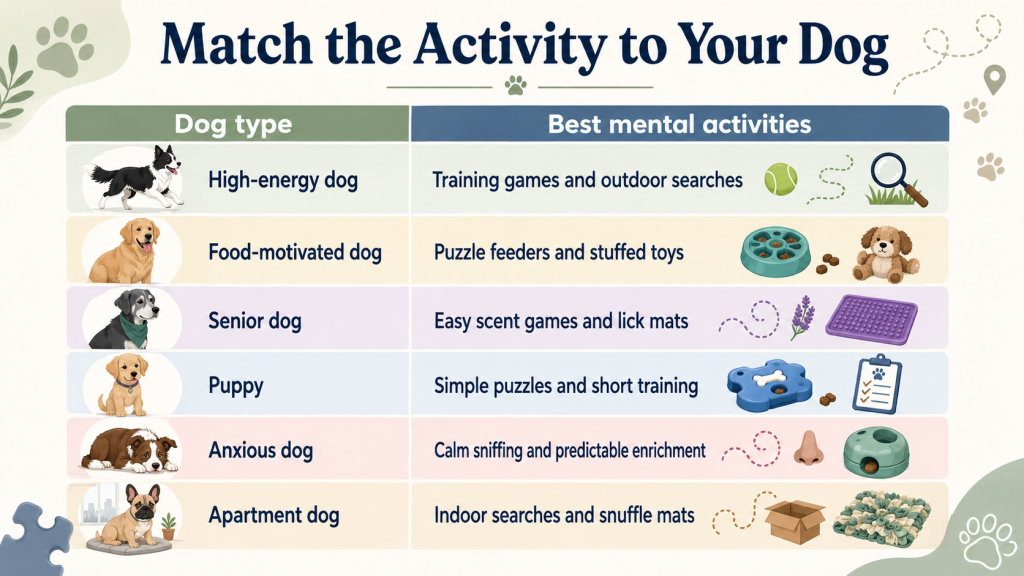
Start with what your dog chooses. Scent-driven dogs may love hidden-food searches, retrievers may carry toys, terriers may prefer supervised digging, and social dogs may favor training games.
Difficulty matters too. Easy success builds interest; repeated failure creates frustration. Show your dog the first treat, leave compartments partly open, or scatter food across a small area. Then increase only one challenge at a time. Useful Dog Mental Stimulation Ideas should feel achievable, not like an exam your dog cannot pass.
Food-Based Dog Mental Stimulation Ideas
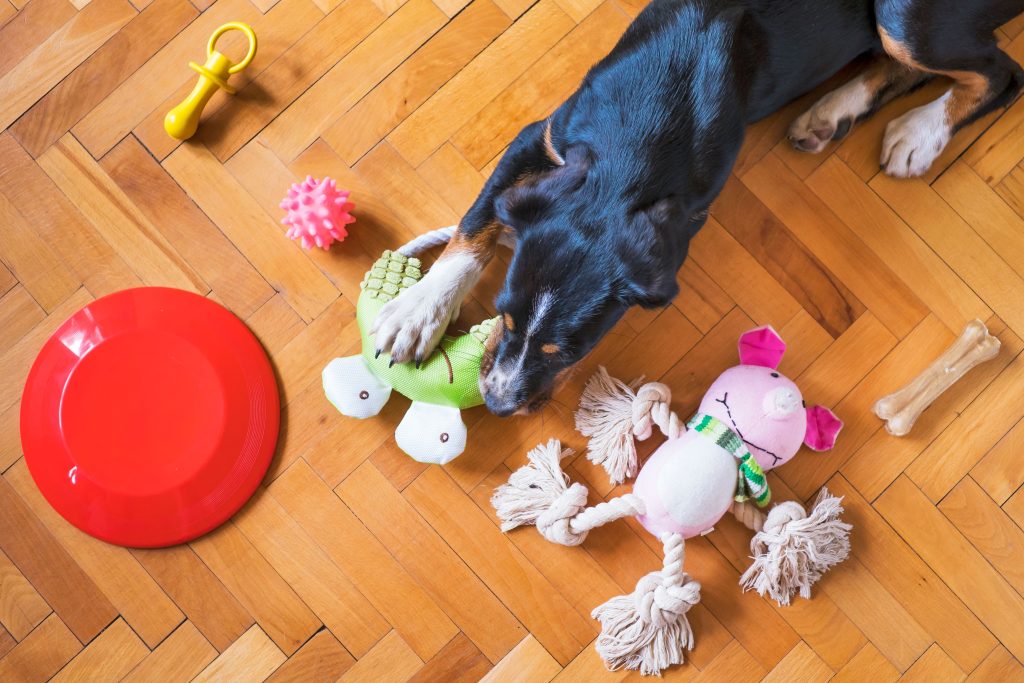
Use part of your dog’s measured meal instead of adding treats. Scatter kibble on a clean floor or lawn, fold pieces loosely in a towel, or use a muffin tin. Supervise fabric and cardboard games.
Begin stuffable toys with dry food that falls out easily. Later, add suitable moist food or freeze a filling for a longer activity. Choose ingredients that fit your dog’s diet and avoid unsafe foods, including anything containing xylitol. In multi-dog homes, separate dogs for food games to reduce competition and guarding pressure.
Scent Games That Turn Sniffing Into Work
Begin “find it” by tossing one treat nearby. Next, hide food behind furniture legs, beneath open cups, or along a short trail. You can also hide a favorite toy or family member.
Keep beginner searches easy. Never hide food near chemicals, breakable items, toxic plants, or places you do not want your dog to investigate later. These low-cost Dog Mental Stimulation Ideas are especially useful during bad weather or temporary exercise restrictions.
Training Games for Focus and Confidence
Training becomes enrichment when sessions stay brief, rewarding, and achievable. Practice hand targets, chin rests, toy clean-up, “go to mat,” name recognition, or simple object choices. Three focused minutes can work better than a long, repetitive drill.
Mark the correct action with a clicker or consistent word, then reward promptly. Do not force positions or intimidate a hesitant dog. Reduce the difficulty and reward a smaller step instead. This keeps learning voluntary and turns problem-solving into a shared activity.
Indoor Brain Games for Busy or Rainy Days
Indoor enrichment needs little space. Build a gentle route around cushions, over a broom handle resting flat on the floor, and toward a mat. Ask for familiar cues in different rooms or play hide-and-seek behind a door.
For shredders, make a supervised box with paper tubes, crumpled paper, and kibble. Remove tape, staples, labels, and small pieces. Stop if your dog swallows materials. Rotate Dog Mental Stimulation Ideas so familiar activities regain novelty without filling the home with unused toys.
Outdoor Enrichment Beyond the Daily Walk
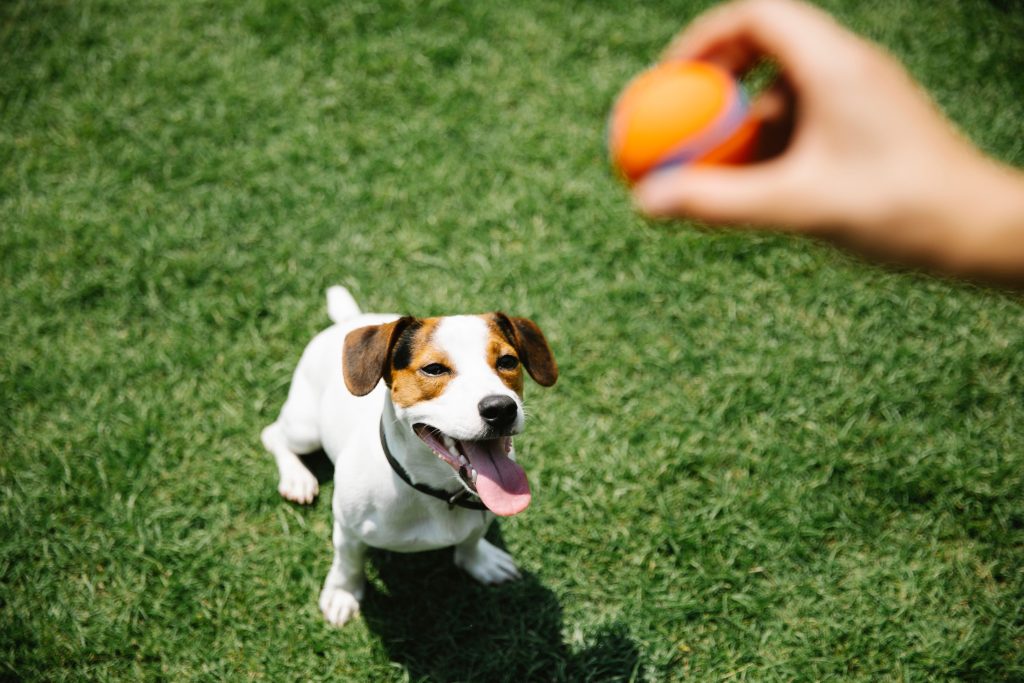
Try a “sniffari,” where distance matters less than exploration. Visit a quiet route, pause at scents, or scatter food in grass. You can also practice recalls, lay a treat trail, or rehearse easy tricks.
Provide a designated digging area for dogs that enjoy it, using clean soil or sand and shallowly buried sturdy toys. Avoid sharp turns, high jumps, or unstable obstacles for puppies, seniors, and dogs with mobility concerns. Match every activity to weather, terrain, fitness, and local leash rules.
Calm Dog Mental Stimulation Ideas for Evenings
Evening enrichment should help the household wind down, not launch another high-speed play session. Licking, gentle foraging, slow sniffing, and familiar cue practice usually fit better than chase games.
Try a lightly filled lick mat, an easy snuffle search, mat training, or a calm grooming routine your dog already enjoys. Avoid introducing a difficult puzzle that triggers pawing or barking. End while your dog remains successful, remove the equipment, offer water, and allow uninterrupted rest.
Adjust Activities for Puppies, Seniors, and Sensitive Dogs
Puppies need easy activities, close supervision, and large materials. Seniors may prefer low-impact scent work within comfortable reach. Consider vision, hearing, dental comfort, mobility, and diet.
Sensitive dogs need control. Introduce one change at a time, let them move away, and avoid trapping them near unfamiliar objects or sounds. Enrichment may support anxious dogs, but it cannot replace professional assessment when distress persists. The safest Dog Mental Stimulation Ideas respect both physical limitations and emotional comfort.
Build a Routine Without Overdoing It
A practical day might include a sniff-focused walk, one puzzle-fed meal, and three minutes of training. That is more sustainable than all-day entertainment.
Watch your dog. Curious, purposeful engagement with the ability to pause usually signals a suitable challenge. Repeated barking, frantic scratching, freezing, avoidance, or loss of interest means you should simplify or stop. Protect sleep as carefully as play. Rotate two or three Dog Mental Stimulation Ideas through the week and keep the ones your dog genuinely chooses.
Recommended Products for Dog Mental Stimulation Ideas
These choices cover stuffing, rolling, foraging, licking, and multi-step problem-solving, helping different dogs and households find a suitable starting point.
| Product | Best use | Format | Main consideration |
| KONG Classic | Beginners | Stuffable rubber | Correct sizing |
| Nina Ottosson Dog Brick | Puzzle learners | Level 2 board | Supervise pieces |
| KONG Wobbler | Meal dispensing | Wobble toy | Needs floor space |
| Starmark Bob-A-Lot | Adjustable challenge | Weighted dispenser | Careful cleaning |
| PAW5 Wooly Mat | Scent work | Fabric mat | Avoid for chewers |
| LickiMat Buddy | Quiet enrichment | Textured mat | Supervise chewing |
KONG Classic Stuffable Dog Toy
Best for: First-time enrichment users
The KONG Classic uses natural rubber, a hollow food center, and an irregular bounce. Start with loose dry food, then progress to packed or frozen fillings. It suits beginners, but owners must select the right size and replace damaged rubber.
Outward Hound Nina Ottosson Dog Brick Interactive Treat Puzzle, Level 2 Intermediate
Best for: Dogs ready for multi-step problem-solving
The Dog Brick combines sliders, flip lids, and removable covers. Its Level 2 design suits dogs moving beyond basic searches while still needing guidance. Introduce one mechanism at a time, supervise play, and store it afterward because it is not a chew toy.
KONG Wobbler Interactive Treat Dispensing Dog Toy, Large
Best for: Fast eaters who enjoy pushing toys
The Wobbler stands upright, then tips and rolls when nudged, releasing dry food. Its screw-apart design simplifies filling and cleaning, and the chamber holds part of a meal. It needs open floor space and may sound noisy on hard surfaces.
Starmark Treat Dispensing Bob-A-Lot Interactive Dog Toy, Large
Best for: Dogs that need adjustable difficulty
The Bob-A-Lot has a weighted base, large chamber, and adjustable openings. Owners can begin with easy dispensing, then increase the challenge. Its movement suits persistent nudgers, but the interior needs careful hand-cleaning and complete drying after every single meal-based session.
PAW5 Wooly Snuffle Mat for Dogs
Best for: Scent-focused dogs and apartment living
The Wooly Snuffle Mat hides dry food among dense fabric strands, encouraging nose-led foraging without a rolling toy. It is washable and suits many sizes and homes. Supervise every session, and avoid it if your dog tears, chews, or swallows fabric.
LickiMat Classic Buddy Slow Feeder for Dogs Lick Mat, Green
Best for: Quiet, low-impact enrichment
The Classic Buddy holds spreadable food across a textured surface and can be chilled or frozen. Its flexible design suits quiet enrichment, but persistent chewers need close supervision and may do better with a rigid alternative.
If your dog enjoys compartments and sliders, Petcurewell’s guide to puzzle toys for dogs can help you compare formats before buying.
What Research Says About Canine Enrichment
Research supports enrichment, but not every toy helps every dog equally. A 2023 feeding-toy study found that dogs spent longer eating and interacting with feeding toys than standard bowls and were more active during feeding. This supports safe, appropriately difficult meal puzzles.
A 2022 pilot study of seven enrichment activities followed 10 assistance-dog trainees. Relaxed behavior increased while alert or stress-related behavior decreased overall, although responses differed by activity.
Evidence remains limited. A 2023 companion-dog study found that five minutes of daily toy access over 12 days did not create clear overall welfare improvements. Variety and individual response matter more than buying a toy.
When introducing Dog Mental Stimulation Ideas, use reward-based teaching. The American Veterinary Society of Animal Behavior’s 2021 position statement recommends reward-based methods and advises against aversive approaches.
Frequently Asked Questions About Dog Mental Stimulation Ideas
How much mental stimulation does a dog need each day?
There is no universal target because age, health, temperament, and difficulty vary. For many dogs, Dog Mental Stimulation Ideas work best in one or two five-minute sessions. Several small opportunities, including sniffing walks and meal games, fit daily life better than one demanding puzzle.
Can mental stimulation replace a walk?
Usually not. Healthy dogs still need movement, outdoor exploration, toileting, and suitable social experiences every day. However, Dog Mental Stimulation Ideas can enrich shorter walks and support dogs whose exercise is veterinarian-restricted because of age, injury, illness, or recovery.
Why does my dog give up on puzzle toys?
The puzzle may be too difficult, unfamiliar, unstable, or unrewarding. Start with visible food and partly open compartments. Demonstrate one action and reward small attempts. If your dog leaves, make the next session easier. Some dogs simply prefer scent searches, play, or training.
Are homemade enrichment toys safe?
They can be useful with suitable materials and close supervision. Remove staples, tape, string, plastic, sharp edges, and swallowable pieces before starting. Avoid cardboard or fabric for dogs that ingest those materials, and stop if shredding changes into eating the container.
How can I tell whether enrichment is overstimulating?
Watch behavior during and after play. Suitable enrichment often produces steady sniffing, loose movement, and an easy return to rest. Frantic scratching, repeated barking, guarding, avoidance, or inability to disengage means the activity should become easier, shorter, quieter, or completely different.
Final Recommendation: Keep Dog Mental Stimulation Ideas Varied
A strong routine combines natural behaviors, manageable difficulty, safe materials, and your dog’s preferences. Start with free options such as sniffing walks, hidden-food searches, and three-minute reward-based training games. Then choose one product that fits your dog: the KONG Classic offers flexible beginner stuffing, while the Nina Ottosson Dog Brick suits dogs ready for guided problem-solving.
Keep food within the normal dietary allowance, supervise new equipment, and reduce difficulty before frustration grows. Most importantly, judge Dog Mental Stimulation Ideas by your dog’s response, not by how complicated an activity appears. Rotate two or three favorites through the week while preserving time for exercise, companionship, and deep rest.