Best Pet Hair Trimmer for Easy Home Grooming
We may earn a commission for purchases made using our links. Please see our disclosure for more details.
You know that moment when your dog hops onto the couch, the light hits just right, and suddenly you realize the fur around the paws, ears, or belly has gone from “a little shaggy” to “okay, now we all live with a tiny woodland creature”? That is usually when people start searching for the best pet hair trimmer.
A good trimmer can make home grooming feel doable. Not perfect. Not magically spa-like. Just easier, safer, and a lot less dramatic. And honestly, that is a win.
In this guide, you’ll learn how to choose a pet hair trimmer that fits your pet’s coat, your confidence level, and your real life. We’ll also go through five Amazon picks, common mistakes, and the little things that make trimming less stressful for both of you.
Affiliate note: This article includes product recommendations, and I may earn a commission at no extra cost to you.
Why a Pet Hair Trimmer Is Worth Having at Home
A pet hair trimmer is not just for fancy grooming days or dogs with show-ring energy. It is for regular, practical upkeep.
Maybe your dog’s paw fur turns into mini mop heads. Maybe your cat gets little tangles under the legs. Maybe your doodle starts looking like a dust bunny with feelings. A trimmer helps you handle those small jobs before they turn into bigger ones.
Regular coat care matters, too. VCA says all dogs benefit from brushing, and dogs with long, silky, or curly coats often need daily brushing to prevent tangles and mats. VCA gives similar advice for cats with long or silky coats, especially around the ears, armpits, and back legs.
What a Pet Hair Trimmer Actually Helps You Do
A lot of people picture a pet hair trimmer as a “full haircut” tool. Sometimes it is. But often, it is more of a cleanup hero.
It can help you:
- tidy paw pads
- neaten the face and ears
- trim sanitary areas
- clean up the belly or legs
- keep long fur from matting so fast
- stretch the time between professional grooming appointments
That is why home pet grooming feels easier with the right setup. You are not always trying to do everything. Sometimes you are just handling the high-maintenance zones before they get out of control.
Signs You Need a Better Pet Hair Trimmer
If your current tool pulls hair, gets hot too fast, or makes your pet look like they lost a bet, it may not be the right one.
A few common red flags:
- the blade snags instead of gliding
- your pet flinches the second it turns on
- thick fur makes the motor struggle
- paws and face are awkward to trim cleanly
- the battery dies halfway through
- the result looks uneven even when you are being careful
Sometimes people assume they are “bad at grooming.” Honestly, sometimes the tool is just bad at helping.
Why Mats Are a Bigger Deal Than They Look
Mats are not just messy. They can become uncomfortable, even painful.
VCA advises using clippers, not scissors, to remove mats because cutting close to the skin can easily cause accidental injuries. For severe tangles, they recommend professional help. Their cat grooming guidance says the same thing and notes that irritation under a mat may need veterinary care.
The bigger picture matters, too. A 2022 study on grooming-related concerns found that 13% of cruelty cases reviewed involved general hair matting concerns or strangulating mat wounds, and 93% of those cases involved long-haired dog breed types. That is a strong reminder that grooming is not just cosmetic. It is part of basic care.
How to Choose the Right Type of Pet Hair Trimmer
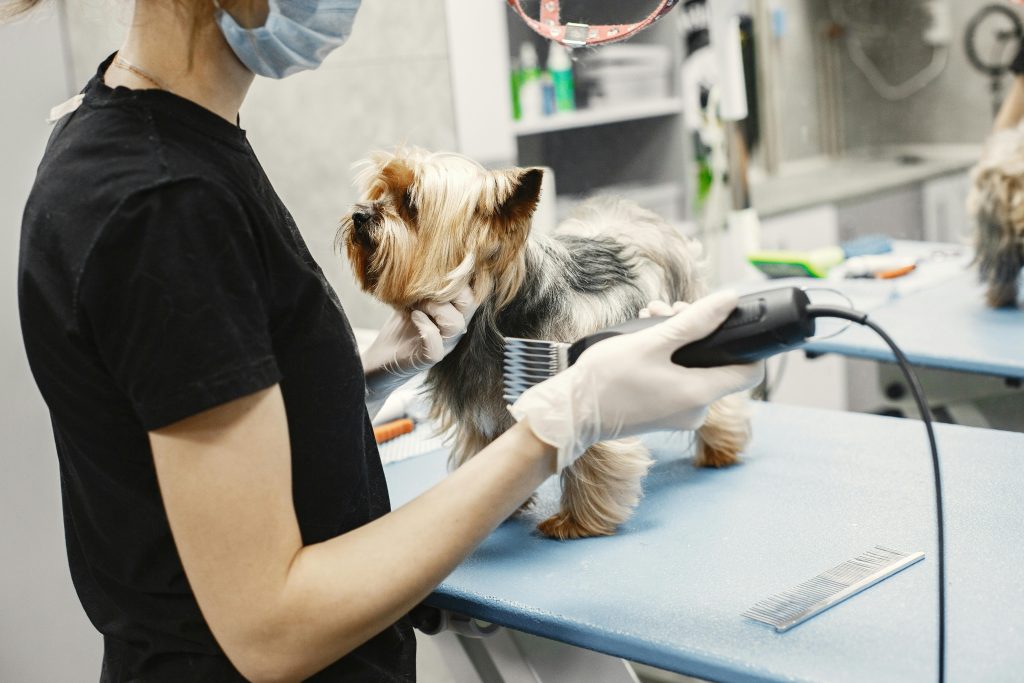
Not every trimmer is built for the same job, and that is where a lot of frustration starts.
Full-body clippers
These are best for bigger grooming jobs, body trims, and thicker coats.
Detail trimmers
These are smaller and easier to use around paws, eyes, ears, and sanitary areas.
Heavy-coat clippers
These are the workhorses. They make more sense for dense, curly, matted, or high-volume coats.
If your pet mainly needs paw tidy-ups, a bulky clipper can feel like trying to frost cupcakes with a shovel.
Match the Tool to Your Pet’s Coat Type
Coat type changes everything.
A short-haired dog may only need light cleanup around the paws or tail. A curly-coated dog usually needs stronger blades and more frequent maintenance. A long-haired cat might need gentle touch-up trimming but not a full-body clip at home.
VCA notes that coat type affects grooming needs a lot, and continuously growing coats often need regular haircuts, while heavier undercoats go through seasonal shedding cycles.
So before you buy the first cute cordless trimmer you see, ask yourself one question: is this for occasional cleanup or real coat management?
Dogs and Cats Are Very Different Grooming Projects
Dogs are often trainable about grooming. Cats are often… deeply opinionated.
That does not mean cats cannot be trimmed. It just means you usually want a quieter, smaller, more precise tool and much lower expectations. VCA notes that many healthy adult cats rarely need baths and that some long-haired cats prone to large mats may benefit from clipping, but extensive mat removal can require professional grooming or even sedation.
Dogs, on the other hand, often do better when trimming becomes part of a predictable routine. Less surprise. Less drama. More snacks.
Corded vs Cordless: Which One Makes More Sense?
Corded clippers usually give you steady power. That is helpful if you groom often or deal with dense coats.
Cordless clippers are easier for most homes. You can move around, shift positions, and work where your pet is calmest. You are also not wrestling with a cord while trying to hold a squirmy paw, which is a beautiful bonus.
For most pet parents, a cordless pet trimmer is the easiest starting point. If you groom multiple pets or tackle thicker coats often, a stronger corded or pro-style option may be worth it.
Why Low-Noise Clippers Matter So Much
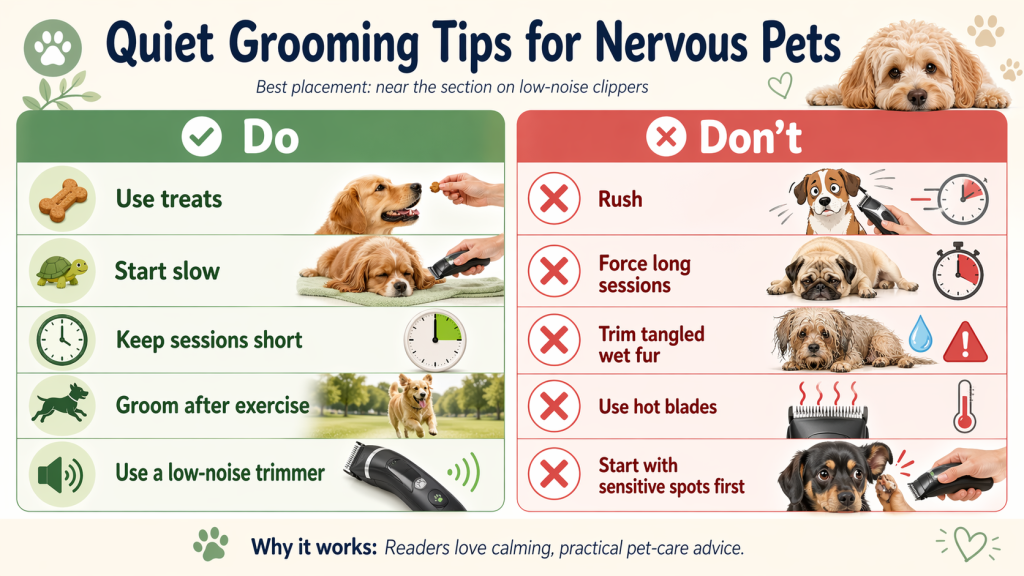
A quiet pet clipper is not just a nice feature. It can change the entire mood of grooming.
The current Amazon product pages for popular pet clippers heavily emphasize low-noise and low-vibration designs, especially for nervous pets and detail work around sensitive areas. That is not marketing fluff. It makes sense. A loud buzzing tool near the face or feet is a hard sell for most animals.
If your pet hates the sound before the clipper even touches the coat, go quieter before you go stronger.
Safety Checks Before You Trim Anything
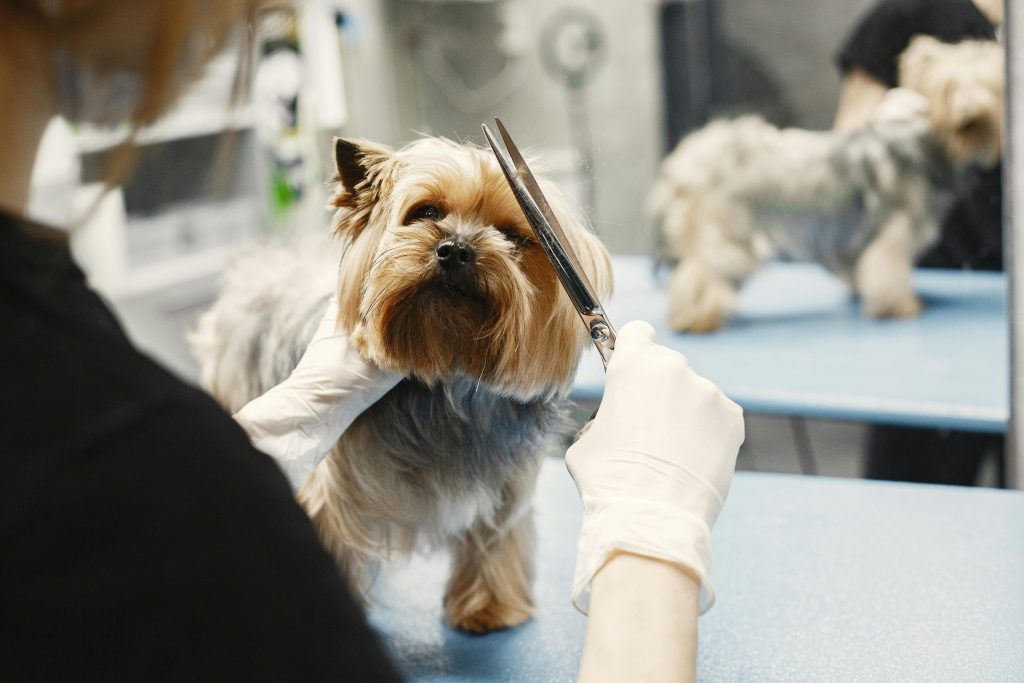
Before you start, pause for one minute and check:
- Is the coat dry and brushed out?
- Are there any sores, bumps, or irritated areas?
- Is the blade cool?
- Do you have treats nearby?
- Is the room calm and well lit?
That one-minute check can save you a lot of trouble.
VCA also recommends brushing out tangles before bathing because mats can become even harder to remove after a bath.
How to Use a Pet Hair Trimmer Without Making It a Whole Ordeal
Start small. Always.
Do not make your first session a full haircut unless your pet is unusually relaxed or you are unusually brave. Start with an easy area, like the paw edges or a little cleanup around the legs.
A simple rhythm works well:
- let your pet sniff the trimmer
- turn it on at a distance
- reward calm behavior
- do a few short passes
- stop before your pet gets overwhelmed
Think of it like building trust, not finishing a project.
How to Help a Nervous Pet Accept the Trimmer
This part matters more than people think.
A 2017 study found that owner-dog interaction improved dogs’ well-being during veterinary examinations. Different setting, yes, but the message still carries over: your calm touch and presence matter during handling tasks.
So if your dog is nervous, try this:
- use a calm voice
- keep sessions short
- trim after a walk, not before
- reward every small success
- stop while things are still going well
And if your dog already gets overstimulated during handling, improving everyday control can help. That is one reason gentle training habits matter. A resource like these leash-pulling tips for calmer daily walks can make handling and grooming feel easier overall.
Common Pet Hair Trimmer Mistakes to Avoid
This is where people accidentally make grooming harder than it needs to be.
A few mistakes to skip:
- using a body clipper for tiny paw detail
- trimming too much at once
- forcing a scared pet through a long session
- using scissors near mats
- trimming dirty, wet, or tangled fur
- assuming every coat should be shaved short
AKC’s 2026 guidance says many dogs, especially double-coated dogs, should not be shaved because the coat helps insulate them, protects from sunburn, and can regrow poorly after close shaving. They also note that trimming excess fur on paws can help cooling because dogs sweat through their paw pads.
Best Amazon Pet Hair Trimmer Picks
Wahl Deluxe U-Clip Pet Clipper Kit
Why it stands out: This is a classic home-grooming option for light to medium coats.
Features: Amazon highlights an adjustable blade with three cutting lengths and seven color-coded guide combs.
Best for: Pet parents who want a familiar, straightforward grooming kit for regular touch-ups.
oneisall 4 in 1 Dog Grooming Kit with LCD Display
Why it stands out: This one is built for all-around convenience.
Features: Amazon lists it as a 4-in-1 kit with a paw trimmer, nail grinder, rechargeable cordless design, low-noise operation, and IPX7 waterproofing. It was also shown as a #1 Best Seller when surfaced in Amazon search.
Best for: Beginners who want one kit that can handle body trims, paws, and detail work.
oneisall Dog Clippers for Grooming Thick/Heavy Coats, 4-in-1 Dog Grooming Kit
Why it stands out: This is the stronger option for fluffier, denser coats.
Features: Amazon’s product page highlights stainless steel blades, a 6800 RPM motor, three speeds, nine guard combs, below-50 dB operation, and long cordless runtime.
Best for: Thick coats, doodles, curly coats, and homes with more than one pet.
Andis 24820 EasyClip Professional-Animal 7-Piece Detachable Ceramic Blade Clipper Kit
Why it stands out: This is the more professional-feeling pick in the lineup.
Features: Amazon search results identify it as a 7-piece detachable ceramic blade corded kit, and it was showing 700+ bought in the past month when surfaced.
Best for: People who want a sturdier, salon-style clipper for regular use.
Casfuy Cordless Dog Paw Trimmer
Why it stands out: Small, precise, and built for the awkward little zones.
Features: Amazon surfaces this as a low-noise, USB-rechargeable paw trimmer with double blades for trimming around paws, face, ears, and other detail areas.
Best for: Detail work, nervous pets, and anyone who mainly needs a paw trimmer rather than a full grooming kit.
What the Research and Experts Say
Two sources are especially useful here.
First, this 2017 study on owner-dog interaction during handling found that calm owner interaction improved canine well-being during veterinary exams. That supports the idea that your presence, voice, and handling style can genuinely affect how stressful trimming feels.
Second, this 2022 study on grooming-related concerns among companion animals found that hair matting showed up in a meaningful share of cruelty cases, especially in long-haired dogs. That is a strong case for routine coat care, early maintenance, and not waiting until grooming becomes a painful rescue job.
Frequently Asked Questions About Pet Hair Trimmers
Is a pet hair trimmer the same as dog grooming clippers?
Not always. “Pet hair trimmer” can describe both full-body clippers and smaller detail tools. If you only need paws or face cleanup, a compact trimmer may be enough.
What is the best pet hair trimmer for thick coats?
Look for a stronger motor, sturdy blades, and enough battery life to finish the job. A heavy-coat dog clipper usually works better than a small detail trimmer.
Can I use a pet hair trimmer on cats?
Yes, but carefully. Cats usually do better with short sessions and smaller, quieter tools. For severe mats or full-body clipping, it is often safer to use a groomer or vet.
Is It Okay to Trim Your Dog’s Fur During Summer?
Sometimes, but not automatically. AKC says many double-coated dogs should not be shaved, since their coat helps protect and insulate them. Light trimming in the right places is different from shaving everything down.
How frequently should I use a pet hair trimmer on my pet?
That depends on the coat. Some pets only need occasional paw and sanitary trims. Others, especially curly or continuously growing coats, need more regular upkeep. VCA notes that non-shedding breeds often need regular haircuts and routine grooming.
Final Thoughts
The best pet hair trimmer is not the fanciest one or the one with the most attachments you will never use. It is the one that matches your pet’s coat, keeps grooming manageable, and helps you stay consistent.
That is really the goal here. Not perfection. Not showroom results. Just a calmer pet, fewer mats, tidier paws, and a grooming routine that does not ruin your afternoon.
Start with the job you need most. Pick a trimmer that fits that job well. Then keep it simple, kind, and regular. Your pet probably will not write you a thank-you note, but the softer coat and fewer grooming battles will speak for themselves.